If you’ve been reading my blog, you’ll know that I’ve been experimenting with sourdough. This includes making banging bagels, adding sourdough to traditional Southern Iranian dishes, and playing with strange toppings and different flours.
Today’s article is about experimenting with buckwheat, a gluten free grain.
The Base Loaf
The base recipe that I used for iterating is a rye loaf from e5 Bakehouse:
- 120 g 100% hydration rye levain (last feed 8-12 hours ago)
- 220 g water
- 55 g wholemeal rye flour
- 180 g light rye flour
- 40 g sunflower seeds
- 40 pumpkin seeds
- 6 salt
Buckwheat Makes Your Starter Pink
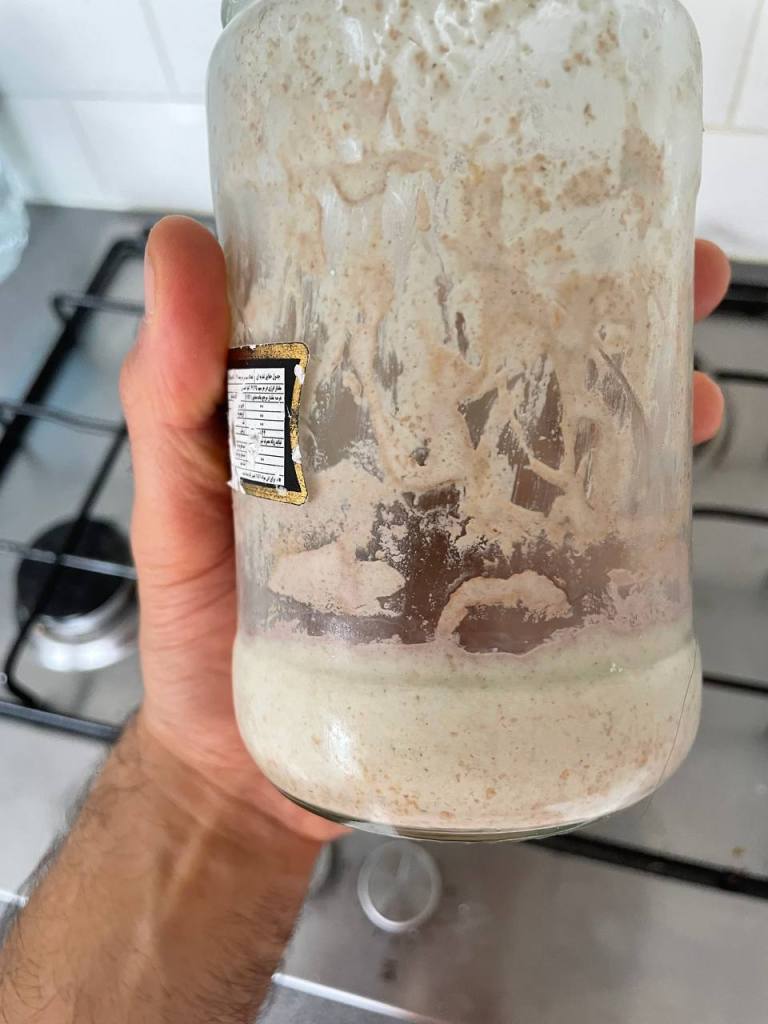
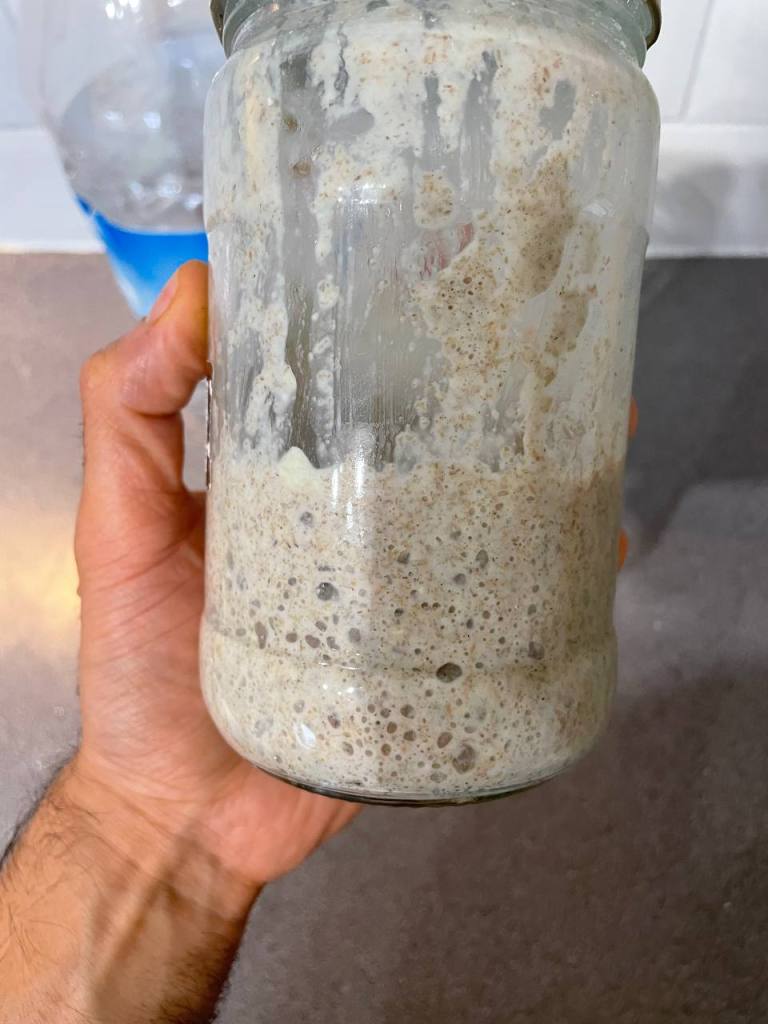
I fed Dusty1 (which I initially started with spelt, so if you want a purely GF version consider starting with buckwheat2) with buckwheat in the morning to prepare the levain for an evening bake. Withon a few hours, instead of seeing healthy air bubbles that I normally do after feeding with rye or spelt, I noticed that my starter turned pink!
I got really worried, as I’d heard: pink starter = mold. It did smell fine, so I doubted that Dusty had grown sick, but I preferred to be safe than sorry. After Doug and Duke3, I wasn’t ready to lose another child!
So, mustering as much patience as I could, I fed Dusty with rye at night and waited till morning… only to find her healthy again with beautiful bubbles! This confirmed to me that the pink hue was not a sign of mould growth, but rather that it is a property of buckwheat.
I fed Dusty with buckwheat again and waited for the next day to bake!


Buckwheat is Sticky
I have this thing where I get really excited experimenting with new ingredients or methods… and it often leads me to change too much at once.
Unexpectedly, the result is often disastrous.
It would be very kind to say that my first attempt at a buckwheat loaf turned disastrous.
I modified the base recipe to the following:
- 120 g 100% hydration
ryebuckwheat levain (last feed 8-12 hours ago) - 220 g water
- 55 g
wholemeal ryeplain white flour - 180 g
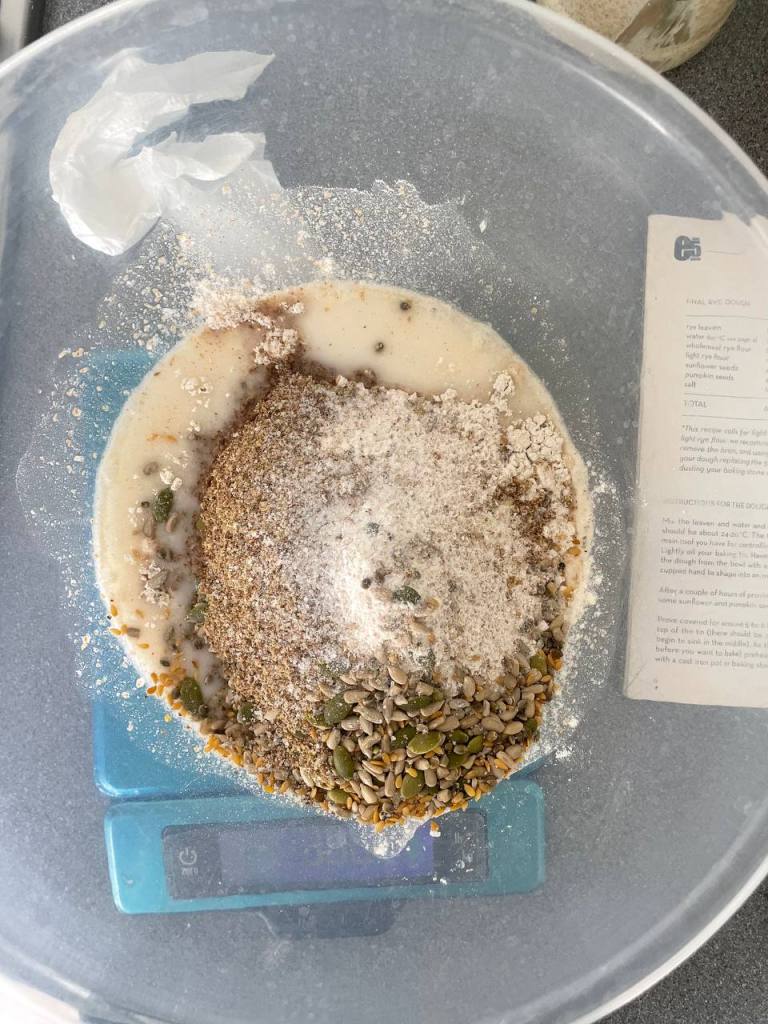
light ryebuckwheat flour 4060 gsunflowermixed seeds4020 gpumpkin seedsflax meal (ground flaxseeds)- 6 salt
Note that addition of the flax meal.
The mixture was quite wet, but I felt like it resembled the same consistency as the dough for a rye loaf, so I continued. The dough rose nicely, so I didn’t have any fears going into the bake, and I was really excited for the outcome!
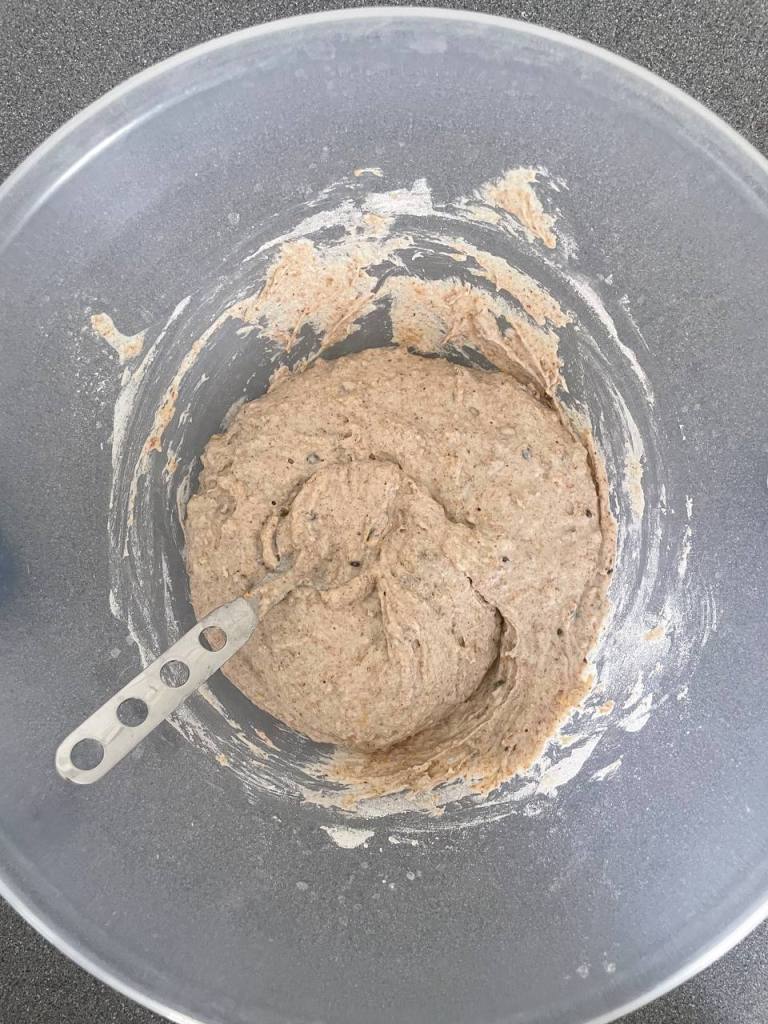
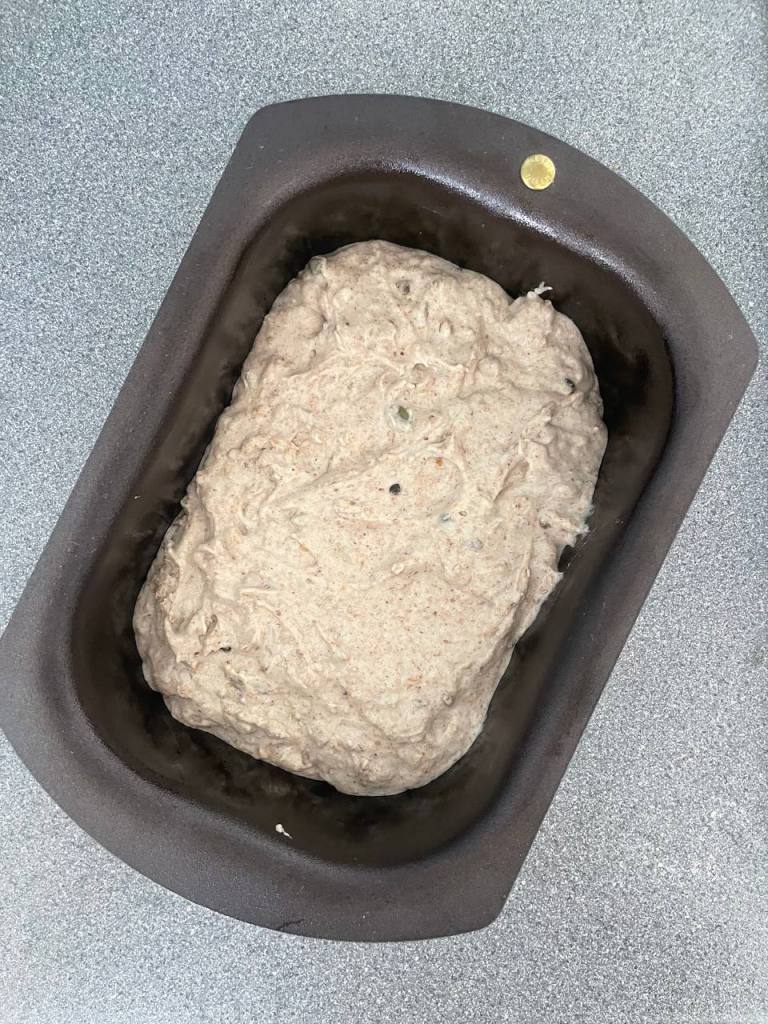

Unfortunately, everything but the crust was absolute garbage: the flavor was really off, the consistency gummy, and the dough didn’t hold its shape AND it stuck to the tin. I really struggled to clean this one and take care of my cast iron!
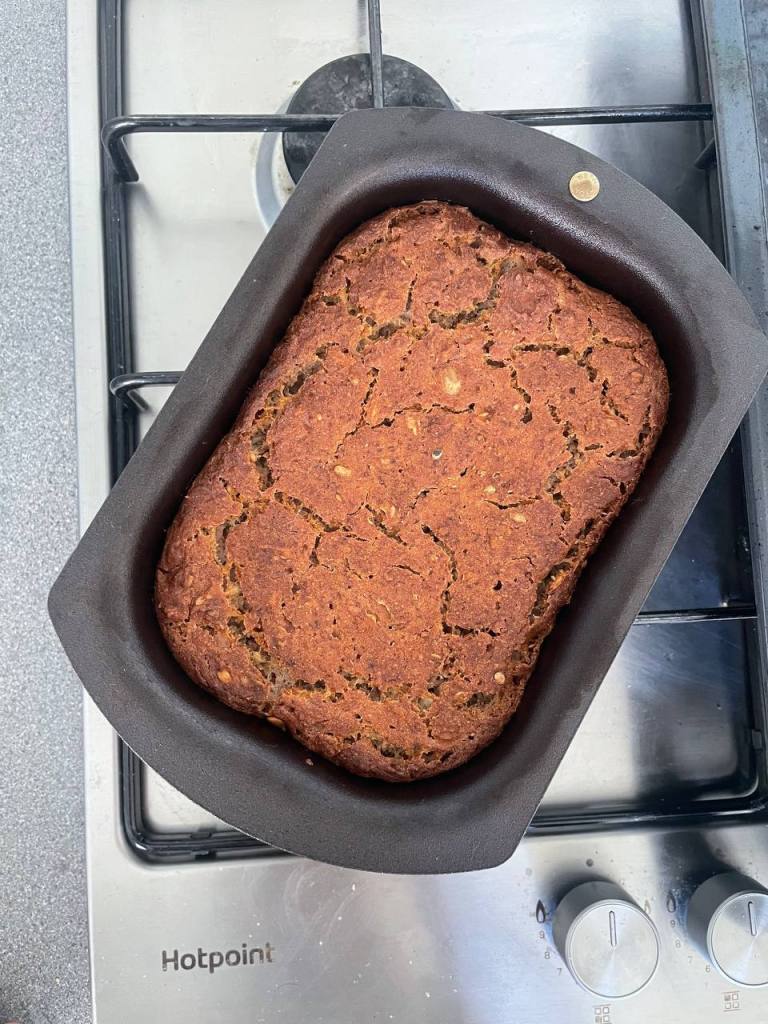
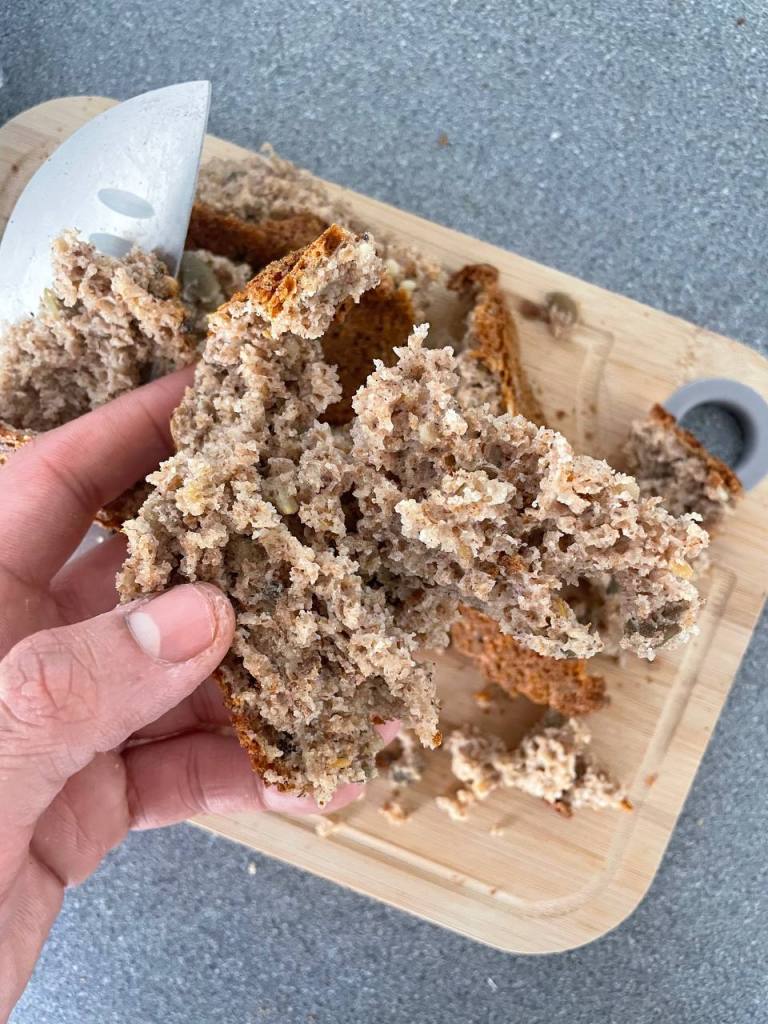

Unlike my failed rye loaf, I don’t think that the gummy nature of this due can be attributed to rapid fermentation due to the presence of glucose. Instead, I blame it all on the flax meal, and I assume that it is because of its ability to perform gel-like structures when in contact with water. I believe lumps formed around the flax meal, leading to the bread structure falling apart.
I am almost certain that the flavor was off because of the flax meal, but I cannot explain this with facts and logic.
I didn’t want to attempt buckwheat again… but what was I gonna do with my buckwheat flour? I decided to give it another go.
When Done Right, Buckwheat is so Tasty!
For my next attempt though, I controlled all urges to experiment: I *just* replaced the rye flour with a 1:1 ratio of buckwheat. No seeds, no extra types of flour, no weird ingredients like flaxmeal… just buckwheat.
Ingredients:
- 120 g 100% hydration
ryebuckwheat levain (last feed 8-12 hours ago) - 220 g water
55 g wholemeal rye flour180235 glight ryebuckwheat flour40 g sunflower seeds40 g pumpkin seeds- 6 salt
As soon as I started this, I was ruing my very existence. The mixture I had was somehow stickier than before. I added another 50 grams of buckwheat flour to help it, but it barely made a difference. Honestly it looked like a lump of bird shit… I had given up all hopes of success. I was not looking forward to cleaning the tin.
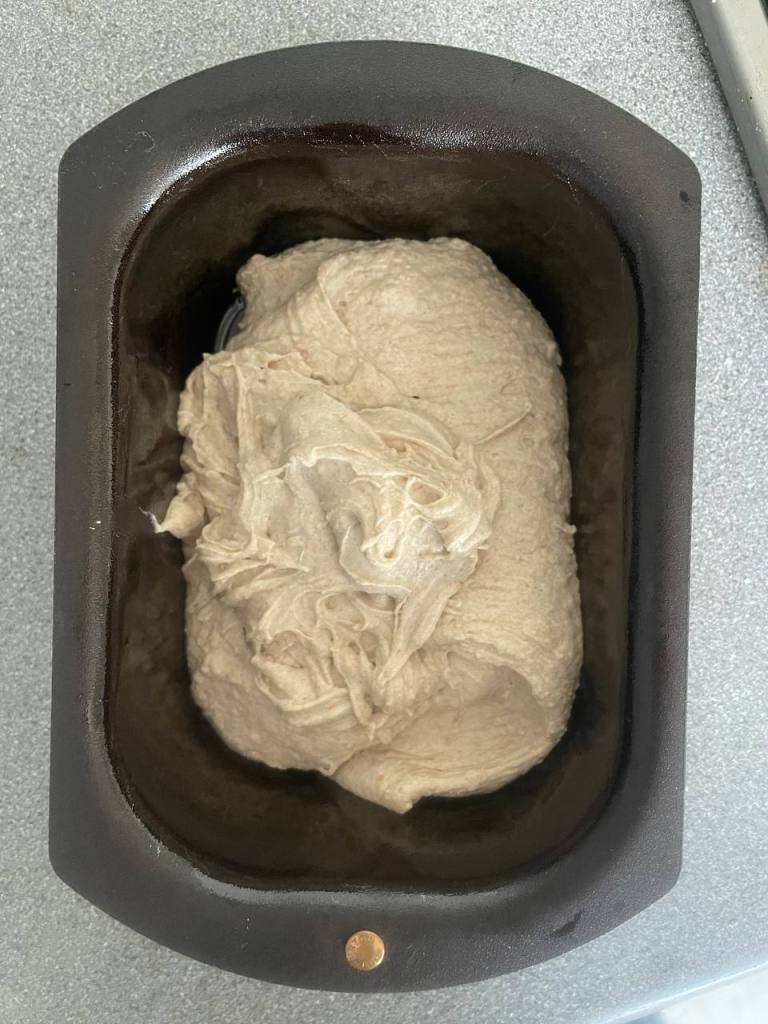
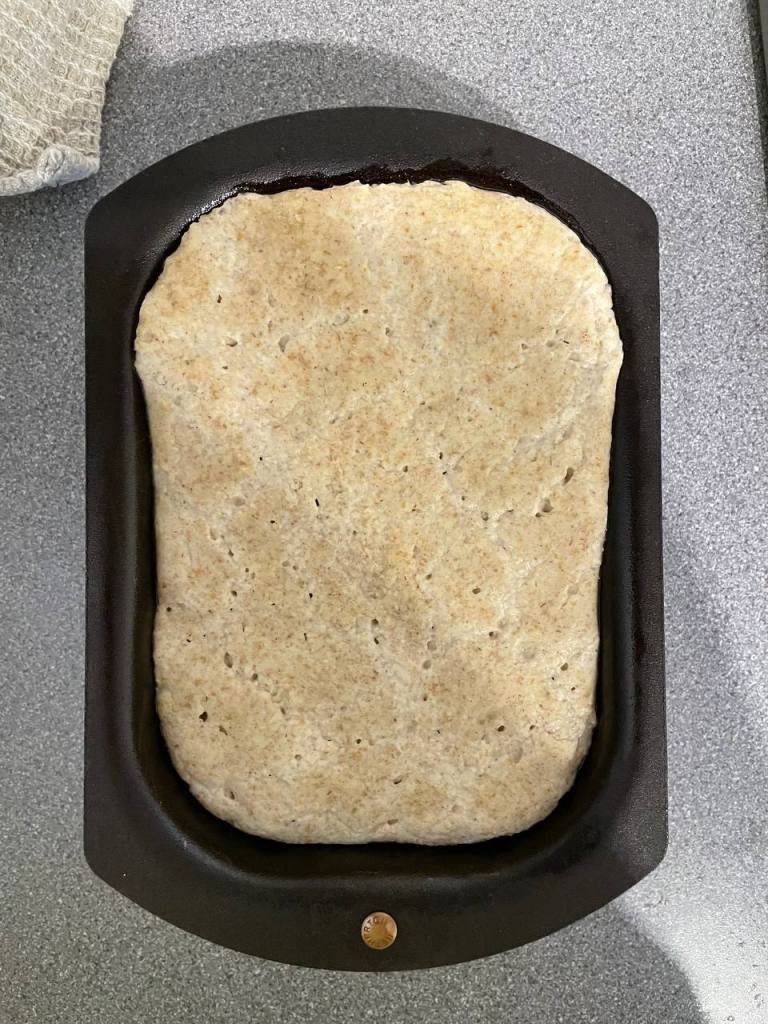
However, after a couple of hours of proving, the dough looked much more inspiring! The top needed some aesthetic touchups, but I was really pleased that a nice shape had formed, and that it didn’t look like it was going to stick in the tin.

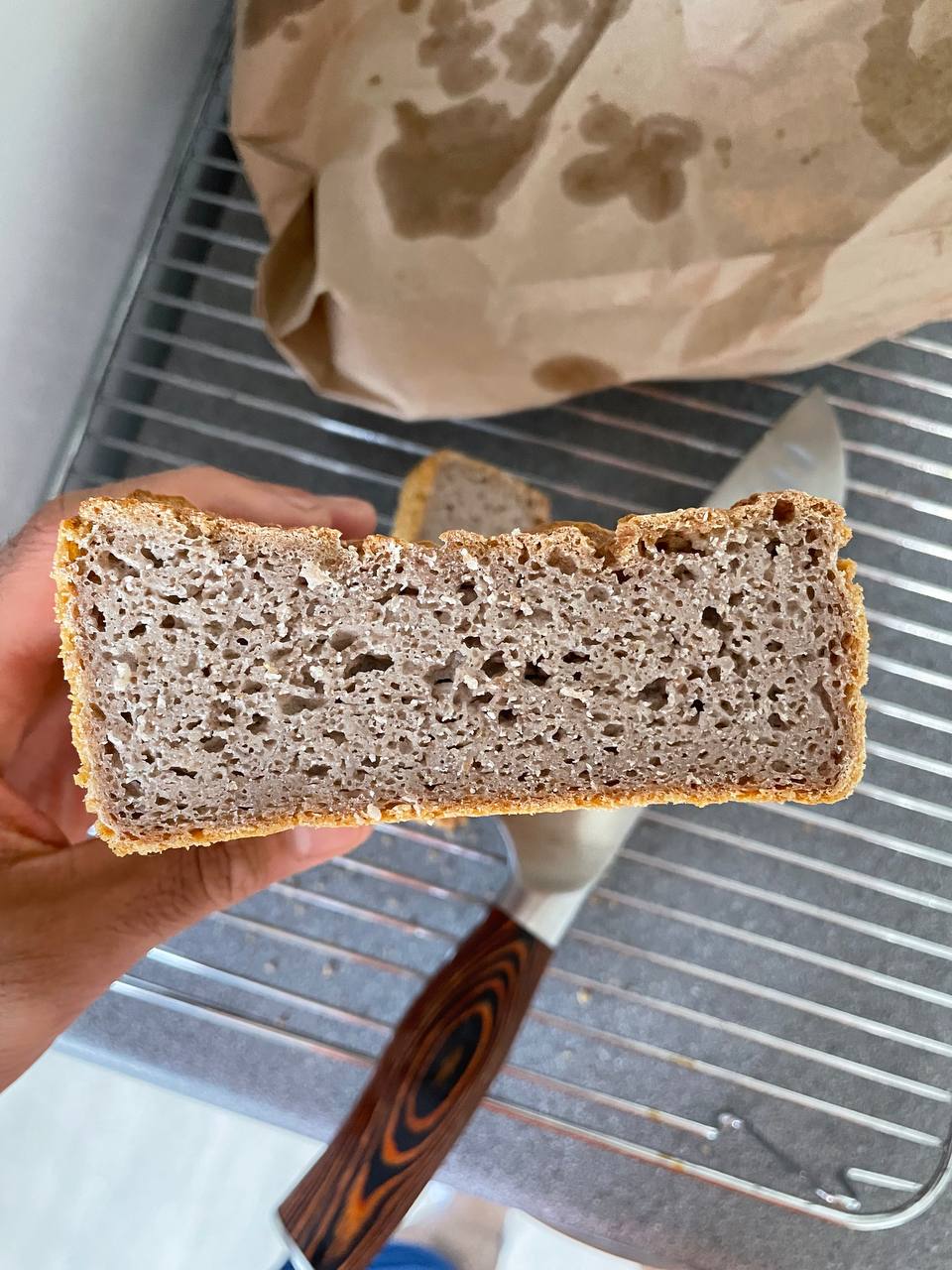
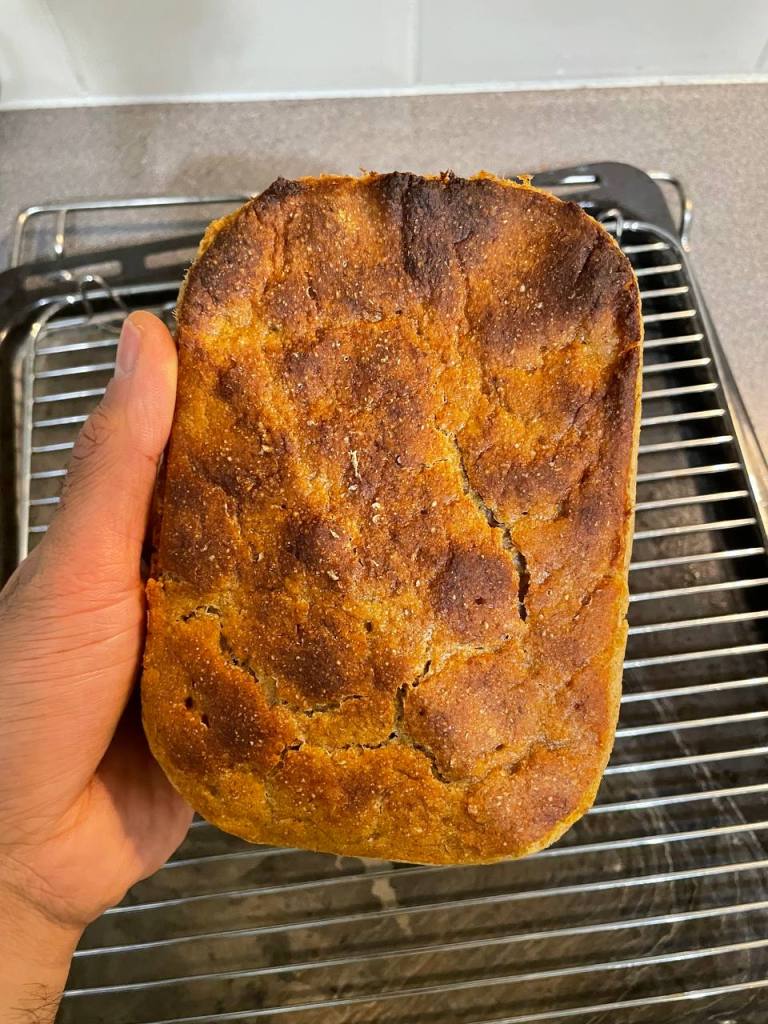
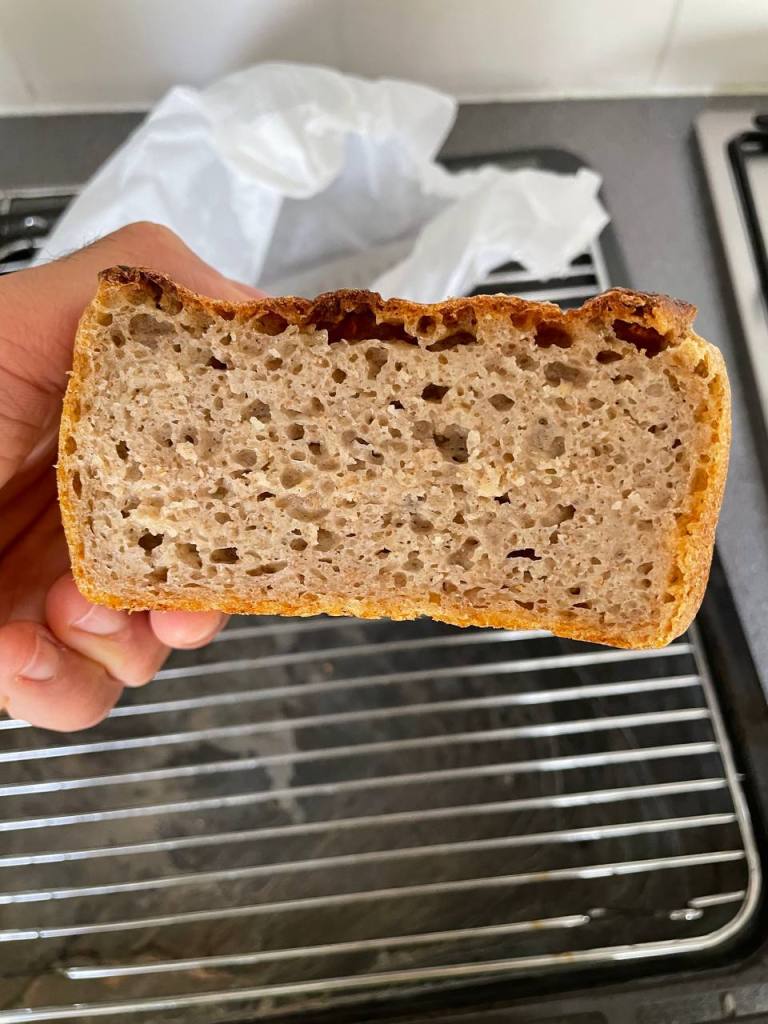
After it came out of the oven, I was even more excited. It looked lovely. The crumb turned out beautiful for a gluten free bread, and the crust, while not as good as last time, looked decent too.
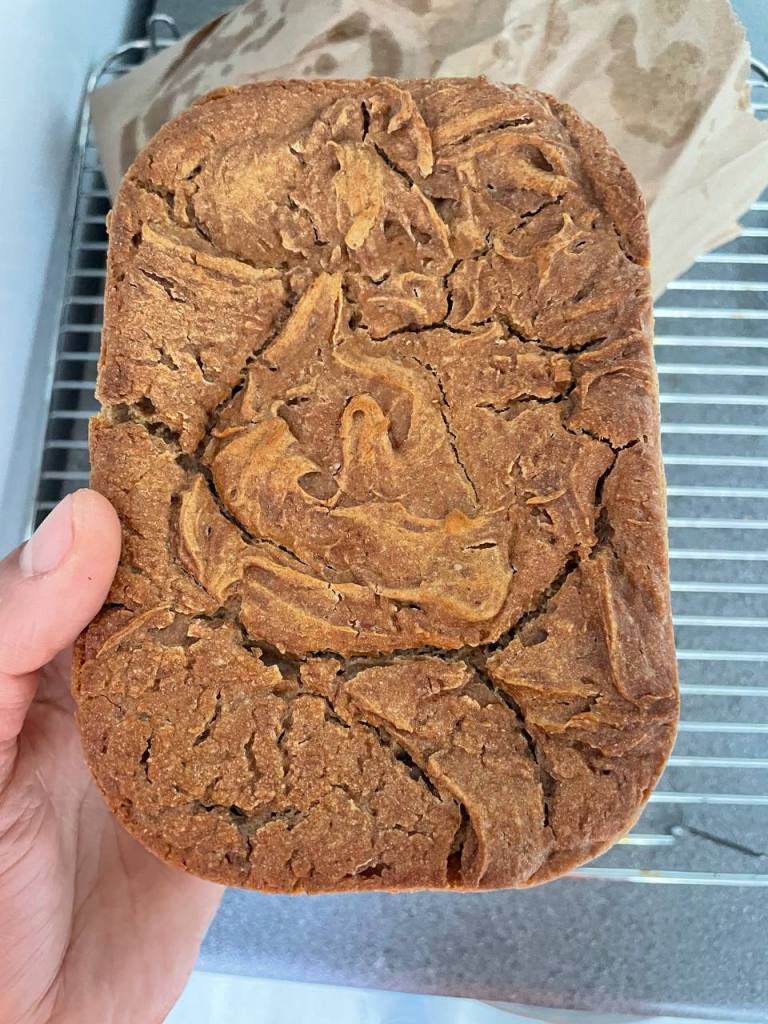
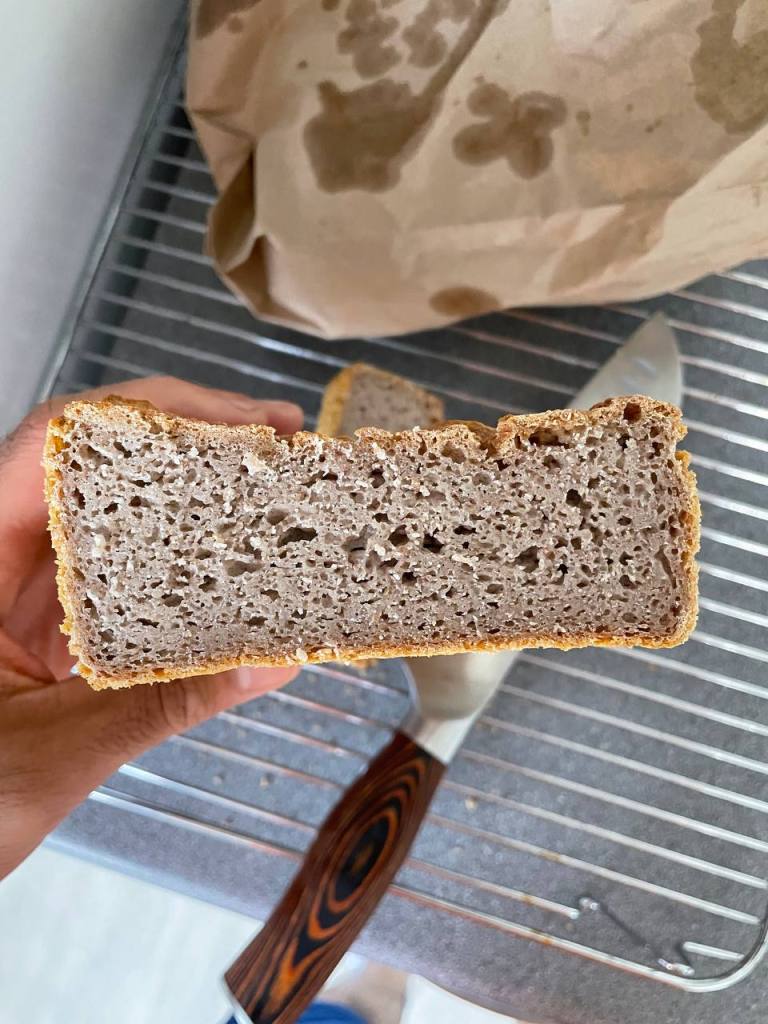
As for the taste? Buckwheat redeemed itself.
It had a nice sour taste that I thoroughly enjoyed, and the buckwheat itself was not opinionated: it let the tangy flavor shine. I was expecting it to taste much more strongly of buckwheat, but perhaps the reason why it didn’t is because I used hulled buckwheat flour.
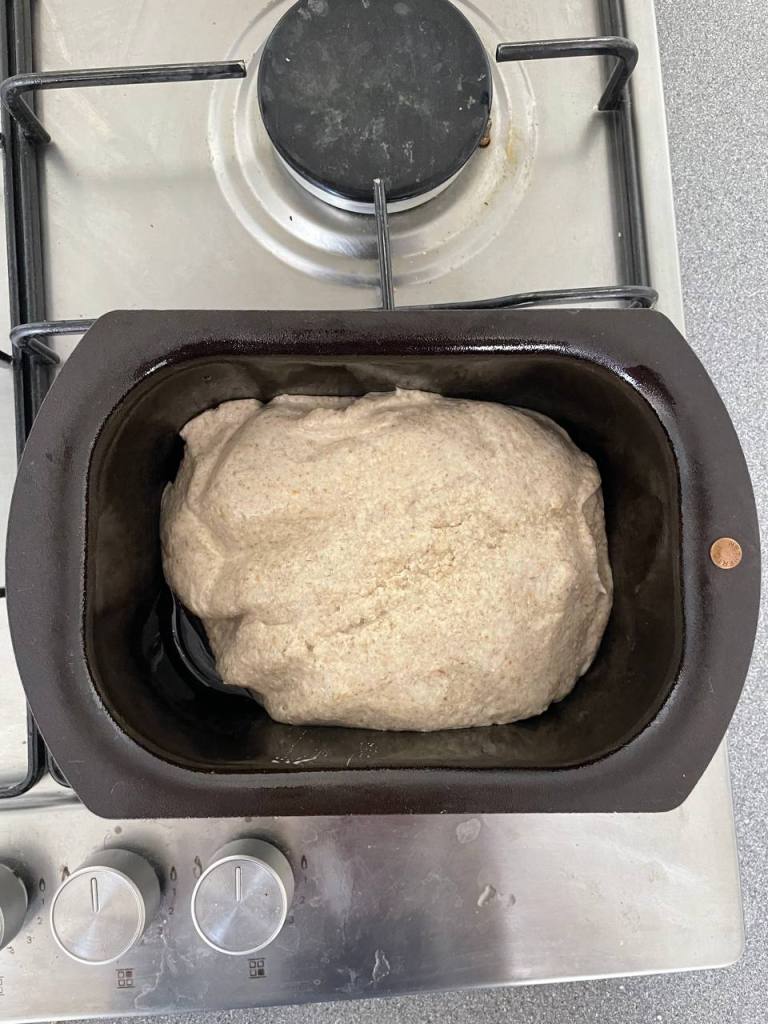
Below is a comparison of the buckwheat loaf with the base rye loaf (seeds removed):
Concluding Remarks
While my first try with buckwheat turned horrible, the second attempt was so good that I’m certain I’ll be making buckwheat loaves again (definitely prefer this over spelt)! Next Monday, I’ll be posting the last of my recent experiments with sourdough. After that I’ll be posting a few more travel articles!
- My starter. Dusty Springfelt because she’s made of spelt. ↩︎
- Note that while my starter initially used spelt, a gluten containing grain, the process of fermentation should cause a breakdown of gluten so that there are only traces of it left. If you can tolerate small levels of gluten, and struggling to get a starter going with a gluten free grain, I would suggest trying to start a starter with rye, and then giving it a few feeds of buckwheat so that by the time you bake there is little to no gluten in the starter. ↩︎
- Doug the Dough, and his younger brother Duke ↩︎


Leave a Reply