One thing I’m known for, is my Tahini Brownies, and of all the things I’ve baked, they are the ones I’ve gone back to the most. They are rich and fudgy (like all good brownies should be) with a nutty and slightly bitter undertone from the tahini. ُThis latter bit is what takes everyone by surprise, pleasantly, as they go for another irresistible bite. My brownies are universally loved1, and since they are so reliable I’ve developed a habit of making them for social functions.
Recently though, I had a few vegans attending. While I have a good collection of reliable vegan recipes, I felt an unstoppable craving for these brownies… and since I have an immovable belief in inclusivity, I challenged myself to work around the two core brownie ingredients: butter and eggs.
The OG Recipe
While I claim these brownies as mine, the credit for the recipe goes to Elisabeth Raether, and her lovely baking book, Wochenmarkt – Das Backbuch. A great investment for anyone with an interest in baking and knowledge of German. Here’s my public service for the day, and me finally putting my knowledge of German to good use:
Ingredients
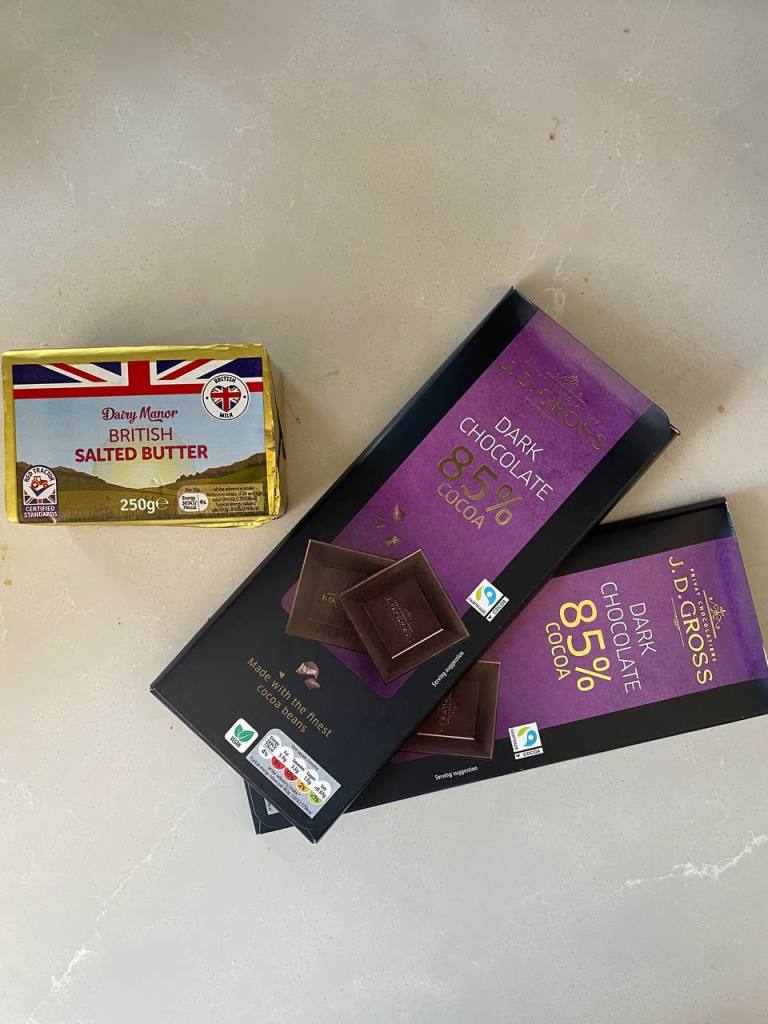
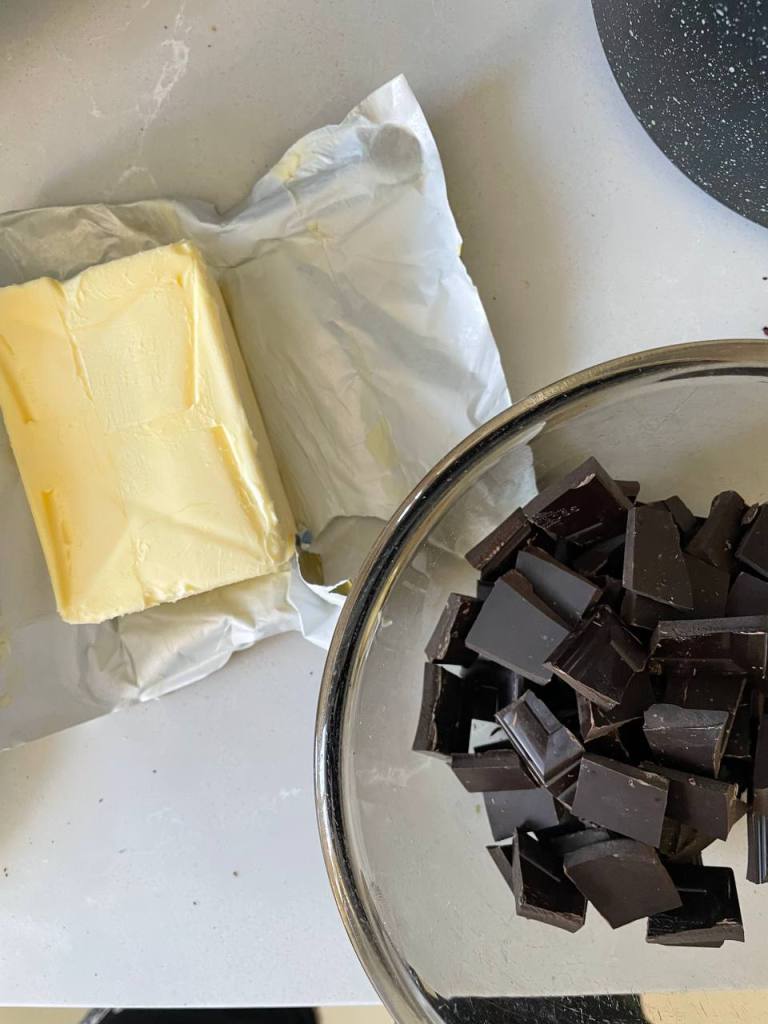
- 250 g dark chocolate
- 250 g salted butter
- 250 g sugar
- 80 g flour
- 6 eggs
- 5 tablespoons of tahini
Preparation
- Preheat your oven to 160 degrees celsius with the fan on
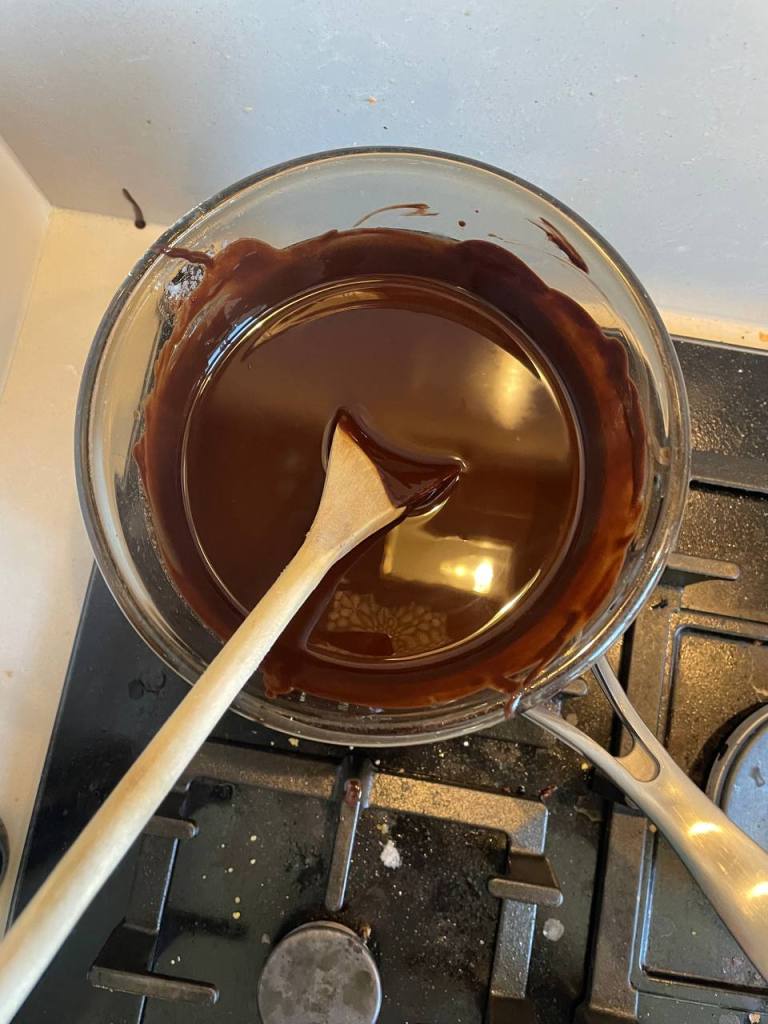
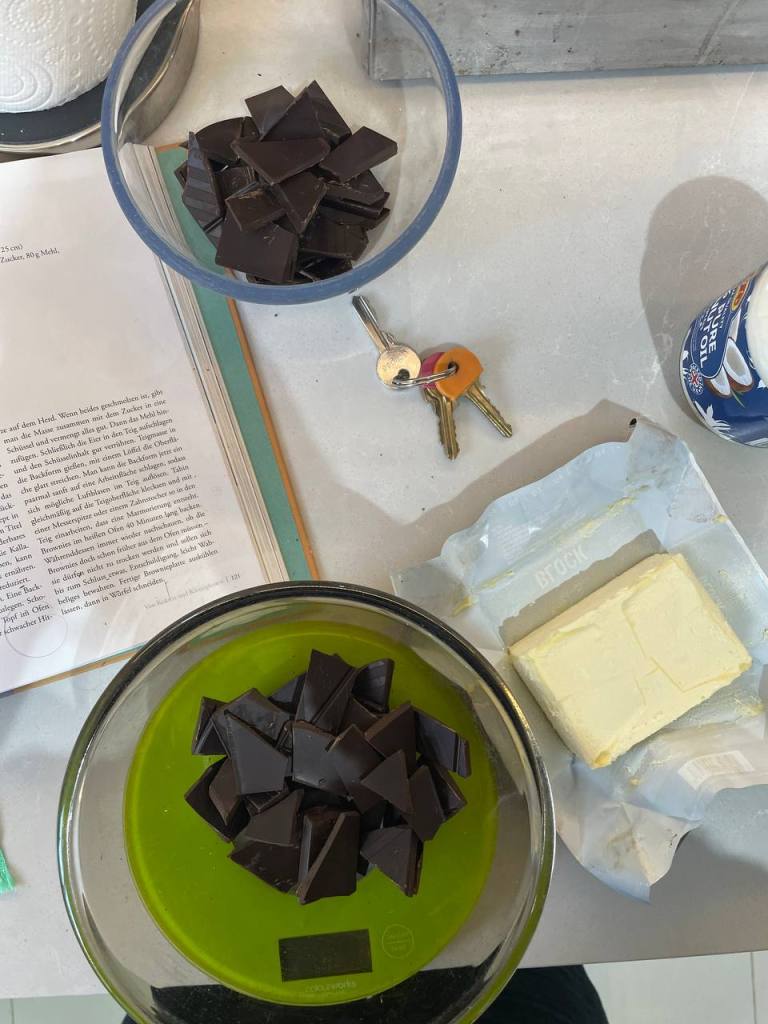
- Melt the chocolate and butter on very low heat
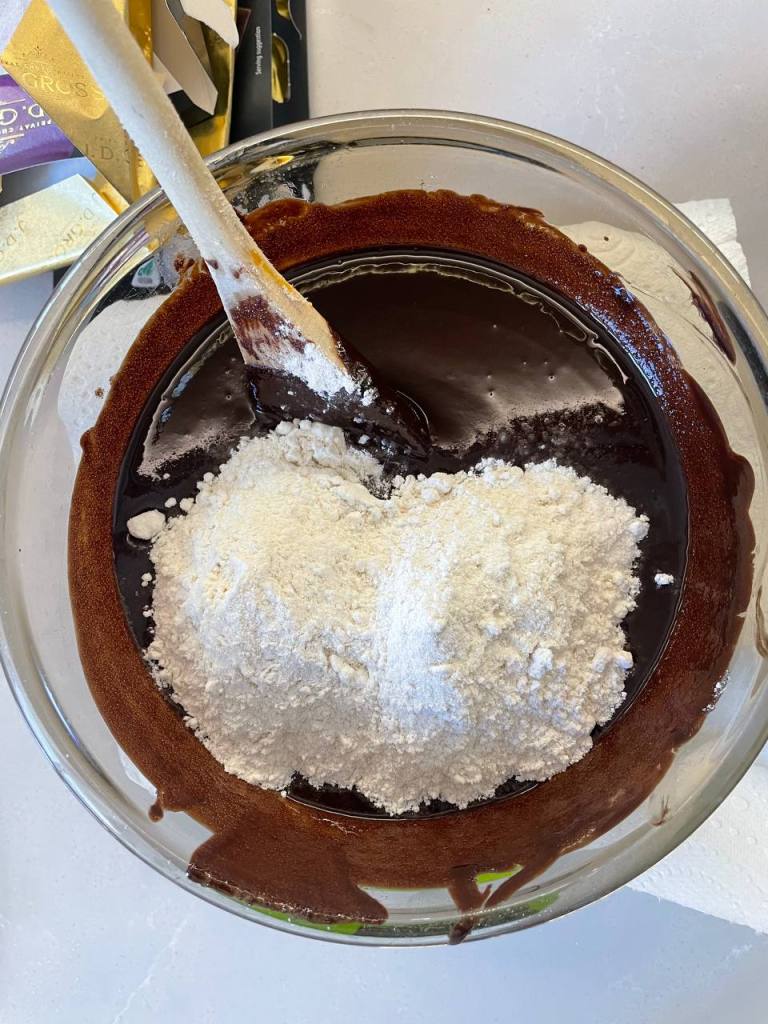
- When both are fully mixed, add the sugar and mix everything well
- Add the flour and mix
- Finally, add the eggs and beat them into the batter, and mix everything very well
- Pour the mixture onto the baking pan and, using the back of a spoon, smoothen it out
- You can hit the backing pan against the counter a few times to release any bubbles from the mixture
- Pour the tahini evenly over the surface, and then using a knife, work it into the batter to form a marbling pattern
- Bake the brownies in the oven for 40 minutes, but during this time, always check on them in case they need to be taken out of the oven earlier. They shouldn’t be too try, and should, till the last moment, have a bit of a “wobble” to them
- Let the brownie cool, before slicing into pieces
My Notes
- Personally, I like to go for an 85% dark chocolate with 200 g of sugar. I find that this way the brownies end up more rich than sweet, which I like. If going with 250 g, I would avoid using chocolate with a percentage less than 85% , as the brownies will end up way too sweet.
- In terms of chocolate choice, I’ve found the 85% from Lidl gives a rich flavor2.
- For the flour, I haven’t experimented much but strong white works fine without giving the brownies a bready texture.
- I use medium eggs.
- I’ve used butters with salt contents ranging from 1.5-1.8%. All work well.

Part 1 – Butter
Oil Replacing Butter?
So… how does one actually replace butter in brownies?
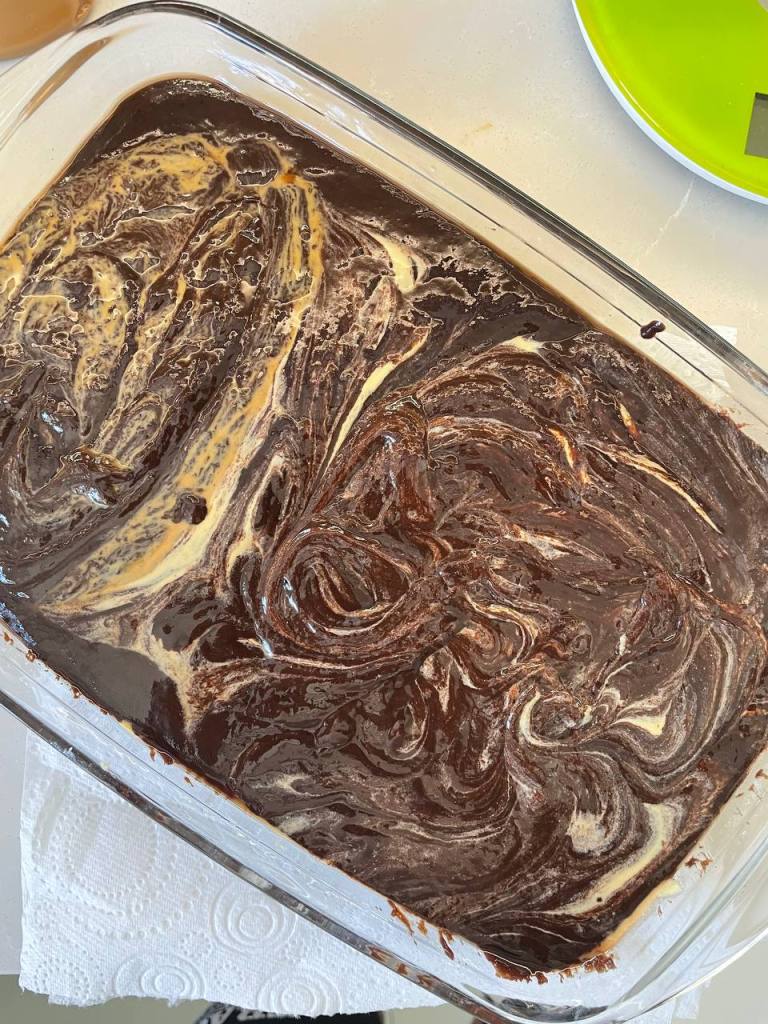
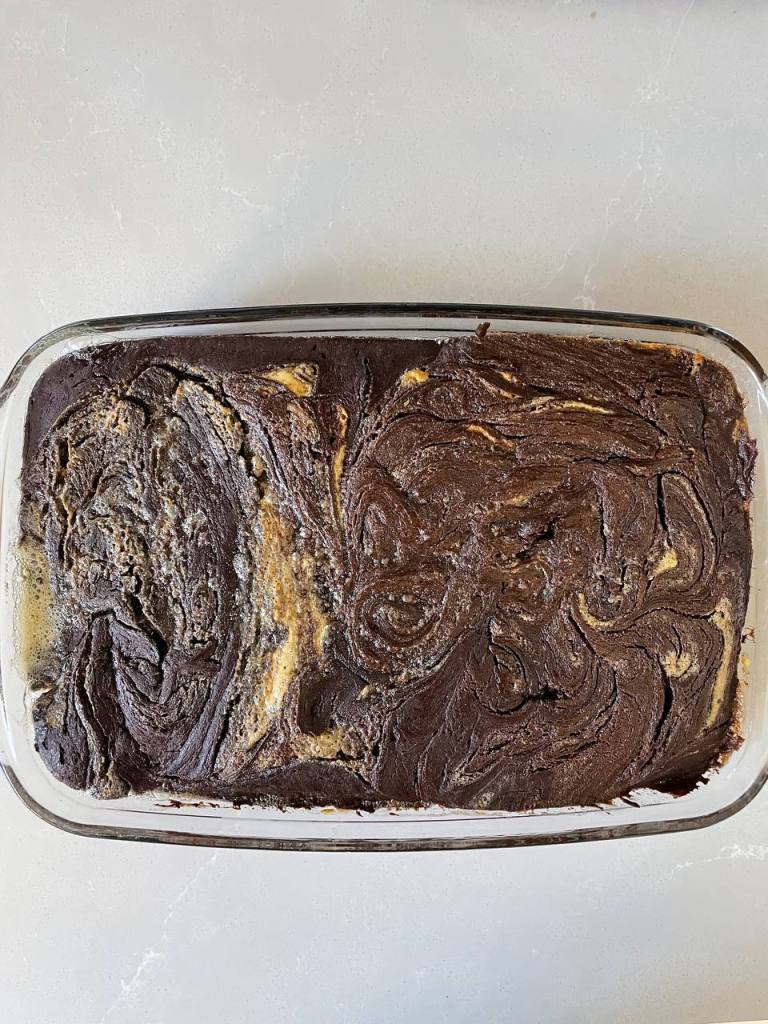
After some time searching online, it appeared that oil can be used to replace butter in recipes with melted better, with a volumetric ratio of 1-1. So for my first experiment, using online values for the density of salted butter, I calculated the volume of the butter to determine how much oil (in this case sunflower) I needed to use. I also calculated the amount of salt to add. I then started melting… only to find that the consistency of the melted chocolate and oil was too runny. There appeared to be some oil separation which concerned me quite a bit.
I continued the process, and in the end my emulsion completely broke.
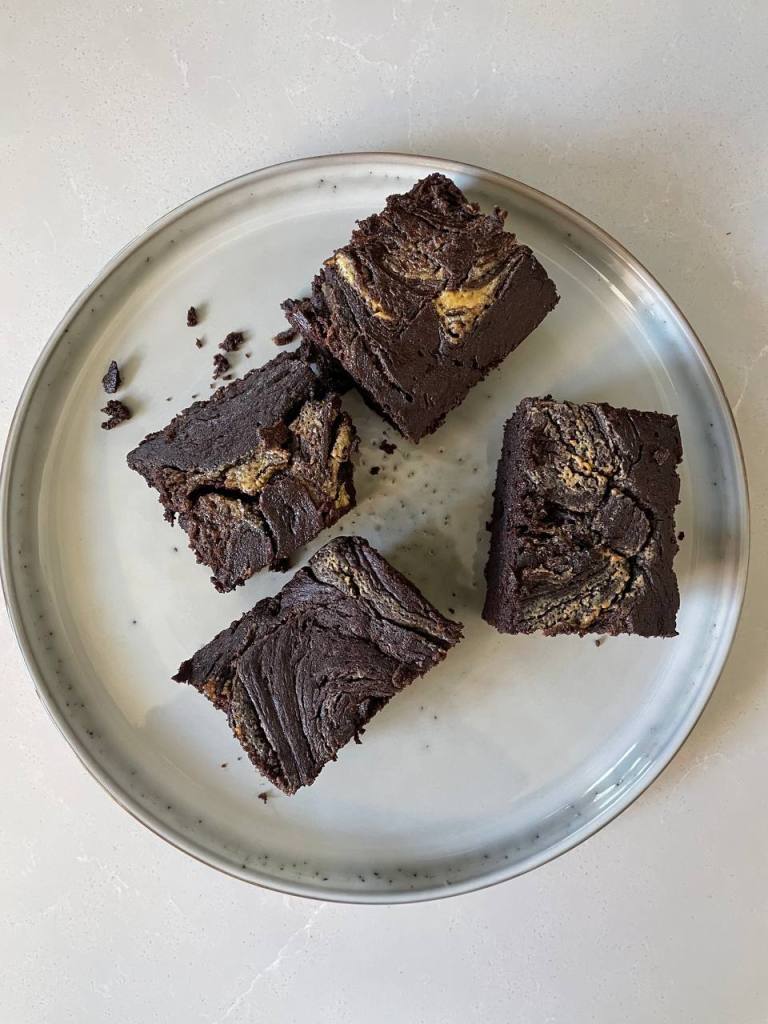
This was not strictly because of the oil (as will be clear in the next section), but I was convinced that having an already thin, almost separating, molten chocolate was not going to help! Midway during baking, I decided to pour the excess tahini+oil into a separate bowl. Even with this, I found the resulting brownies too oily.
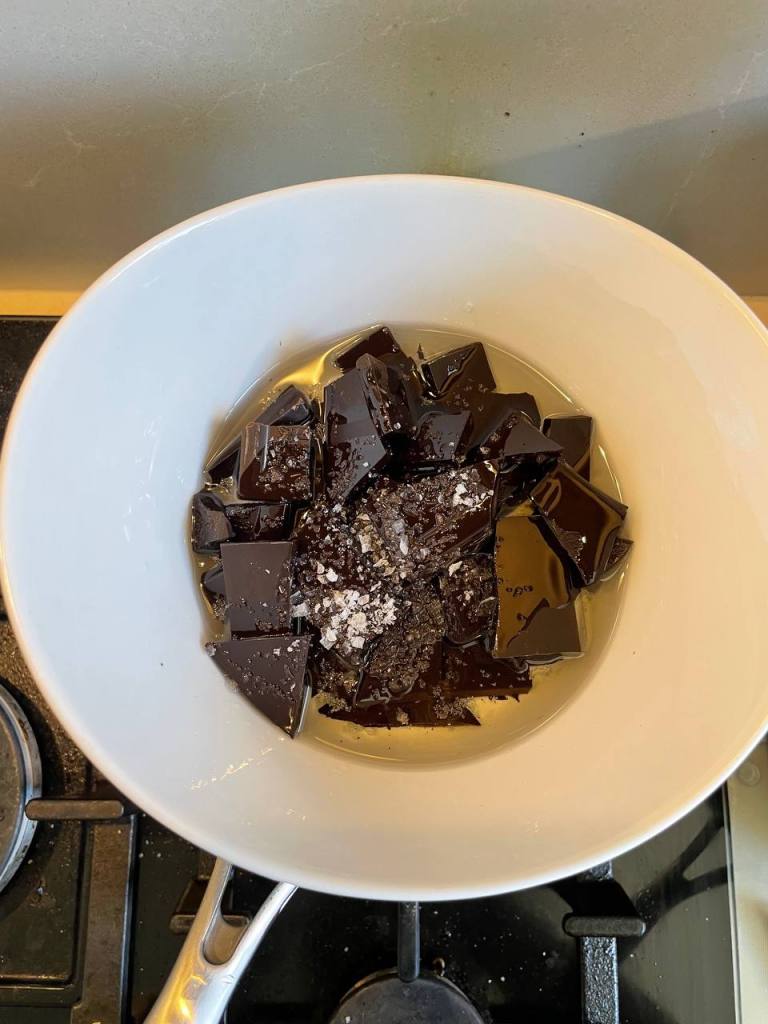
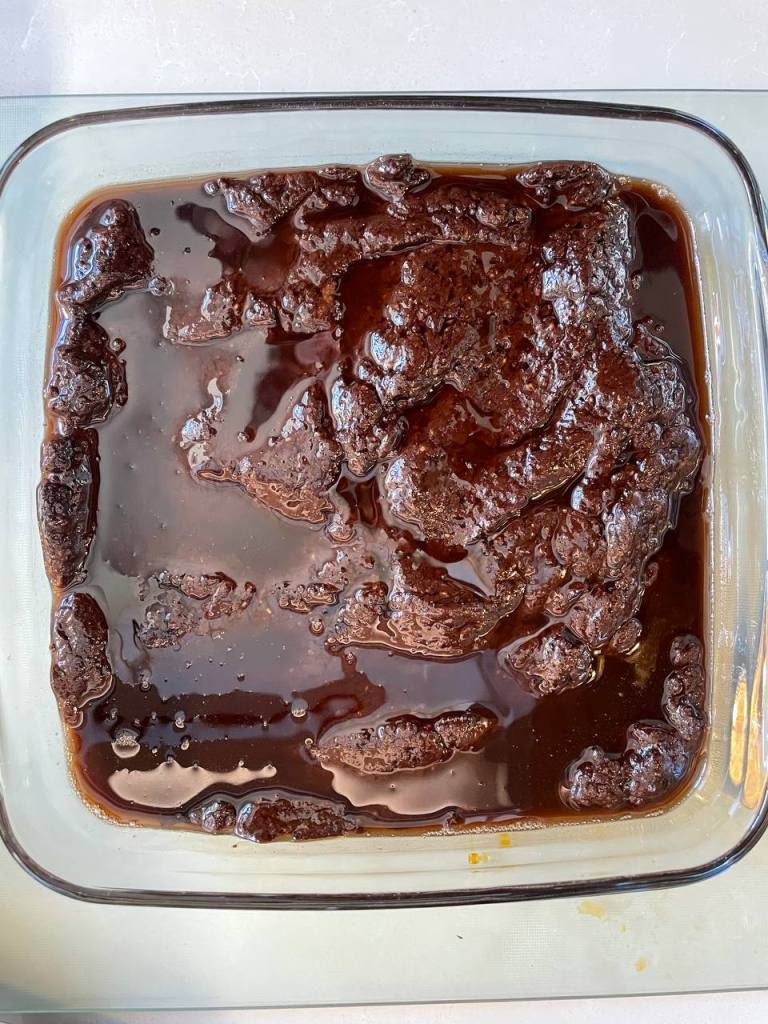
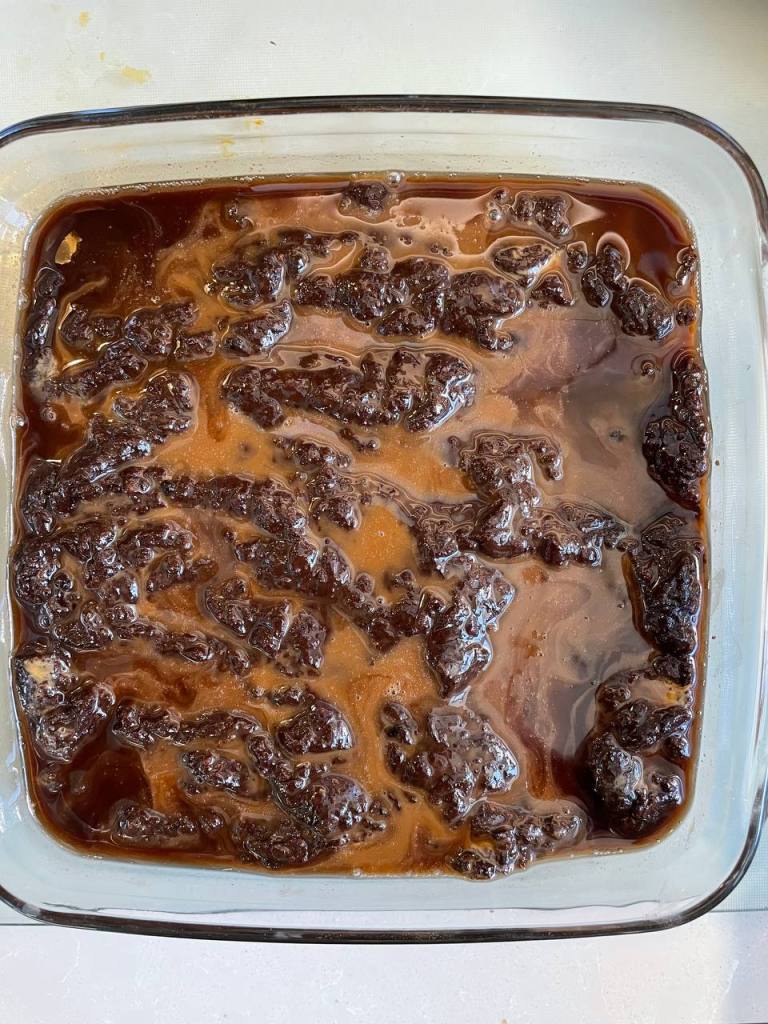
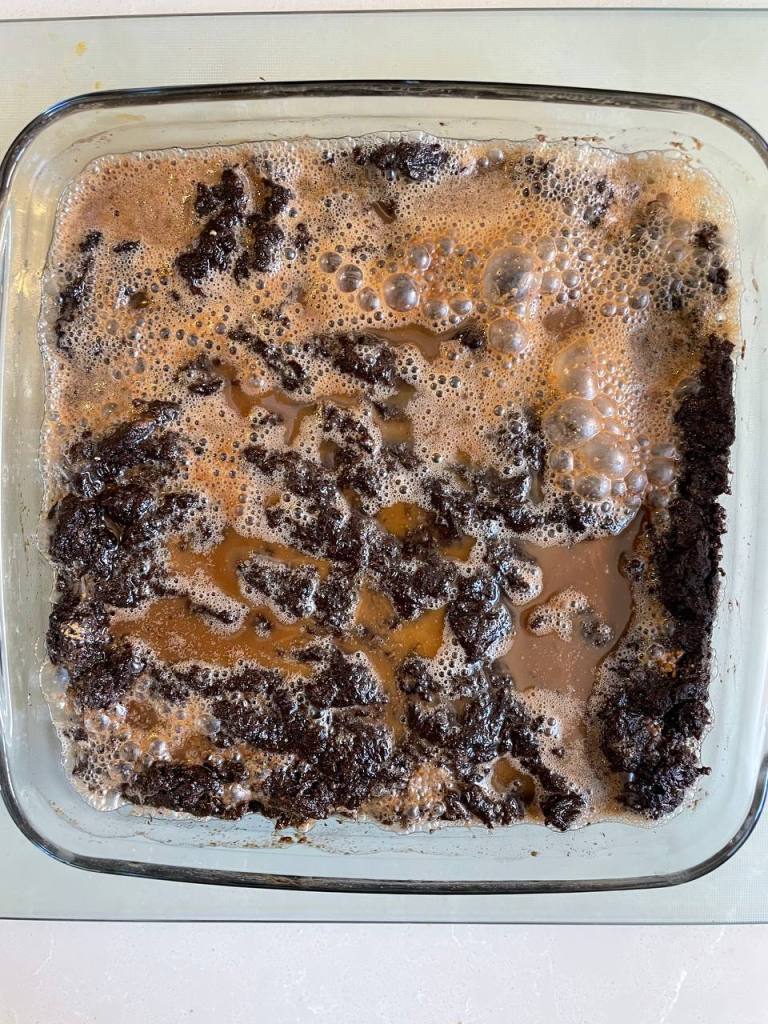
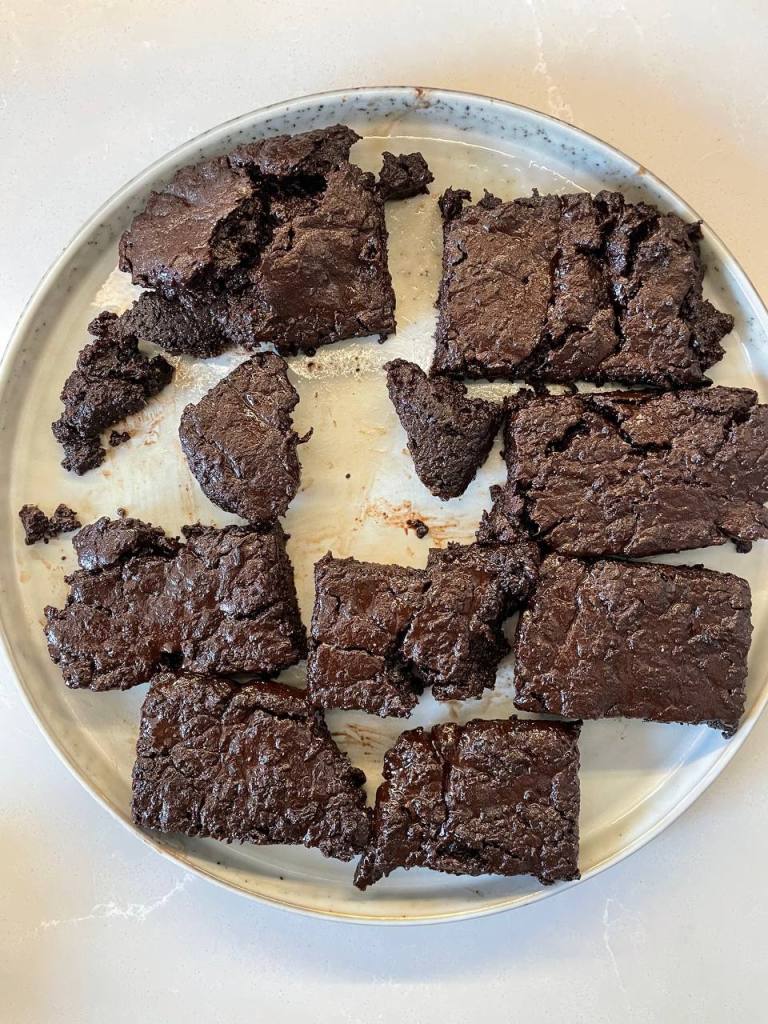
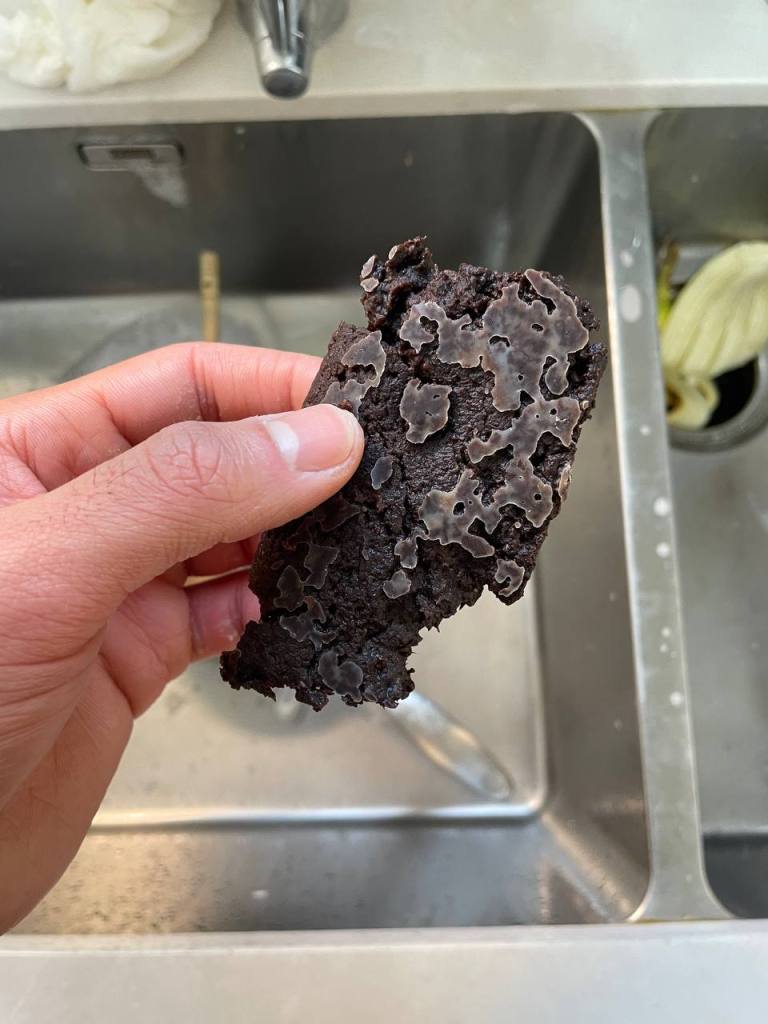
This was a disappointing outcome, and I had determined that I wouldn’t make brownies again with an oil that doesn’t solidify at room temperature. I was still curious to see if other replacements suggested online would work though, so I tried to see what the consistency of the melted chocolate would be like if olive oil were used, which is very popular in vegan baking (I was also very curious to see if my mind could associate olive oil with a sweet dish!), and coconut oil, which I thought would be promising given that it is solid at room temperature.
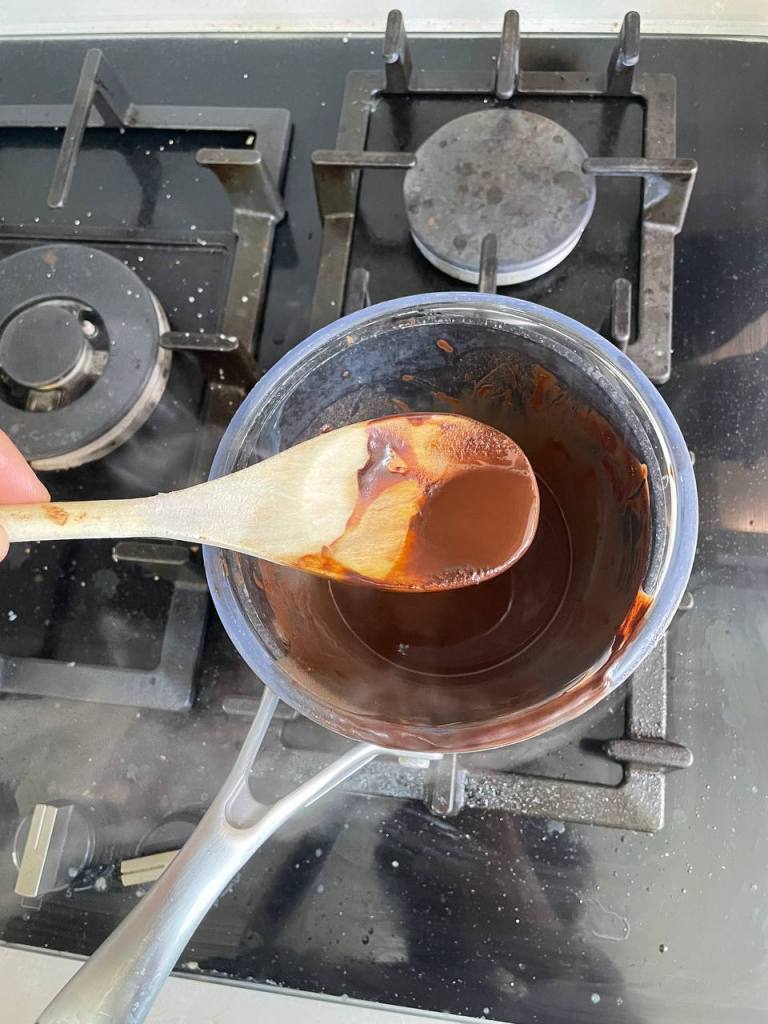
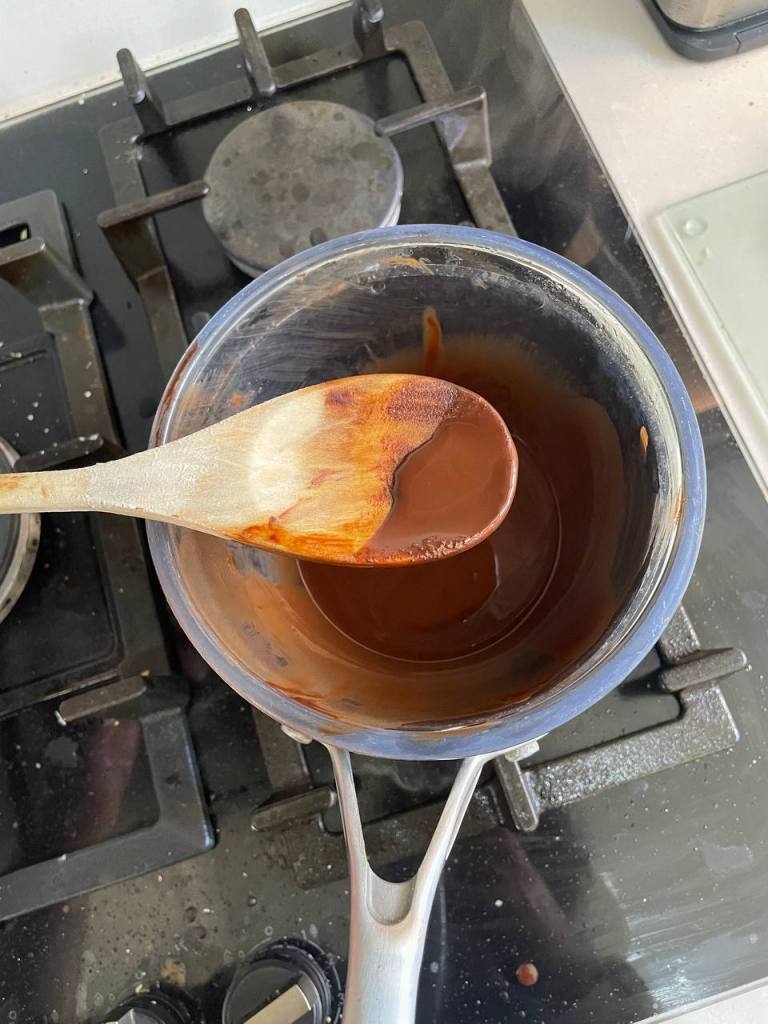
However, as the above photos hopefully show, both mixes turned out too runny. The olive oil chocolate mixture tasted a bit funny in my opinion, and I struggle to imagine that it would help the final product3. As for the coconut oil mixture, I was pleasantly surprised that there was barely a hint of coconut in the chocolate flavor, but was disappointed that the mixture turned out so runny. More investigation was needed to find something that replicated molten butter.
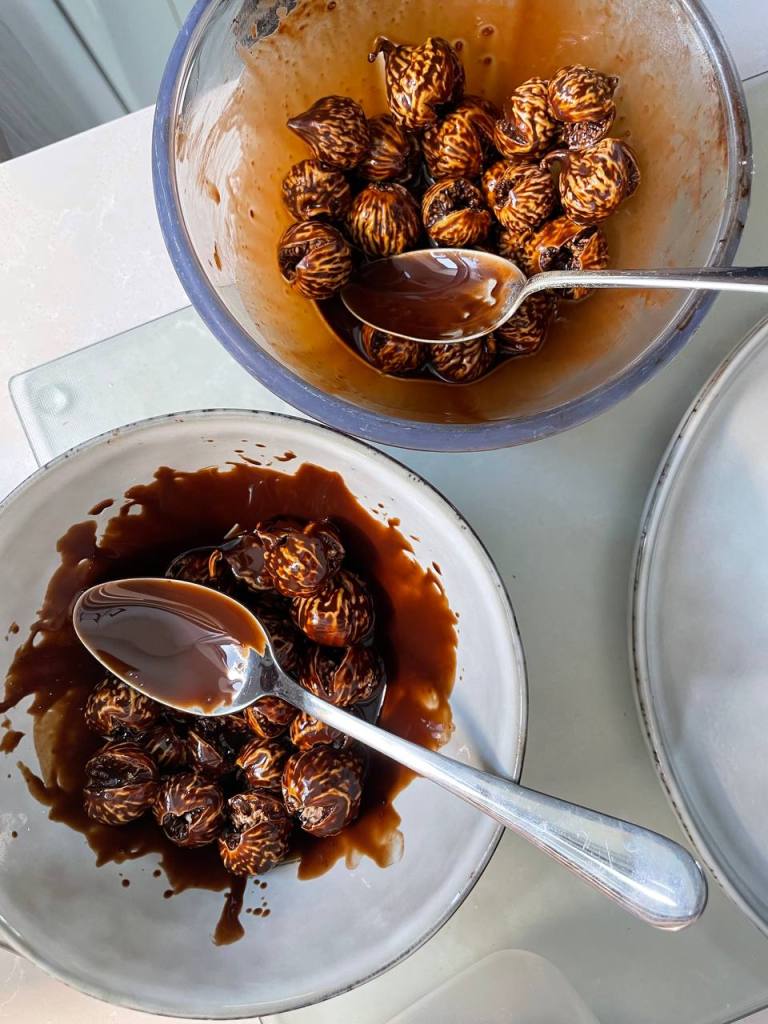
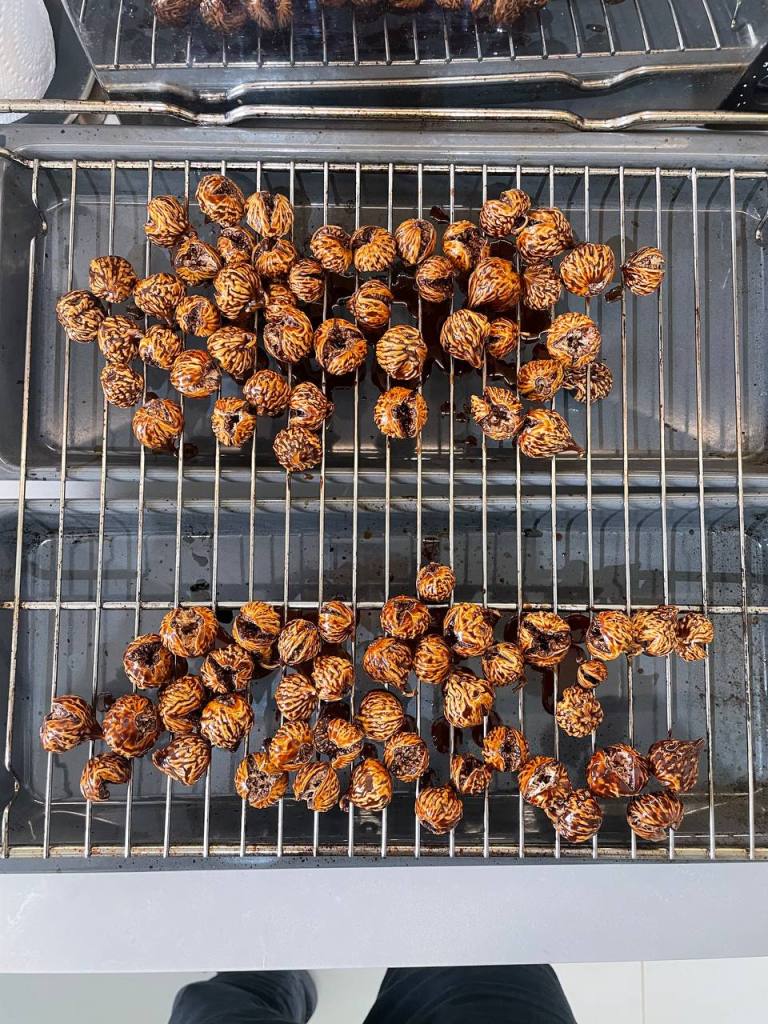
And as I don’t like to waste food, I decided to use these chocolate batches to coat a bunch of dried Iranian figs. I must say that these turned out wonderful. As you first bite through them you get that nice, rich chocolaty flavor, but as you chew, the intensity of the dried figs suddenly take center stage. If you chew quickly like me, this is one dish where you must take your time, as the flavor keeps evolving.
Vegan Butter Actually Works!
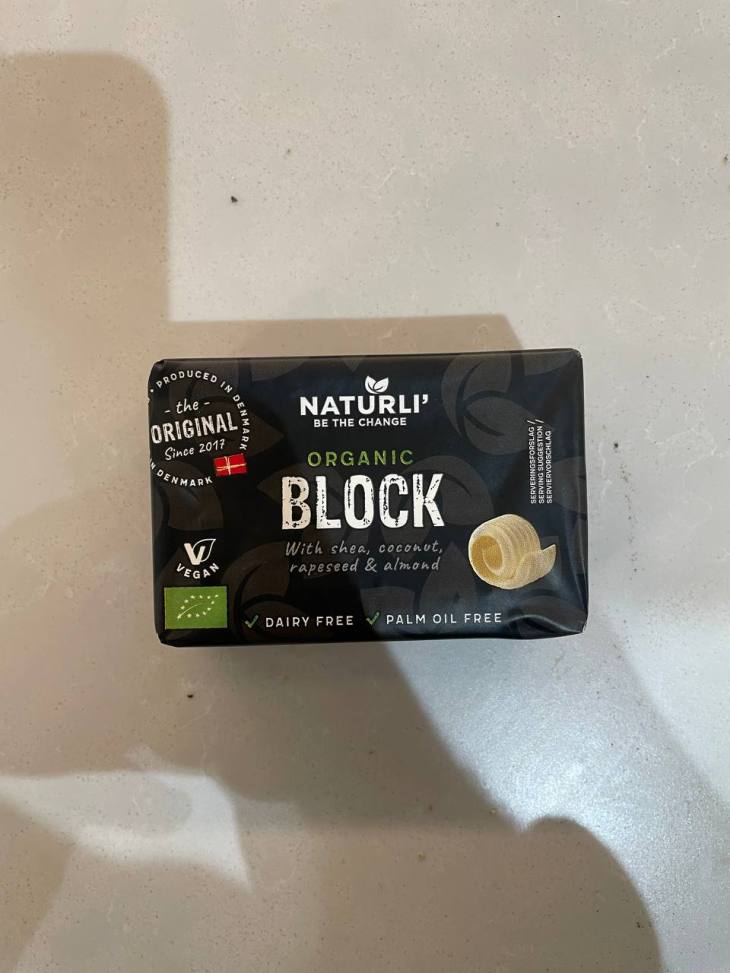
As I was searching the aisles in the shops with my Detective Conan hat on, looking for ways to achieve a thick melted chocolate consistency, I found vegan butter. I’m normally very skeptical of vegan products that are made to resemble non-vegan ones, as I don’t think the technology is there yet. But this block felt like butter, and in my desperation I decided to give it a try.
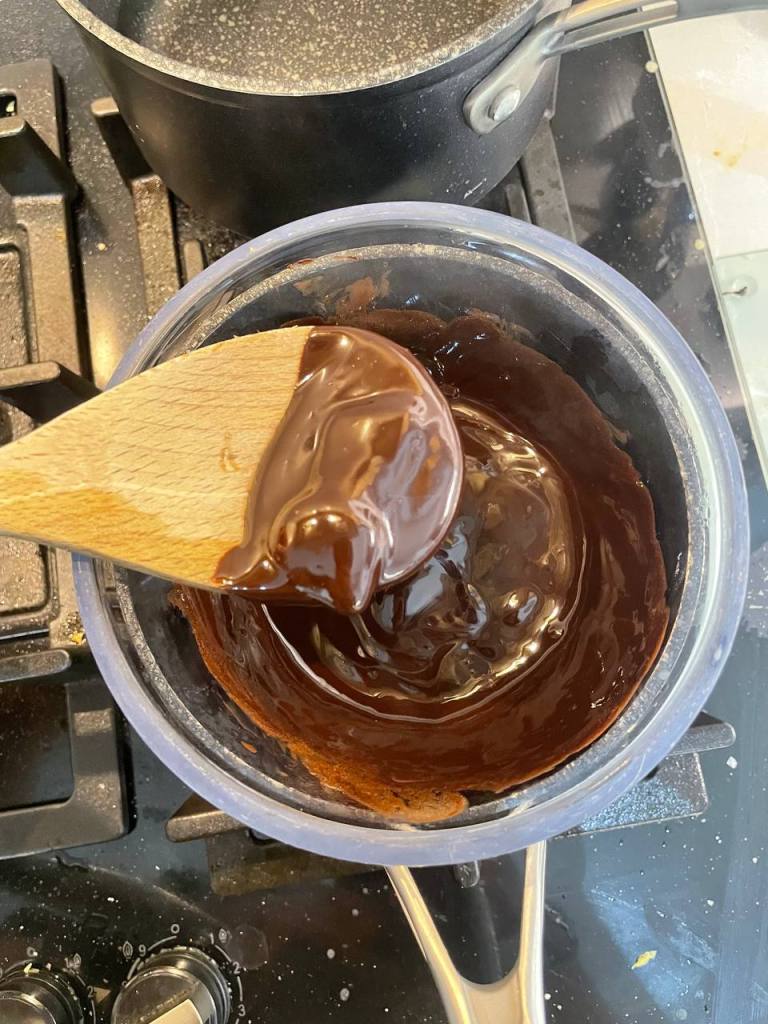
The first thing I did was to see if it improves the chocolate texture… and voila! It turned out very similar, if not the same, as melted chocolate with butter! Can you even tell which is which?
In terms of the taste, I tried some of the vegan butter its own, and then a bit of the molten chocolate.
I was not impressed.
Firstly, both were very salty, but unlike with salted butter, there were no pleasant flavors that accompanied it. It felt like I was having salt and a strange greasy substance at the same time. When molten in the chocolate, there was a hint of an almost rancid flavor, which I desperately hoped would go away during the baking process.
As a final examination of vegan butter, I decided to see what happens when I clarify it… perhaps I could finally create “vegetable ghee” that my aunt uses when making koluché.
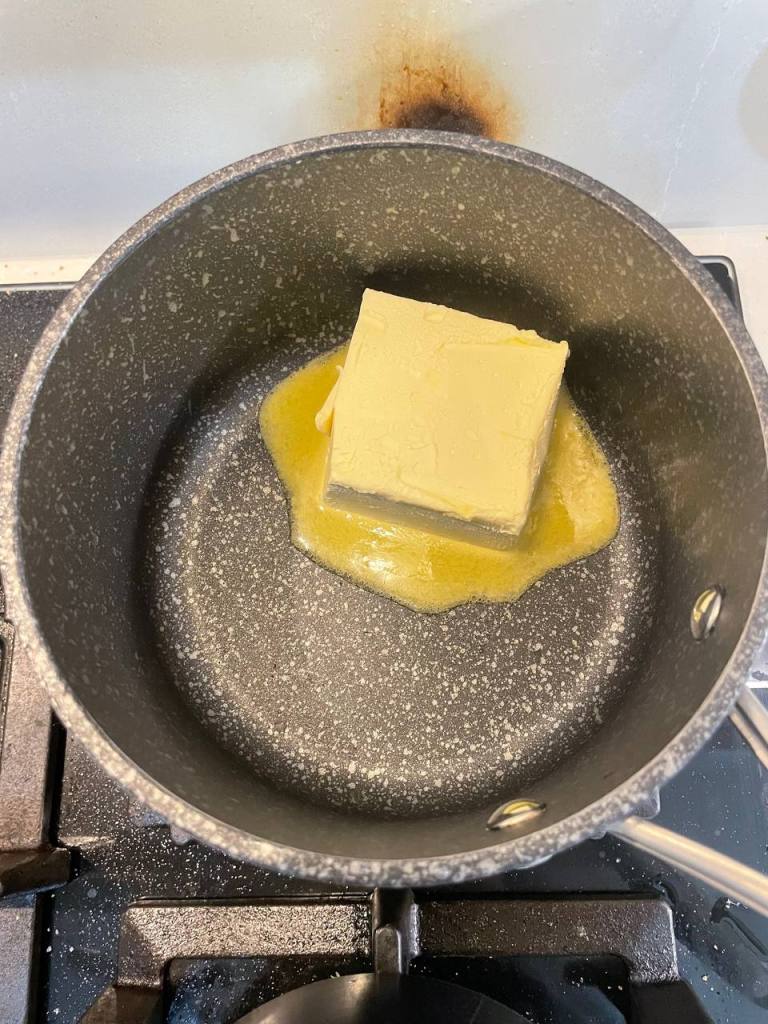

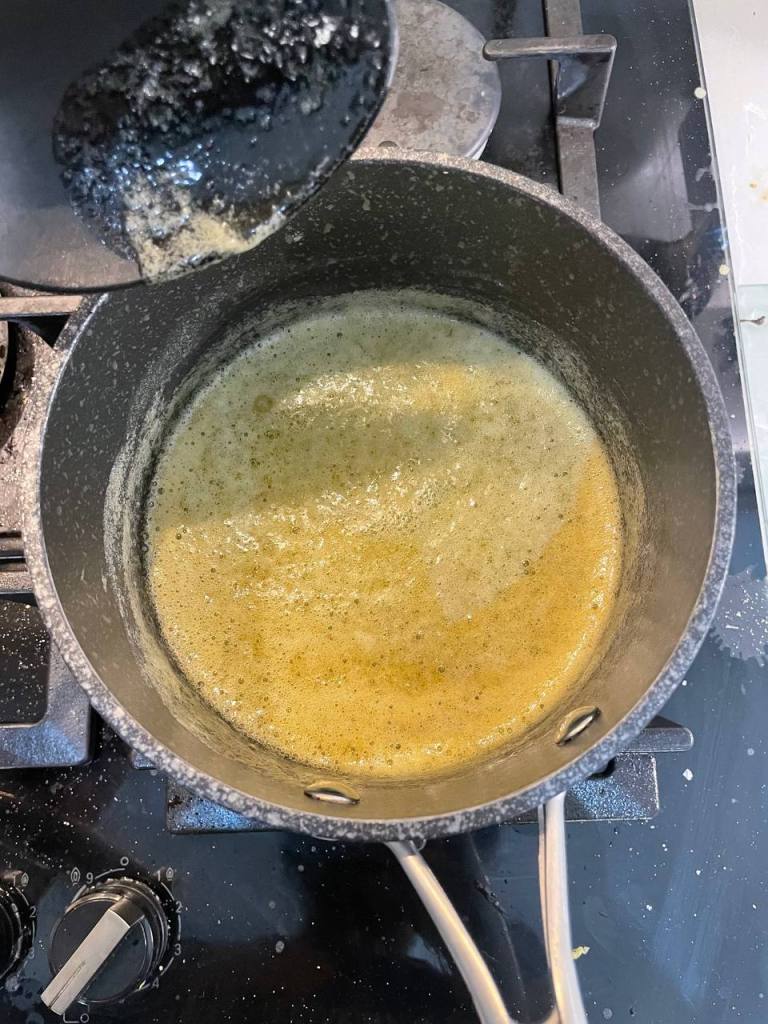
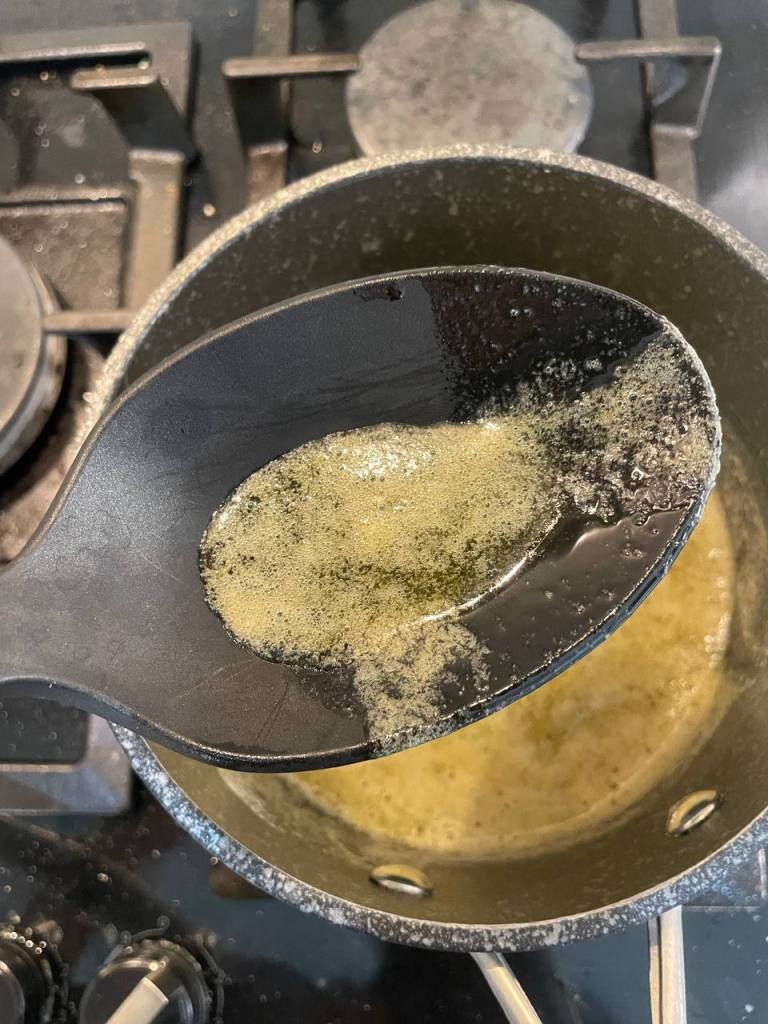
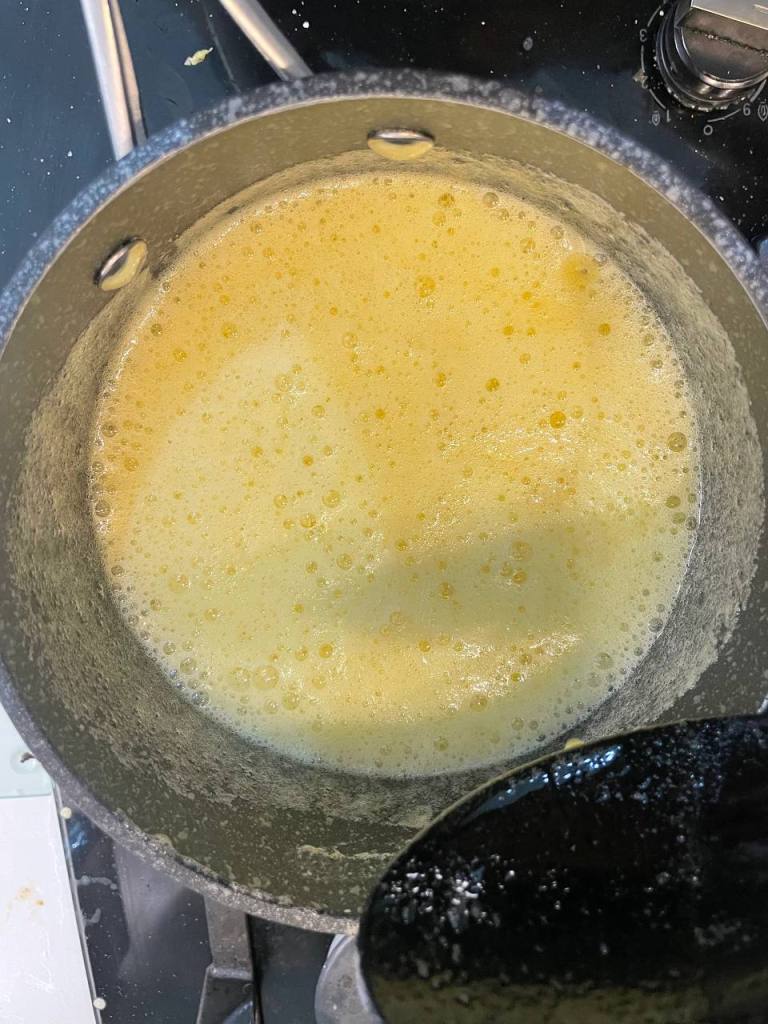
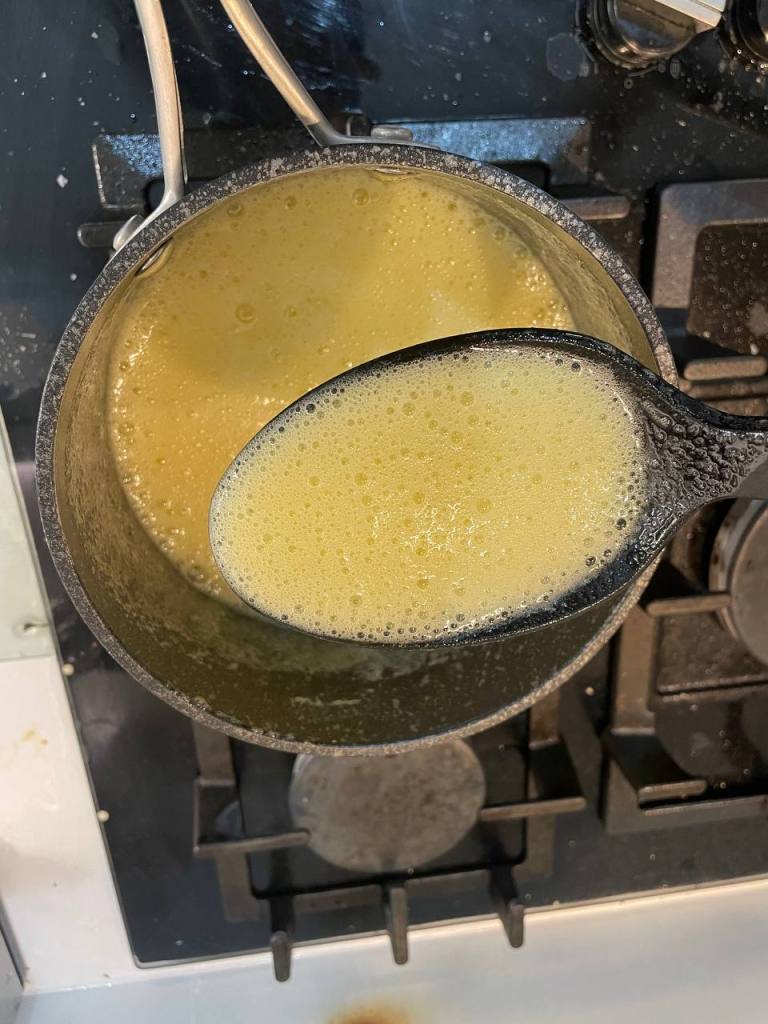
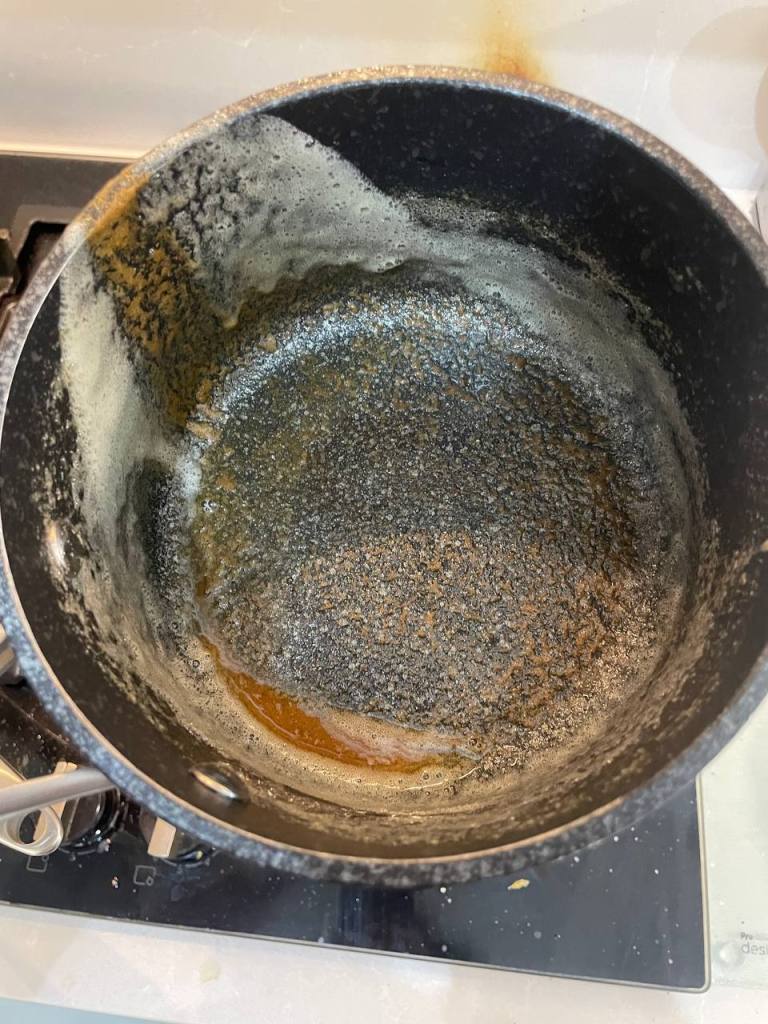
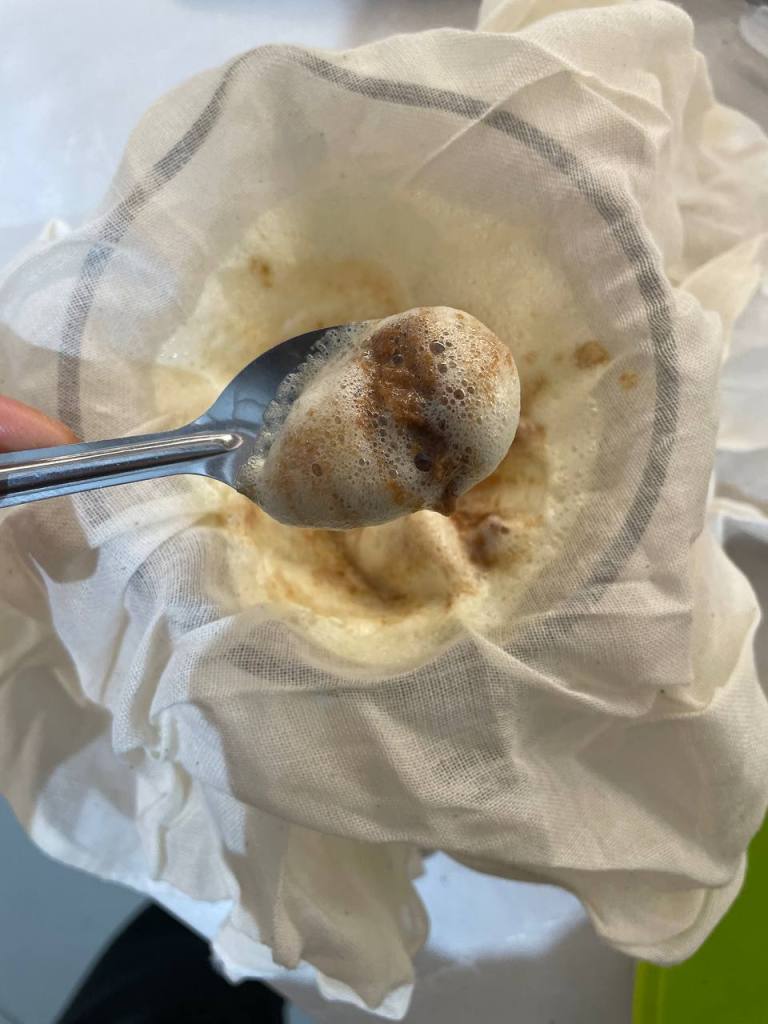
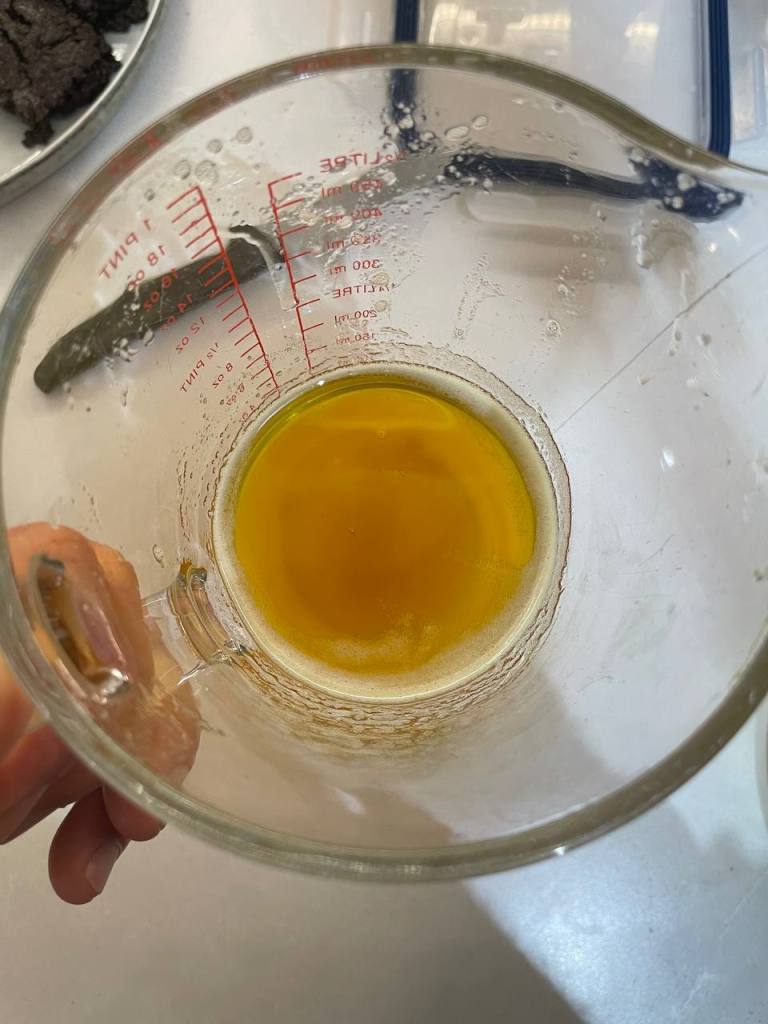
I don’t have a photo of it, but the vegan ghee does actually harden the way ghee does when left in the fridge.
The foamy bits, and the solids, were all really really salty. In that sense I guess it is really not that different to whey. I did not find eating them pleasant on their own, but I could see using it sparingly on toast, or in a savory dish. The vegan ghee was pretty much tasteless (with a teeny tiny hint of salt), so could be useful as a cooking oil.
Part 2 – Eggs
I now had a solution for butter, but I needed to figure out how to replace eggs. This was going to be the real challenge to begin with, since eggs have excellent binding properties, and always give baked goods a beautiful color. Flavor, of course, cannot be replicated using egg substitutes, but I find that this is less important in baked goods, where other ingredients take a leading role. For this experiment, I wasn’t interested in getting the color right, so I searched online for things that could replicate the consistency.
Chia Eggs
My first instinct was to go for sweet potato or squash as a binder, but after some research I thought chia eggs would be promising. A chia egg, which can allegedly replace a single egg in any recipe, is simply a tablespoon of chia seeds soaked in three tablespoons of water. The idea is that the soluble fibre coating that forms around the chia seeds when they come in contact with water should replicate the gelatinous texture of eggs. I was pleasantly surprised with how gelatinous the texture turned out4.
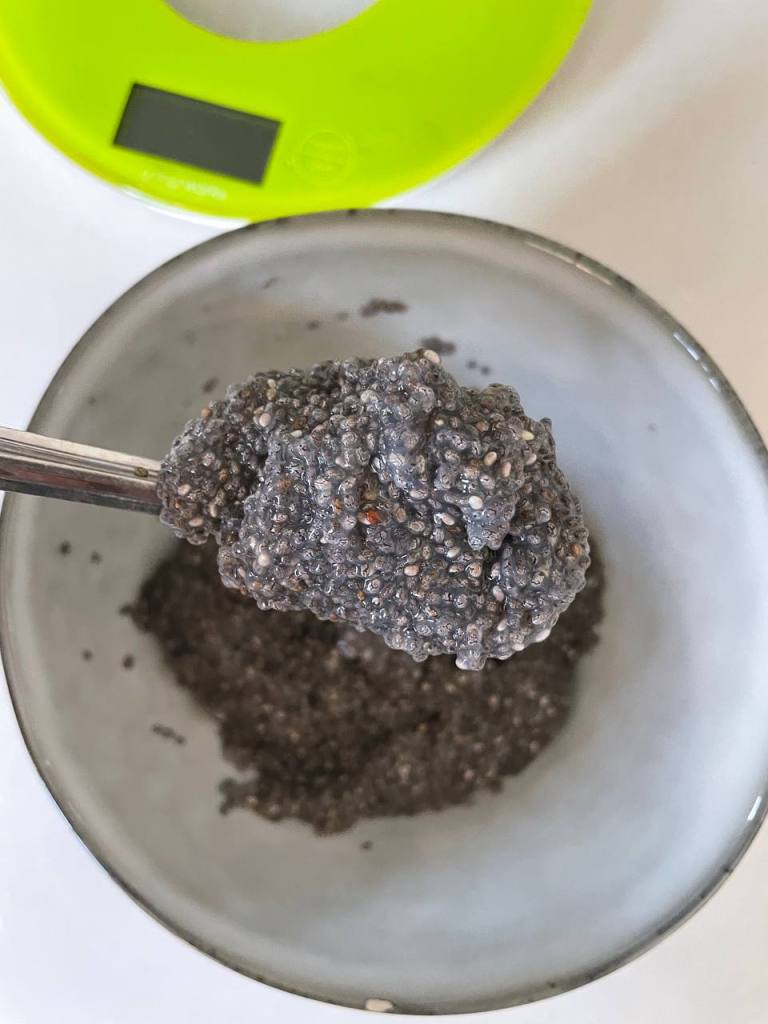
That said, I was surprised to find that people who use chia eggs as egg replacements just… use it like that without any further processing? It’s grainy… surely the grains will come through in the final product?
I thought I’d be smart and use an immersion blender to break down the chia eggs even further. This… looked so reassuring! The result ended up very gelatinous and thick (too thick compared to eggs though), but it gave me enough confidence to mix it into the brownie batter. I accepted that there would be some grainy bits in the final mixture as I couldn’t quite crush all the seeds.
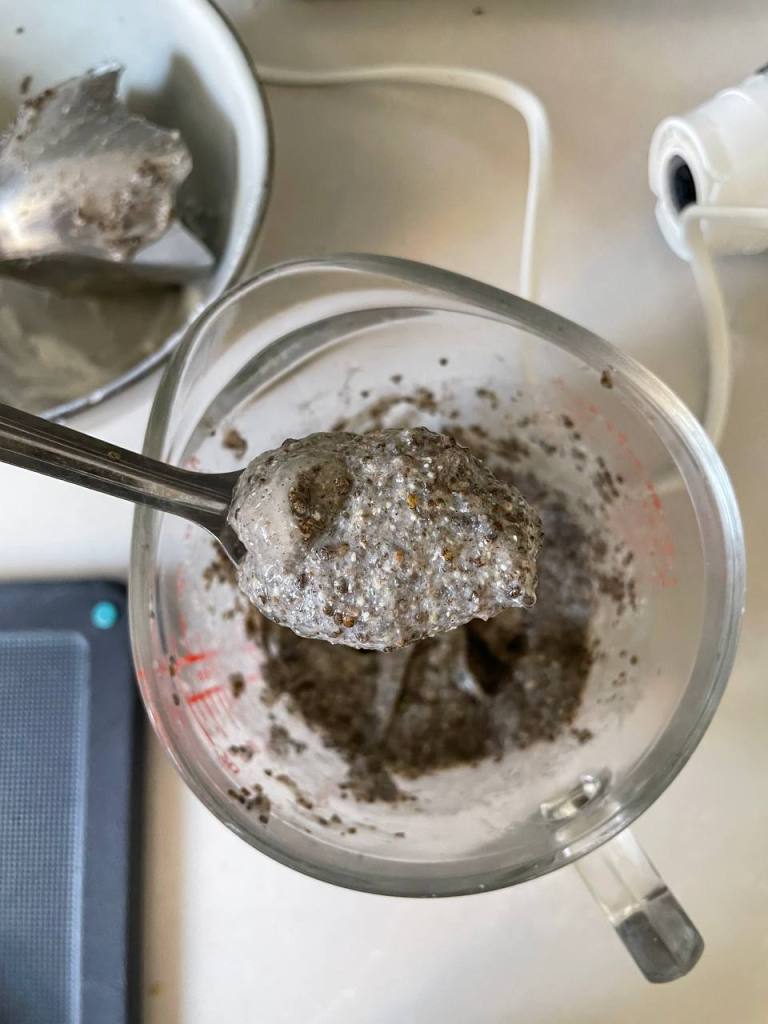
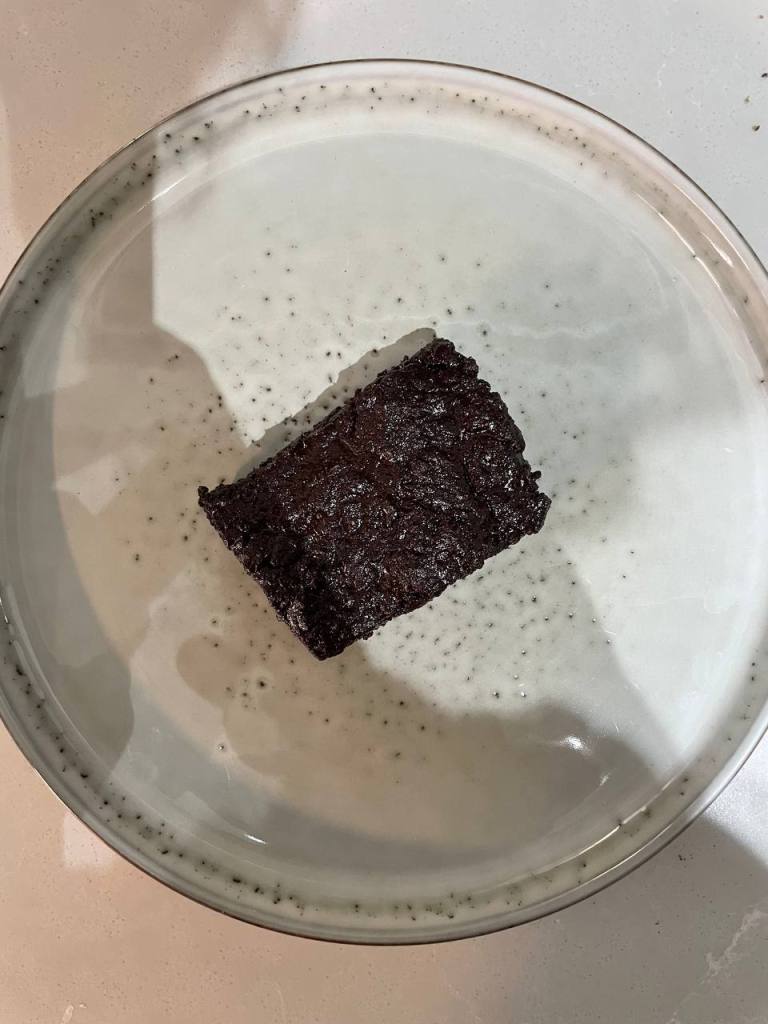
Initially, it looked like the chia eggs were working well, but my batter suddenly turned out grainy. I thought that with more volume, I could further break the chia seeds and that it might help with the texture, but this caused my emulsion to break completely5! The resulting brownies you’ve already seen… but I’ve provided another photo of it below for a reminder:

Can Pre-grinding Help?
I was really looking forward to my second attempt with chia eggs, as I’d gotten to a molten chocolate texture that I was happy with (with the help of vegan butter). I thought a bit about what went wrong last time, thinking that the issue was the use of an immersion blender, and perhaps, that my chia seeds were too gelatinous due to a low water content.
So this time, I increased the ratio of chia seeds to water to 1:4 for making the chia egg, and instead of blitzing the chia egg after it has formed, I decided to grind the chia seeds beforehand.

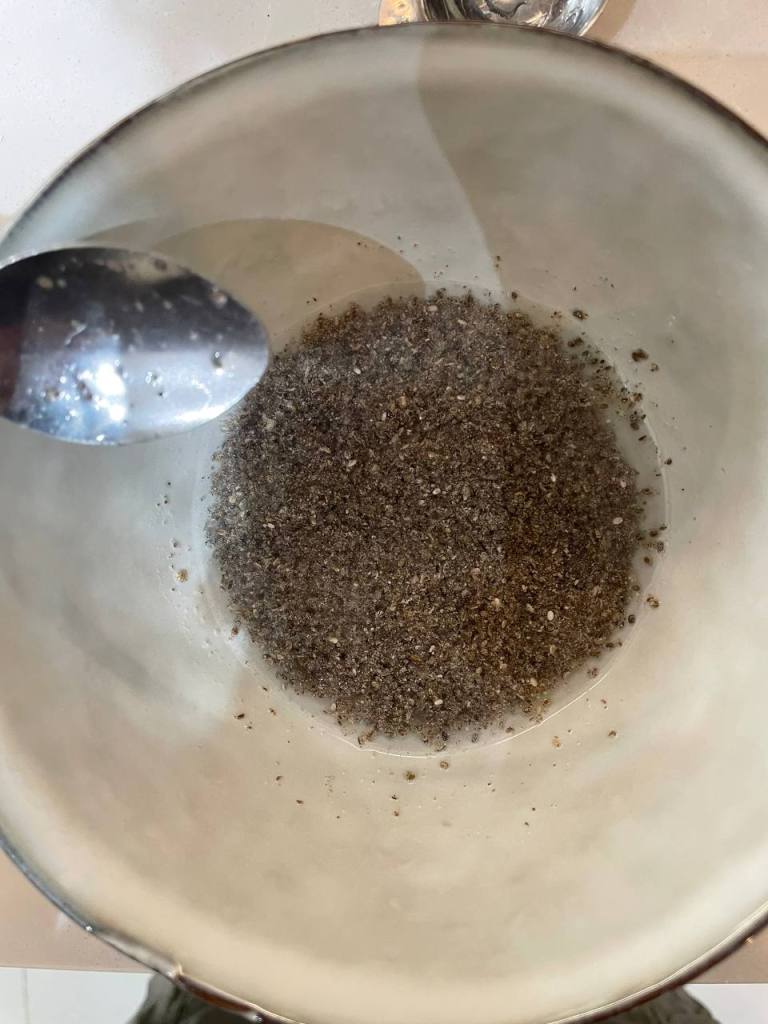
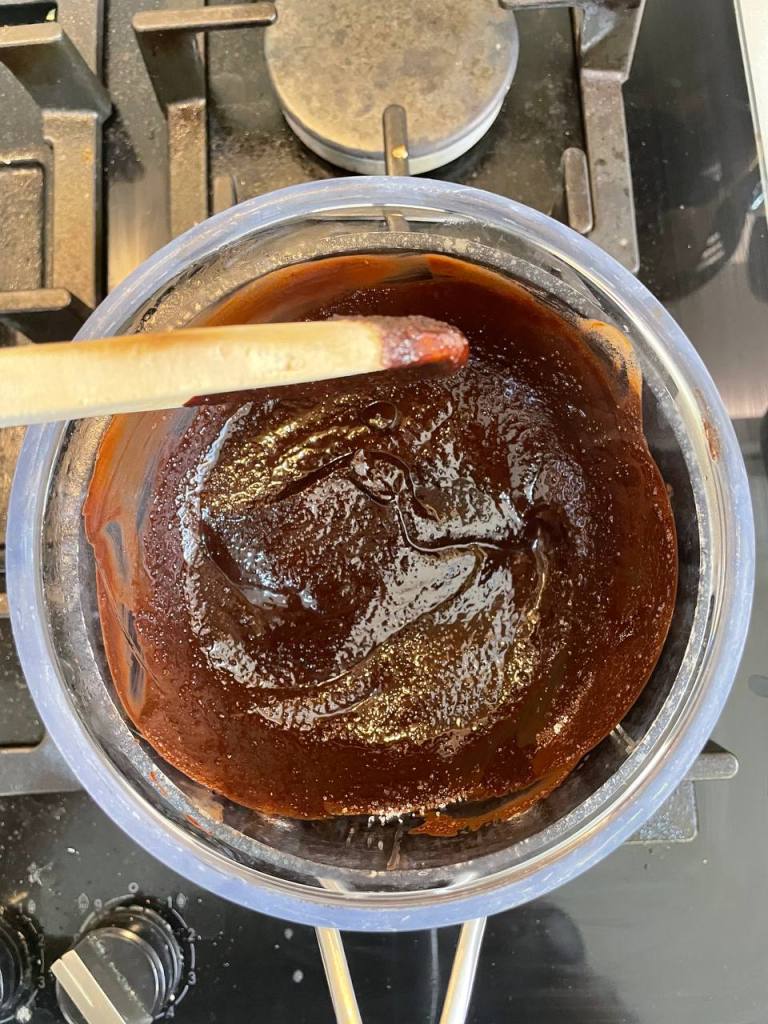

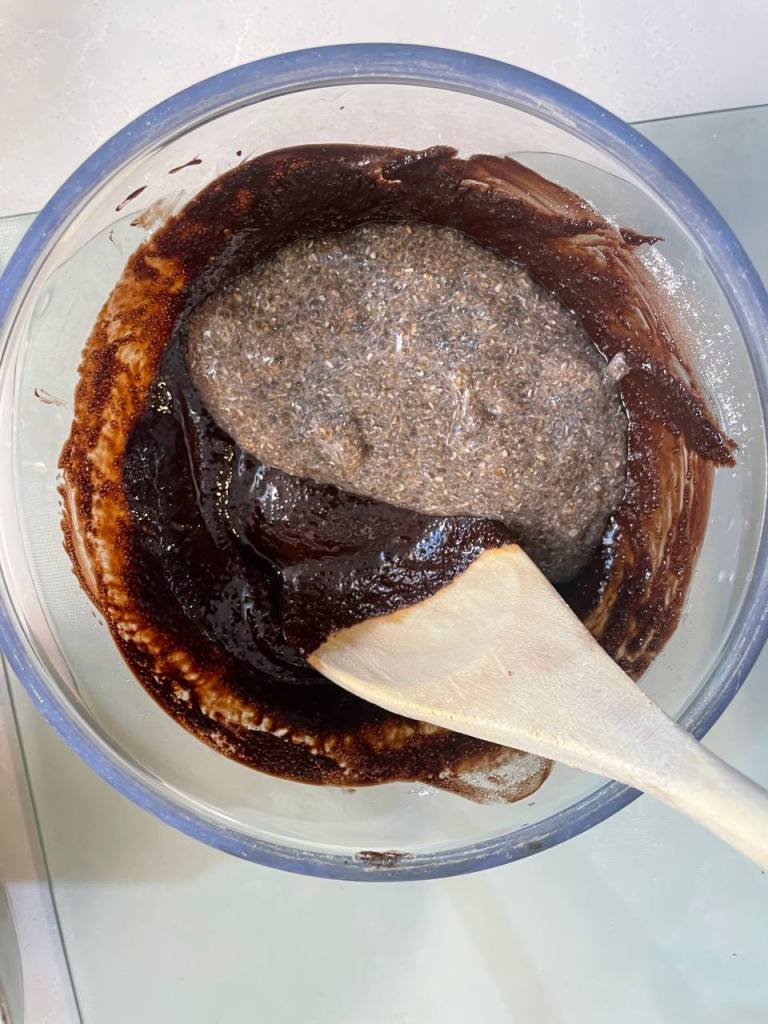
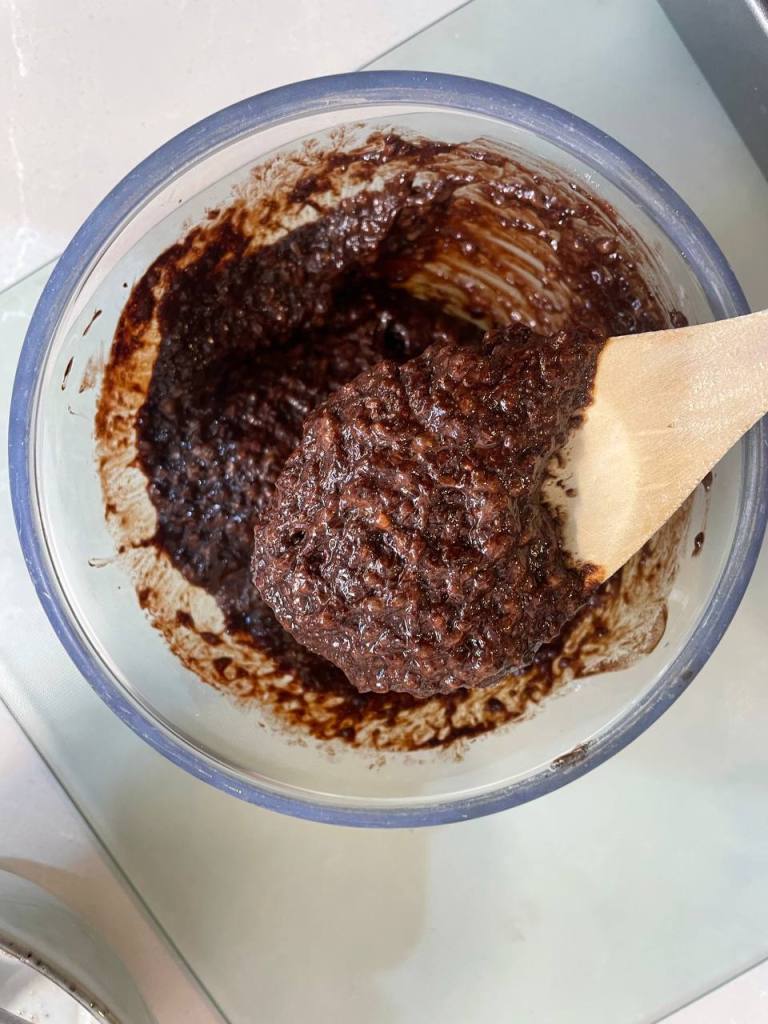
To my disappointed, the consistency turned out very grainy again. However, there was no oil separation so this was an improvement. I decided to bake the brownies to see how they turn out (though I forgot to add tahini!).
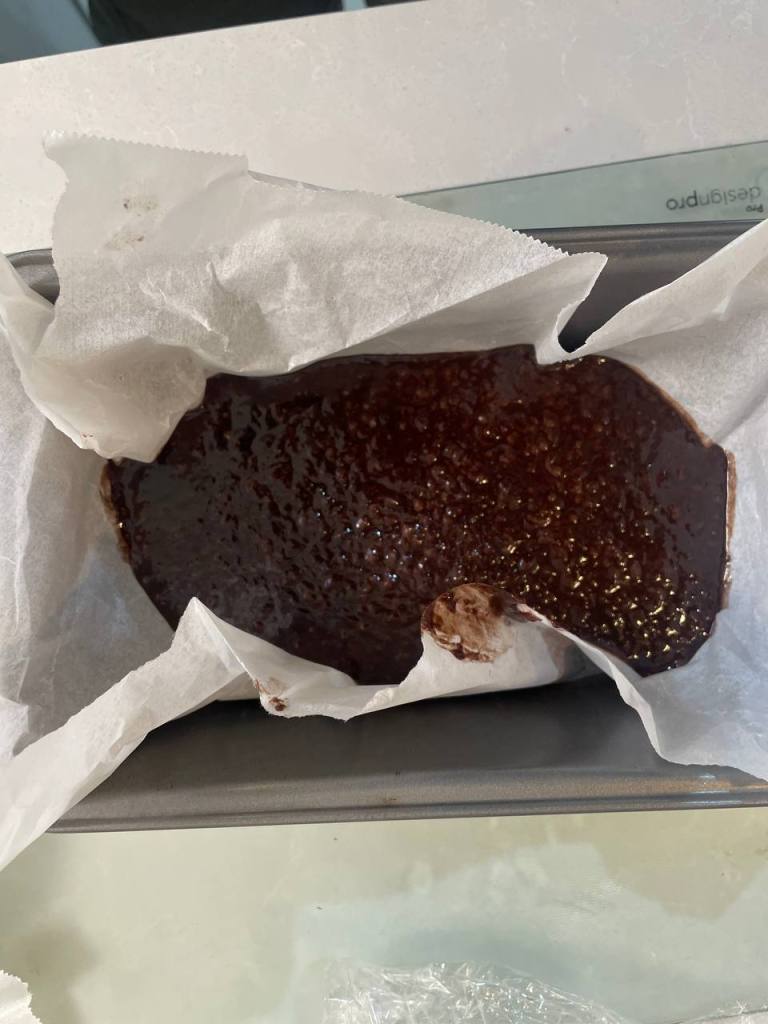
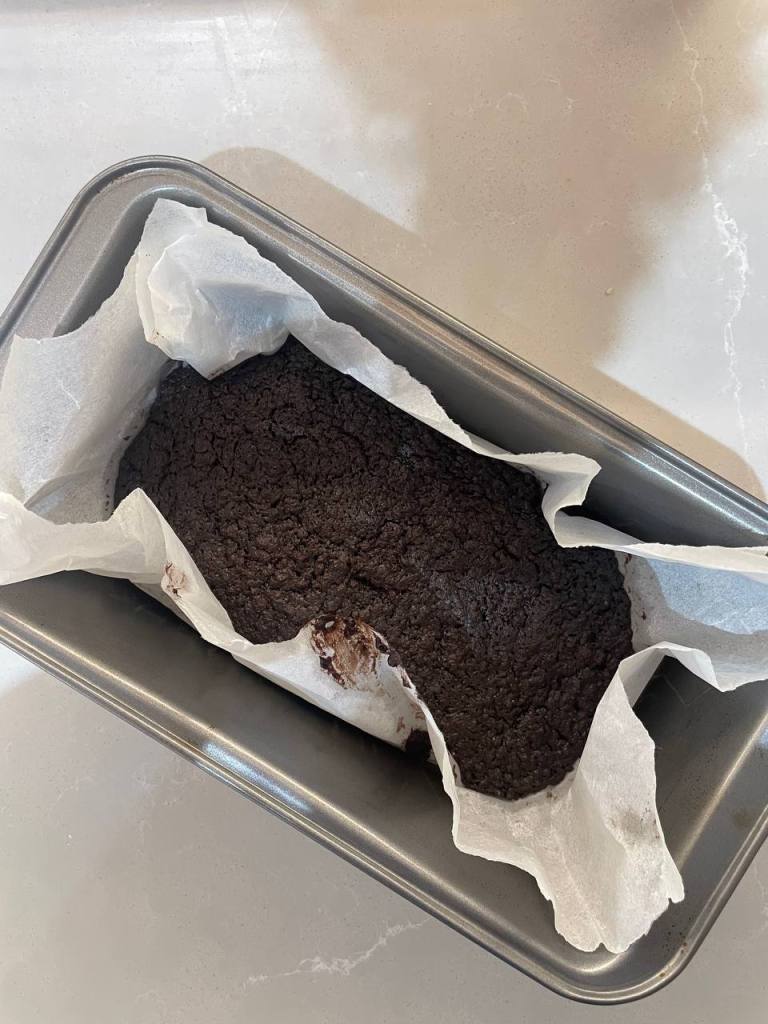
The brownies were OK. They were definitely less oily, but somehow I found myself enjoying the first ones more as they were denser. Too many air pockets with this one, which I attributed to the extra amount of water in the chia eggs. One thing I hated about these new brownies is that they didn’t have a strong structure: picking up a piece was enough to cause it to break apart.
An Experiment Gone Wild
I searched online again for things that I thought might work. I wanted to avoid fruit/vegetable replacements for eggs due to the taste, the use of yoghurt didn’t make much sense as these brownies wouldn’t benefit from a tart flavor, and nut butters overpower the palette. Part of me wanted to try to use potato starch… but I wasn’t able to find this in the shops.
Scrolling and scrolling deeper online, and finding myself lost between comments on Reddit, I glimpsed something that made me curious: apparently 2 tablespoons of chickpea flour dissolved in 2 tablespoons of water with a teaspoon of oil could do the trick.
I promised myself that this would be the last experiment before I took a proper break, but I wanted to give the chia eggs another try as well: go back to using 3 times the amount of water, but keep them pre-ground. Also, this time I wasn’t going to forget the tahini!
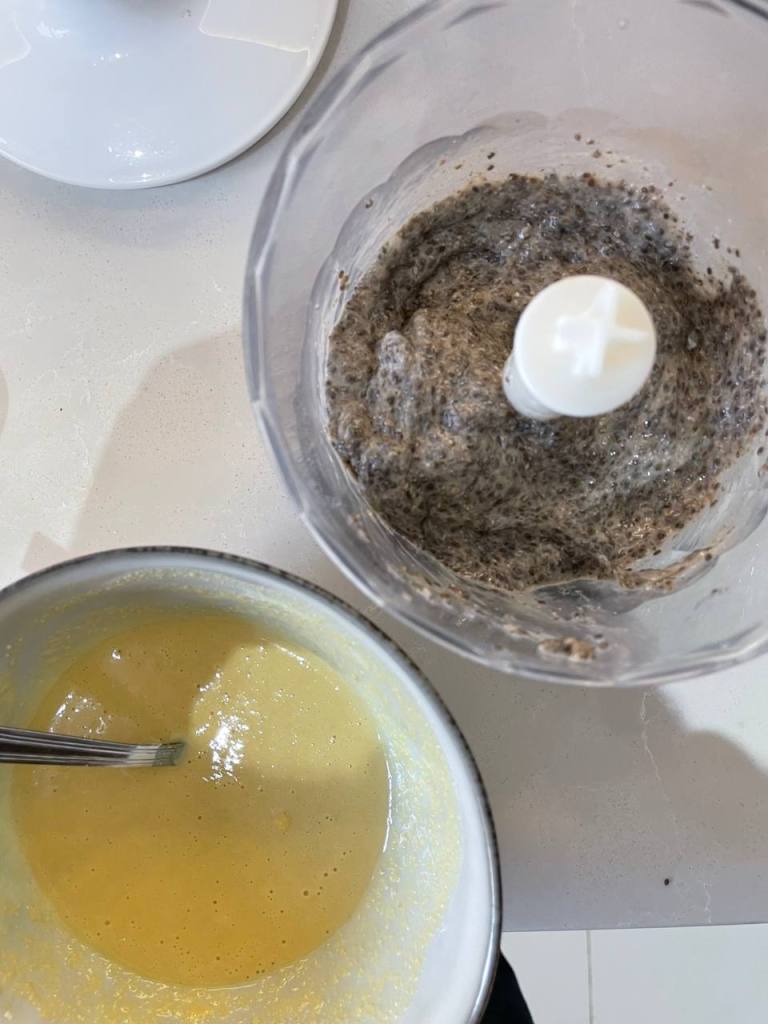
I started two batches going at once:
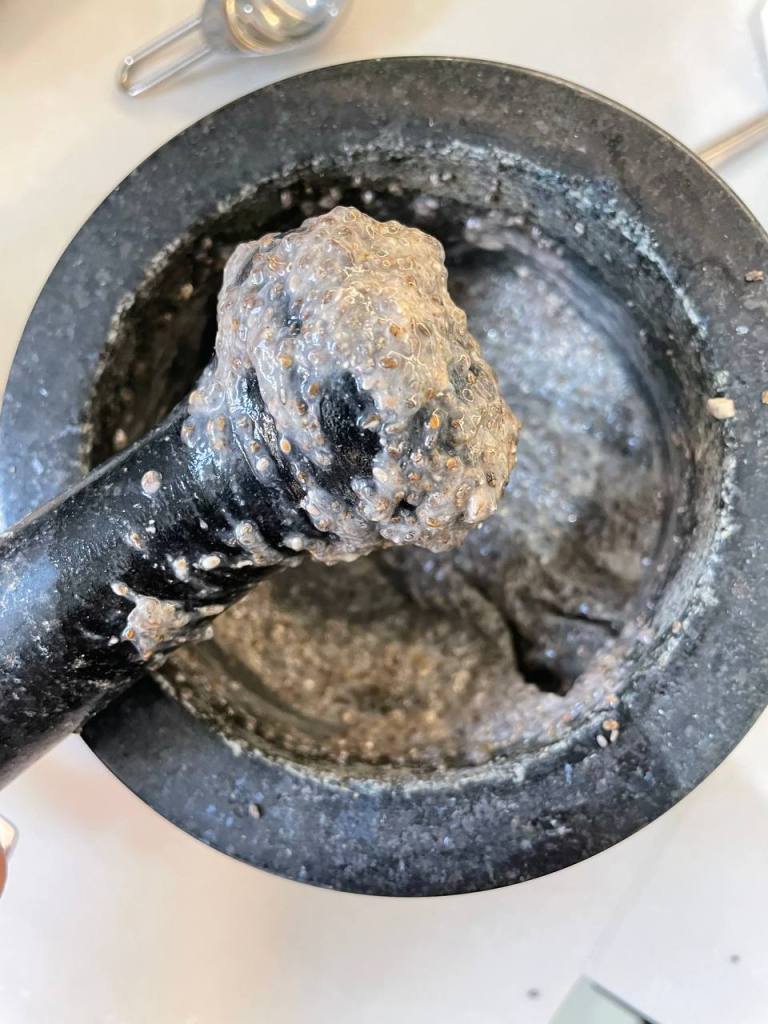
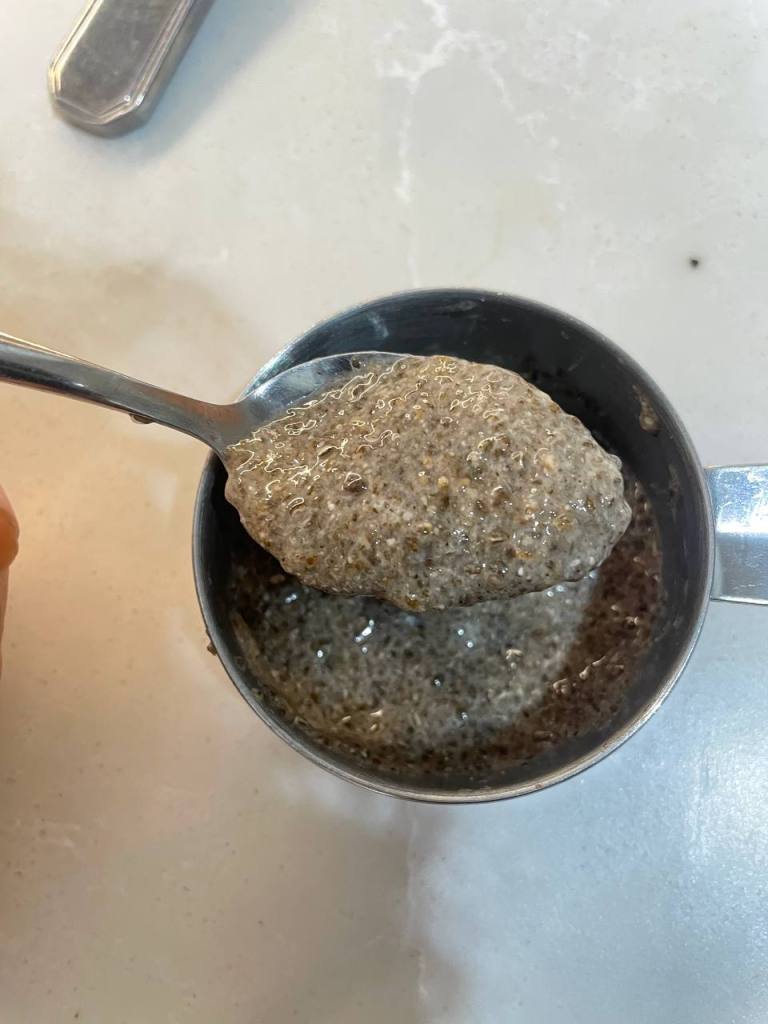
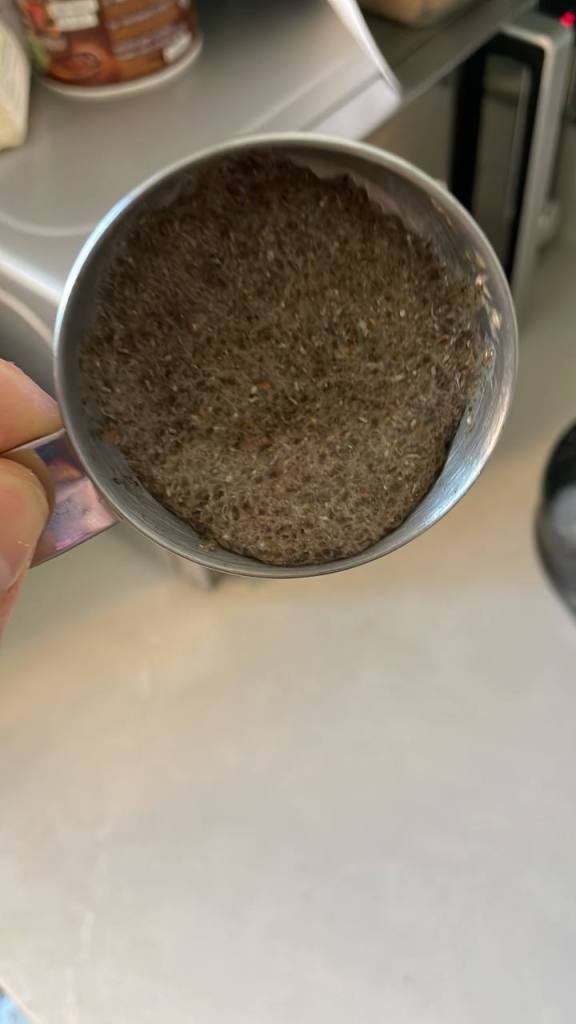
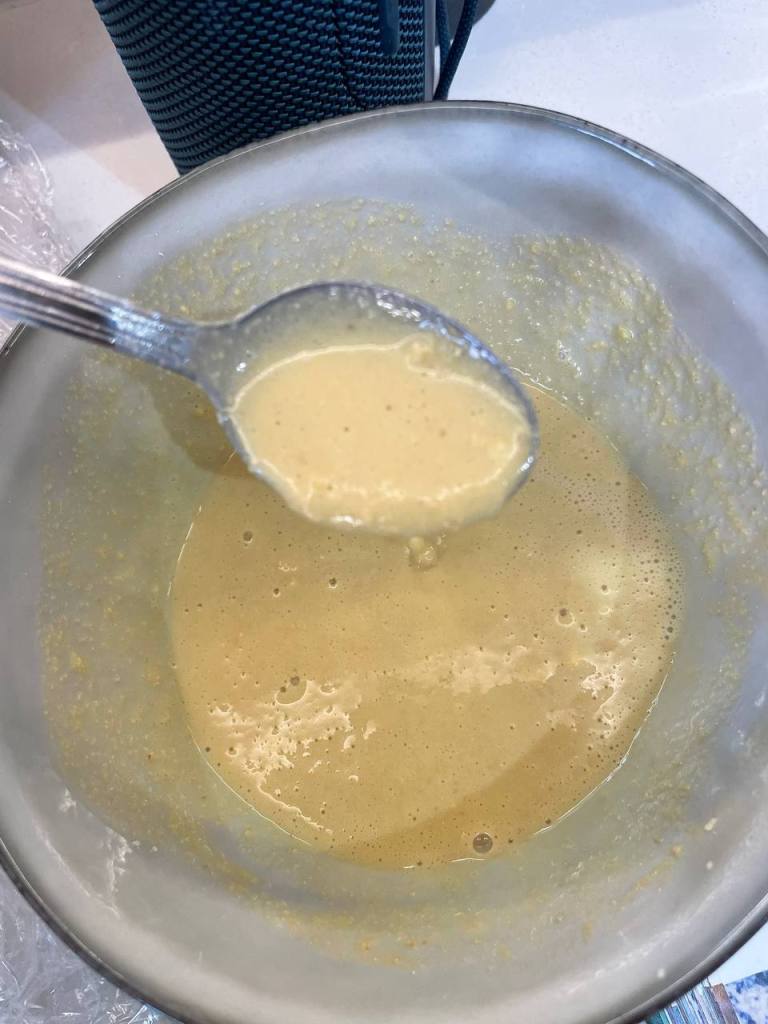

But in a moment of panic… I thought that this wasn’t going to work. The chickpea flour was too runny, and the chia eggs still too thick, and also very grainy.
I decided to mix both together.
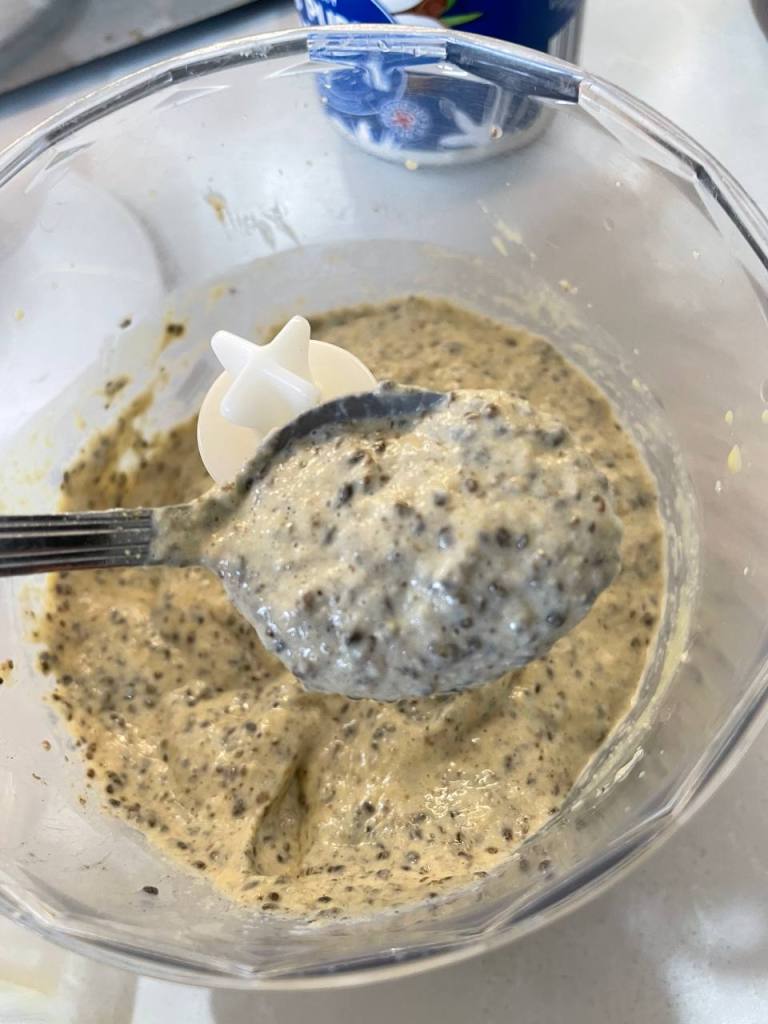
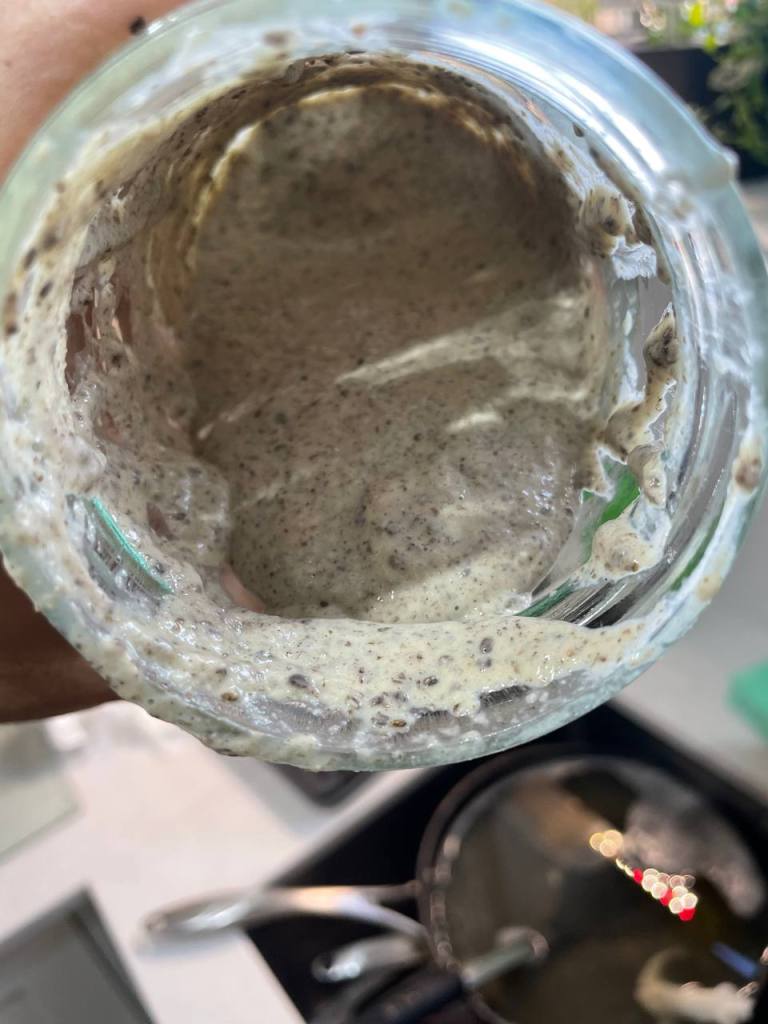
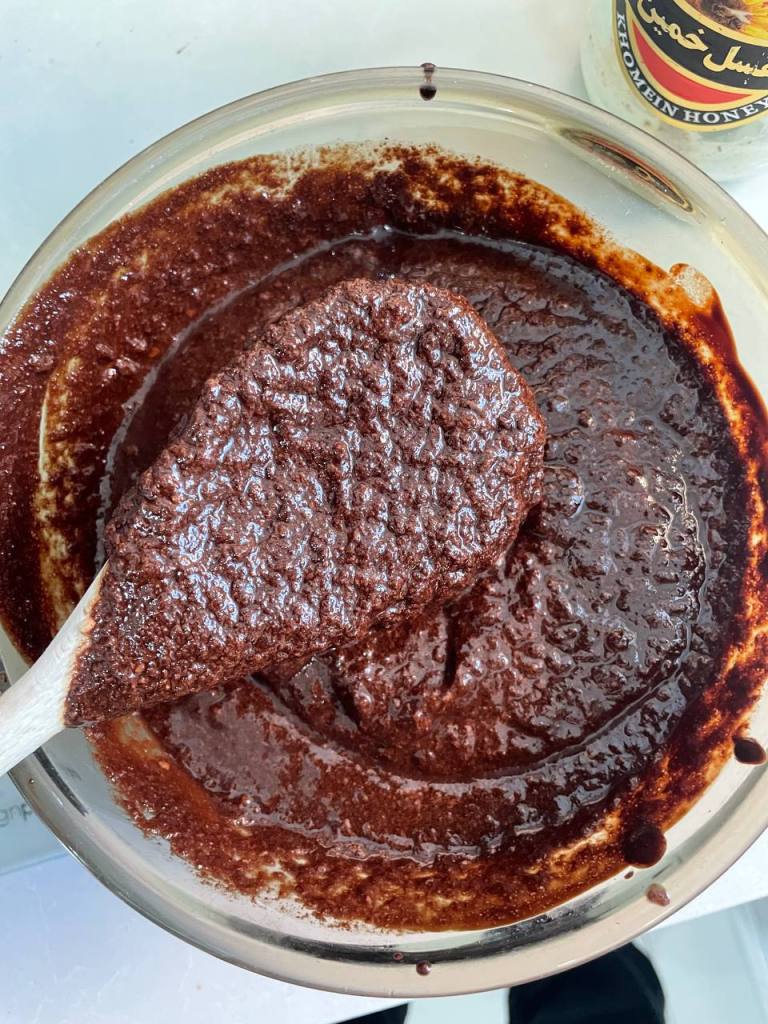
This was looking very good. I was feeling confident again. The texture was thick but neither too gelatinous nor too runny. Should work like a charm, I thought. I went for the mix… and was careful to mix in the chia eggs bit by bit this time!
It wasn’t turning into a smooth mix like it does with eggs… but hey! It wasn’t looking grainy, nor was my emulsion broken! I kept going…
And suddenly… my emulsion broke. I was devastated.
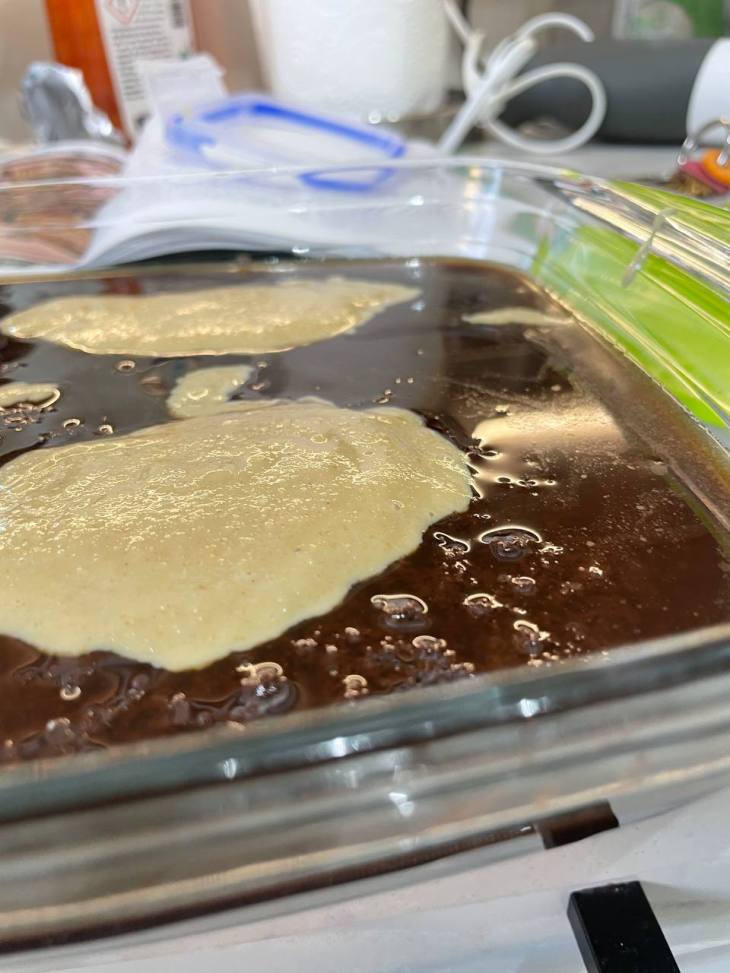
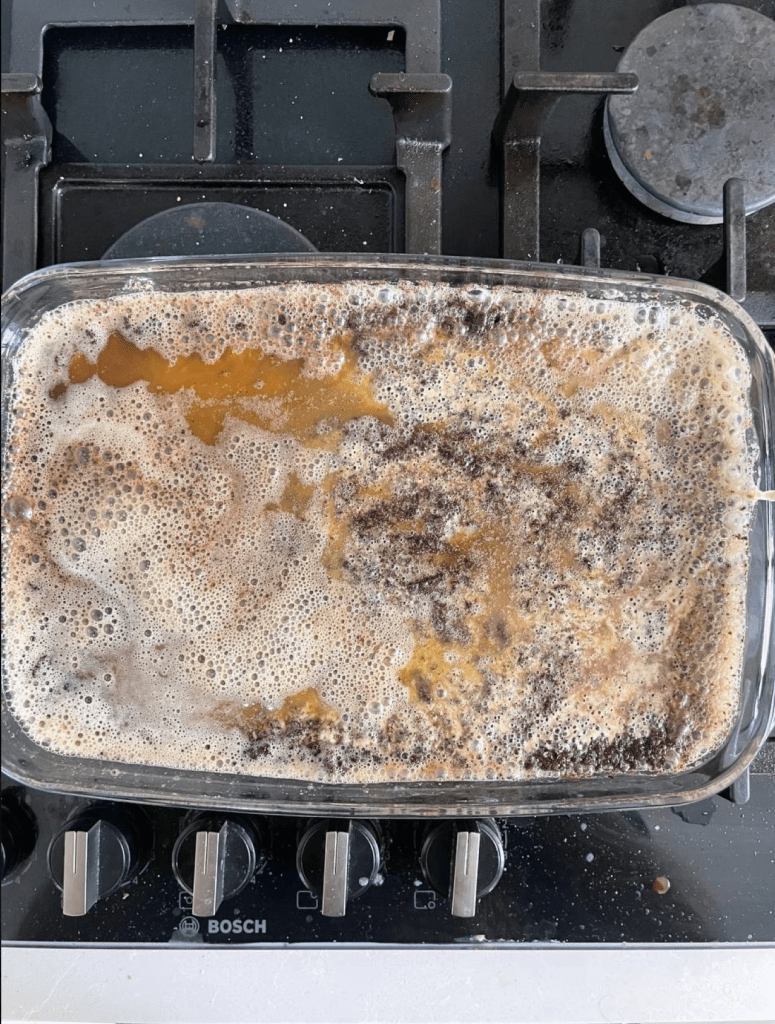
I waited for it to completely cool this time, and for the fats to reabsorb back into the brownies.
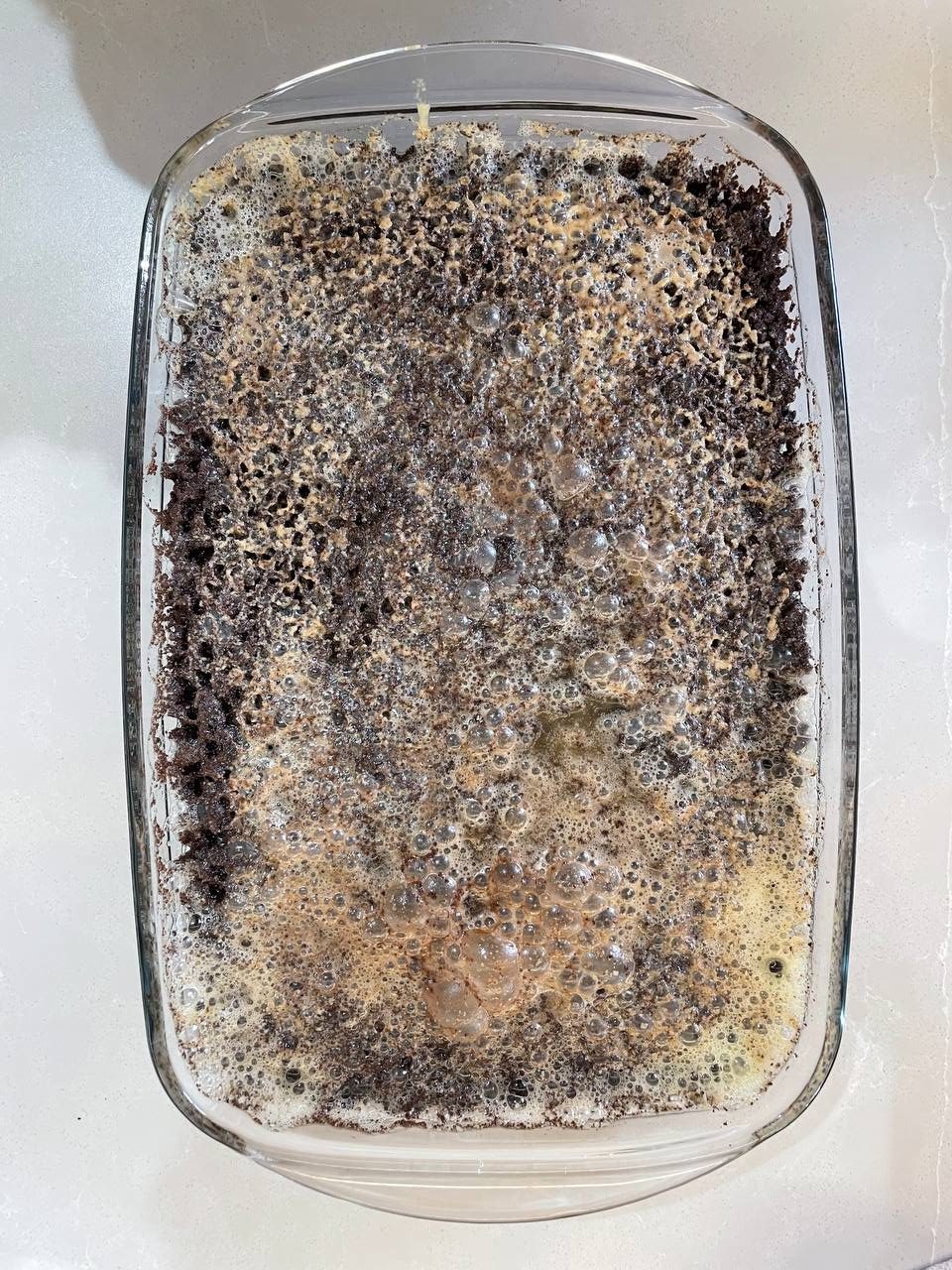
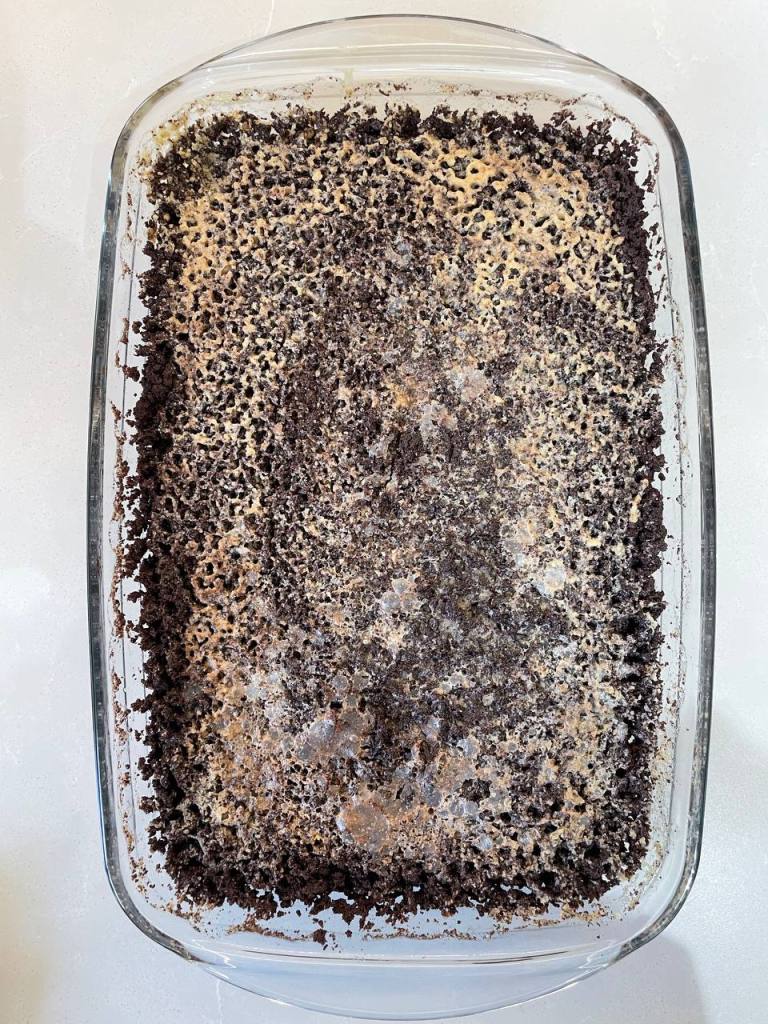
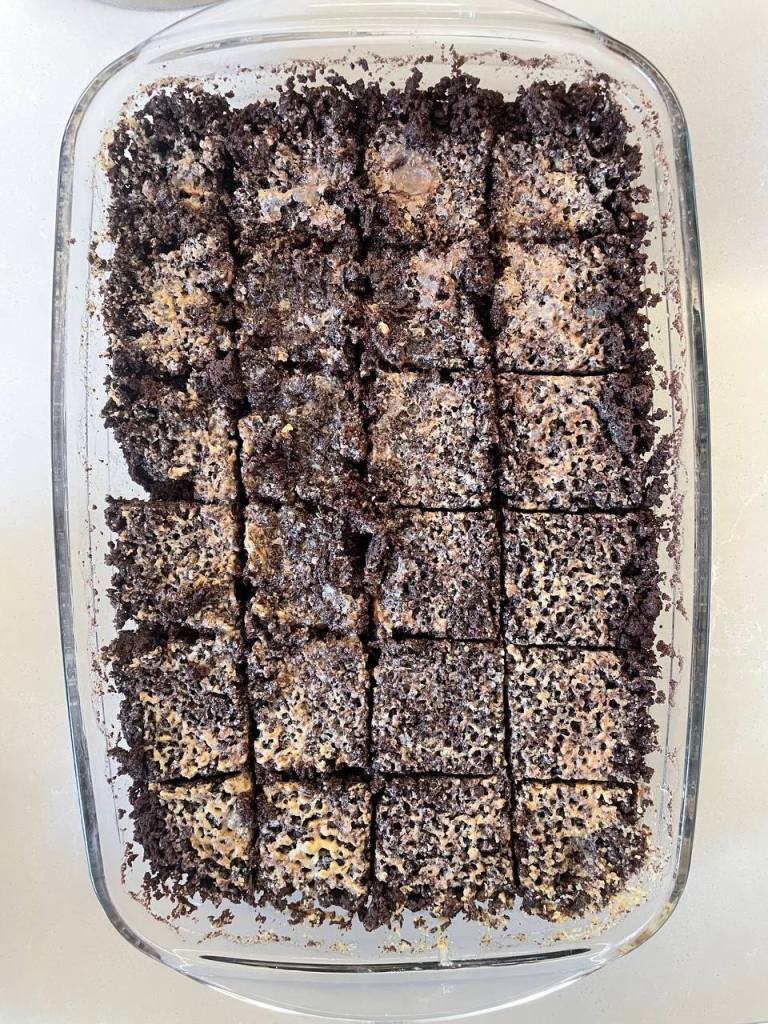
The final outcome was, all things considered, OK.
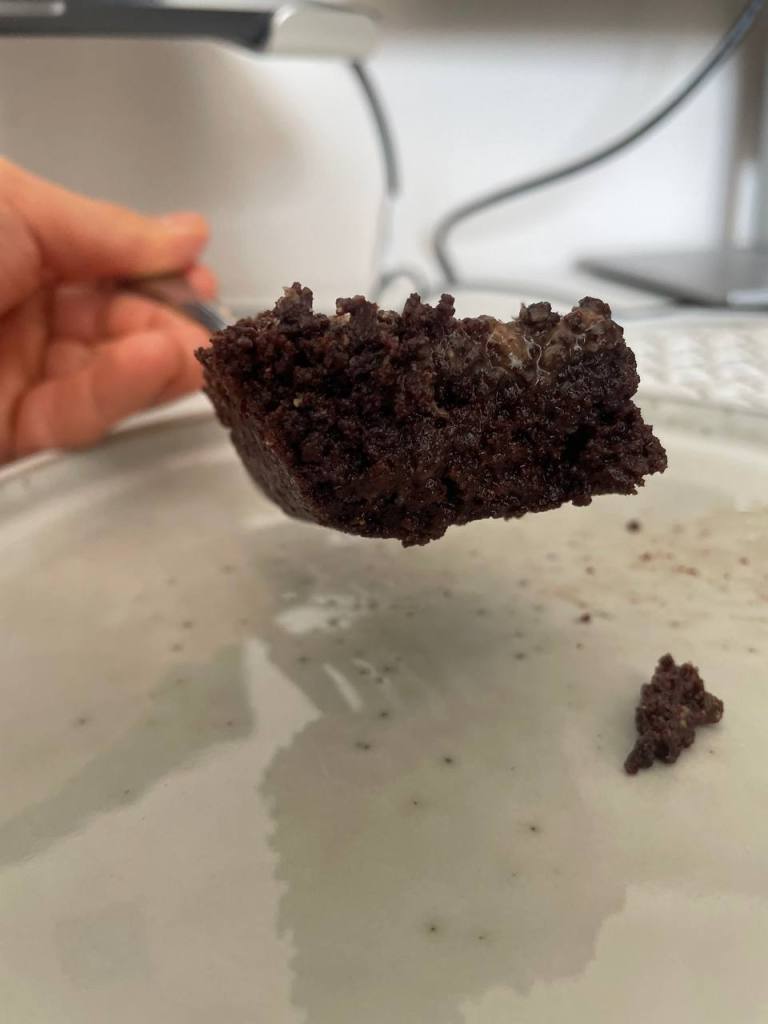
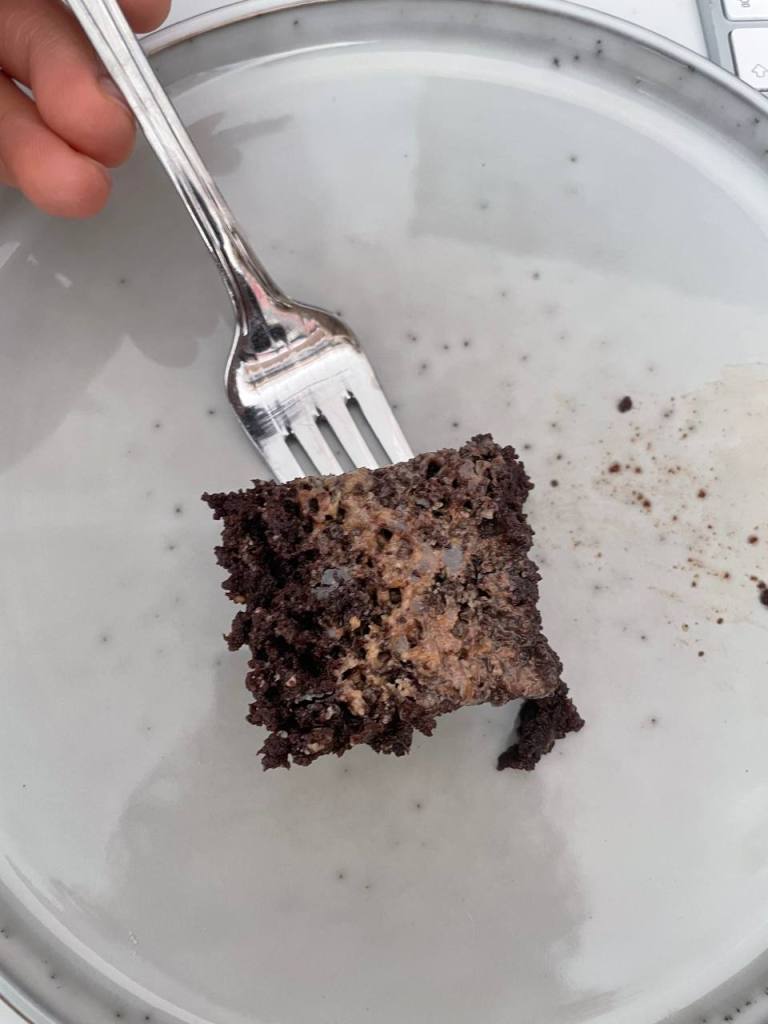
However, the flavor was off. The chickpea flour definitely affected the taste, and it’s not something I was happy with. Definitely needs more work.
Concluding Remarks
The core issue that I’m facing is keeping the emulsion without any grains in my batter. Grinding the chia seeds beforehand removes grainy pieces at the end, so it’s definitely something I’m going to take with me to the next experiment.
I’m not sure how I feel about the chickpea flour. The flavor is distracting, but it seems like adding it improved the brownie texture.
I’m unsure what broke my emulsion. Is it that when chia eggs are very gelatinous, they break emulsion? Or is it due to the addition of the vegan ghee, or the chickpea flour. I need to try smaller scale experiments to see how these ingredients behave in isolation… but for now, I will take a break… and probably a long one from this recipe!
Just before I go, below is a comparison of the different batter textures right before the tahini is added.
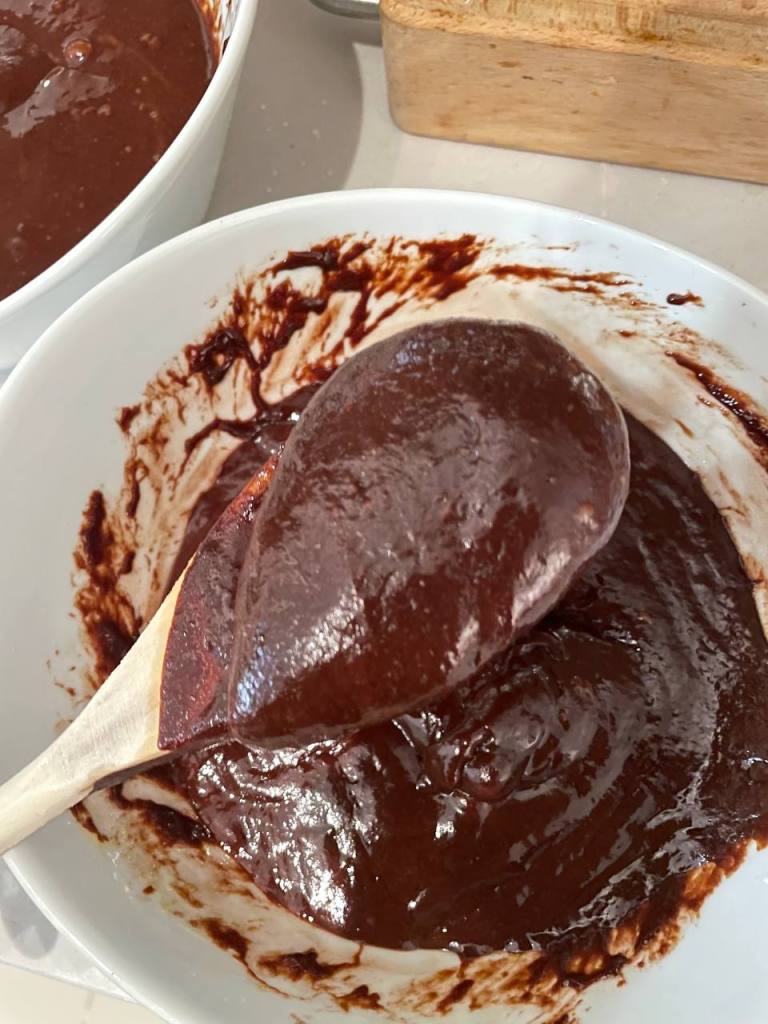
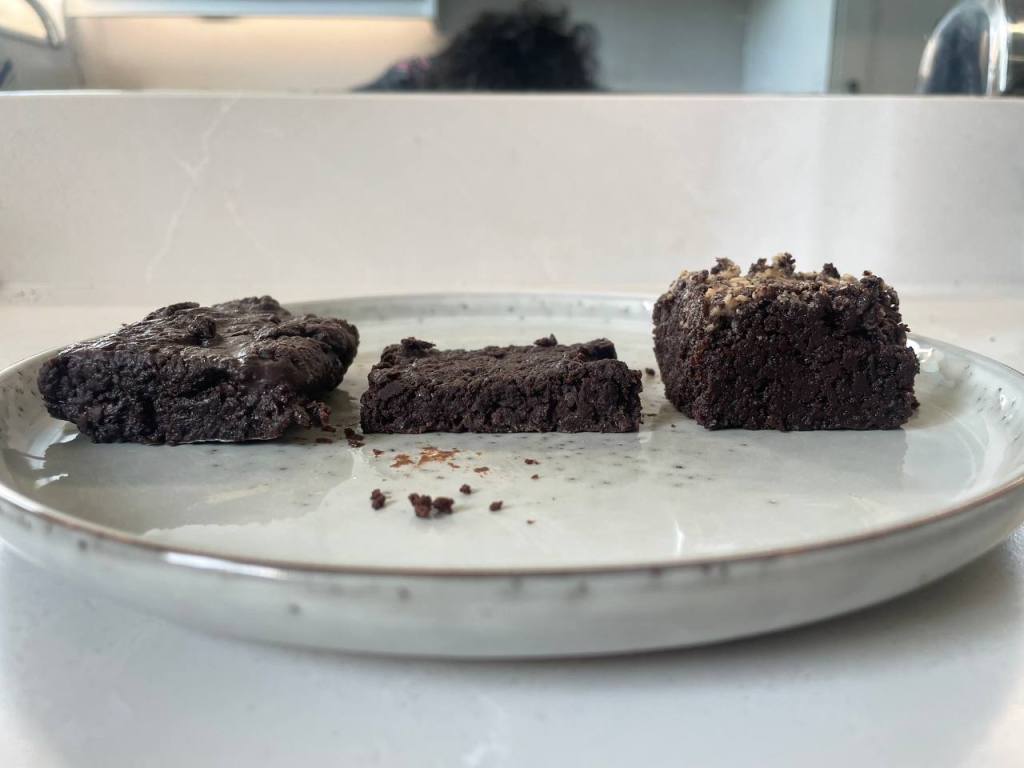
And below are what the brownies looked like for each:
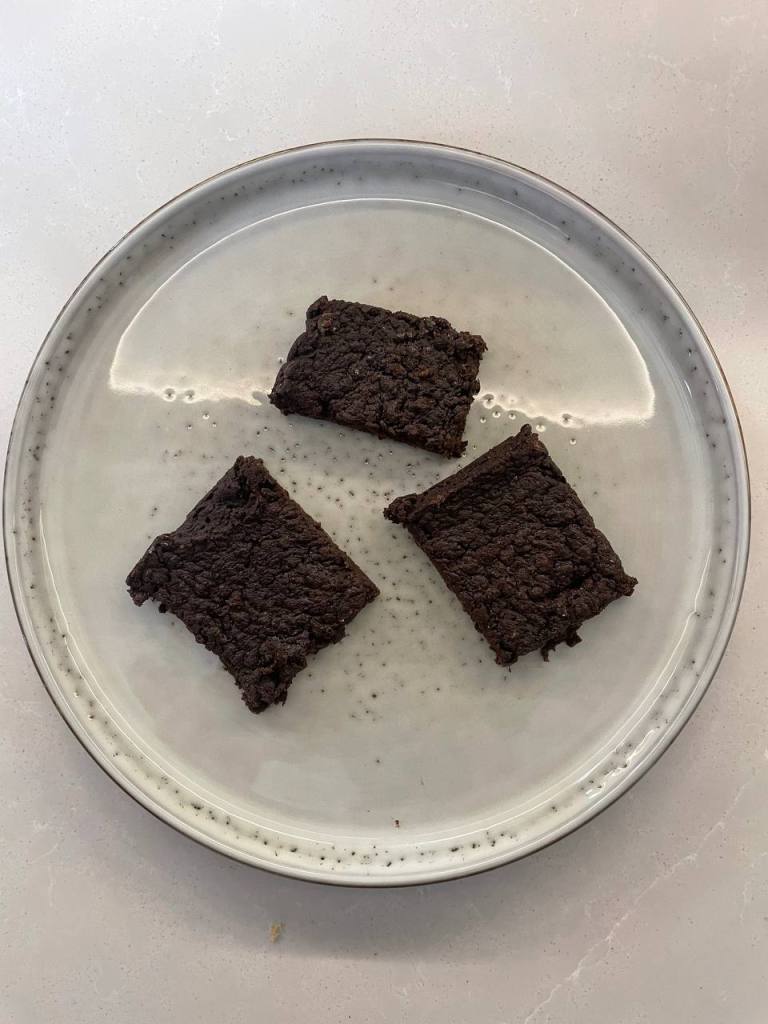
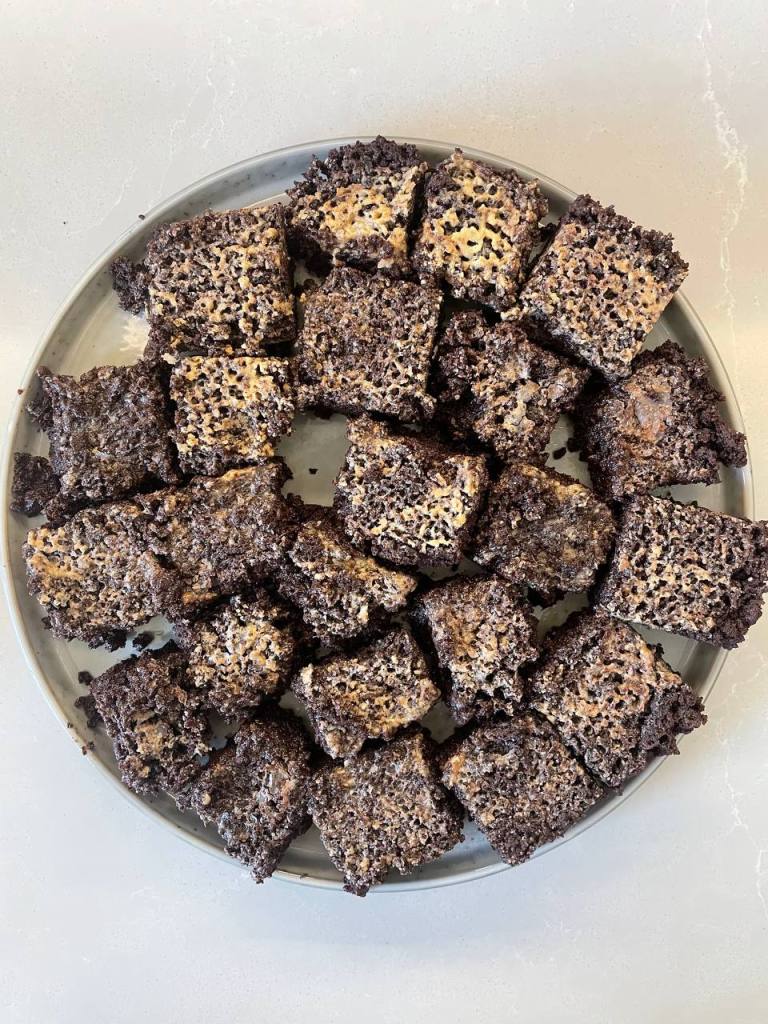
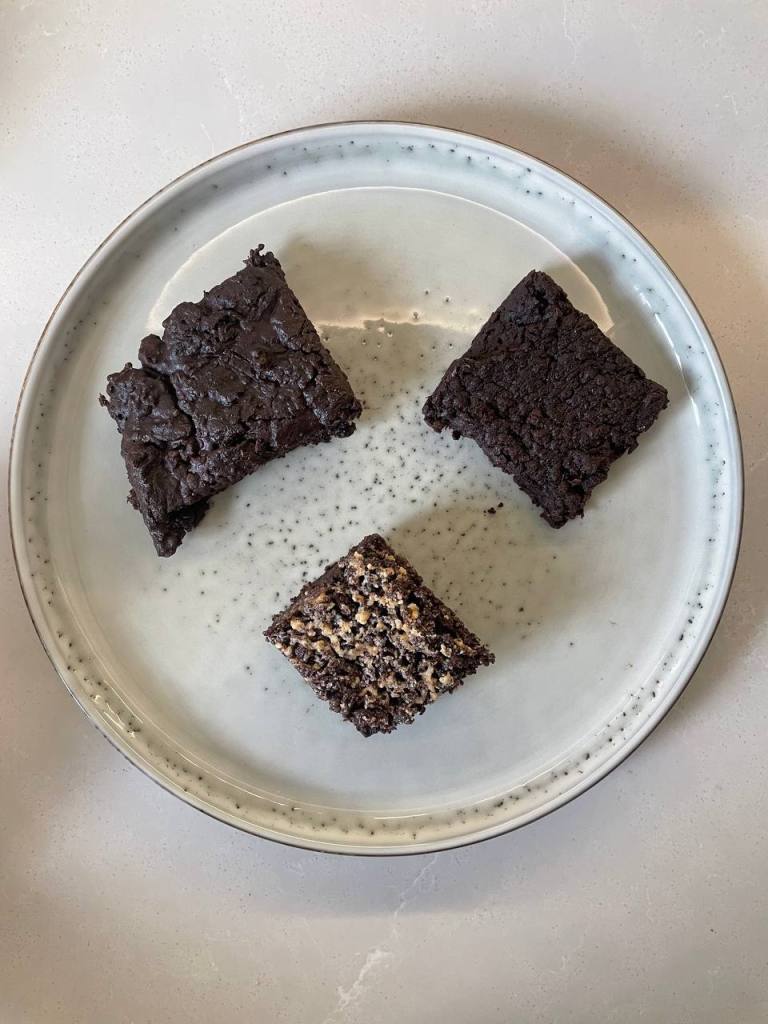
And detailed side to side comparisons:
- Seriously. I haven’t found anyone who dislikes them to date. ↩︎
- I haven’t experimented too much with different brands, but off my memory I’ve tried: Green and Black’s 85%, Lindt 70%, 85% and 90%, as well as Waitrose Fairtrade 85%. ↩︎
- I guess I’m very strongly opinionated on this… the only recipe that I’ve found where olive oil makes sense is a sweet focaccia recipe from Raether’s book… I can see bread and olive oil going together, even if the bread is sweet, but I can’t imagine olive oil in baked goods. I am willing to be convinced otherwise though. ↩︎
- I’m used to coating chia seeds with a much larger amount of water, so I was surprised with how nice the texture turned out. ↩︎
- At this point though, I hadn’t yet discovered vegan butter, so it was a batter made with sunflower oil as the fat. ↩︎

 Tsunami's Hungry
Leave a comment