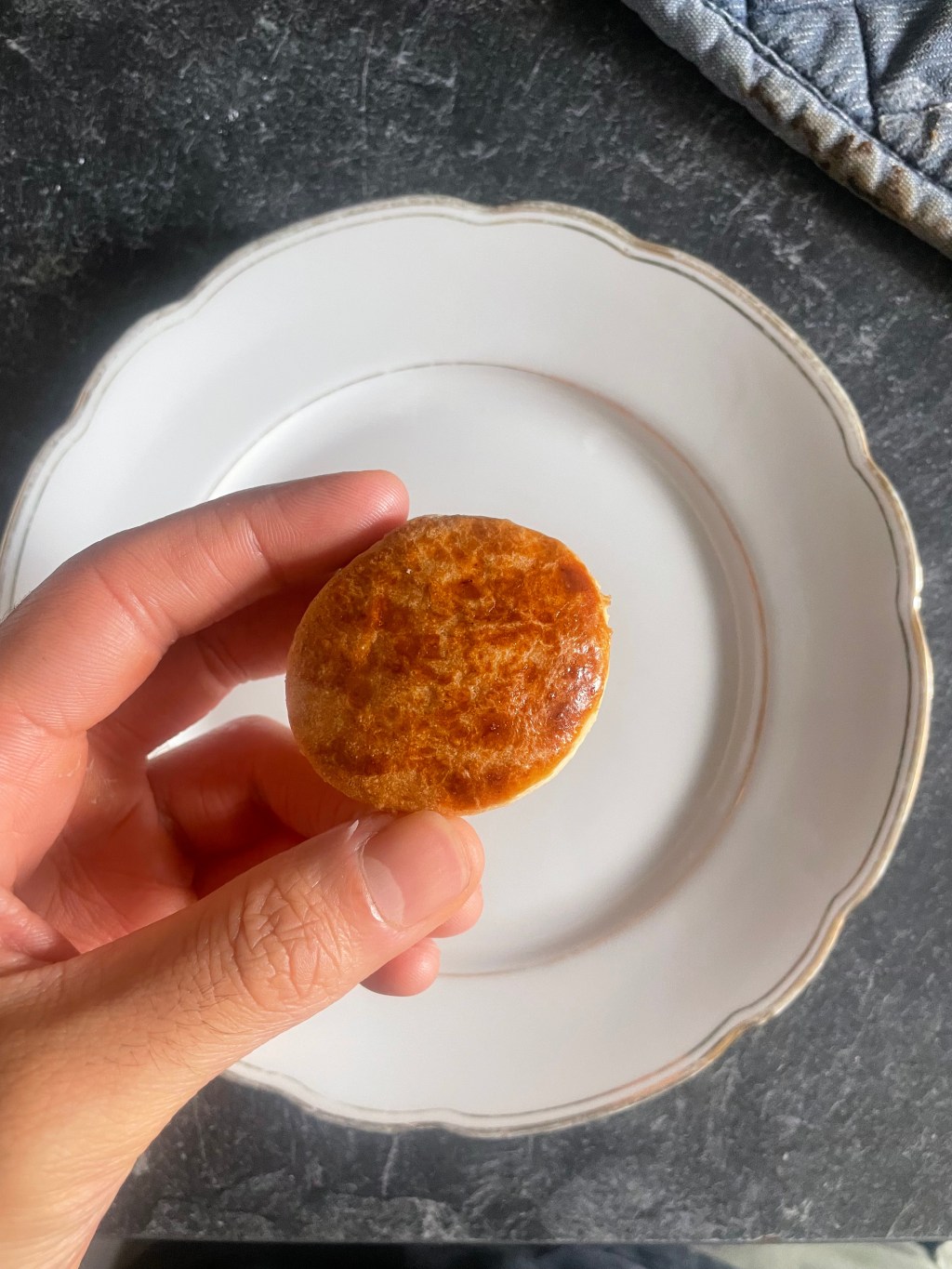
A snack I would devour in my childhood is Koluché (not to be confused with Kulcha), an Evazi classic, which is probably best described as “savory shortbread” (though it is not a shortbread as you will soon see). Each bite delights you with a crumbly buttery sensation, and the umami flavor from the mahveh keeps you going for more.
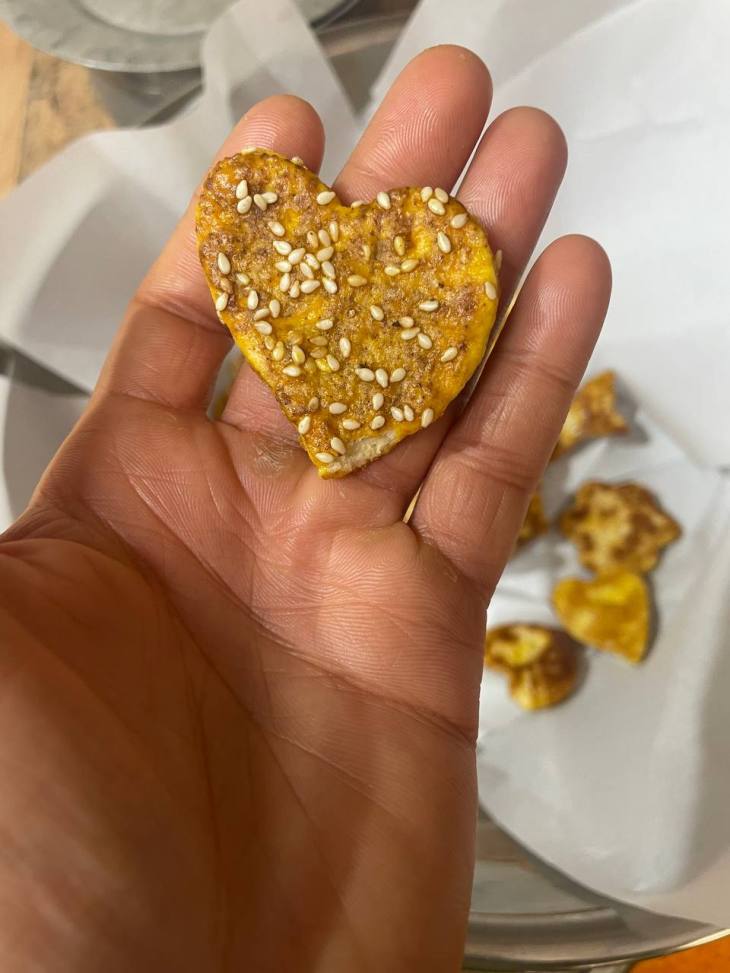
While Koluché is not a dessert, I would often consume it like one: I’d enjoy the change from the savory flavor to a sweet one when I followed each bite with a sip of really sweetened Iranian tea1. ُ The reason for this strange behavior is that I absolutely reviled the sweet version of Koluché, which always felt like it was lacking something. Unlike its beautiful golden counterpart, it had an unappealing white, almost dead, color. As for taste? It was only mildly sweet, which to a kid who was used to loaded up sugary breakfasts every morning, felt wrong. If you’re going to make something sweet, make it sweet!
However, in pursuit of preserving these traditional Evazi dishes, I decided to try making them myself, thinking that perhaps with an adult palette, and my own labour going into the making, that I’d come to enjoy it.
Ingredients
As told by my aunt:
- 1 kg all purpose flour
- 300 g Aseel vegetable ghee2
- 1 tbsp baking powder
- 1 tbsp crushed cardamom (the whole pod, not only the seeds. You can find this in powdered form)
- Water, around 2 cups3 (very, very approximate!)
- 250 g sugar
- (Optional) 1 egg and a few saffron strands to coat the Koluché before baking (if you want a beautiful golden color like me :))
I wasn’t trying to feed the entire village, so halved everything. I also decided to use butter instead of the Aseel oil as I generally prefer to avoid strange oil products.
Preparation
Preparing the Flour
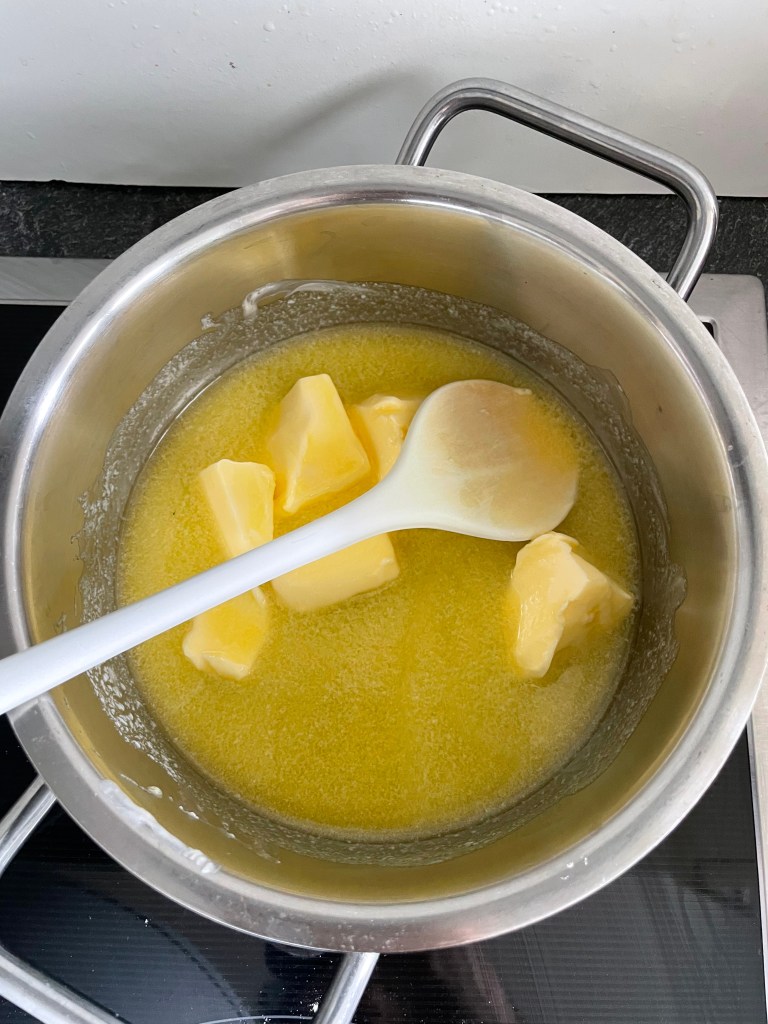
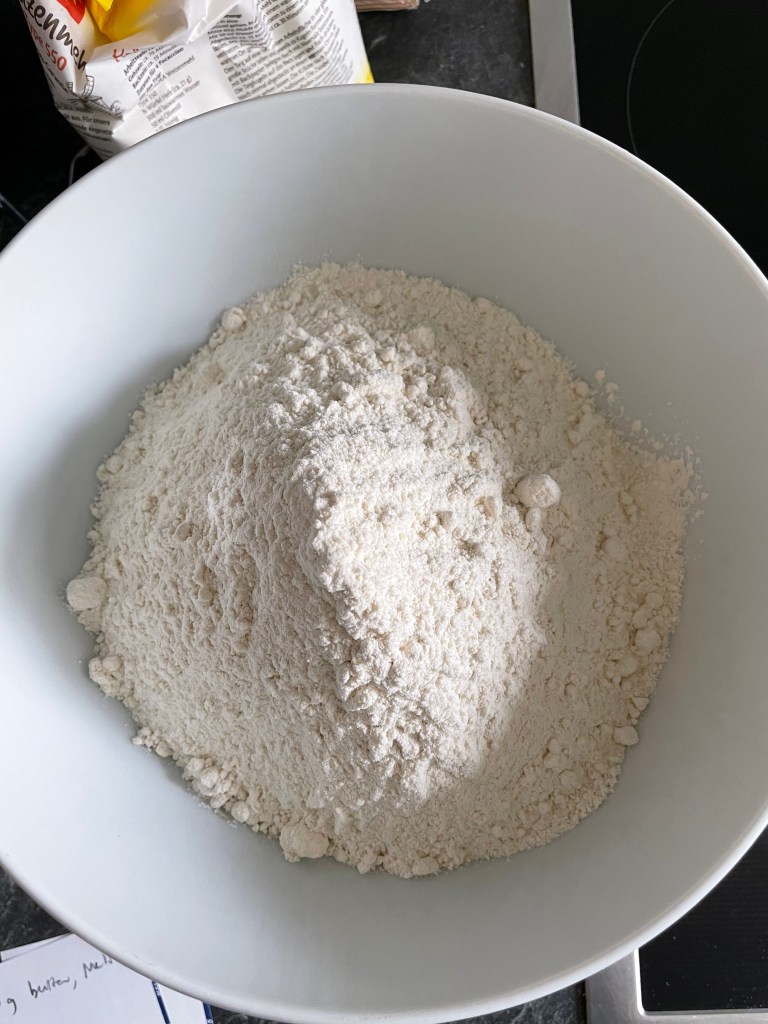
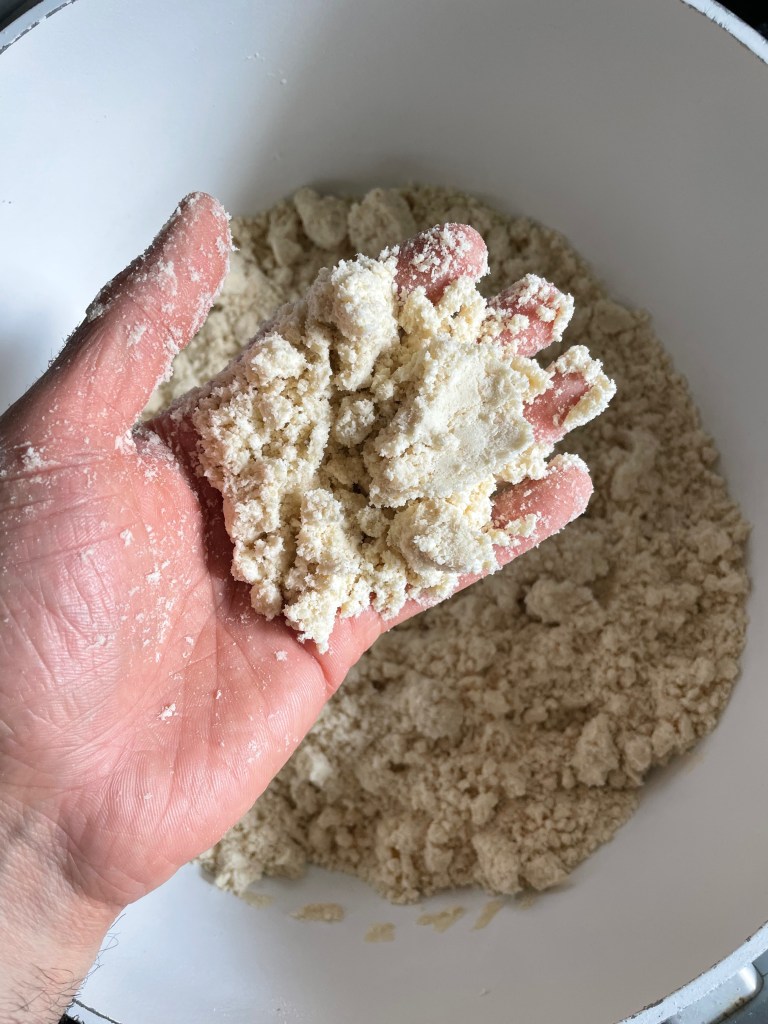
The first step is to melt the fat that we’re using on a low heat, to make sure that it doesn’t brown (particularly important if you’re using butter). At the same time, add the sugar to water and bring it to a simmer, or until the sugar has fully dissolved. In the meantime, mix the baking powder and crushed cardamom into the flour. Once your oil has melted, wait for it to cool4 a bit before adding it to the flour. Mix it in, until you arrive at a nice crumbly consistency.
Forming the Dough
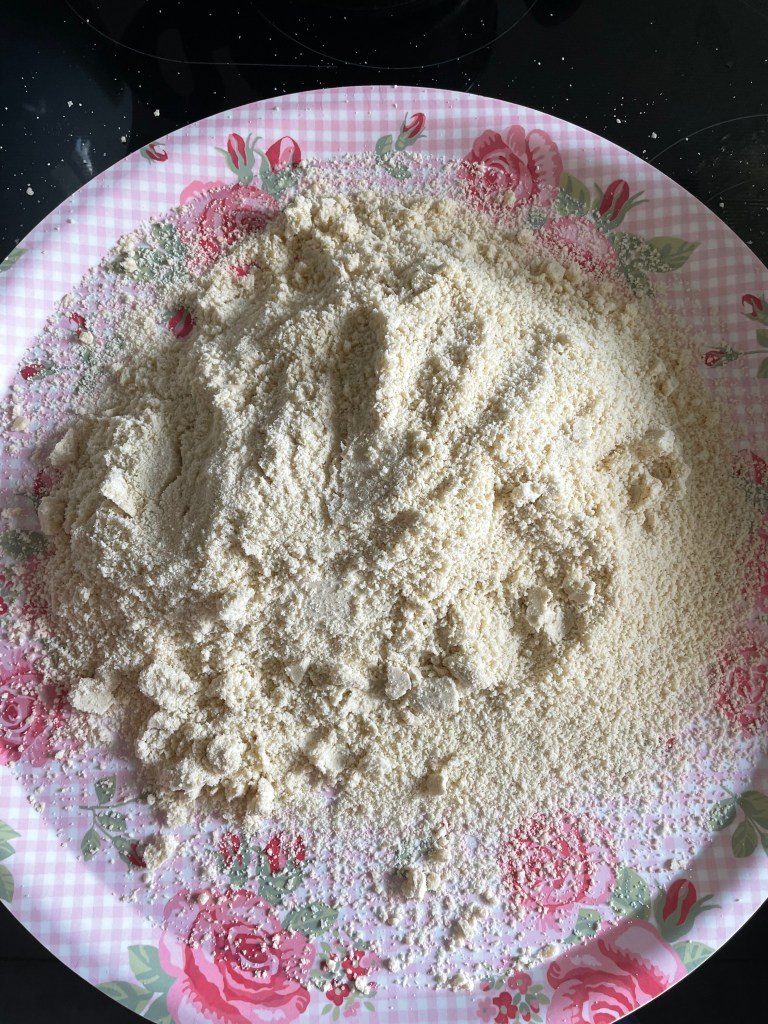
Once you have oily flour, you must pass it all through a fine sieve to get a nice and smooth texture. This step takes ages, but it’s a labour of love! In the video below you’ll clearly be able to see the difference between the flour passed through the sieve, and the flour before.
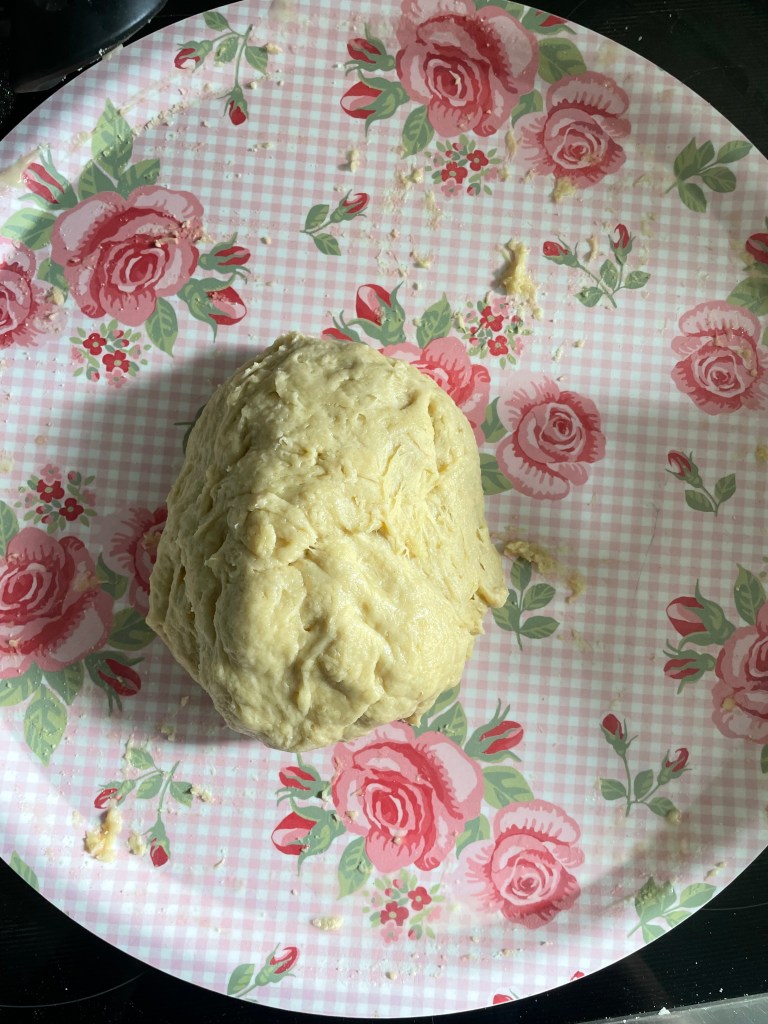
At this stage, once the sugar water has cooled, you can add it to the dough. This is where I recognized that my aunt’s recipe is very approximate… there is just too much water, which quickly helps gluten form in the dough. This is not a desirable outcome, as it will change the texture from a crumbly one towards a chewy one!
Shaping and Cooking
At this point, you can roll the dough flat, until it is about 3-5 mm in height. I would go to the lower end to be on the safe side, as the koluché will expand substantially during cooking. Once flattened, you could ideally use a rolling pin with ridges to give your flattened dough a pattern.
And then, you can use moulds to cut nice shapes for the koluché.
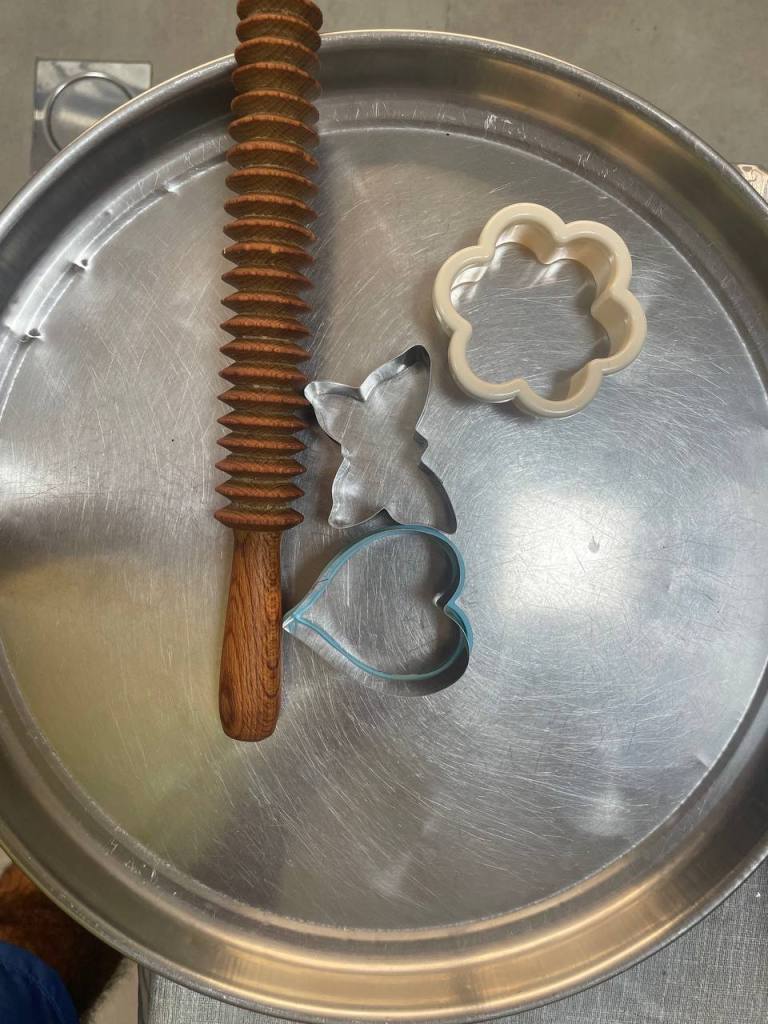
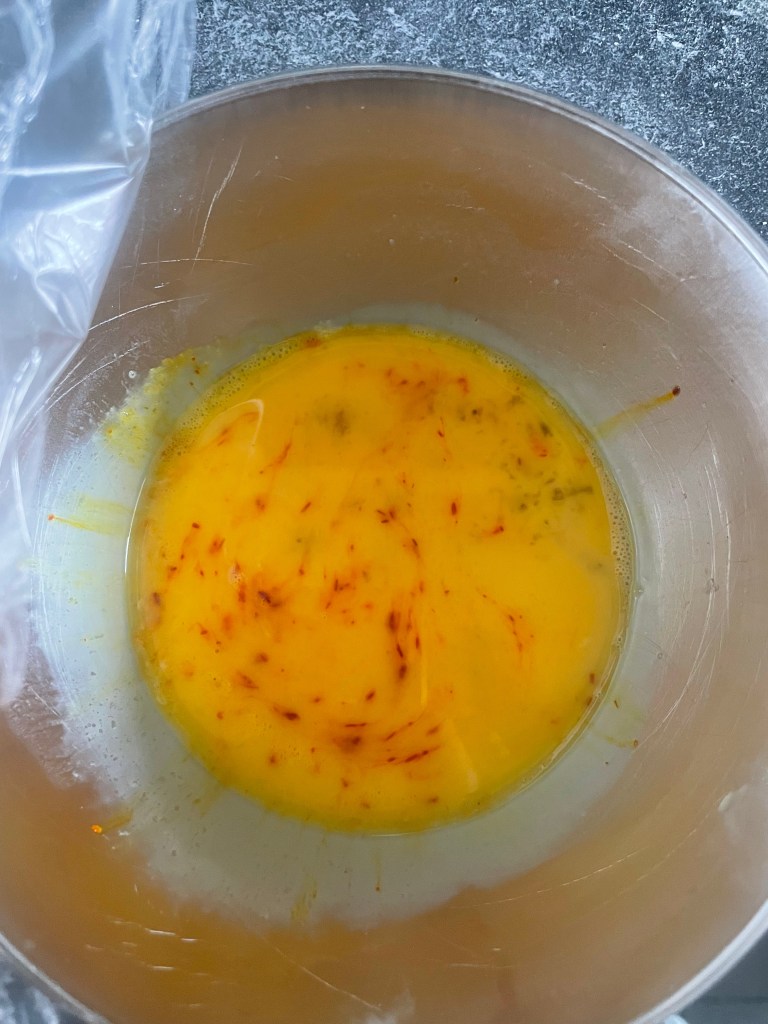
Unfortunately, I didn’t have access to such fancy equipment… so I didn’t give my koluché any pattern, and I used the lip of a teacup to create nice circles. Once this is done, you can optionally choose to coat the koluché with a saffron-egg coating. Simply dissolve a few strands of saffron in water, and stir into beaten eggs. There’s your saffron mixture!
Sweet koluché is not traditionally served like this, but at this point I was thoroughly disappointed with the texture knowing that they were gonna turn out bready… so I just went for it.,
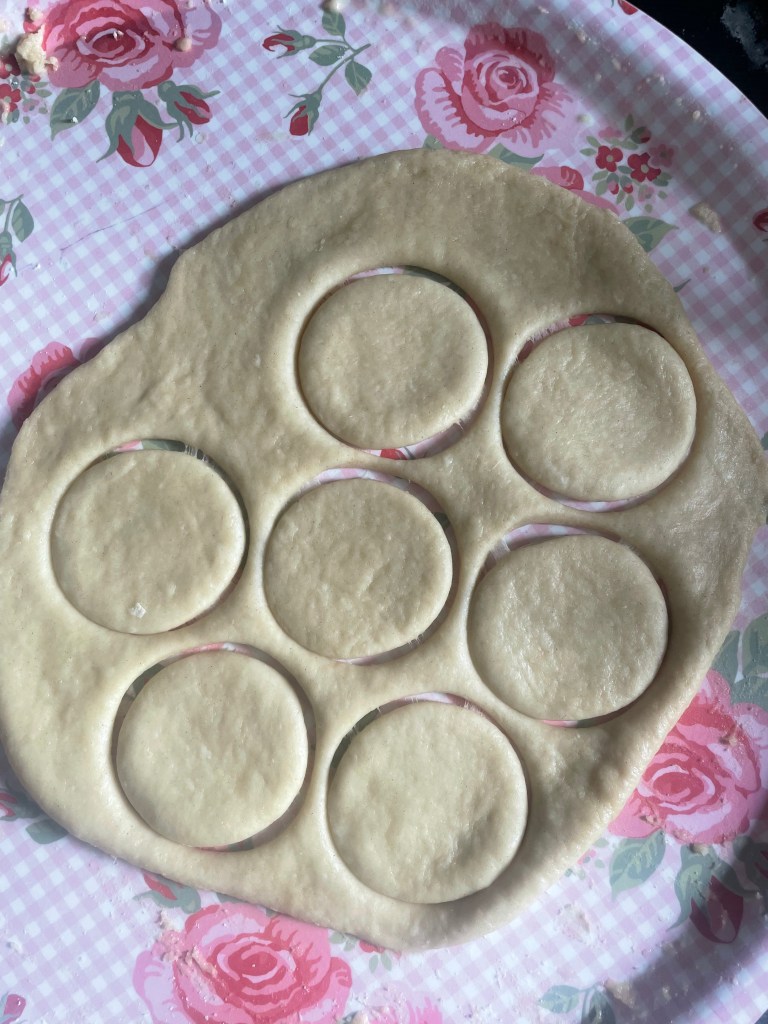
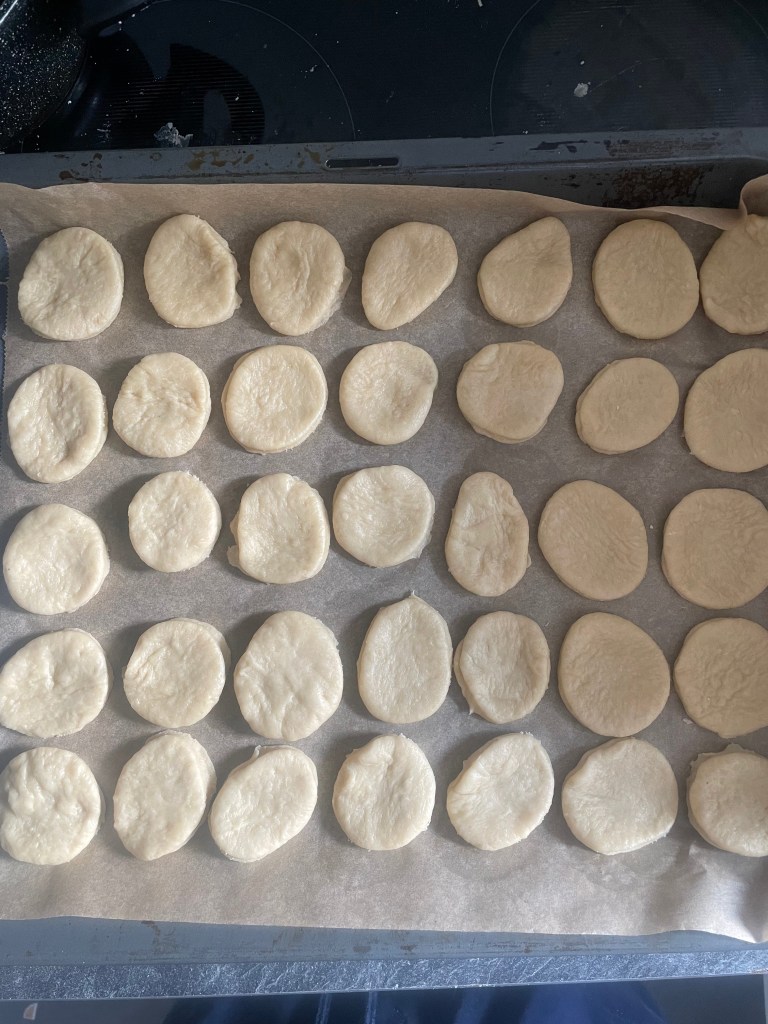
To bake them, set your oven to setting 5 if using a gas cooker, or 190 degrees celsius. Put them in the oven for around 7 minutes. Note that you must judge this by eye. They are ready for the next step once they’ve developed a nice golden color at the bottom. It’s hard to tell when it is ready for the next step without the saffron/egg coating by eye, you must instead trust the texture: they are strong enough to hold the shape, but still soft that the dough can bend (and break) if tried.
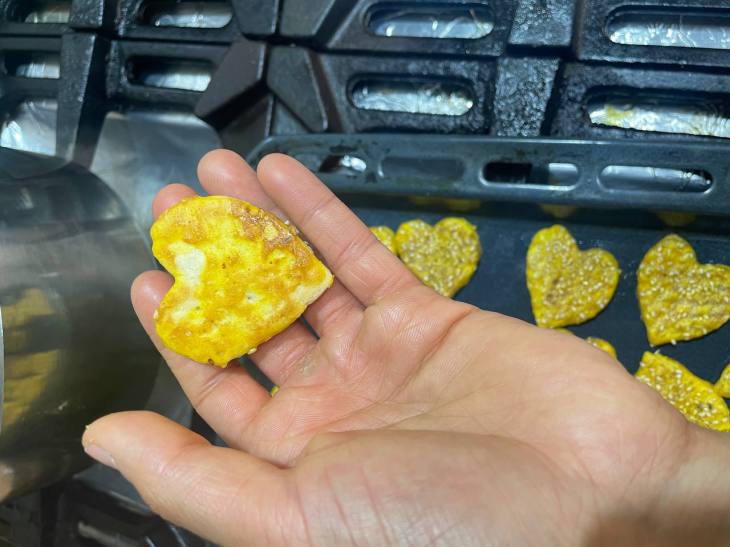
At this point, put them near the grill at 205 degrees, for around 5-7 minutes.
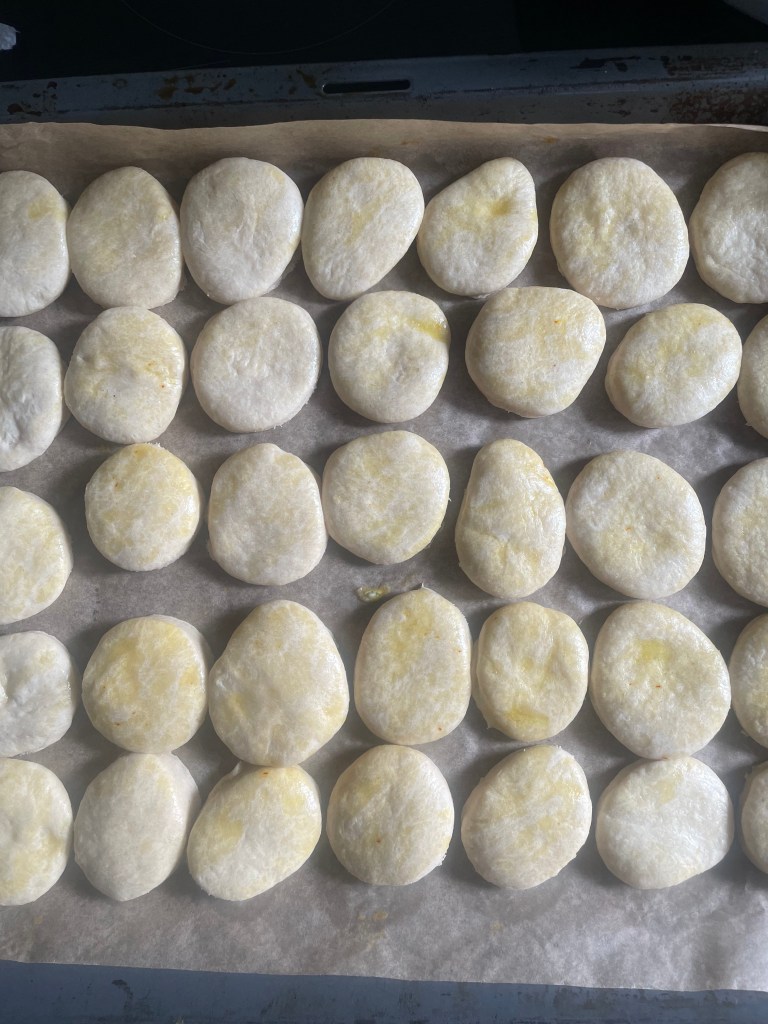
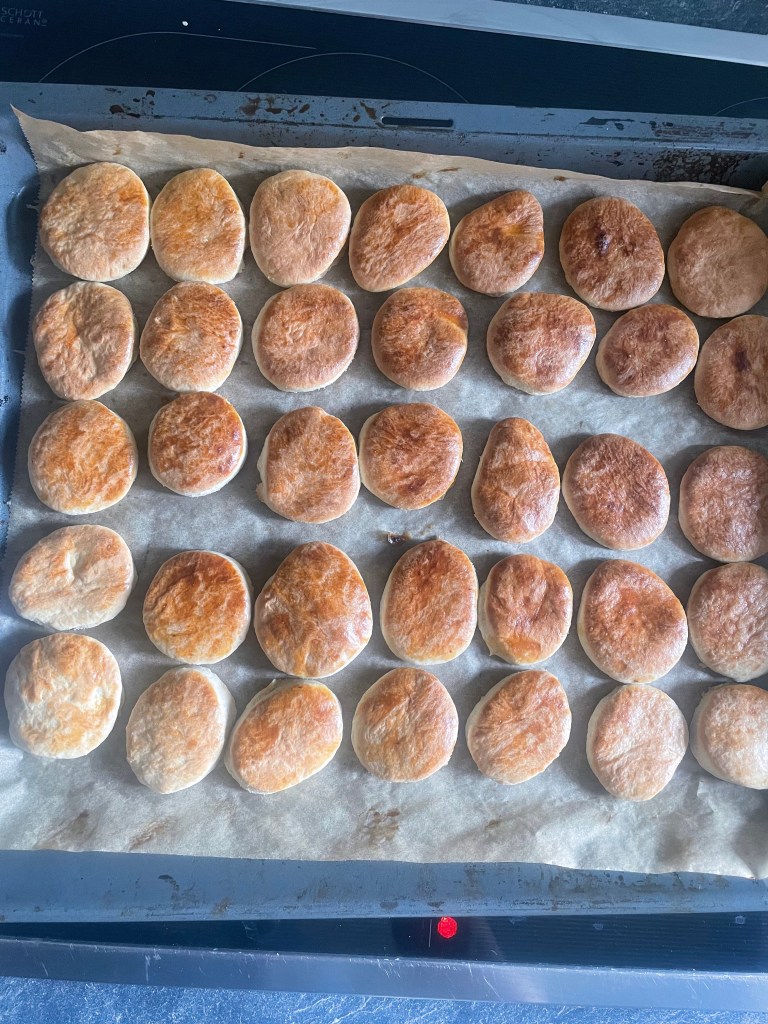
Wait for them to fully cool before trying them. During the cooling process they’ll stiffen up a bit and get that crumbly texture, if done right…!
Concluding Remarks
In my case, it was going to be a disaster right from the beginning due to the extra amount of water.
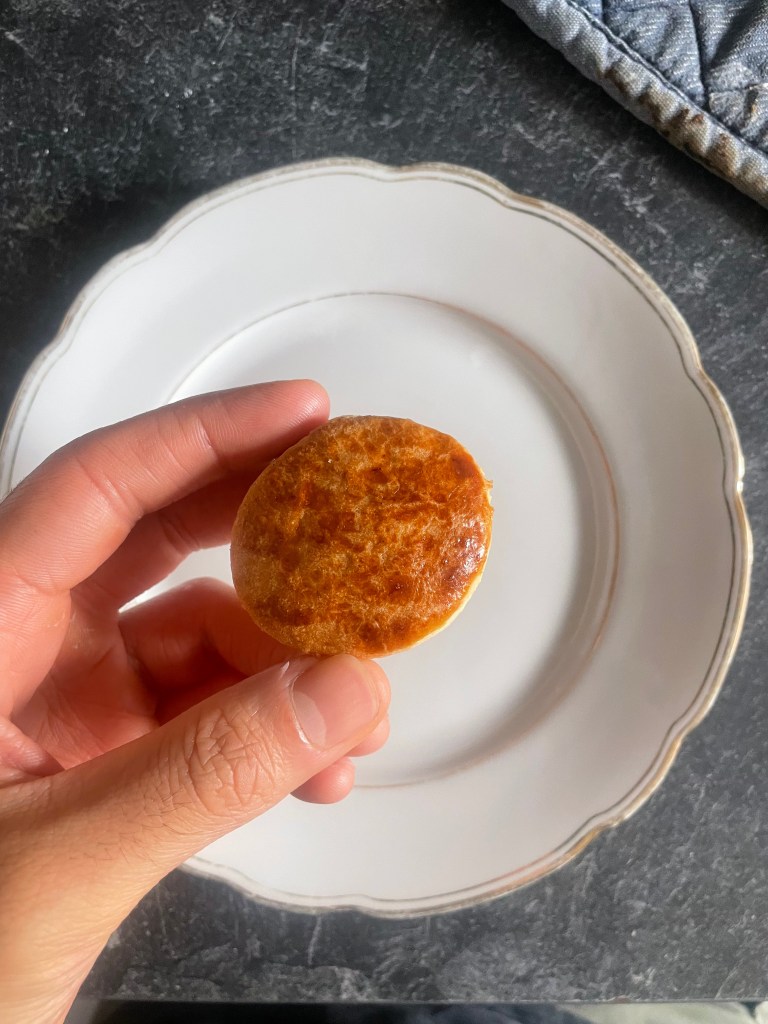
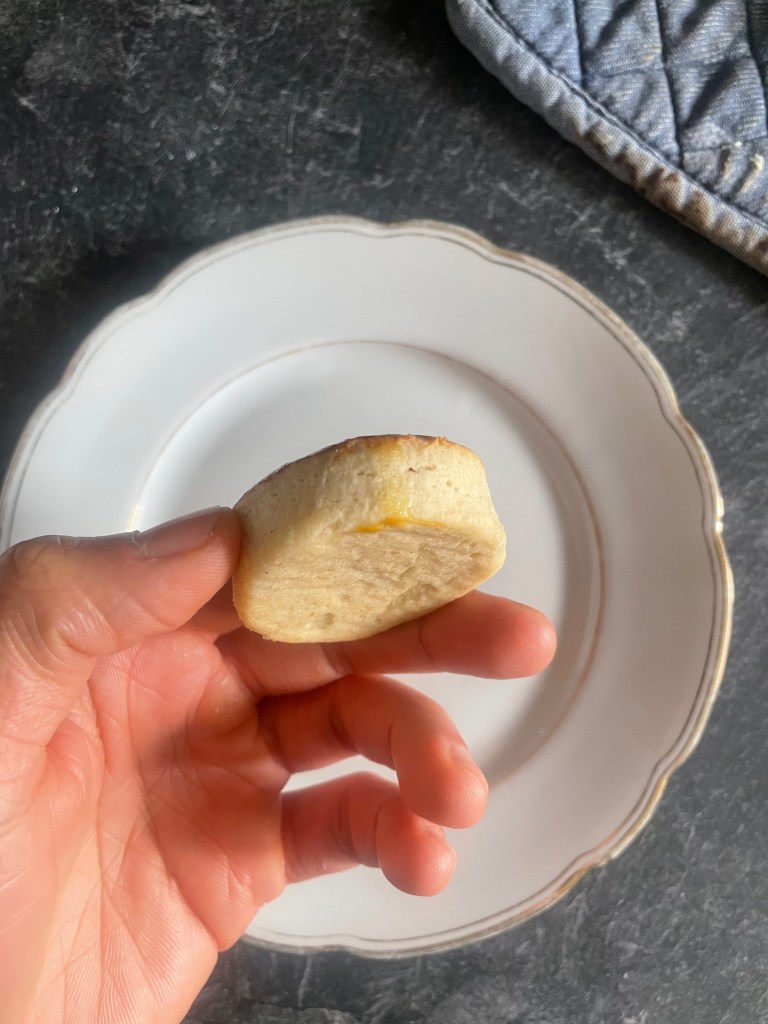
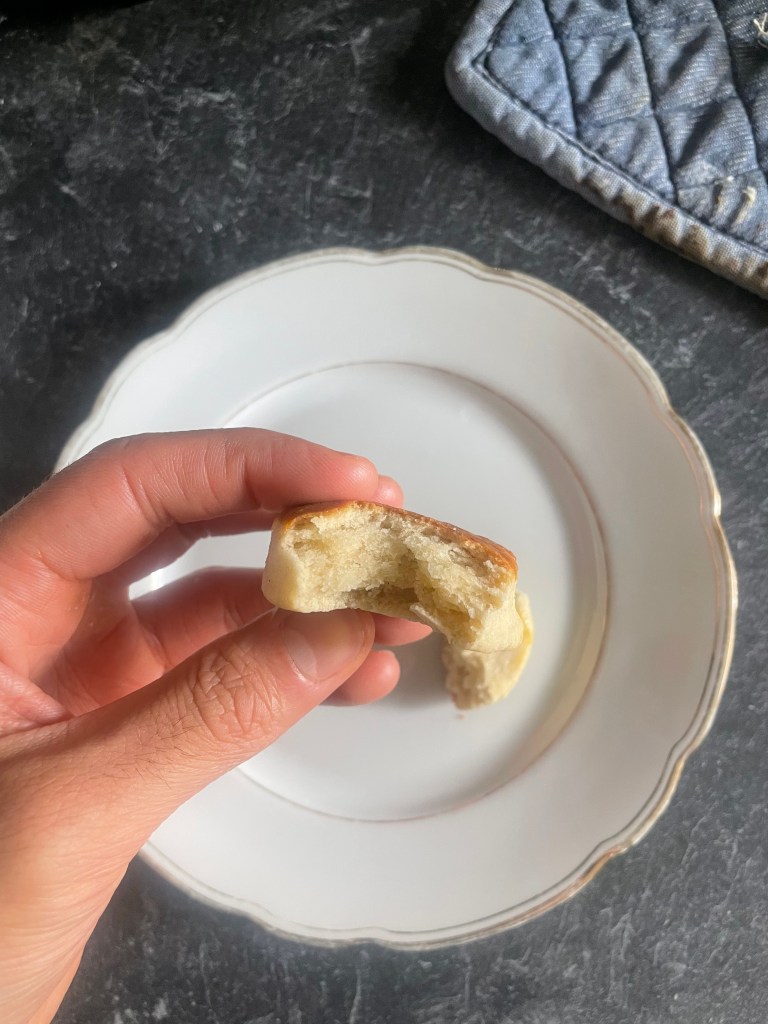
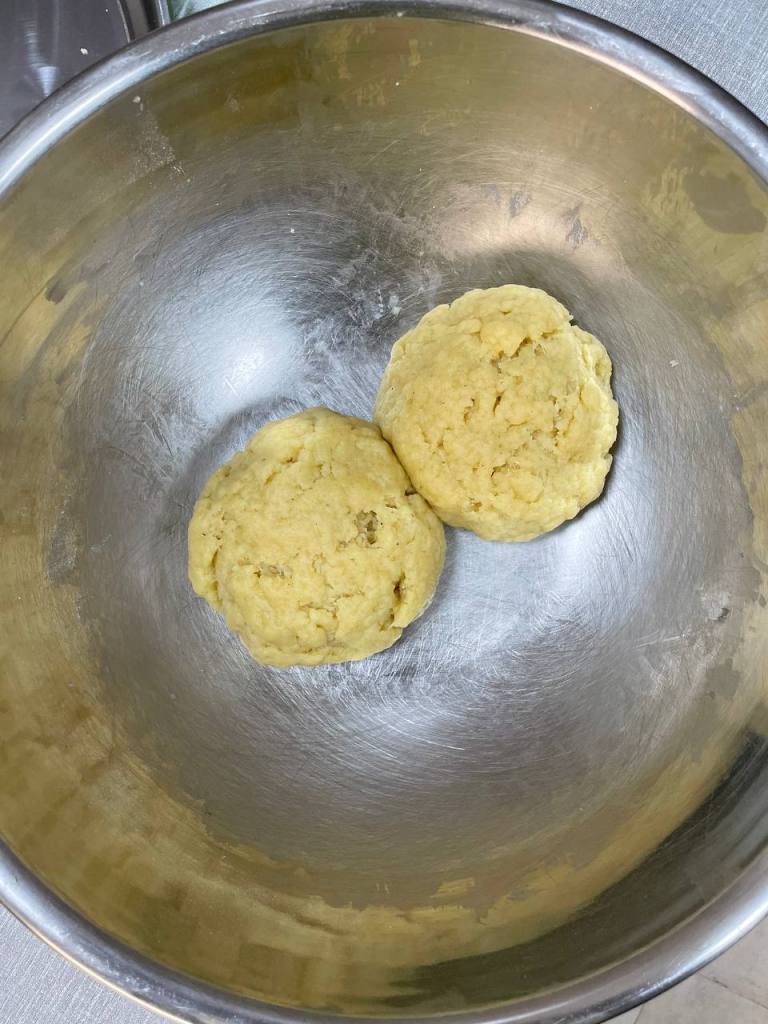
You can see from the above photos that the koluché had a bready texture. Further, the bottom had barely started to change color so I think I moved it a bit too early. The fact that I didn’t add a pattern to the top also addicted the outcome, as it rose quite a bit.
Texture aside though, the flavor was really nice. The cardamom was perfect, and I found that as an adult, I enjoyed the subtle sweetness quite a bit.
So with more work, I’m sure I’ll get the texture to be just right.
The next time I attempt this, I’ll try try the following:
- Attempt with a fat that’s more resembling of the Aseel oil. I’m thinking ghee might be a good option. This should also reduce the water content, and also decrease the chance of gluten development.
- I am tempted to try to make this the way shortbreads are made: starting with really cold butter first, and then once I’ve gotten past of the crumble stage incorporating water. This is something I’ll try, if the ghee experiment doesn’t work.
I’ve been working on quite a few experiments… so I’ll be sharing more soon!
- I have also tried this with Nutella… and as an adult I look down on my younger self with disgust, but as a kid I was pushing the boundaries of Evazi cuisine! ↩︎
- Note that this is not “ghee” since ghee is a form of clarified butter. They call it “vegetable ghee” because the plant oils are hydrogenated to stay solid at room temperature. ↩︎
- The water in the recipe is what distinguishes Koluché from shortbread. A classic shortbread will not have any water, which is why short breads are brittle (water is necessary to form gluten networks). ↩︎
- Don’t be hasty with this step. While I can’t find much evidence online indicating that heated melted butter is worse for gluten development than cold melted better… the consistency of the crumb I got was not one I was happy with. ↩︎

 Tsunami's Hungry
Leave a reply to 12 recipes from 2025 – Tsunami's Hungry Cancel reply