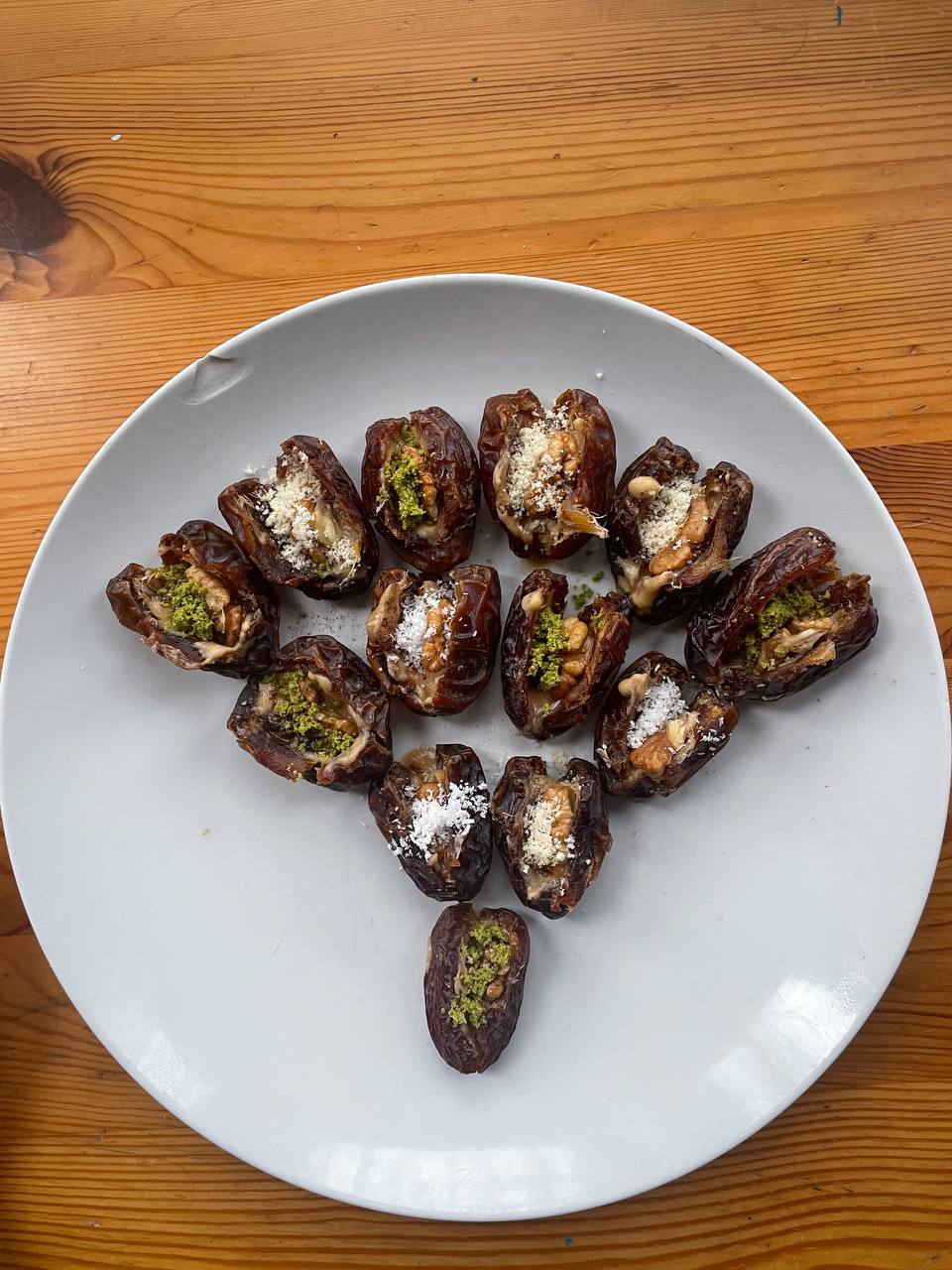
Okay so… I haven’t forgotten about Experiment #2 – I simply haven’t tidied up the article yet! I got so excited after this current experiment so I’m breaking chronology and posting it first. Back in June, I started aggressively experimenting with a traditional south Iranian dessert called Ranginak – a layered date dessert with a toasted-flour coating that gives it an excellent nutty flavor. In many ways, this dessert is perfect: it is delicious with lovely textures, it is somewhat filling, it pairs well with tea and coffee, and it is accessible to almost everyone since it is naturally vegan and doesn’t1 cause a massive spike in blood sugar. So what’s the catch?
The perfect ranginak requires a specific type of date (“ripe dates” known as rotab) that are difficult to find in Europe. But… this hasn’t stopped me from preparing it though, and in the process I’ve found myself quarreling with two questions:
- How best can I mimic rotab dates using local ingredients available to me?
- Can I (should I dare upset my ancestors) bring more out of the ranginak by using different ingredients?
Thus far, I’ve tried using different oils2, adding melted chocolate, soaking dates, using different families of dates3, and using non-traditional garnishes such as macadamia nuts. While I consider my experiments successes, none of them have added anything to ranginak. For my 25th birthday I decided to take the experimentation up a notch and for the first time, I feel that I’ve created something new: a way of presenting ranginak that has the essence of the dessert, but doesn’t suffer from the texture issues caused by using dry dates. As a bonus: it is gluten free and I discovered a garnish that elevates its flavor.
Trial Run
Having tried using wholemeal flour last time (this is experiment #2 which I haven’t posted yet), it was time to try something new. How about making ranginak gluten free? It wouldn’t necessarily make the dish less calorie dense, but it does make it almost accessible to all4. I decided to go for rice flour. Why? My best reason is that we use it in another Evazi dessert (Halva) that I enjoy.
But you know that I’m not satisfied with a single experiment: I decided to finally try medjoul dates with ranginak. I enjoy these dates on their own… and they are normally quite soft. So I thought maybe it would work?
I toasted the flour as I normally do… but it was taking a very long time and not really changing color. After some time with a tiny change, I added some sunflower oil. It emulsified the way normal flour does so so far so good.
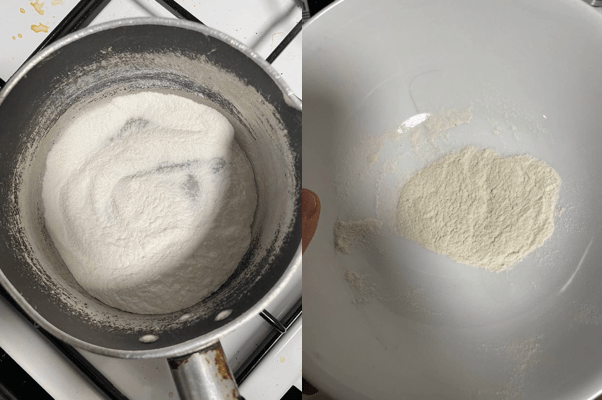
Since I was just doing a trial run, I opened the date up and poured the flour into it. This gave me an idea! Maybe the solution to not having rotab is to present ranginak in a different way? The layering works well with rotab because they are so soft, that your spoon just goes through them like you are having a cake. Stipulating that we can’t soften the dates, perhaps presenting them as stuffed works… fine? It won’t have the texture of ranginak, but it doesn’t have the issue of making the eating experience difficult.
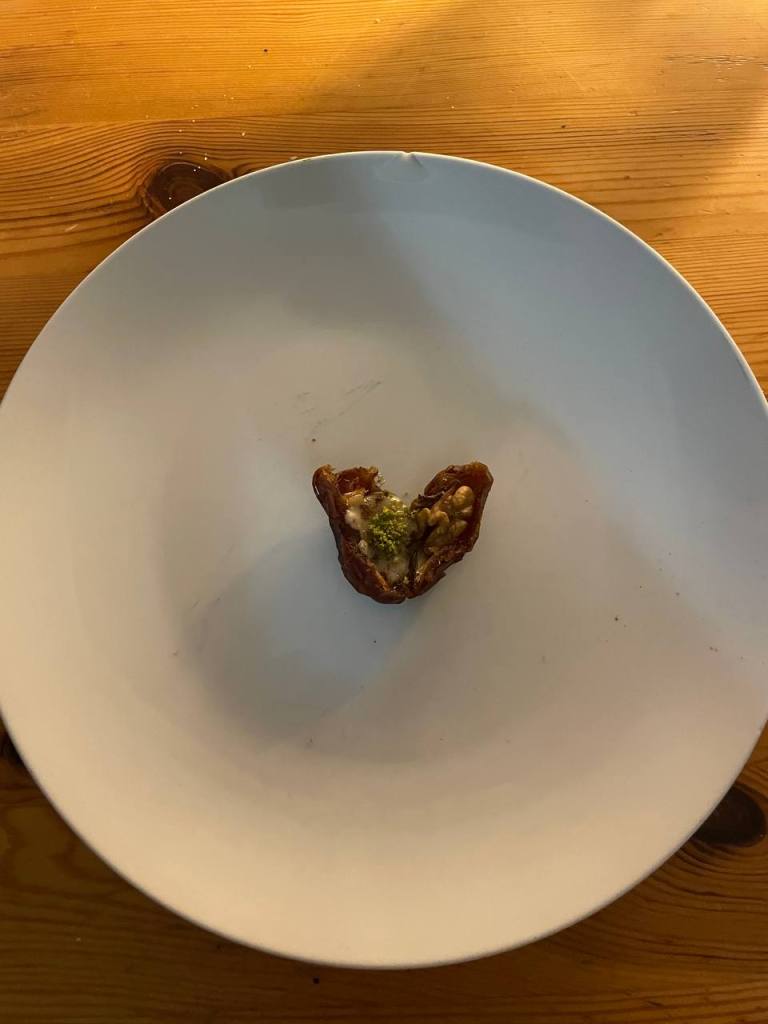
The result? Not great to be honest. The rice flour didn’t come through at all… and the bits that did through felt very grainy. It also had a funny taste, like it was raw. The way of presenting it was nice, but there was just too much date. I also was right about medjoul dates not working as a substitute for rotab. They may be soft compared to most dates, but not soft enough to be layered for ranginak. Mazafati dates are a better option for that.
Disappointed… but I knew I had to make it better. Maybe I just need to toast the flour more, and perhaps adding it to both halves will make sure it’s flavor comes through.
Towards Perfection
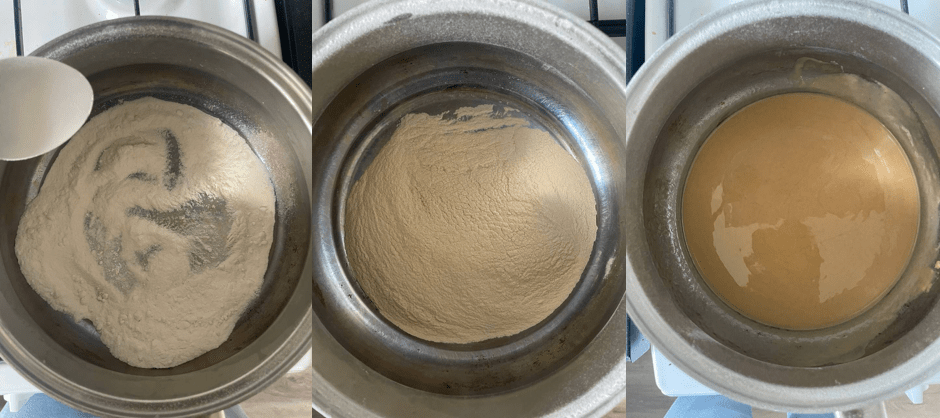
Thinking more clearly the next day, and with less time pressure, I decided to take my time toasting the flour. How far can I go before I burn it?
So I kept going, and after some 10-15 minutes it did start to brown nicely! It has an odd aroma though – when you toast wheat flour it starts to smell nutty. With rice flour it’s less consistent. I get some nuttiness but there’s also a sickening starchy aroma. Still, I was pleased with the color and was willing to see how it tastes.
I assembled one with the flour topping in both halves, garnished with pistachio… and wow! The browning worked – the taste was very similar to that of normal ranginak. The texture is still a bit grainy where ranginak is crumbly, but given the way it’s presented, e.g. stuffed dates, you don’t notice it much.
I had a look at the pantry to try it with almonds… and a bag of desiccated coconut immediately caught my attention. I must try it with this. And viola! Excellent pairing. Sometimes the best things are discovered by chance. I continued to make more of these so I can share them with others.
Some photos from the assembly process below.
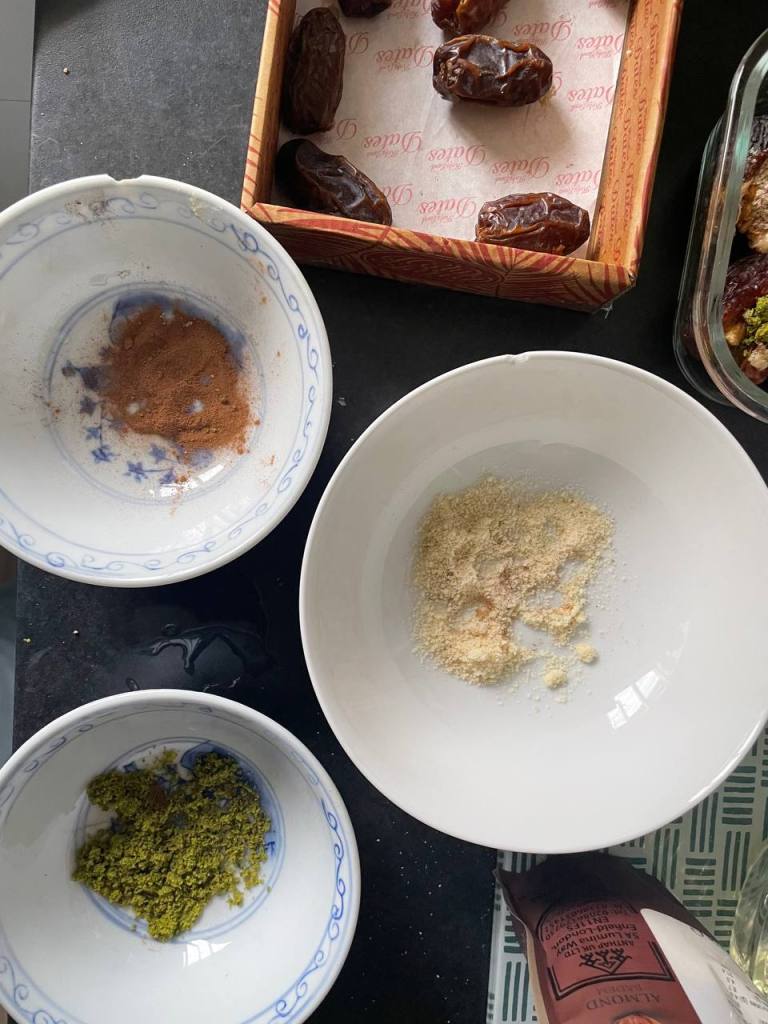
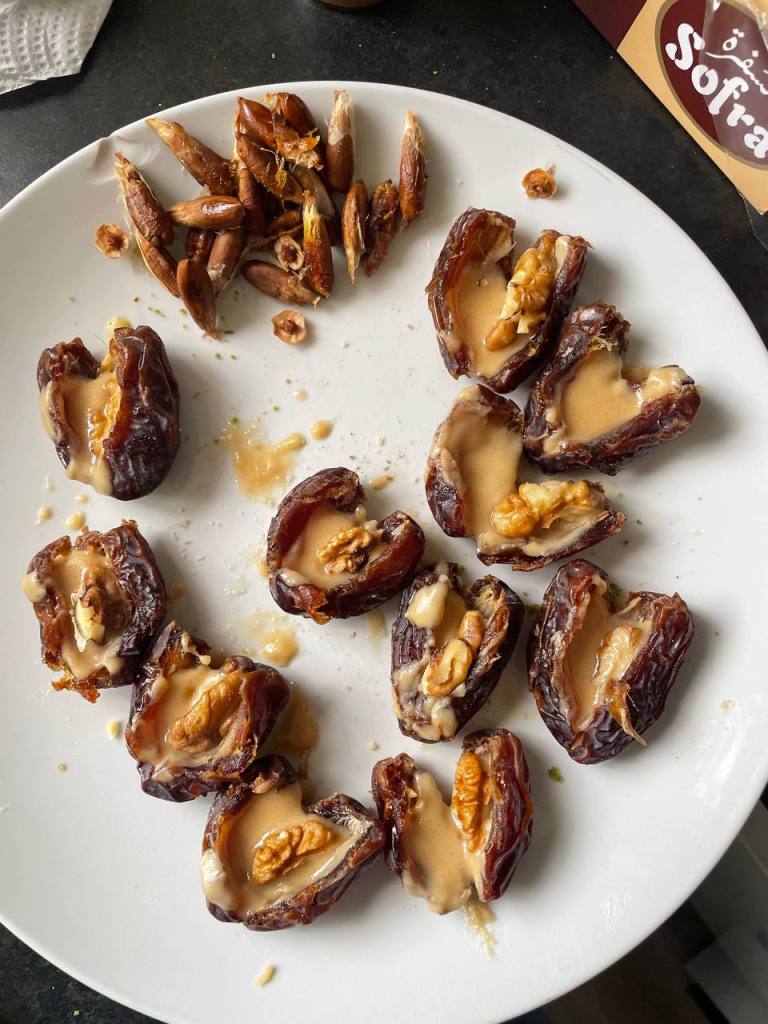
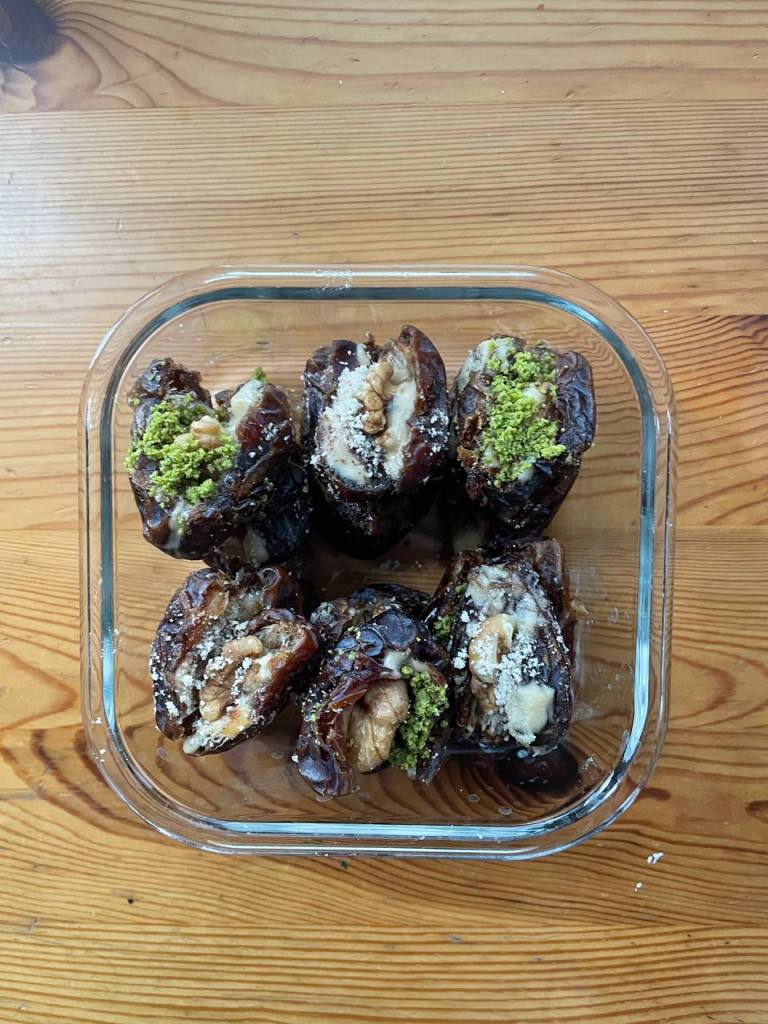
Final Outcome and Next Steps
This experiment was a resounding success for the following reasons:
- I discovered that rice flour is a viable alternative to wheat flour. Ranginak is now even more accessible. This success now gives me courage to try working with flours that I’m not familiar with… such as gram and oat flour!
- If we can’t make the dates soft, then presenting ranginak as stuffed dates as opposed to a layered date-cake is the best way forwards. While it doesn’t re-create the texture of ranginak, the texture of the dates doesn’t impact the eating experience
- Desiccated coconut is an almost perfect pairing with ranginak. This is something I’ll be using when making ranginak henceforth.
For the next time, I want to go back to the drawing board to find ways of softening dates. I’ve tried soaking twice now (will discuss this in Experiment #2), and have not had much success. I want to try it one last time before I move onto finding ways to make ranginak less calories dense, and better for the gut.
- I am not good with my biology but this is based off the fact that dates themselves don’t cause spikes in blood sugar, and the fact that you have fats such as the nuts and the oil which stabilize blood sugar spikes from the flour and granulated sugar ↩︎
- Such as ghee, home-made ghee (clarified butter) and butter ↩︎
- Such as keshti dates (small dried Iranian dates that are very sweet) and mazafati dates ↩︎
- People with nut allergies: I’m so sorry. The core of ranginak is using nuts. I will at some point in the future try to challenge this though. ↩︎

 Tsunami's Hungry
Leave a reply to By far my best Ranginak – Tsunami's Hungry Cancel reply