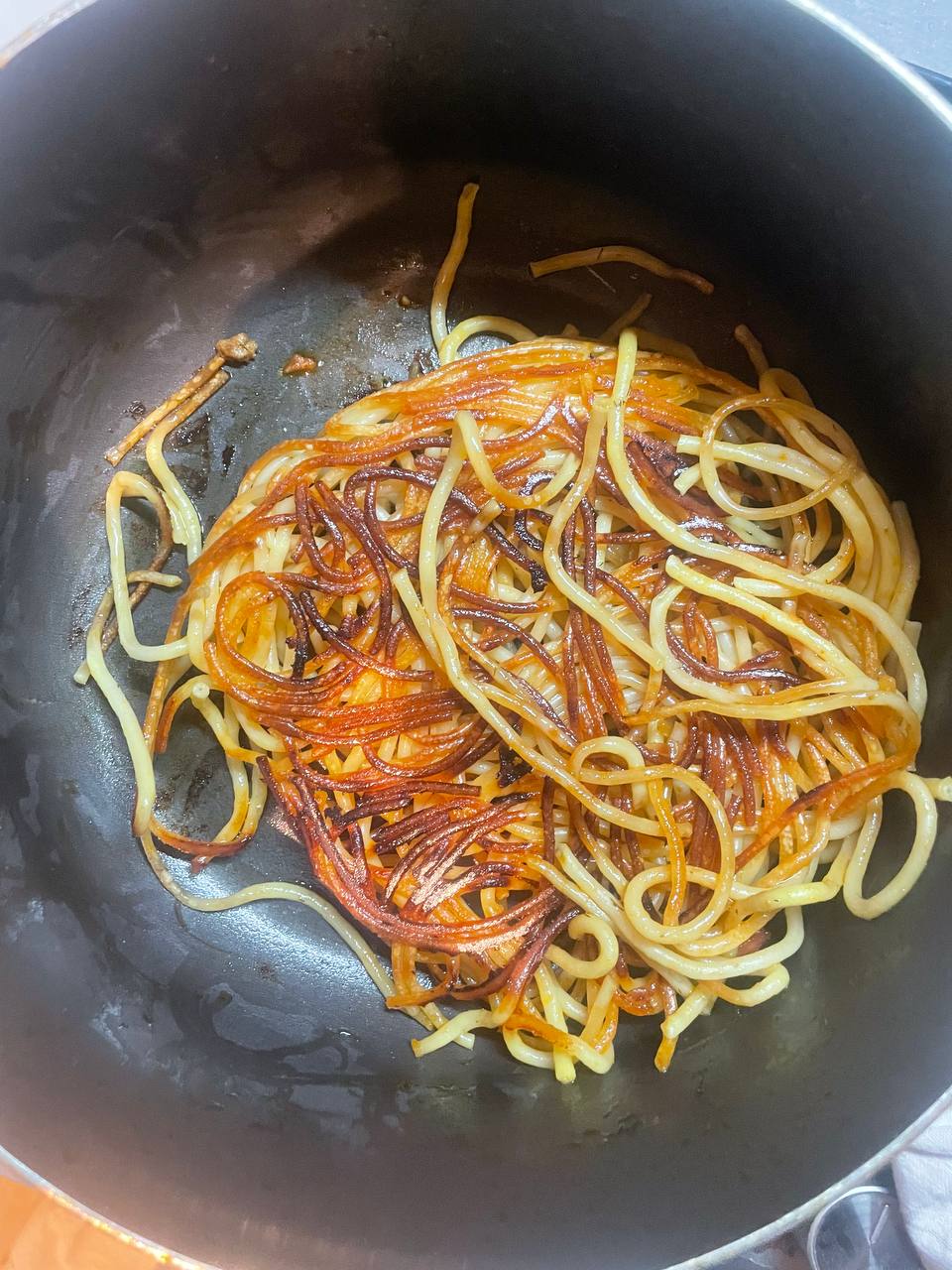
It seems like nationalism is back in fashion, and perhaps for the first time in my life I’ve given up my revulsion to it: I present to you Makaroni, also known as Iranian Pasta, with an Evazi twist.
The pasta you’ve been indoctrinated to enjoy is hard, heavy and rarely fragrant. Learn a little something from me and do your taste buds a favour!
Ingredients
The ingredients, as described by my aunt:
- Minced veal (I used 500 g minced beef)
- Onion (I used a large onion)
- Garlic (I used 3 cloves)
- Tomato (I used 450 g)
- 1 tbsp tomato paste (I used 2)
- Spaghetti (I used 500 g)
- Turmeric
- Salt
- Black pepper
- Dried dill
- Oil, for cooking
- (Optional) Potatoes for the tahdig
Preparation
We Iranians take a lot of pride in our cooking, as is reflected for example in how we make Makaroni1. We add our own spices to it, and cook it using our own methods such as dum pukht, completely disregarding the notion of “al dente”2. This pride comes partly from thinking that we cook better than others, (which is bad), but also from a strong belief in protecting our recipes from extinction (which is valid). Of course, the big irony is that many of us inject our pride into foods that are antithetical to ours, and in many ways threaten the extinction of our cuisine. I’m the perfect example of this: I’m much more likely to make a quick pasta than to belabour myself with 3 hours of active stirring to make fesenjoon. In that sense, we Iranians, especially those of us in the diaspora, have lost the desire to make love to our food3.
Anyhow, today I’m showing you how to make pasta, Iranian style, and with Evazi twists:
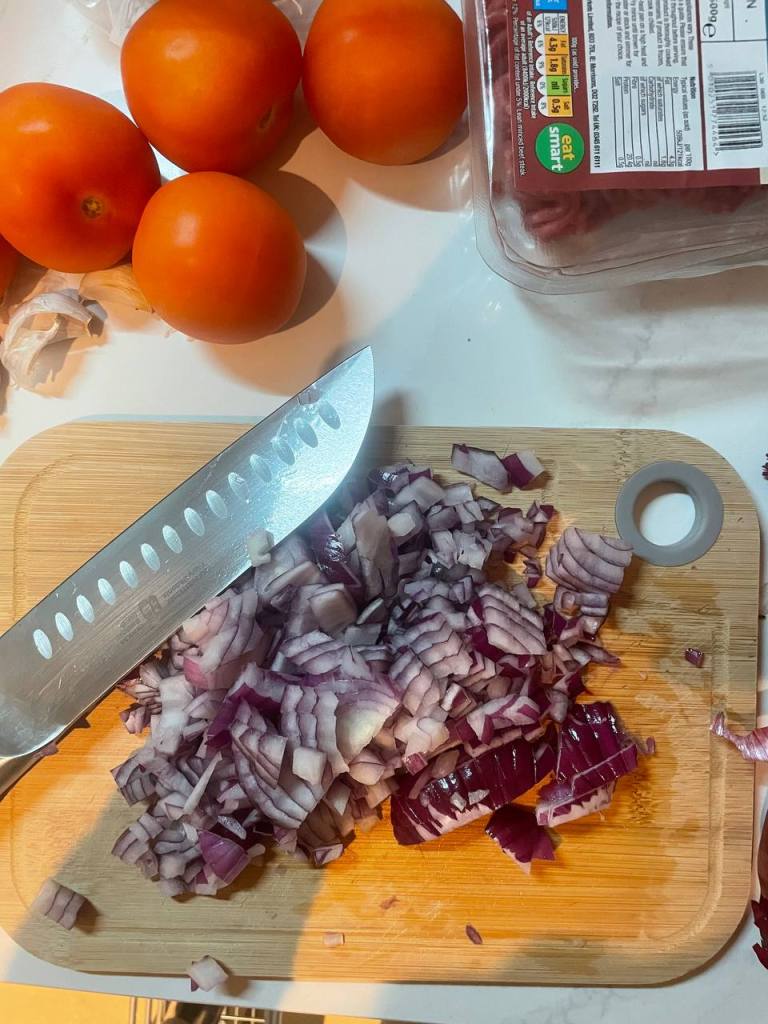
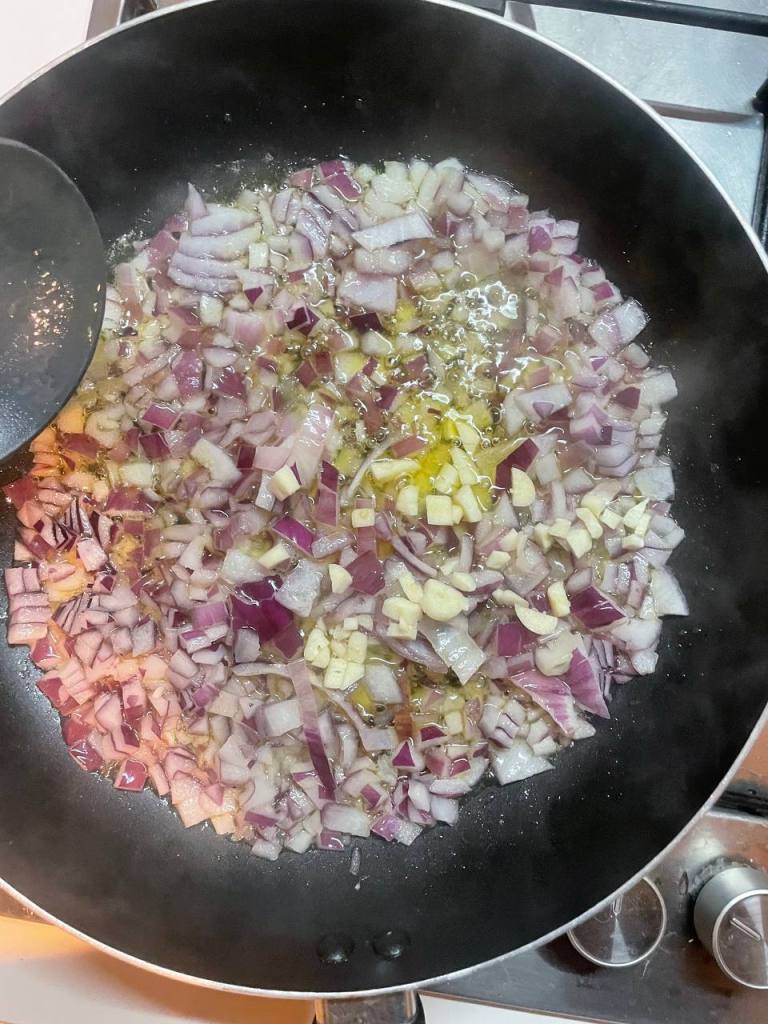
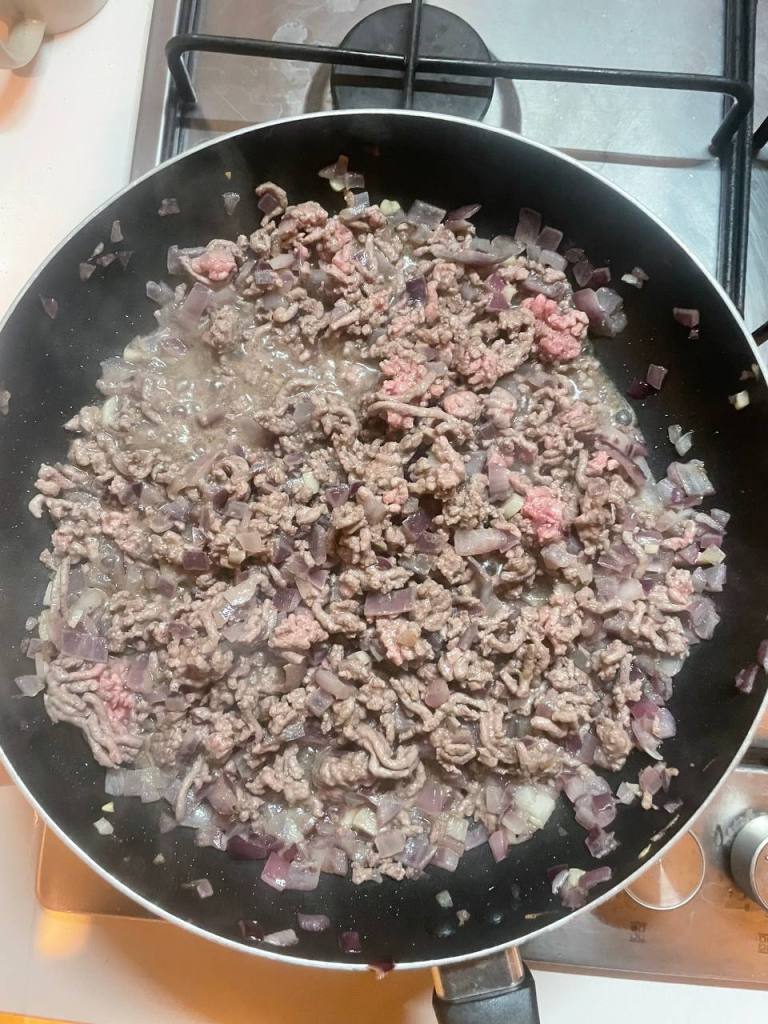
- Dice the onion and garlic cloves finely, and then fry in olive oil4 until golden
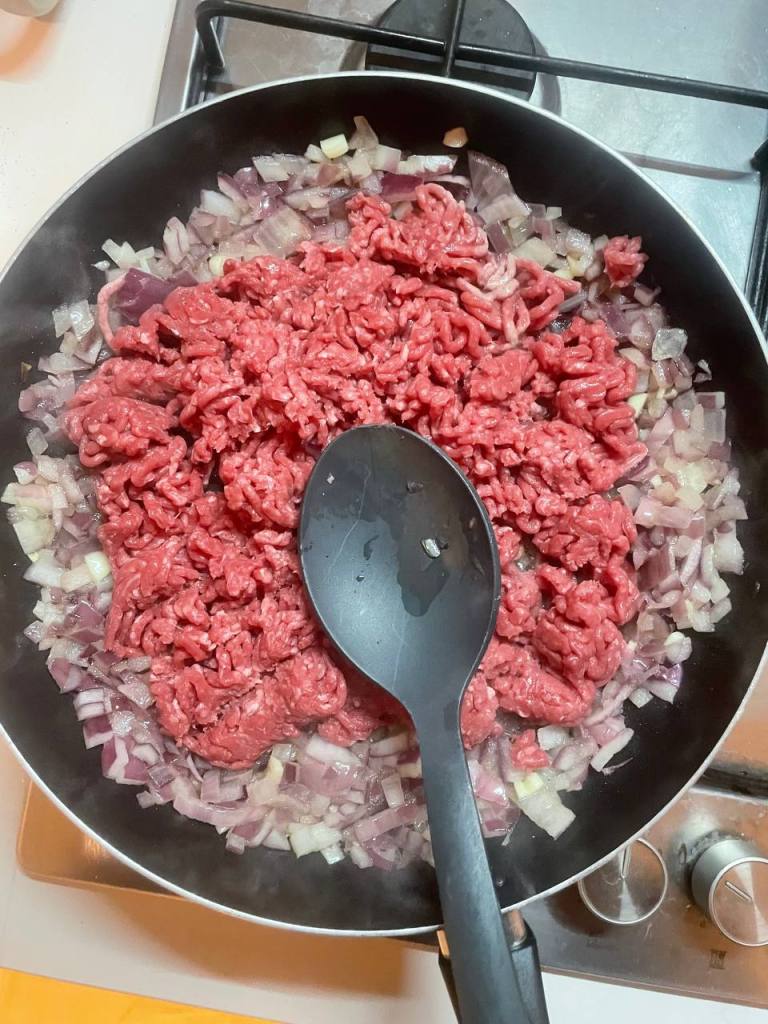
- Add the minced meat and break it up with the end of the spatula. Cook until browned
- Meanwhile, grate the tomatoes. Once the meat is browned add the tomatoes, along with turmeric (it wouldn’t be Iranian without this), salt and black pepper. At this point also add the tomato paste.
- Mix thoroughly and cook on a low heat to intensity the flavours. If the sauce dries up then feel free to occasionally add water. We don’t want the consistency to be dry.
- In the meantime, cook the spaghetti in well-salted water until al-dente, and at this point do what would make every Italian scream in pain: drain the pasta water and run the pasta under cold water. We do this to prevent the pasta from cooking any further, as we’ll soon steam it dum pukht style. If it cooks too much now, the pasta will end up becoming soggy.
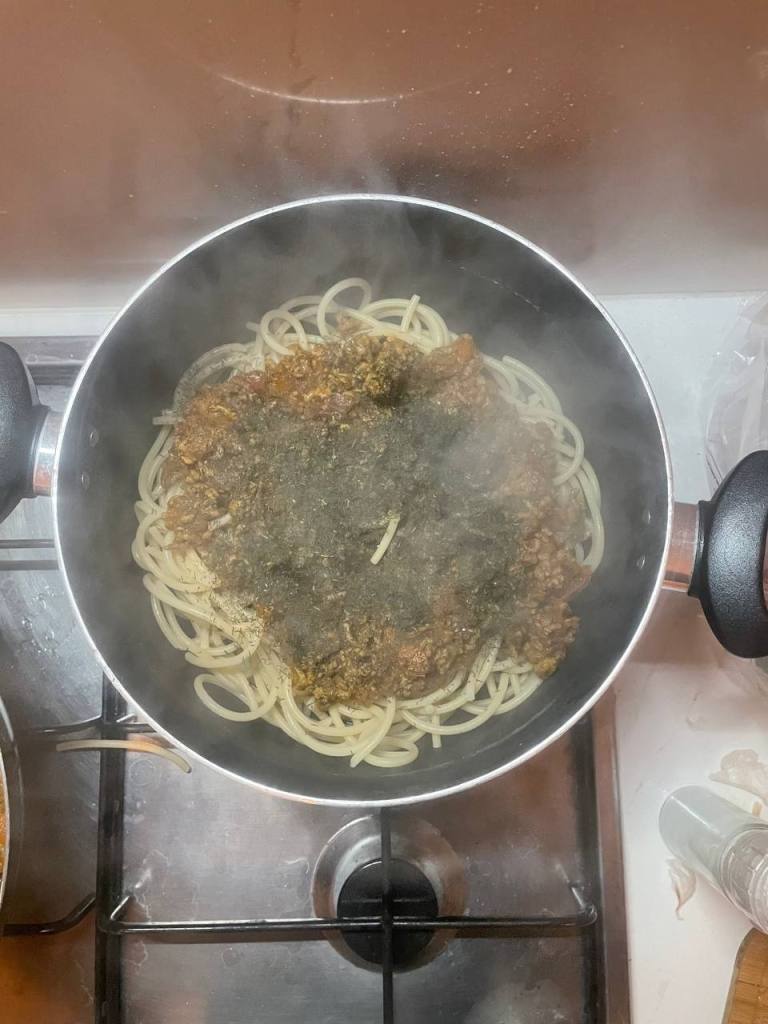
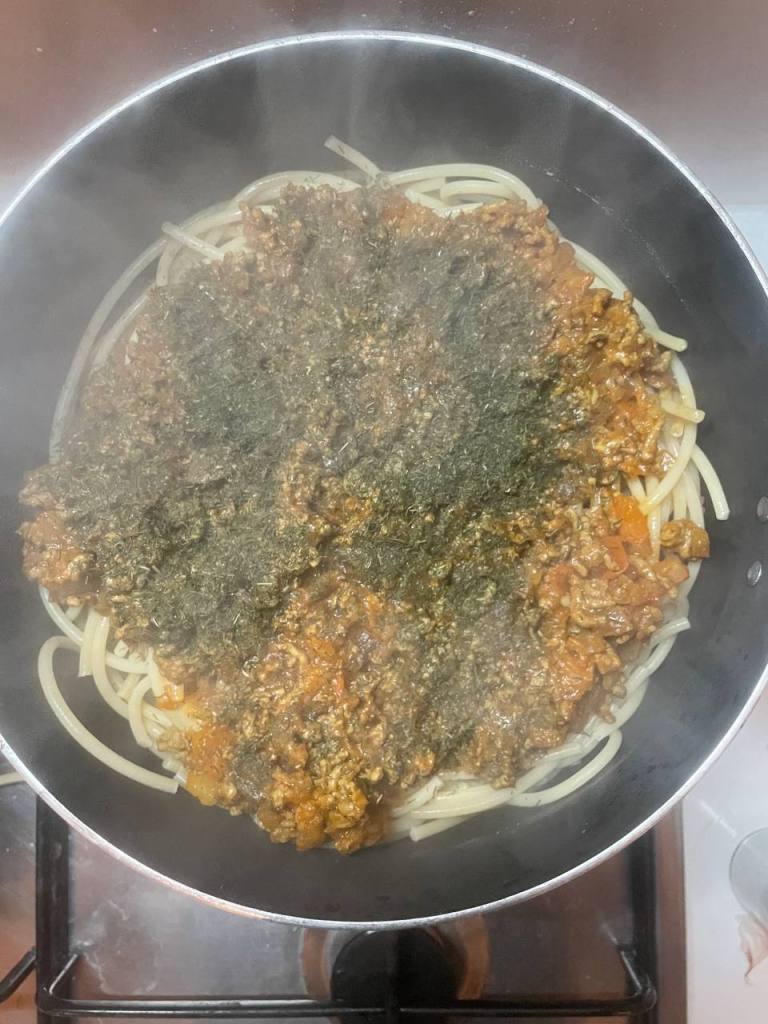
- Add some oil to the bottom of the pot. If using potatoes for the tahdig, then line the pot with thin slices of peeled potatoes, otherwise just use the pasta. Add a layer of the beef stew, and then garnish with dried dill. This ingredient is what makes this dish Evazi… I’ve yet to see a Makaroni recipe that does this5!
- Then layer again with more pasta, and a final layer of the stew (garnished again with dill)
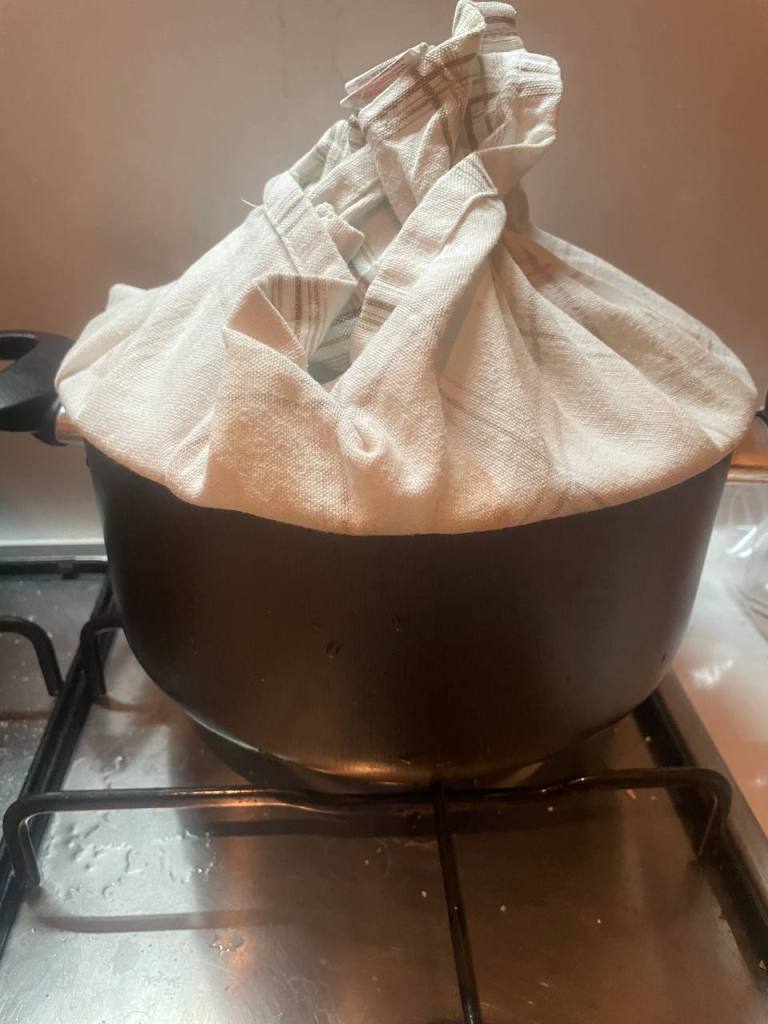
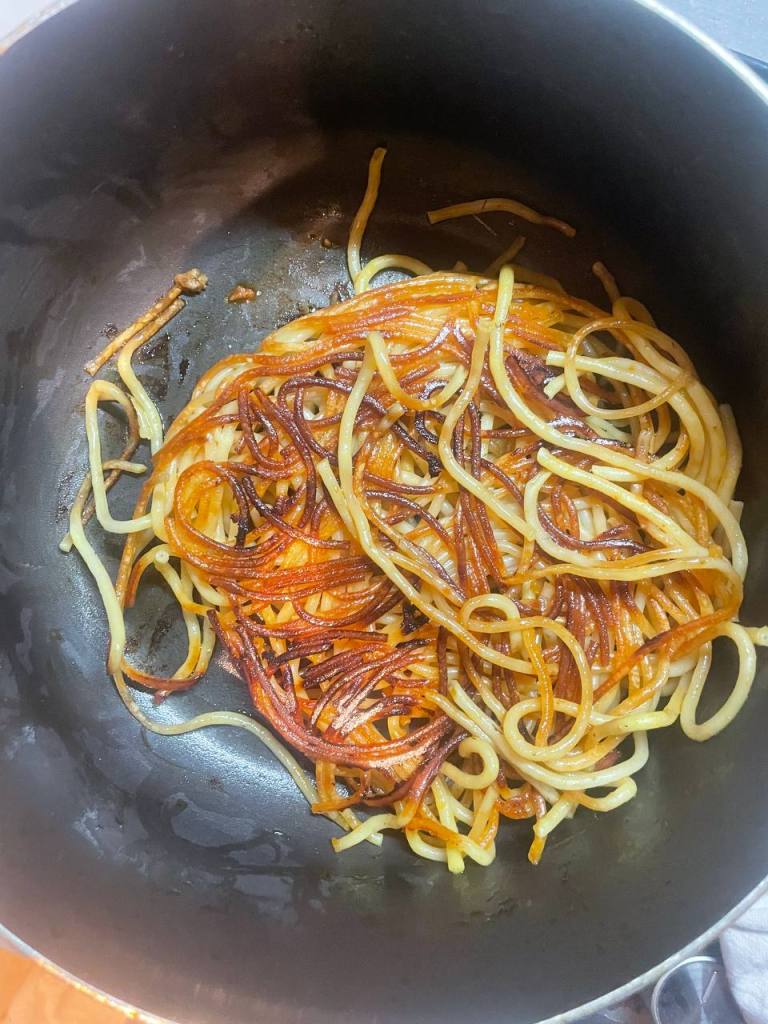
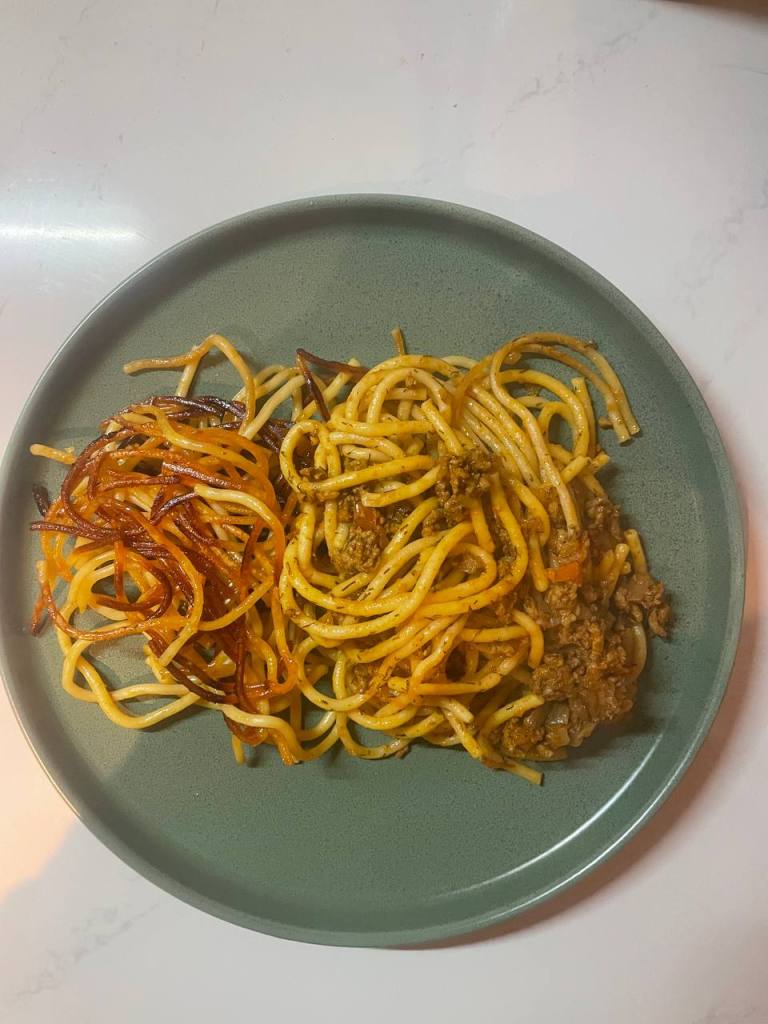
- Cover the pot with a lid that is wrapped around a tea-towel to trap steam, and cook on a slow heat for 40 mins to an hour. If everything is done right, then you’ll be able to flip the pasta onto your plate to see a beautiful golden tahdig on top!
Concluding Remarks
I think the pasta turned out OK. However, I couldn’t replicate the exact taste of the pasta I’ve grown up having at my aunts. I think this was due to the seasoning being off: too much turmeric, too little tomato with no flaovur (which is why I added a second tablespoon of tomato paste), little salt and little dill.
Still, nothing too complicated to modify, and very excited to cook this again soon!
- Note that makaroni (e.g. macaroni) usually means spaghetti, though any pasta can be called makaroni. ↩︎
- Every time I go out to an Italian restaurant with my mum I have to hear the same story of “the pasta is not cooked”. ↩︎
- A reference to none other than the great Vincenzo from Vincenzo’s plate. ↩︎
- Most Iranian households would more likely use a neutral oil like sunflower oil. ↩︎
- Dill might sound strange, especially because you’ve most likely only tried fresh dill. Dried dill is not offensive, like it sits in the front of your mouth. Instead it adds a nice secondary taste to the tomato sauce and a lovely aroma that keeps you going for more! ↩︎
 Tsunami's Hungry
Leave a comment