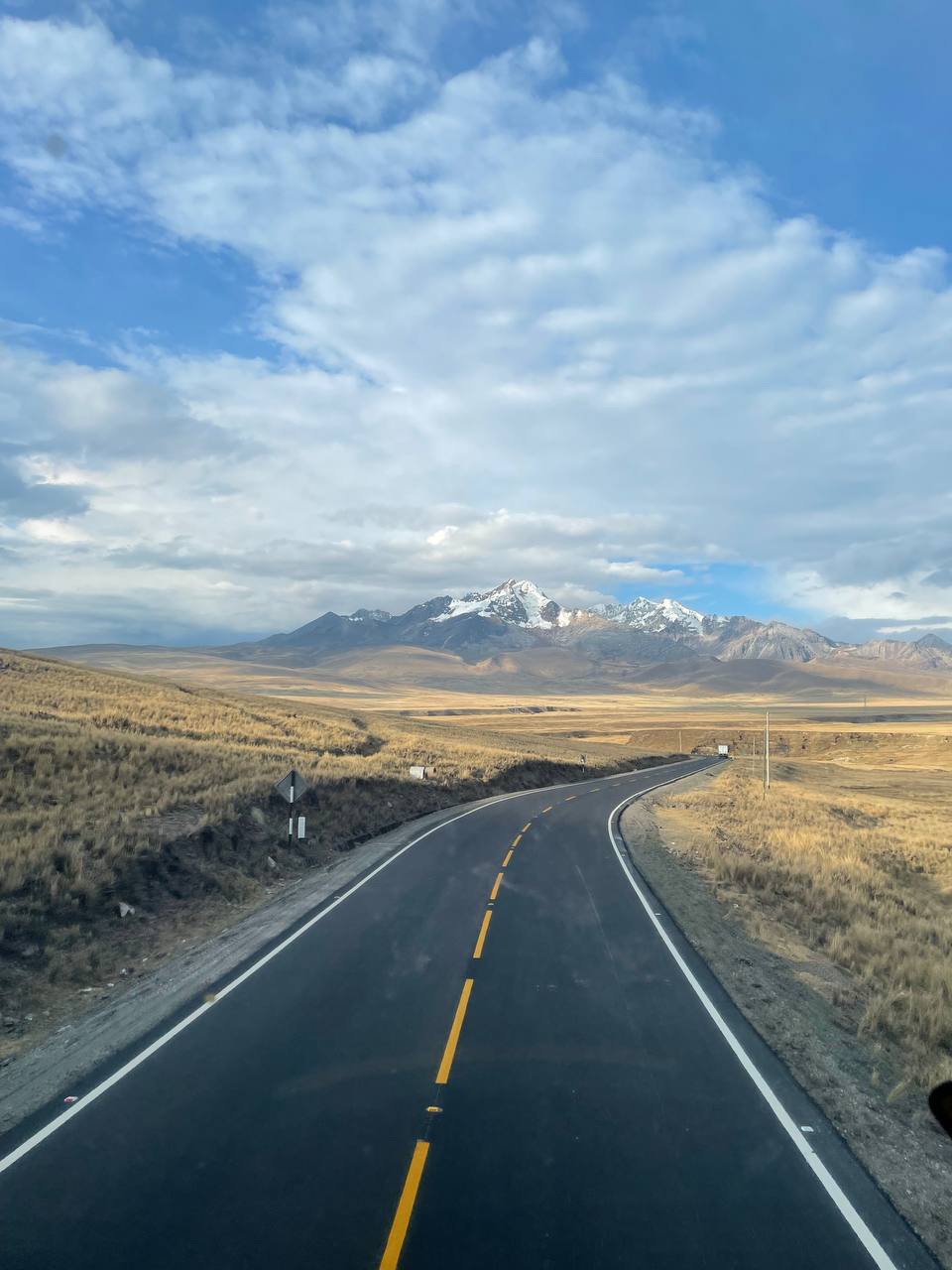
Our bodies undergo massive physiological changes when exposed to altitude, and short of sleeping in low pressure chambers, there is nothing we can do to prepare for them. In this post I briefly summarise my understanding of its effects on our bodies, and detail my experience at altitude during my 10 day hike around the Cordillera Huayhuash, most of which was spent above the tree line, peaking at a max altitude of 5100.
Physiological Changes
Most people’s understanding of high altitude is wrong: the amount of oxygen in the air is no different to that at sea level. However, our bodies get less of it. This is because air pressure decreases as altitude increases, and consequently, there is less of a “push” for the oxygen to diffuse into our bloodstream1.
Our bodies adapt to the lack of oxygen in the blood stream through a few different ways.
Firstly, our heart rates increase to make up for the lack of oxygen reaching our cells, our non-essential body functions are suppressed, and our ability to digest food is hampered. In the background, our bodies also try to adapt to the low oxygen environment by a few different mechanisms, such as but not limited to increasing the production of red blood cells. This process is known as acclimatisation.
Exerting yourself at altitude without proper acclimatisation can cause severe complications, such as fluids building up in the brain and lungs, ultimately leading to death, regardless of how healthy the individual is. No amount of good fitness can guarantee that you’ll be complication free from the effects of altitude, so be sure to take it seriously.
My Own Notes
Notes About Myself
I had never been at altitude before, and I’d lived at sea level my whole life. I am G6PD deficient. I had good cardiovascular fitness before this trip.
Altitudes Crossed
I ascended from sea level to 3052 metres over 12 hours. I slept at that altitude for 6 nights before my Huayhhuash trip. During those days I did day hikes to areas of higher altitude: up to 3400 on day 2, 3700 on day 3, 4500 on day 4 and 4980 on day 5. On the Huayhuash trek, the itinerary was roughly as follows: 1) day 1 gently ascend to 4100 by car, and then hike to 4500 before sleeping back at 4100, 2) day 2 ascend to 4680 before, hike down to 4230 for sleep, 3) day 3 hike to around 4650 before going back down to around 4138 to sleep, 4) day 4 hike up to 4800 before going back down to around 4330 to sleep, 5) day 5 hike up to 5000 before going back down to 4350 to sleep, 6) day 6 hike to around 5100 before going back down to 4200 to sleep, 7) hike down to 3550 to sleep, 8) hike back up to 4800, before going back to 4350 to sleep, 9) hike up to 4847 before hiking back down to 4066 to sleep and finally 10) hike down to 3300 to sleep.
Physiological Changes at Different Altitudes
I didn’t take any diamox because of my allergies.
Up to 4000
I felt quite lightheaded and dehydrated when I arrived to 3052 on the first night, though part of this was due to actual dehydration and hunger. Despite the accent of 3000 meters in one day, I had an appetite and I finished my meal. Many suggest eating light, but I listened to my body and recognised that it required food. By the morning I felt very good. I think having gradually ascended helped me acclimatise. I didn’t have any issues going up to 3400 or 3700 aside from shortness of breath, though it was manageable.
Up to 4500
The first time I went to 4500 I found it hard, though it was manageable. My heart was pounding, but not just beating fast, the heartbeats would hurt. I had a bad headache (very similar to a hangover or a night with 3 hours of sleep). The hike was sufficient to distract me from it, and I never felt like I needed to sit down and rest. On this hike though I think I experienced my body ignoring signs of hunger, because it was only on the descent that I felt extremely hungry, and really unwell (I believe I may have been in a state of having exhausted all my carbohydrate sources).
Up to 5000
The day after was when I ascended to 4980, but on this hike altitude sickness hit me hard at around 4050. I noticed these effects: a more intense headache than the day before, bordering on inability to think clearly (though I did not feel dizzy) and an expansion of the eyelids causing a noticeable strain on the face. I had two very strong urges: to jump down the mountain to relieve the pain (not in a suicidal way, more so “if I jump down then the headache will go away”) and to rest or nap. I tried the latter but I couldn’t fall asleep. I slowed my hike and took frequent breaks, and by 4500 my headache had receded a bit, though it was still there. On that hike I managed to push to 4980 without any complications of my symptoms.
Crossing 5000
Once the Huayhuash hike started, I didn’t notice many issues (neither with sleep nor with the hikes) aside from the occasional heart pain and breathlessness. I had two difficult days: both when we went up to the 5000s. Unlike my previous experience though the effects didn’t so intense on the ascent up, but they really hit me on the way down. I believe this is because of our body’s tendency to mask pain when we are exerting ourselves. None of the above experiences were as bad as the time I went to 4980.
Other Physiological Changes
I noticed that I needed to urinate quite frequently.
Treating Altitude Sickness
I found by chance that having dark chocolate can sometimes help with the symptoms of altitude sickness, or at least delay it. However, this is not consistent and cannot be relied on as a preventative measure. I did not notice any improvements from coca tea, though I cannot say definitively that it didn’t do anything, as I was having at least a cup a day on the Huayhuash trek.
Can You Prepare?
While there is nothing you can do that guarantees that you won’t get altitude sickness, there are still very good reasons to be as fit as possible.
Good fitness means that your body won’t be under as much as strain as it would otherwise. This makes it less likely for you to develop symptoms of altitude sickness, and it makes it less likely for your body to breakdown (for instance: muscle failure, heart failure, etc…). Further, being physically fit improves your recover.
While there isn’t much evidence for it online, I believe that training to exert yourself while holding your breath, or while taking small breaths is useful in that it makes you used to exerting yourself under symptoms similar to that induced by altitude sickness. Of course, this should not mean that you should push yourself to dangerous limits when you’re up there.
- It is for this reason that the use of air constricting masks don’t help you “get used to” altitude. If your lungs are full of air, then you end up having the same amount of oxygen in you regardless of how hard you worked to fill up your lungs. The exercise masks train your diaphragm, which is good to decrease the chance of being exhausted at altitude, but it does not train you for altitude. ↩︎
 Tsunami's Hungry
Leave a comment