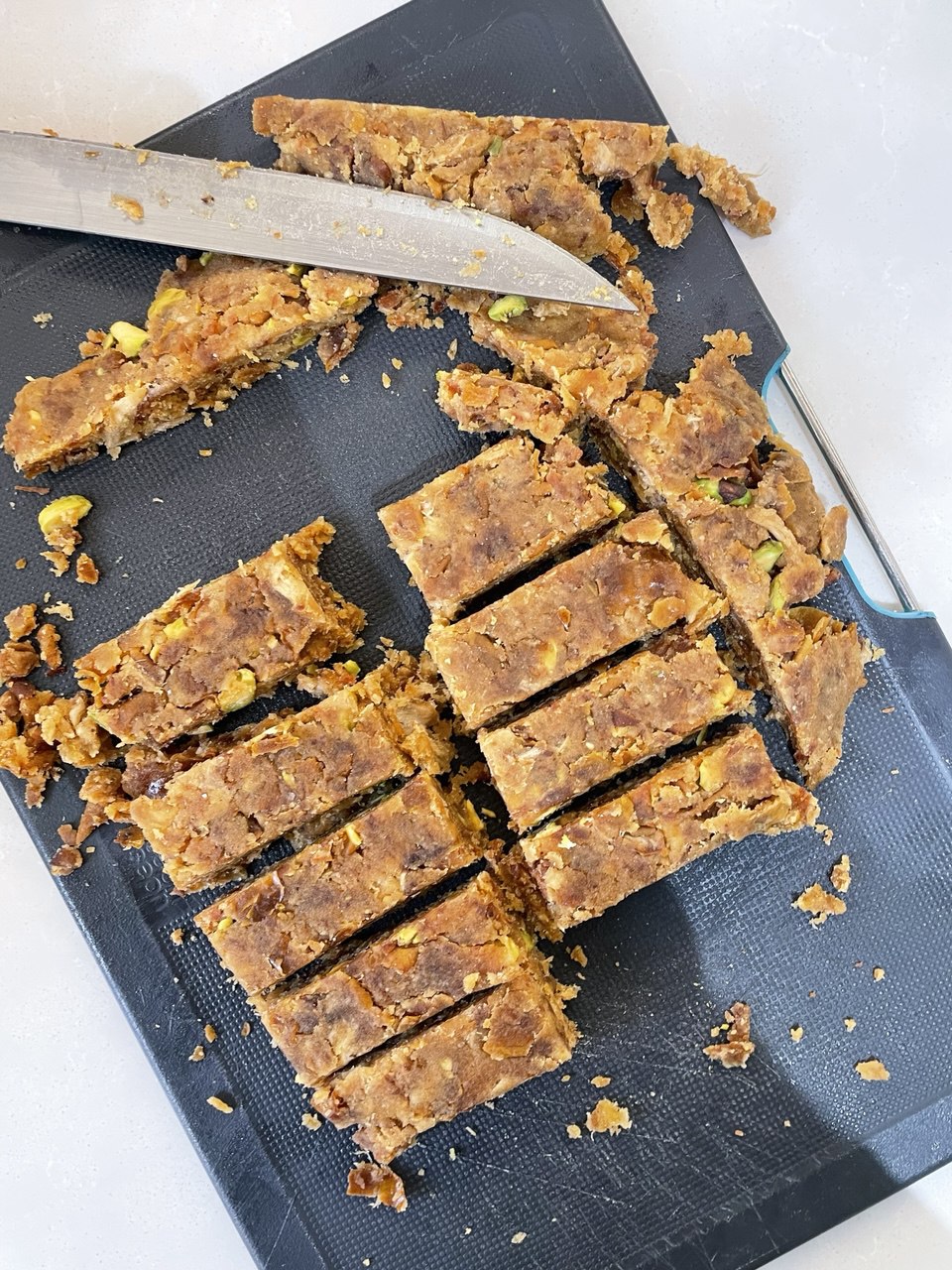
You’ll notice reading my posts on Evazi cuisine that I absolutely hated a lot of the desserts growing up. This is because Evazi deserts invite a mature palette: dates, nuts and spices take center stage, whereas ingredients that children love, like chocolate, have no presence.
I therefore forgive myself, for the most part, about not having enjoyed Evazi delicacies in my childhood. However, I’d be lying if I said that I wouldn’t wish to have discovered many of them sooner… and Astomazata is definitely one of them.
Ingredients
As described by my aunt:
- 2 cups of type 2 flour
- 1 cup of neutral oil
- 3 cups of dates (or 2.5, if 3 is too much)
- (optional) butter
- (optional) pistachios as garnish
- (optional) cinnamon for flavor
- (optional) cardamom for flavor
My attempt:
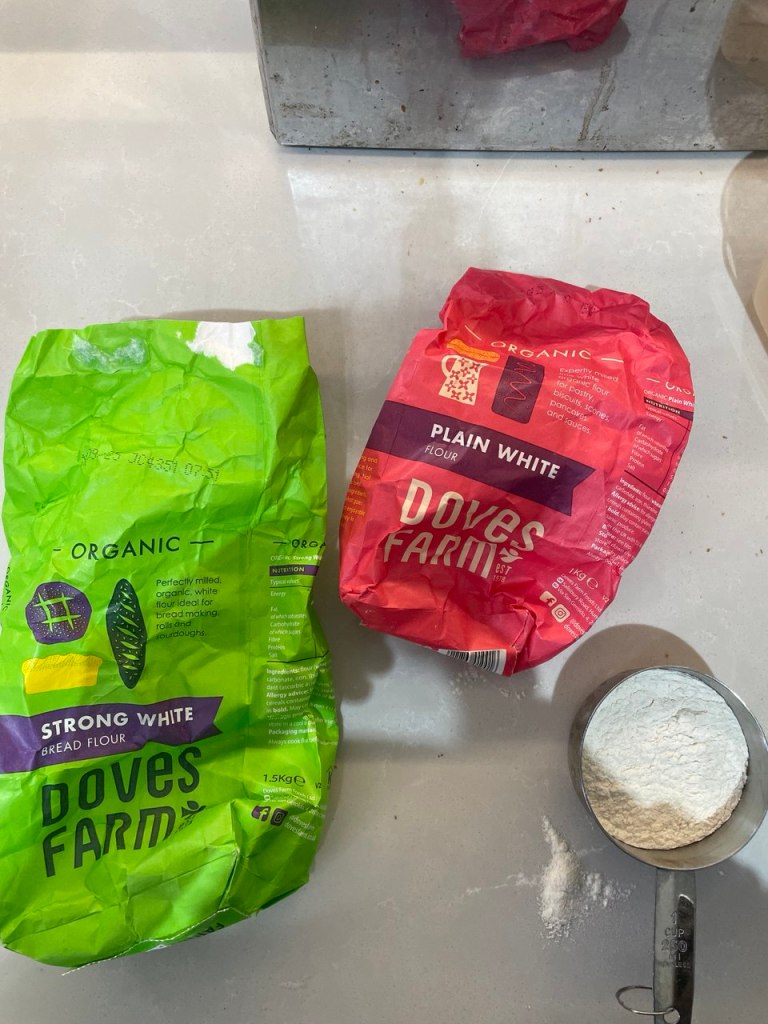
- 120 g of strong white flour (in the absence of type 2 flour I tried with white flour)
- 113 g of sunflower oil
- 316 g dates (I used medjoul dates)
- 25 g pistachio
- 1/2 tsp cinnamon
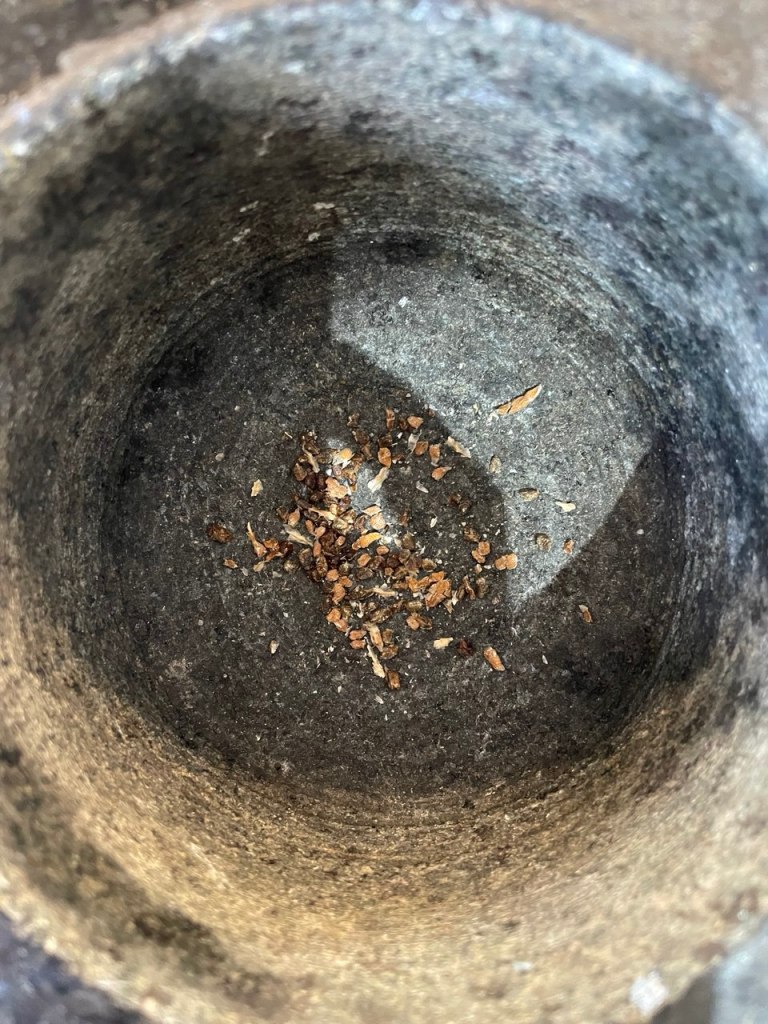
- 12 cardamom pods
I’m not sure what category of dessert Astomazata falls in, but the texture really reminds me of a sweet minced meat. So perhaps you can think of it as the British “mincemeat”, but instead of using it as a filling for pies, us Evazis either enjoy eating chunks by hand, or having morsels of it with flatbreads, like Gapok.
Preparation
As per my aunt, making astomazata is a piece of cake:
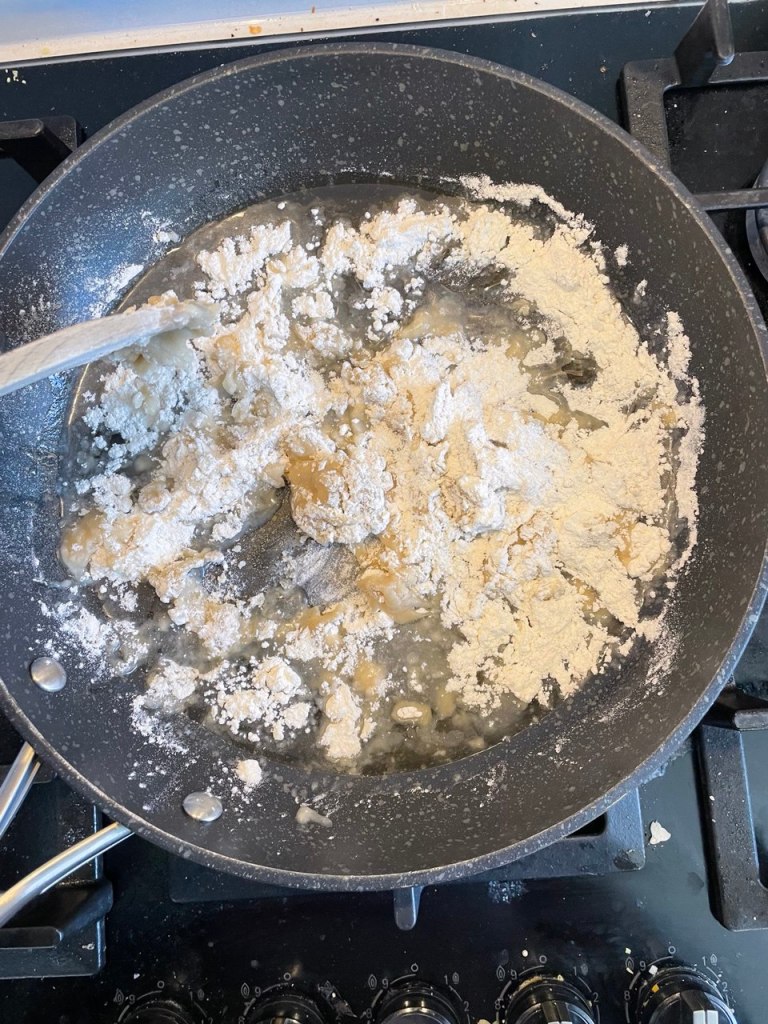
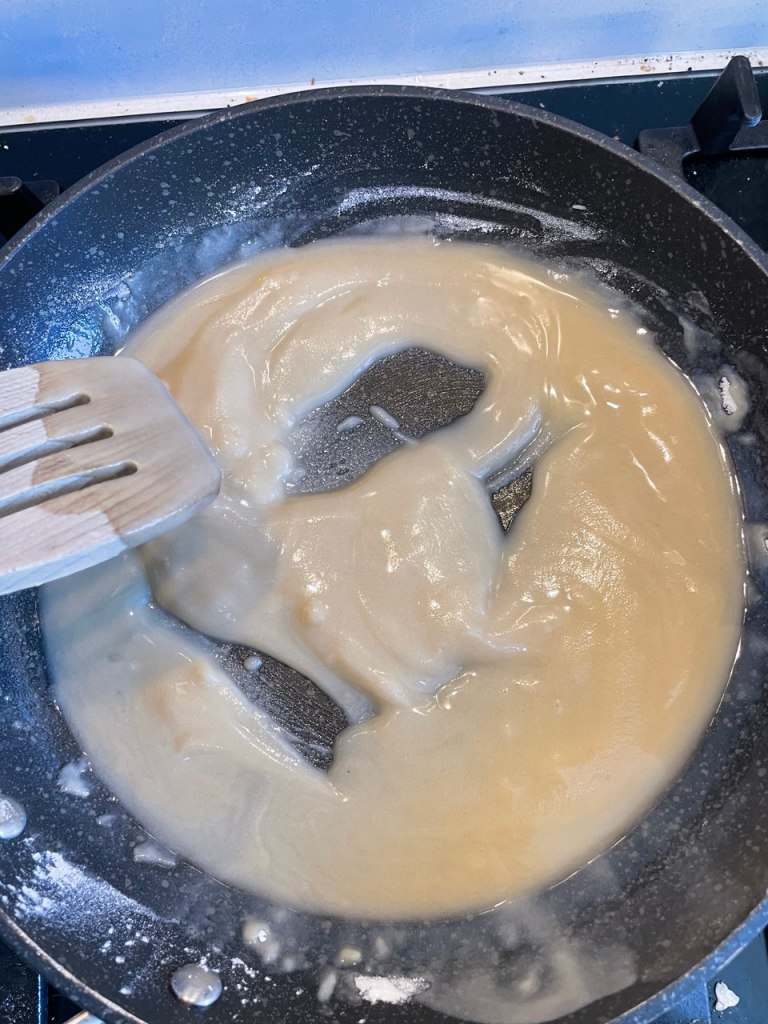
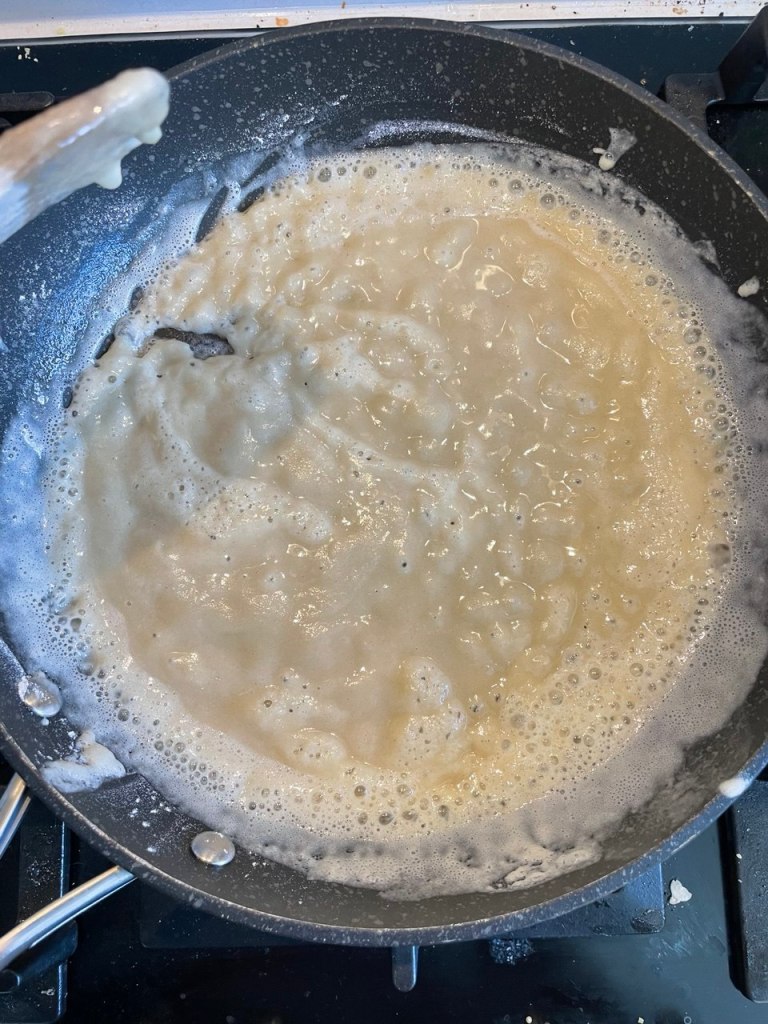
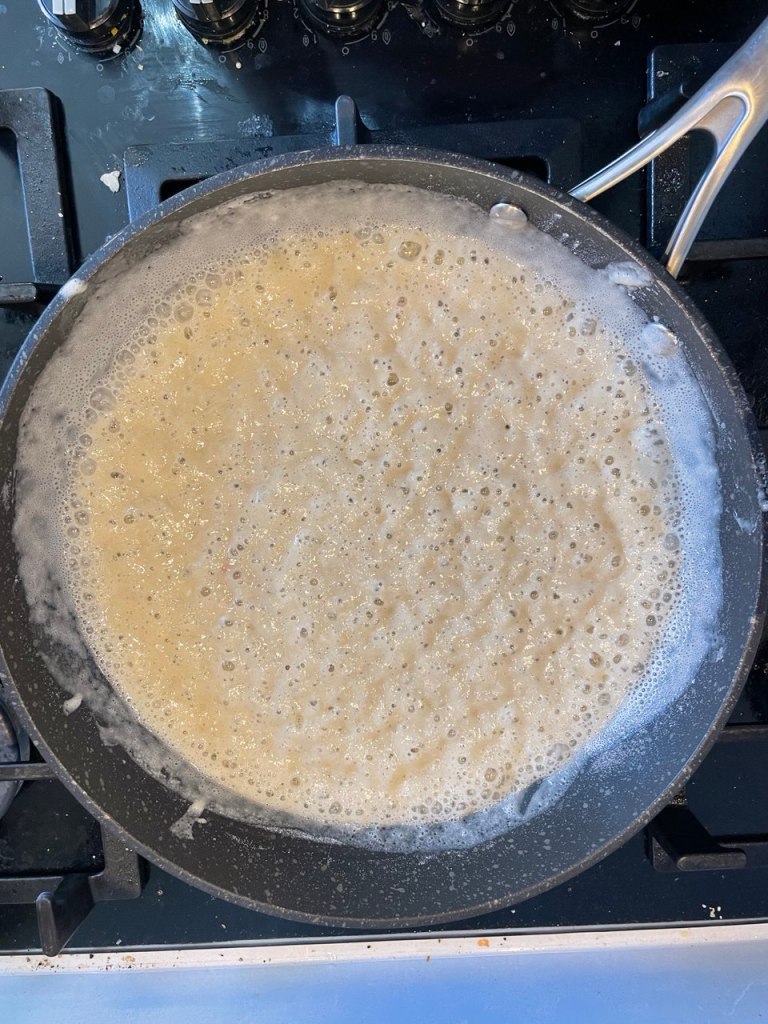
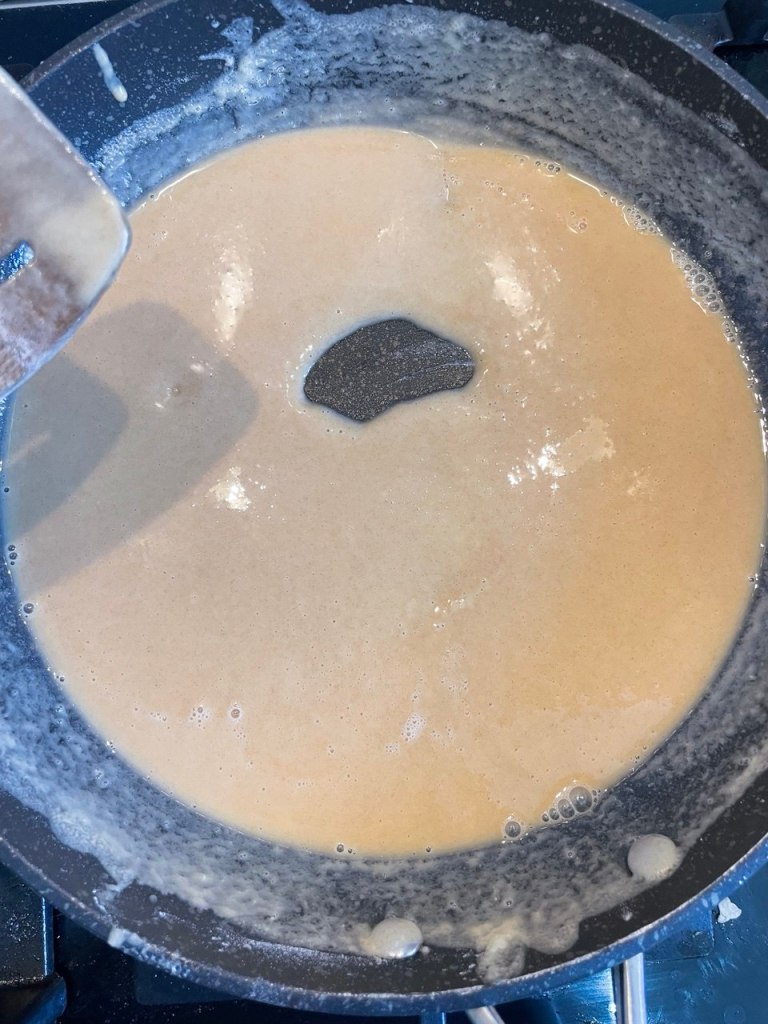
- Heat the oil and then add the flour
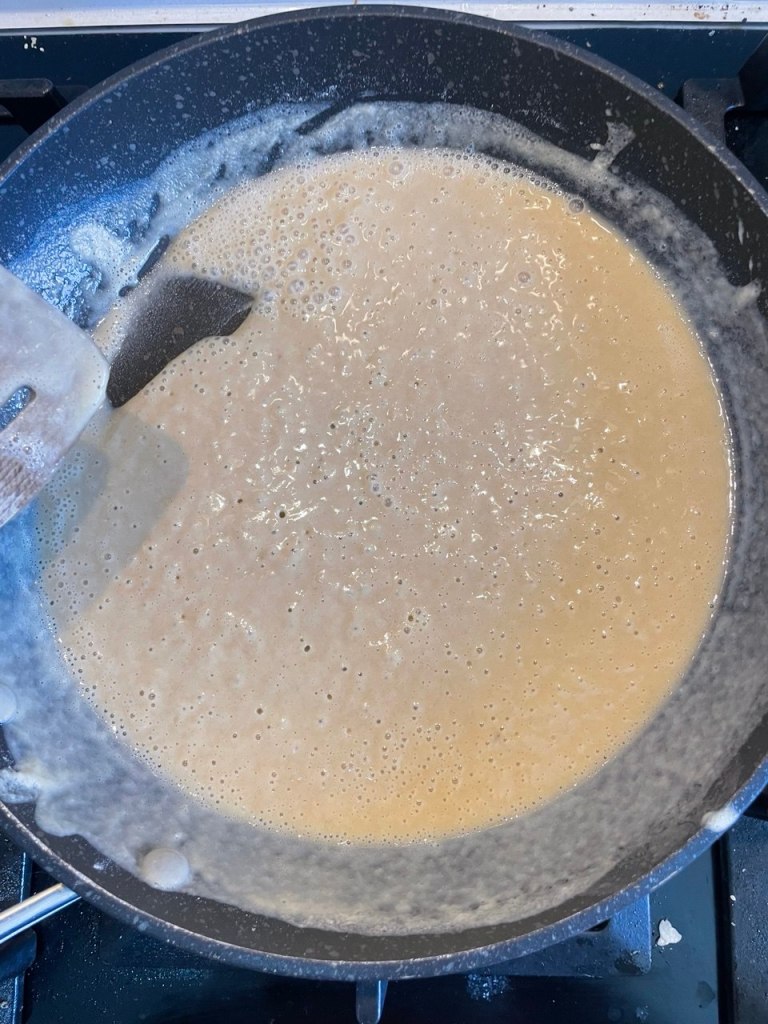
- Keeping stirring until the flour turns a beautiful red color
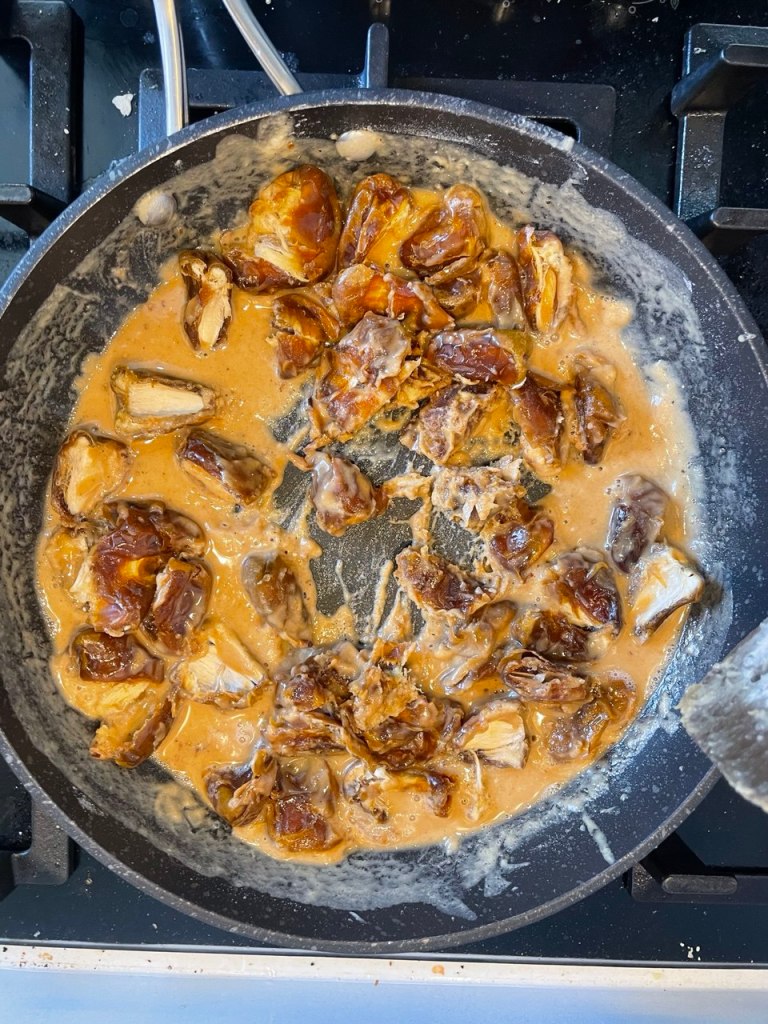
- Optionally add the spices, and then add the chopped dates
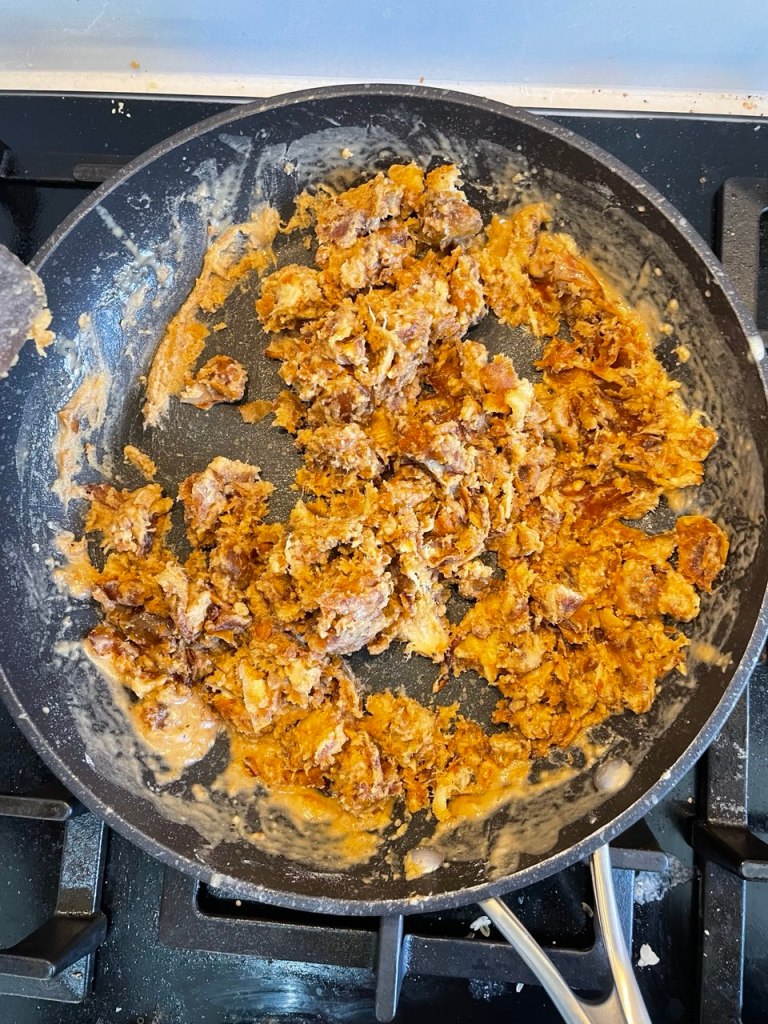
- Using a flat ended spatula, break up the pieces of the dates until you have a consistency that resembles minced meat. At this point you should also turn off the heat
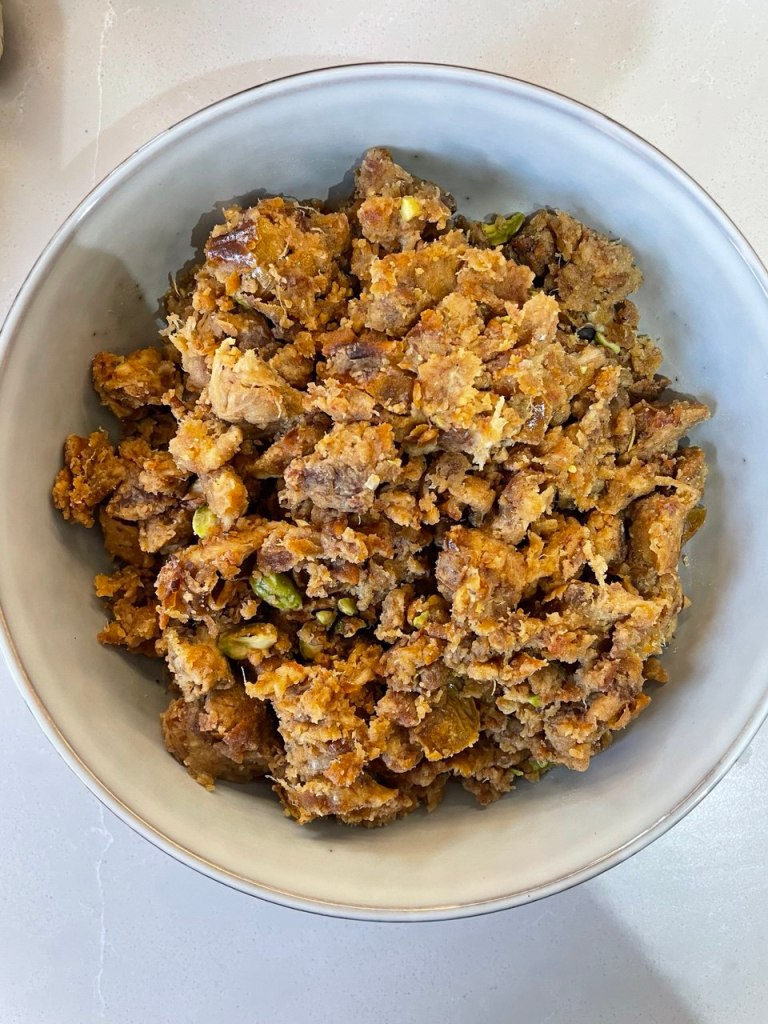
- Optionally, mix in the sliced pistachios
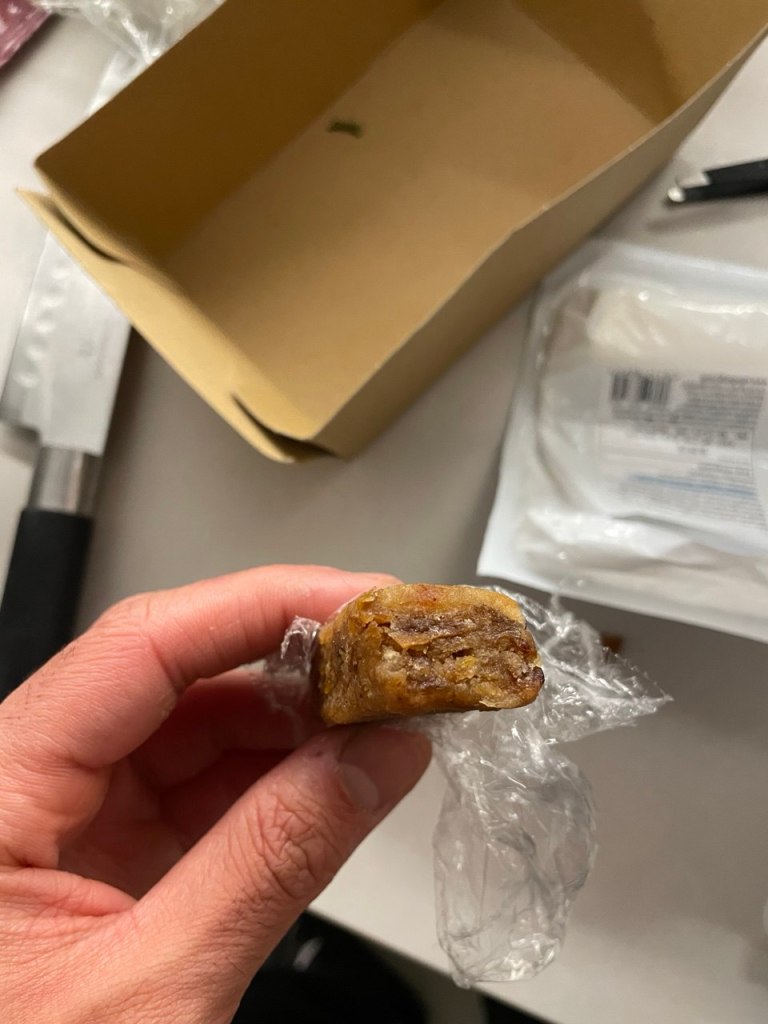
Despite the fact that it sounds painfully simple, I couldn’t get the right consistency or the right color when I made it. Therefore in the end I decided to see if I can convert the failed experiment into energy bars, and it sort of worked!
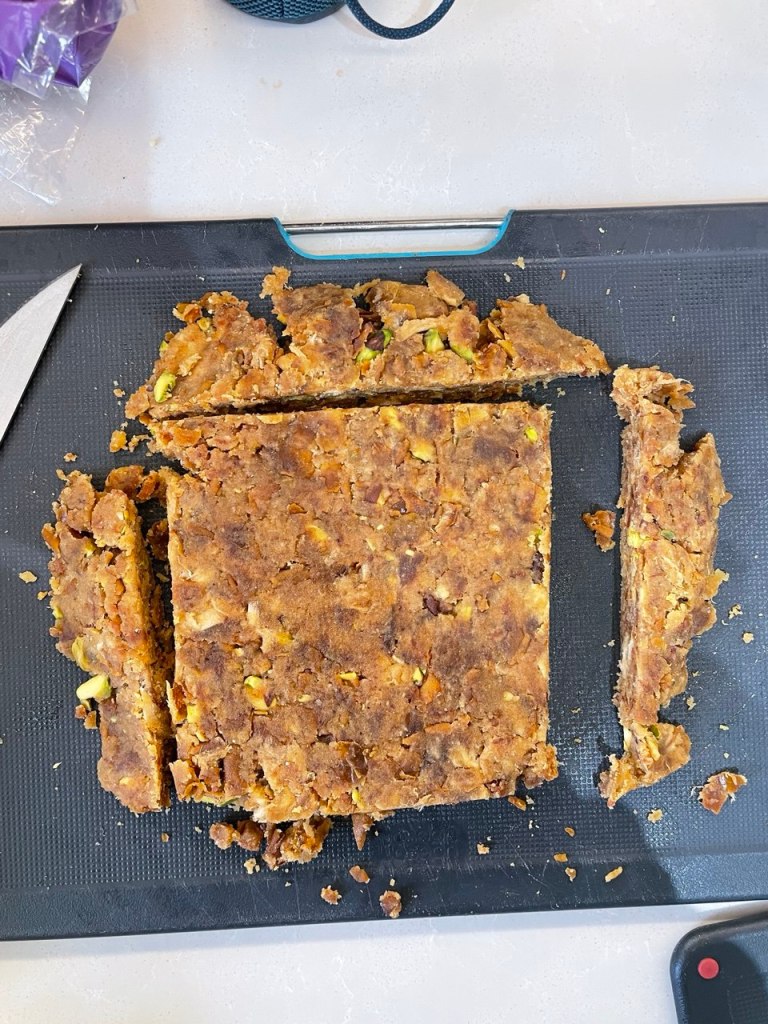
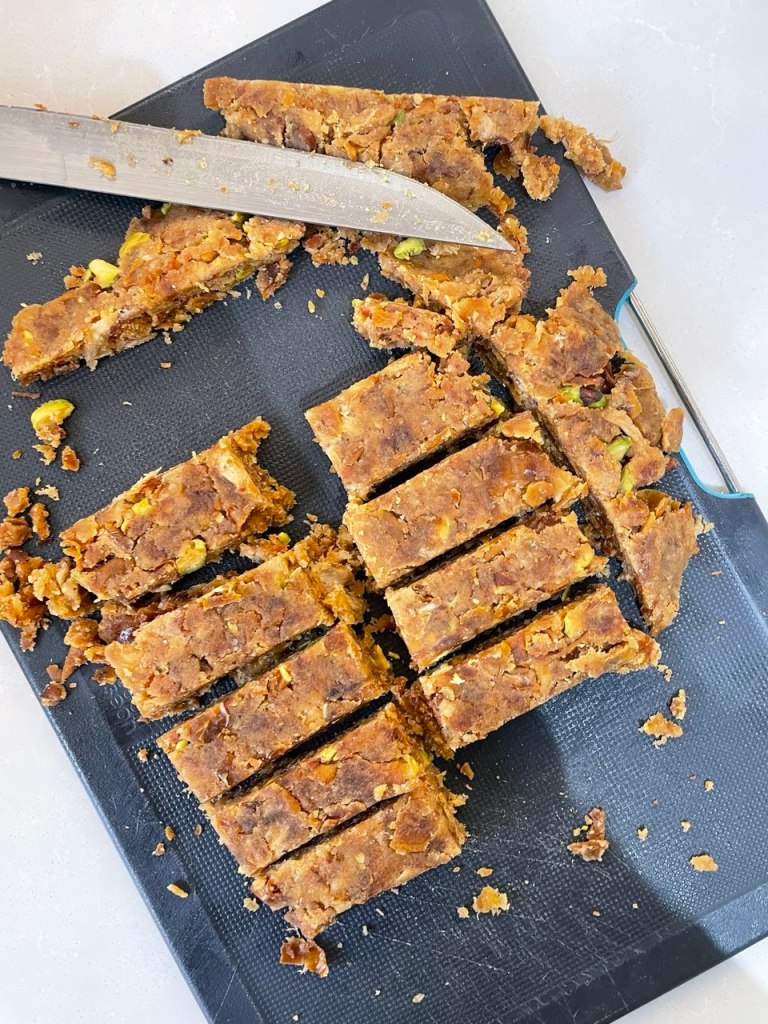
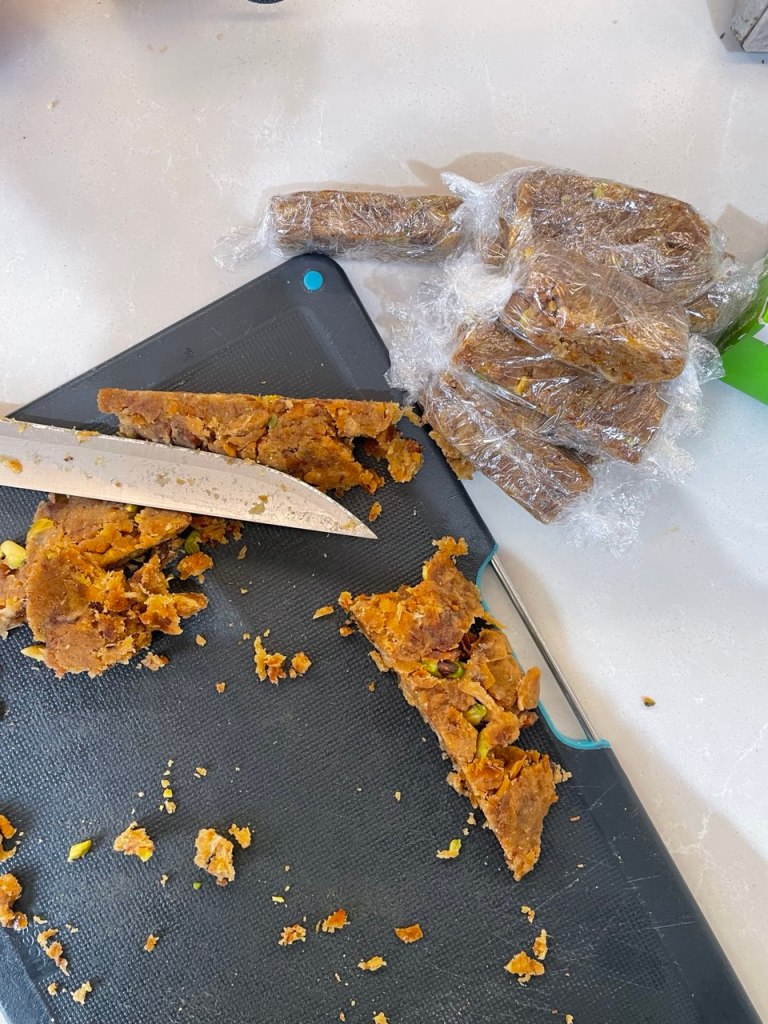
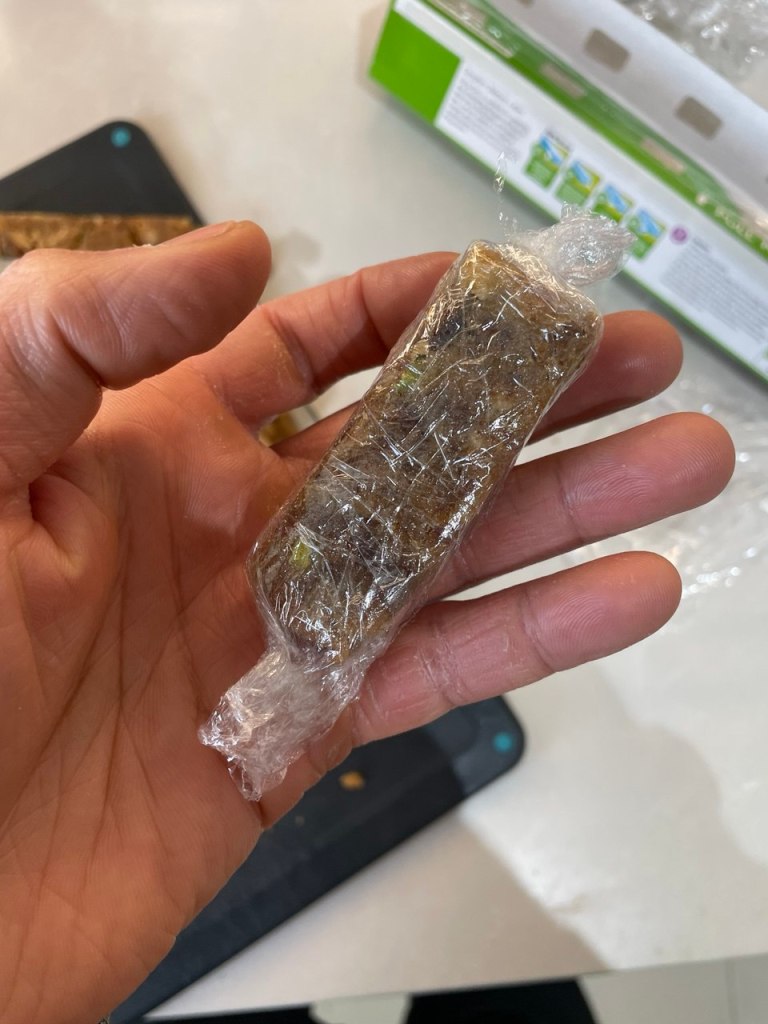
I clumped the astomazata together using two chopping boards and let it set in the fridge. Then broke it into bars using a sharp knife before wrapping with cling film. This to me was kind of a success, as I find it much more nutritious and less processed than store bought energy bars!
Maybe what I need to invest in is a kit to get them wrapped up properly… and can I figure out how to ensure that the clumps stick together?
Below is a visual catalogue of the steps, along with captions.
Concluding Remarks
Looking back, part of the reason why this went wrong is because I doubted my aunt: she mentioned explicitly the need for turning the flour “red” (which I take means brown). I assumed she meant golden, so stopped a bit too early. Further, note that I used white flour when she suggested using type 2 flour, which is a bit darker. I doubted this because the astomazatas I’ve tasted don’t have that earthy flavor characteristic of wholemeal flour. I still believe this, so next time I make this I’ll try white flour again but I’ll make sure to toast it to brown without burning it.
The second reason why I went wrong is because I couldn’t cut my dates using the flat end of the spatula that I was using. This is because the spatula head is a bit soft and too thick, but I also recognize that I could have softened the dates a bit.
Still, I believe that there is great potential in presenting astomazata as energy bars, so even this mishap can be seen quite positively.
I’m excited to continue experimenting with Evazi foods in the coming year.
 Tsunami's Hungry
Leave a comment