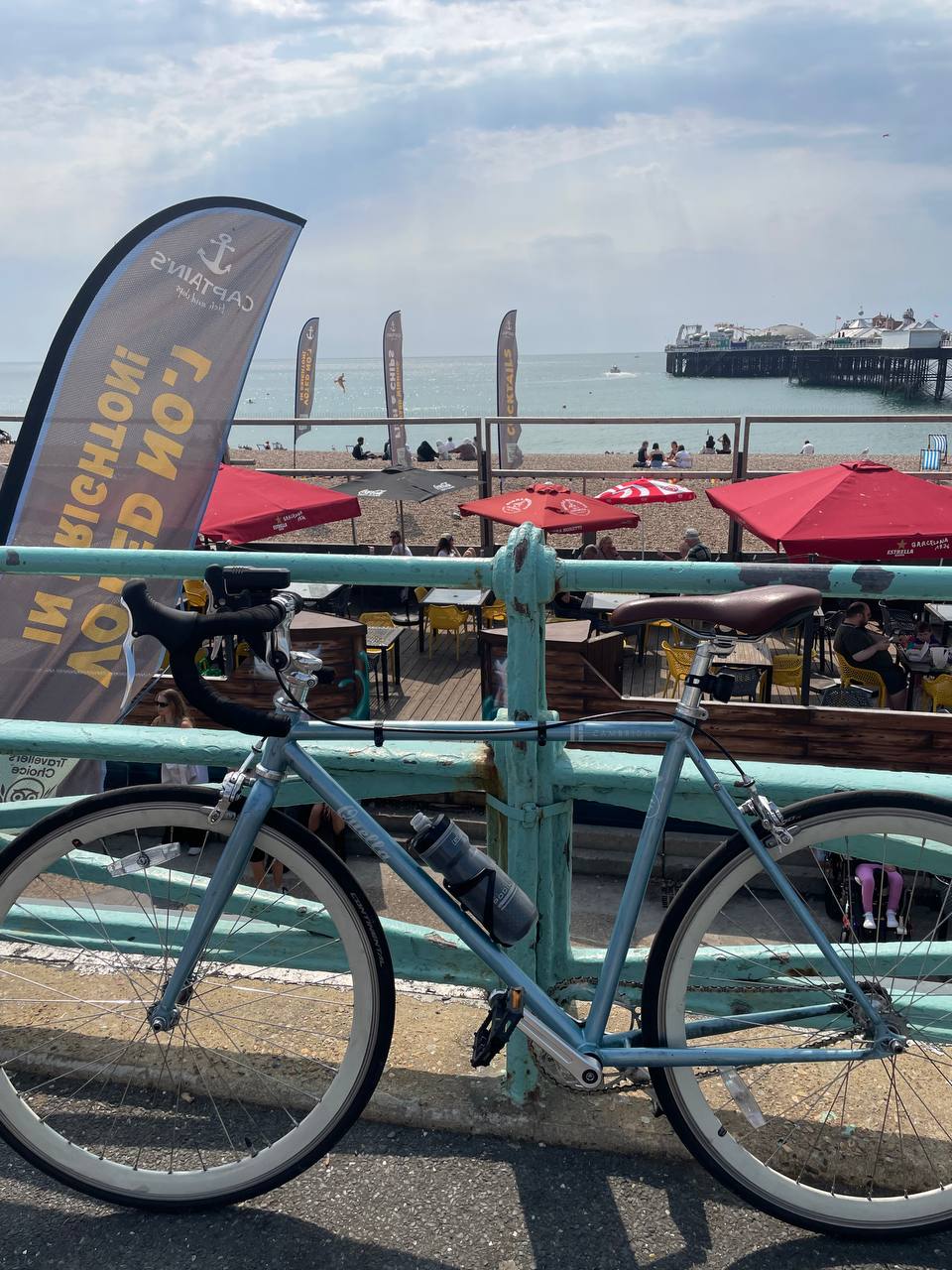
“I wanted to cycle to Brighton, but I couldn’t work out the logistics of making it for the official BHF organized event” is roughly what I said to Rook at the local bike shop, to which he said “I’ll join you on the gravel bike I built recently”, to which Fel added “and I’ll join you on my mountain bike” to which Mike and Rudy added “and we’ll join you on our road bikes”… and as for me? I was going to ride it on a single speed!
Pixie’s New Look
If you read about my conquest of North London’s Hills, you’ll already know about Pixie1! She’s a Quella Varsity Cambridge with the classic handlebars. But you may notice she’s had a bit of a makeover: I got her some dropbars2!
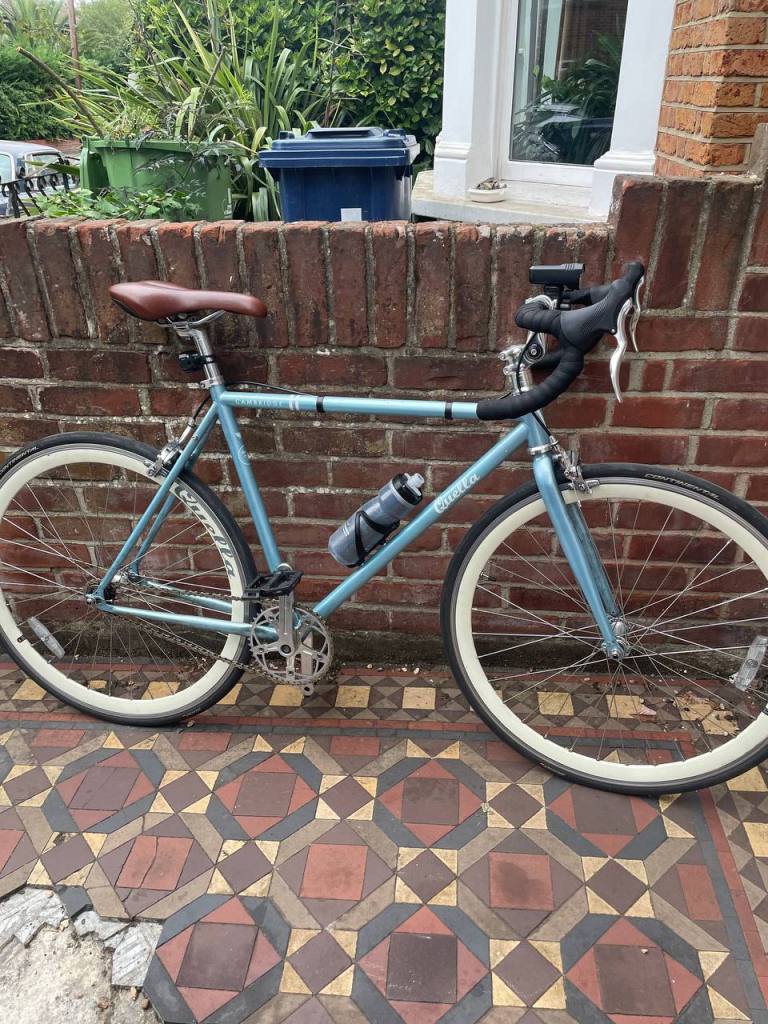
This wasn’t necessarily in preparation for this ride: in fact I’d gotten some bullhorns to help with the hills3. The reason why I ended up using the dropbars is because I wanted to give them a proper test ride to see if I like them: I’d only set them up three days before the cycle to Brighton, and hadn’t really given them much of a chance… and the truth is that I wasn’t bothered to switch back to the bullhorns!
Route Details
The route we went on wasn’t the official BHF London to Brighton route. It was the first leg of a London to Brighton to London loop! The full segment details can be found here.
Compared to the official route, this was considerably harder, with:
- 1238 meters (4061 ft) of elevation gain, instead of 878 (2881 ft)
- 102 km (63 mi) instead of 86 (53.5 mi)
With an average elevation gain of 12 m/km (60 ft/mi), this is considered a moderately hilly route… translated in single speed: I was going to be cycling through the alps, so I had my fair share of sleepless nights imagining my knees popping in the middle of the climbs!
Our Bikes and Gear
I kind of knew that cycling with a single speed was going to get me ridiculed, but hey: it’s my only bike and my philosophy is that you shouldn’t stop yourself from doing something you want to do because others tell you your gear isn’t right4!
In fact this is one aspect of cycling that I seriously dislike: the community can be quite elitist, with their fancy carbon bikes, cycling shoes and clipless pedals, fancy sunglasses, cycling shorts and jerseys and of course, the fancy gels they all have hidden in their pouches!
Now, I’m not saying you should not get into cycling as a sport: there are reasons why cyclists swear by their gear, and those reasons are backed by serious science. I’m simply commenting on an industry that increasingly caters for racing only: not every cyclist wants to optimize for speed, and it is a shame that the culture seems to reinforce this, often leading beginner cyclists to spend huge sums of money on bikes that force them into uncomfortable positions just so they can be more “aero”. Marginal gains only make sense if you are racing… what happened to just getting on a bike for the fun of it? You know, that feeling of freedom that you got as a kid when you first learnt how to cycle? At least at this point of my life, this is why I love cycling: I’m intoxicated by the freedom of it.
Anyhow, the bunch I was to cycle with are chill despite their fancy carbon bikes… and while they can put on serious speed5, the intention of the ride was to take it easy on me and my single speed.
Bikes
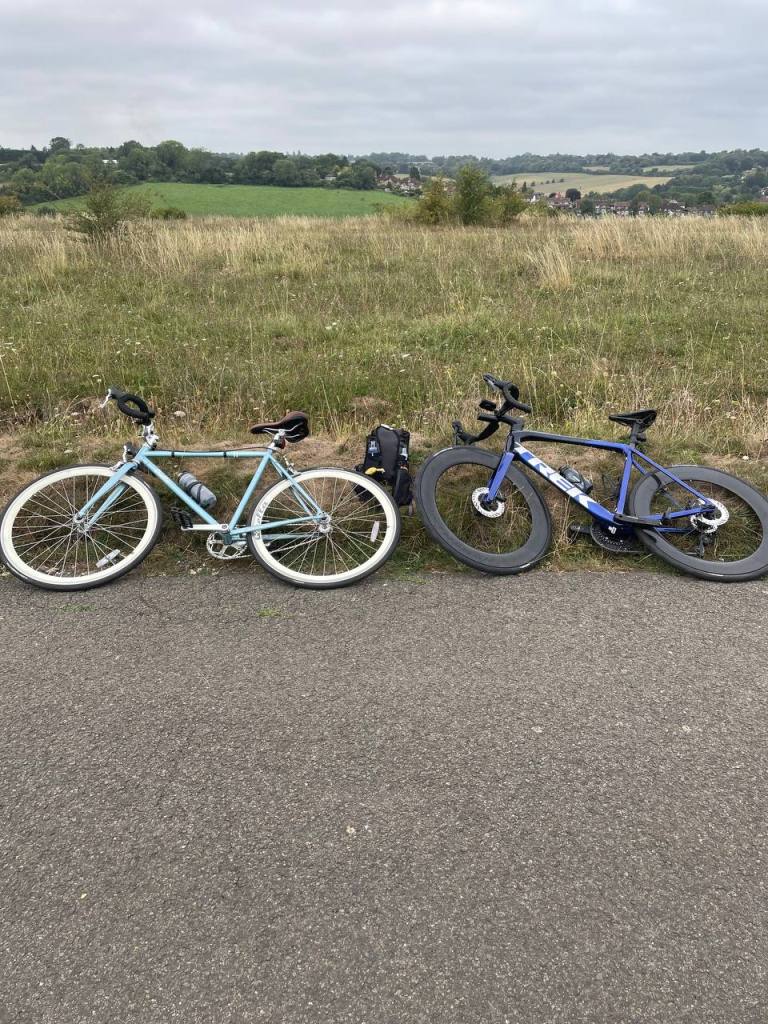
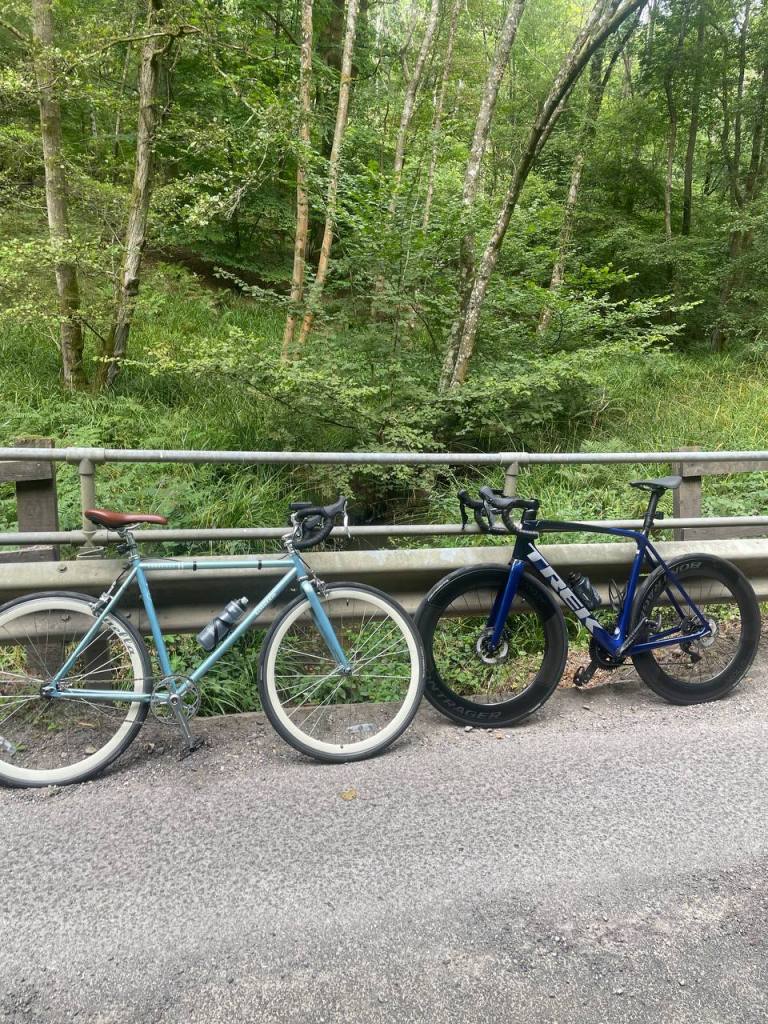
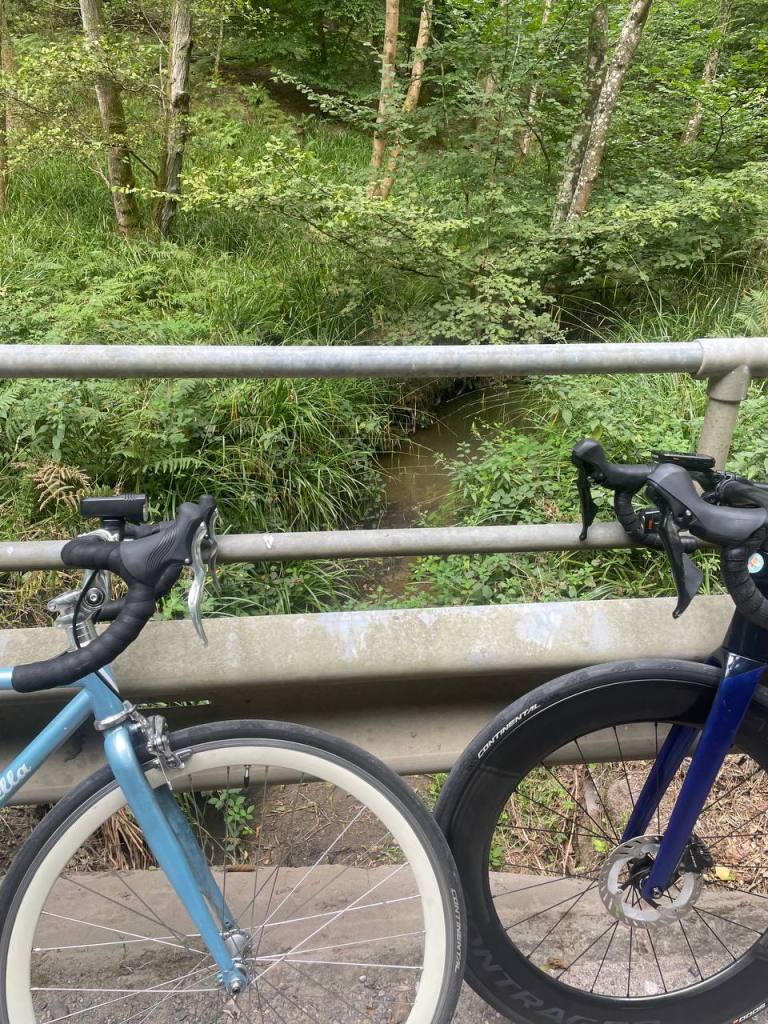
In the end, it was just Mike and I on the ride, and below is a photo of our bikes, Orion and Pixie, side by side:
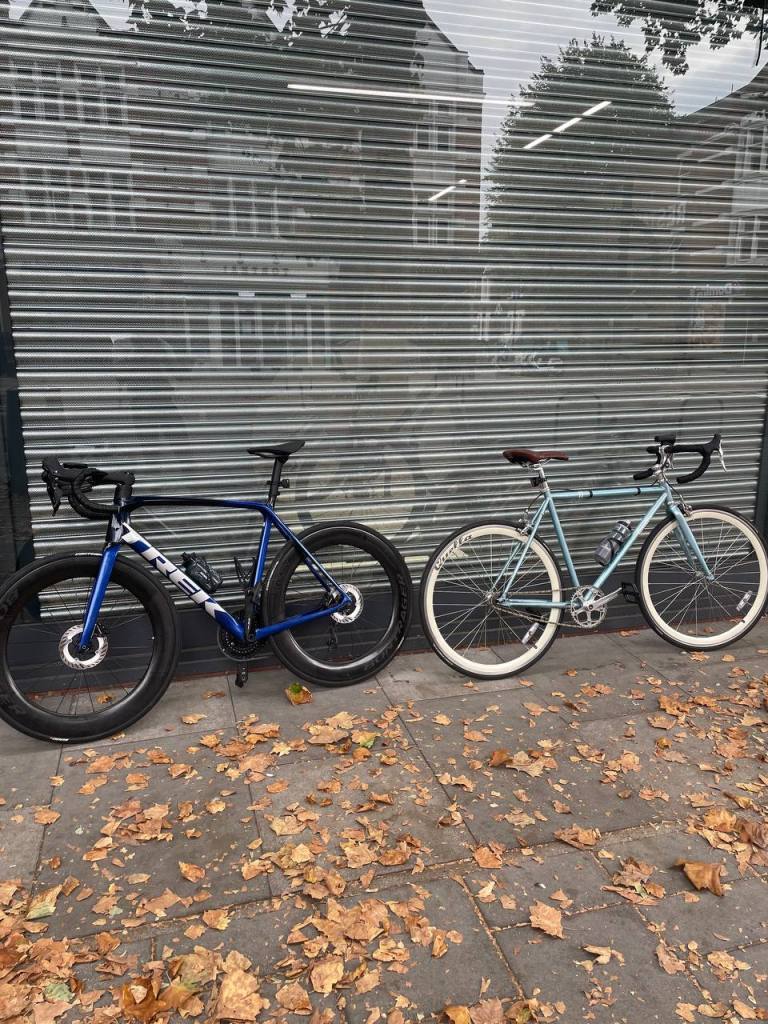
For those who aren’t bikesexual like me, I’ll point you to some of the differences between our bikes. This will hopefully give you an understanding of why racing bikes are so expensive! A lot of good science and tech has gone into them!
Wheels
Pixie’s wheels are made of aluminum, with 40 mm rims6, and Orion’s are made of carbon and are 75mm deep. The deeper the rims, the less drag at higher speeds (due to an increase in the smooth surfaces, leading to more laminar flow around the wheel). So Orion’s wheels, which have a whopping 75mm rim depth, help you go faster at higher speeds. They may also be lighter, because they are made of carbon fibre, which has a very high strength to weight ratio.
However, it’s worth mentioning that the extra material from longer rims adds weight to the bike, and since the aero advantage really only kicks in at around 25-28kph, in our case, with an average speed of 22 kph, I can only suspect that they slowed Mike down!
Further, the deeper the rims, the most unstable the bike will feel when there is a side wind, due to the higher contact area.
I must admit though, as with a lot of things in cycling, looks can often outweigh facts and logic… I could see myself rocking deep dish wheels or even disc wheels just for the vibes even if they make no sense for the type of ride that I’m doing!
Frame
Pixie’s frame is made of a chrome steel alloy, whereas Orion’s is made of carbon fibre. While I don’t know the frame weights, I am confident that Orion’s is lighter and stronger, if not equally as strong.
You can see that the tubes on Pixie are all round, giving it that vintage bike feel (which I personally like). However, modern bikes will almost always look like Orion, with thin, almost rectangular tubing. These tubes are designed with aerodynamics in mind.
Another key difference between our frames, which may not be visible on the photo, is that Orion’s is designed to support internal cable routing: all the brake and shifting cables run through the frame! That’s what gives the bike such a clean and polished look.
On mine, you can see the black brake cable going along the top tube.
I don’t have strong opinions on the frame: I like steel because it’s a timeless material and tonnes of people know how to work with it. This means that it can be repaired easily. The same can’t be said about carbon…
That said, carbon is the best choice if you want the lightest fast bike.
Tyres
This isn’t visible in the photo, but Pixie has 25mm wide tyres, whereas Orion is rocking 28s.
Historically, racing bikes had thinner tyres, but this is a trend that has changed over the years as tyre technology has improved.
Wider tyres can be more efficient than thinner ones, with the added advantage of being a bit more comfortable as they can be run at lower pressures.
This pull towards wider tyres is so strong that 25s are becoming an ancient relic!
I myself am considering swapping to wider tyres when winter hits, so that I can be safer on the roads.
We were both rocking the GP5000s, which are top of the range road tyres. I made this upgrade because the stock tyres that came with the bike busted really quickly.
Derailleur
This is the fundamental difference between our bikes: his has gears, mine doesn’t!
The mechanism that enables gear shifting is called a derailleur, and this is the extra bit that “hangs” underneath the chain.
Orion has two derailleurs, because the chainring (the big gear that the cranks are connected to) has two sizes.
This, coupled with the cassette (the gears at the rear wheel) are what enable a bike to have so many speeds. So if a bike has 7 gears on the cassette, and 2 gears on the chainring, then it has 14 speeds (14 different gear ratios). Some bikes even come with a triple chainring, enable a massive range or ratios to choose from!
Pixie, on the other hand, is a humble single speed: it has no derailleurs because the chainring has one size, and the cassette is just a single gear. In my opinion, this gives the bike a very clean look, but comes at a massive cost to usability!
On a single speed, the gear ratio is typically selected to work well on flats, allowing you to reach decent speeds for city commuting, but one that is not so hard that it makes it impossible to climb hills!
Pixie comes with a gear ratio of 2.75, which I find is excellent for city commuting since I rarely spin out, and good for climbing most hills… it does get really hard at a 10% gradient, and almost impossible above 12-14%.
Brakes
Pixie’s brakes are rim brakes: these are classic bike brakes that will pinch the top of the rims to slow the bike down. They are mechanical: you pull onto the levers, which pulls the brake cable, which in turn, causes the brake pads to press against the rims.
Orion’s brakes are disc brakes, and I believe they are hydraulic. Instead of pressing onto the rims, the brake pads will press onto the disc that is placed in the middle of the wheel. This is said to provide smooth braking, and also better braking which can be helpful in wet conditions.
Gear
Since I was entering this ride with a bike not fit for purpose, I thought it would be funny to share with you the other DIY, non-cyclist solutions I had.
Cycling Shoes
Mike was wearing cycling shoes. These are made of stiff materials that help with force transfer (and should decrease fatigue compared to using trainers, as the foam would act as a kind of suspension). Further, cycling shoes don’t have laces: instead they tighten using a locking mechanism. This is perfect as it allows you to make micro adjustments for the perfect fit (and even loosen while riding to alleviate pressure on longer rides where your feet start to swell).
Most importantly though: they eliminate the risk of having your shoes untie mid-ride, with the laces getting stuck in your pedals! This has happened to me twice, once in the middle of traffic on a busy road, and it is NOT FUN.
However, cycling shoes must be used with cycling specific pedals. This is because they come with a mechanism at the bottom of the shoe called cleats, that clip into the pedals. This fixes your feet onto the pedals, ensuring that every stroke is the same. Confusingly, these pedals are caller “clipless”, so when I first got into cycling I was very confused…!
Cycling shoes and clipless pedals improve cycling efficiency, and are said to improve with power output on climbs. However, I’m not sure of the science why. Mike tells me this is because clipping ensures that your feet are always parallel to the pedals, so that you can best recruit all your leg muscles!
I’ve never ridden with clipless pedals, but I have noticed that on longer rides, especially those with climbs, that the front of my feet go numb. The use of clipless pedals should prevent this from happening, as it would make sure that I’m always pushing from the mid-sole, and not relying on the toes!
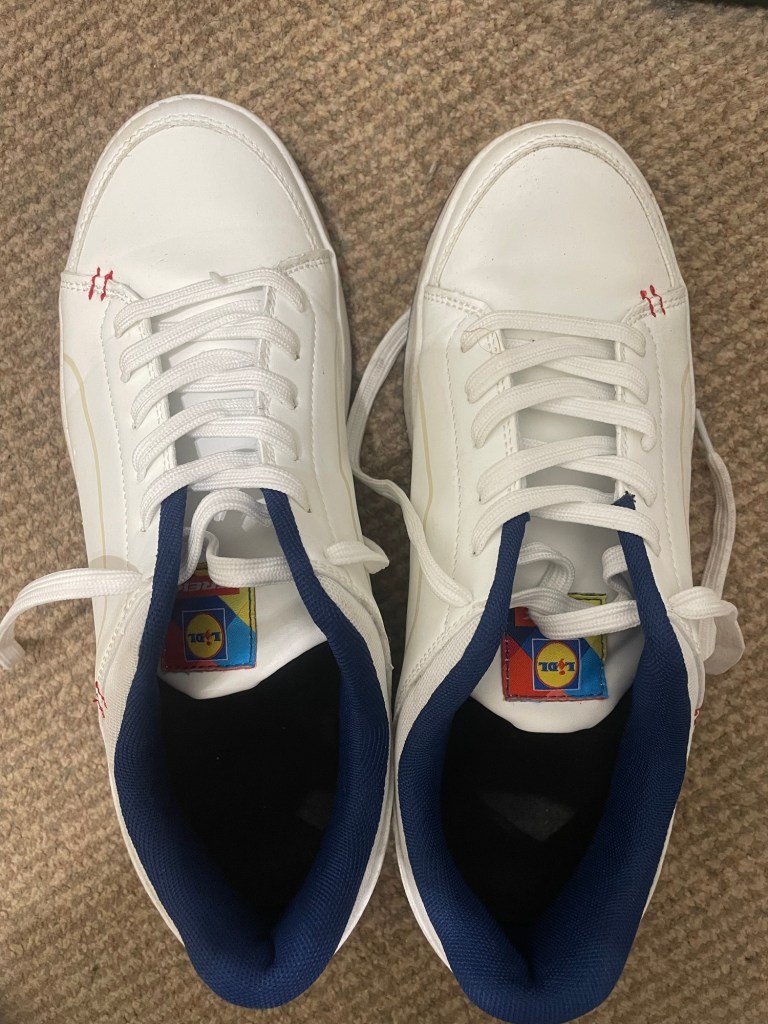
But since I’m only a beginner cyclist, I thought why not take the mick and wear REAL cycling shoes: my 10 pound Lidl-Trek merch:
Cycling Nutrition
Mike told me to pack gels the day before our ride. Issue is: I’ve never used gels and wasn’t gonna risk getting the loosies in the middle of the ride. I decided to use my DIY solution that helped me through the London marathon… honey water and salt. This time I added some sugar into it as honey is mainly comprised of fructose.

In addition to this, I packed a massive tupperware of Evazi halwa, with the original recipe modified to decrease the amount of oil, and to replace some of the sugar with date sugar to have a combo of fast and slow releasing sugars.
I had also baked some bread for us: a rye-wheat loaf filled with pecans, dried bananas and dark chocolate.
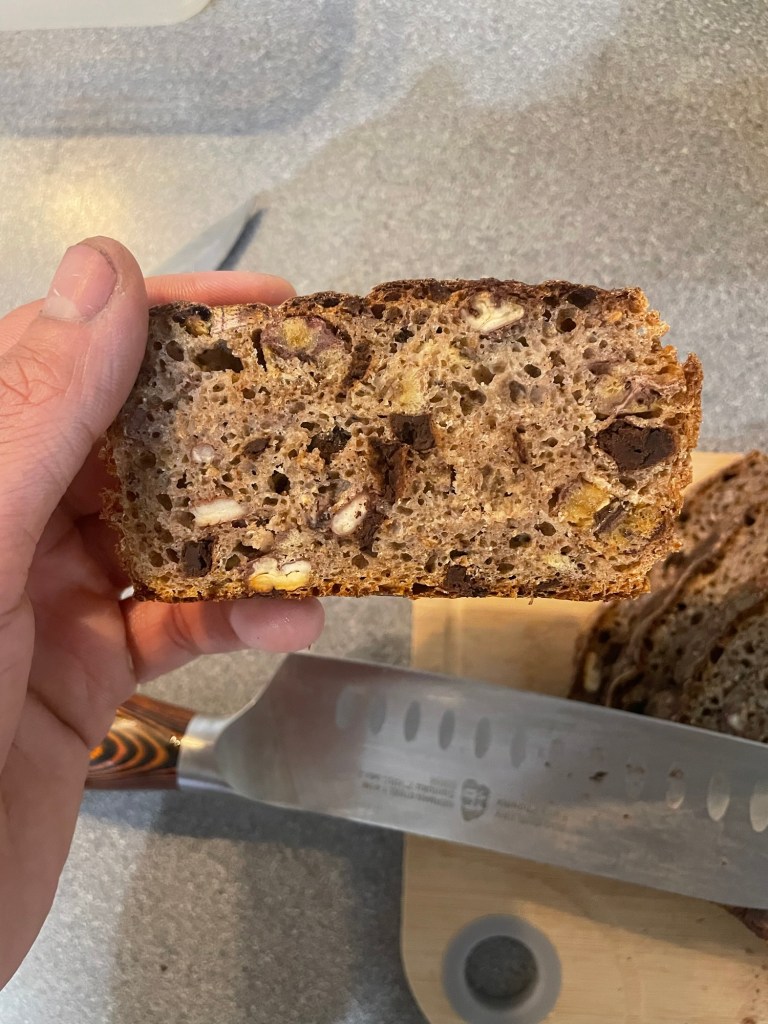
As a backup, I had a banana too.
So yeah… wasn’t too concerned about nutrition.
Cycling Bag
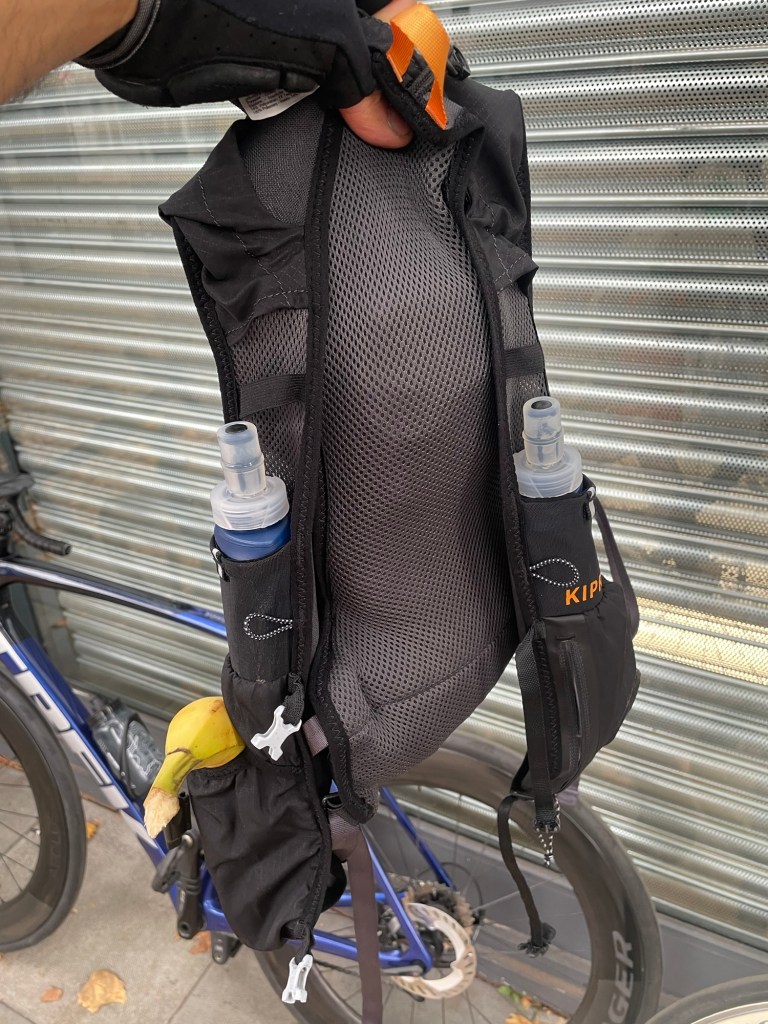
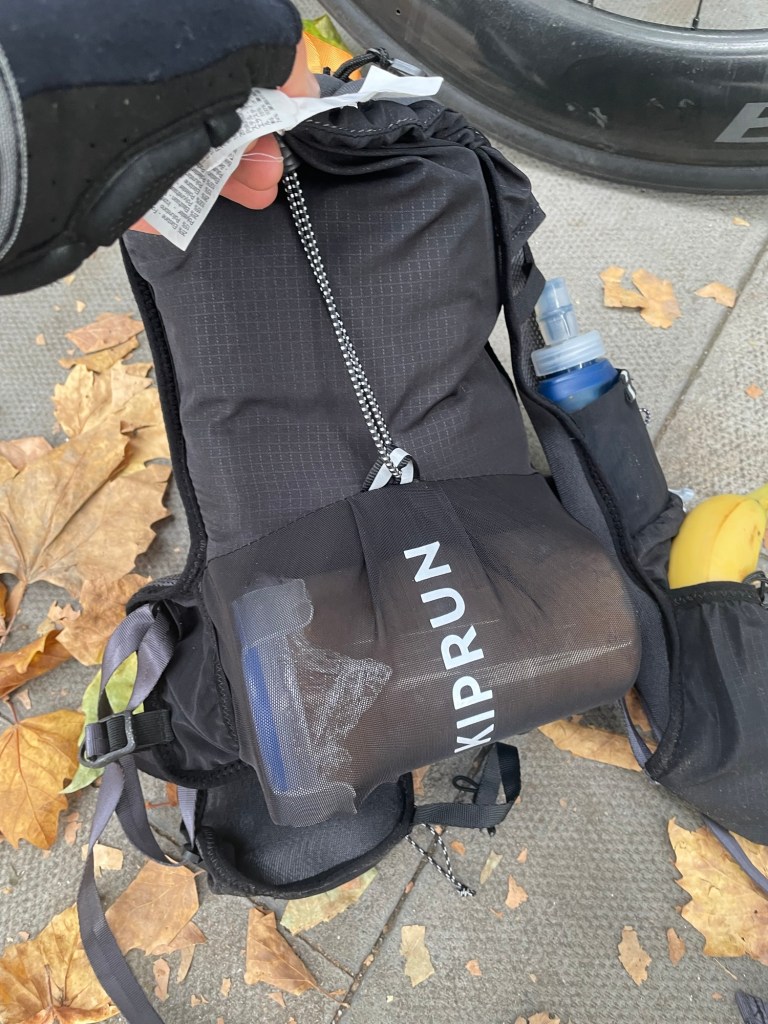
Mike carried everything in his cycling jersey. These come with deep pockets allowing one to carry essentials for the ride. As I was carrying more gear, I used my running vest. On the front pouches I had two 250ml water bottles, my phone and the banana. In the rear pocket, I had the halva tupperware, and in the pocket where the water bladder is meant to go I had the bread, a powerbank and a cable. I also fit something very important: a microfibre towel and swimming trunks… because I wasn’t gonna haul my ass to Brighton on a beautiful day and NOT dip in the sea!
I also had my cycling fanny pack that I carry around my waist which contains most essentials to work on my bike on the road: two spare tubes, an electric pump, allen keys, wrenches and a pair of tyre levers. Never ride without them, you’ll never know when you’ll need them (speaking from hard learnt lessons).
The Ride
Leaving London
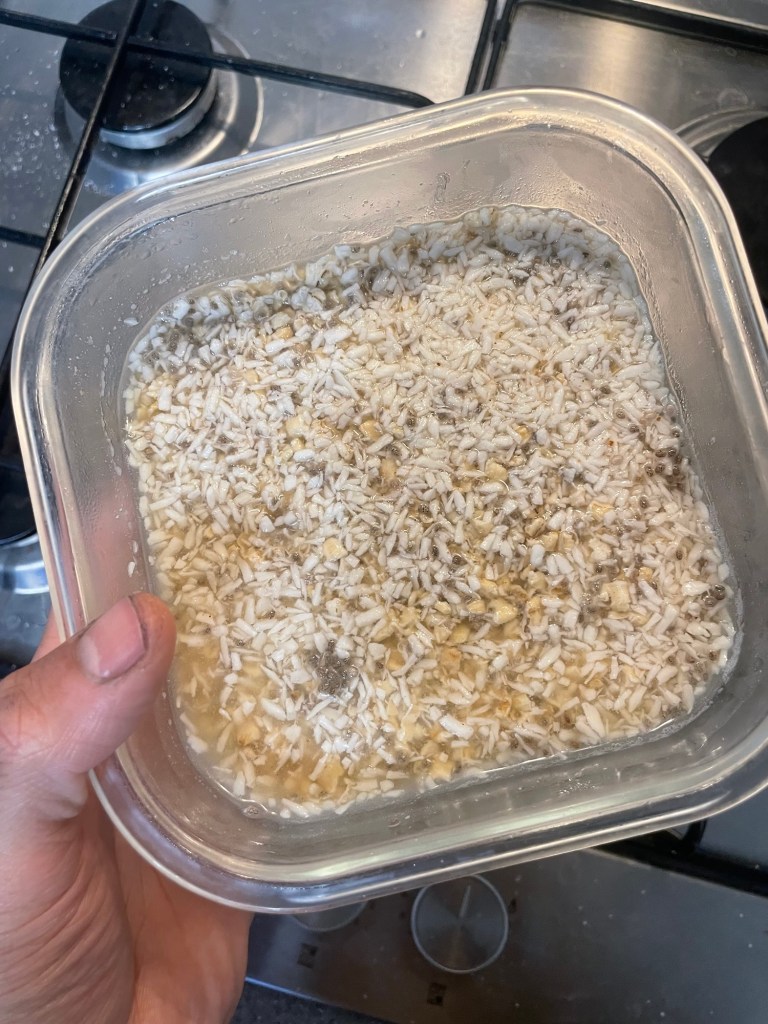
We met at the bike shop for a rather late (by cyclist standards) 7 am depart. I’d started my day an hour earlier with my morning mobility routine, and a nice slow releasing carby breakfast: overnight oats with coconut flakes and chia seeds, and a slice of the rye loaf which had turned out excellent.
Our route was to take us through Wimbledon: so we cycled west to Kew Bridge and then south into Mortlake. Eastwards through Barnes we went until we reached Putney, where we turned sharply facing south, and our first hill of the trip: Putney Hill. This was a good warm up hill for what was to come, as it was over a long distance. Once we got to Wimbledon, traffic slowed down quite a bit until somewhere in Morden, where we had an altercation with a truck driver who allegedly told Mike, about me, “if he doesn’t move over next time I’ll kill him”. To which I say? Nothing really. The reason why he’s stressed is because he drives, the reason why I’m so relaxed is because I cycle. It’s as simple as that.
We continued cycling away from London, until we got to a decently challenging hill at Farthing Downs. Once conquered, we stopped for a short break and enjoyed a few slices of the bread and the beautiful scenery.
The weather was still rather gray, but we were both happy that it was a bit chilly. We had high hopes for the sun coming just before our descent into Brighton.
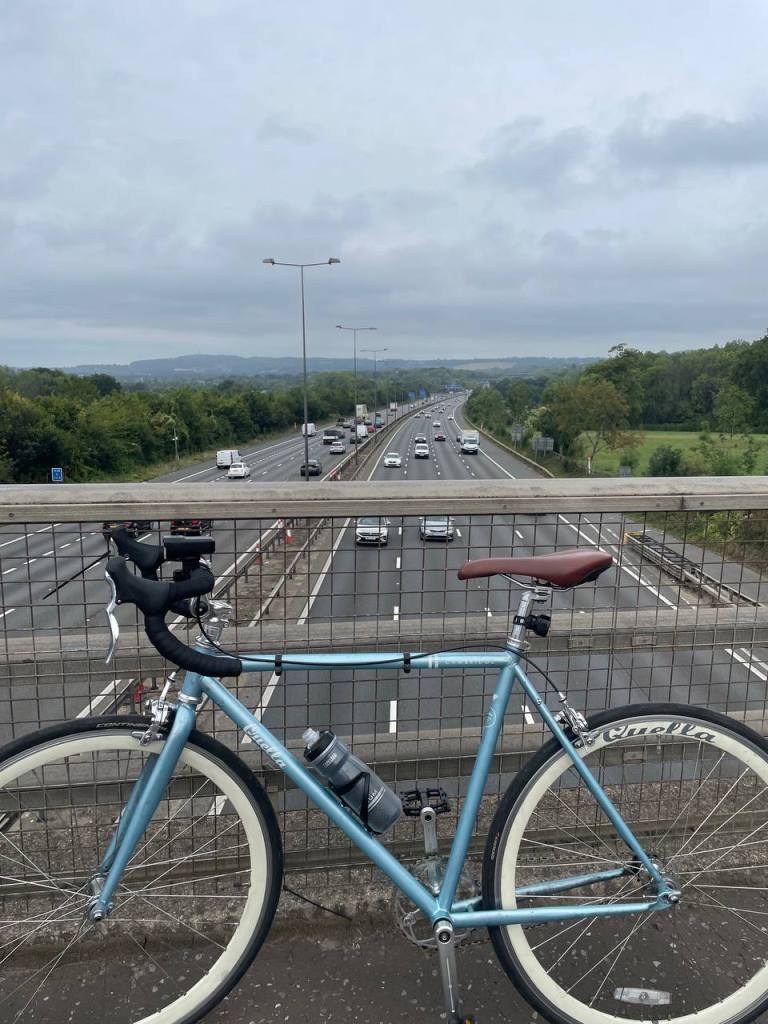
We cycled on until a bridge on White Hill Lane took us over the M25. We had officially left London.
Country Roads
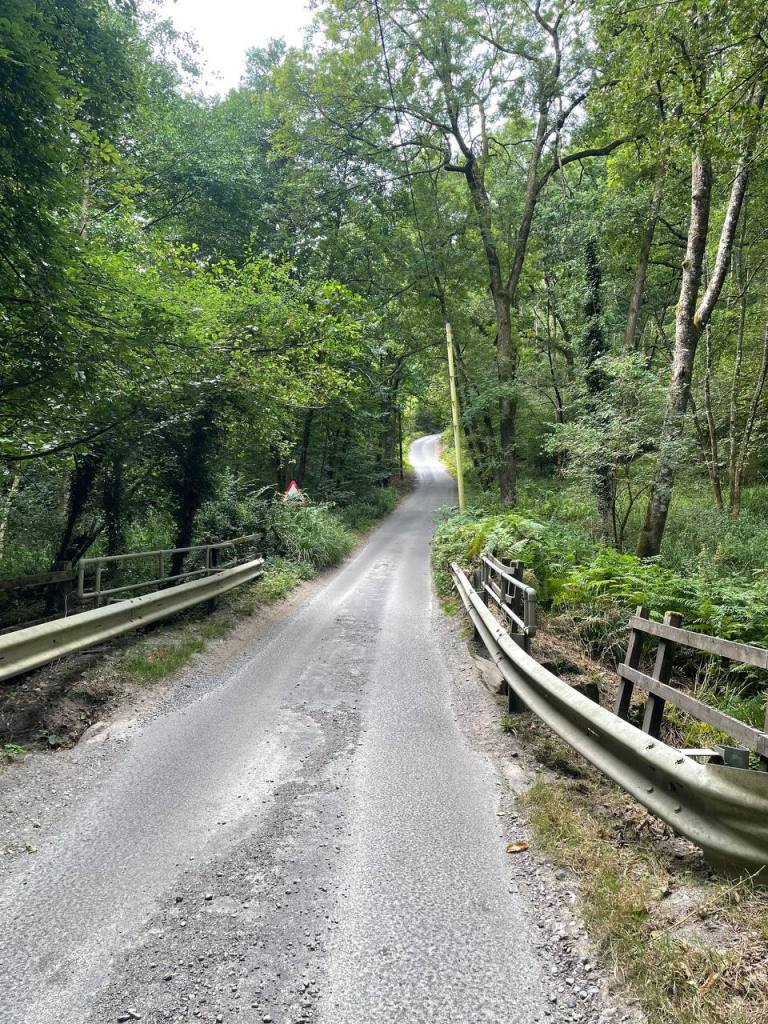
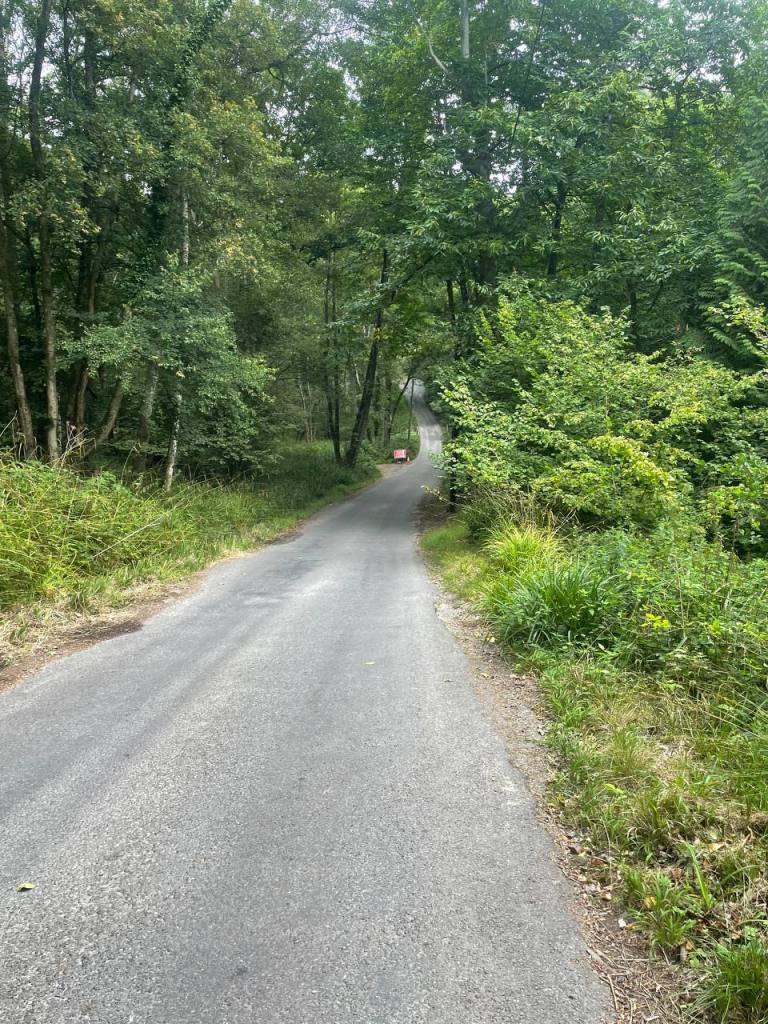
Unfortunately I don’t have much footage of the roads outside London, but they were absolutely stunning. Many of the roads passed were enclosed by trees on both sides, and between them you could see massive fields below. I found the drivers to be mostly sensible on these roads.
In Crawley, we hit the first challenging hill of the ride: Turner’s Hill. This was a climb of 44 meters over 700 meters, and by the end of it my lungs felt like an internal combustion engine. While I am generally unsympathetic to drivers, I felt really bad for the truck driver behind me as I was crawling up the hill…
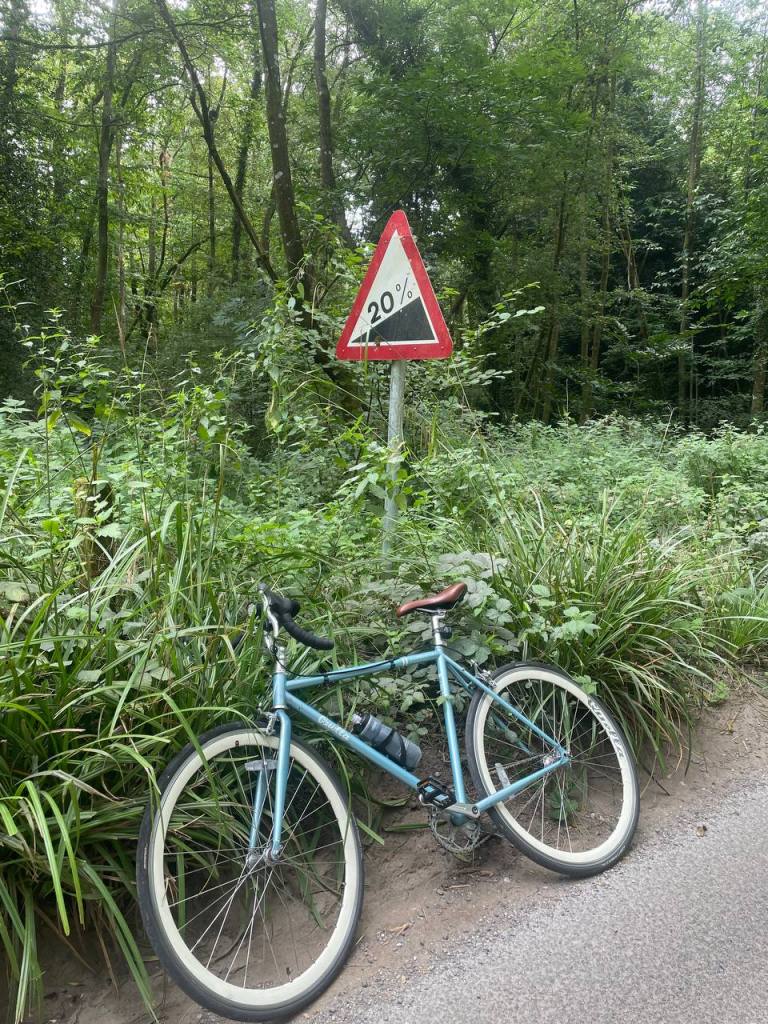
The rest of the hills were fine, until we got to an almost off-road section just before passing Ardingly with a monstrous 20 percent gradient. This hill was a bitch, and there was no way I was doing it on a single speed. I tried my best to build some momentum before but couldn’t get past a third of it.
In the end, I resigned to getting off my bike, but perhaps the shame of it prompted me to let my lungs feel the burn they would have felt cycling up the hill by other means: I decided to make a run for the top with my bike. Not only did I have to stop and wheeze for all the oxygen I could get numerous times, but for a good 10-15 kilometers after Ardingly my legs were screaming for mercy. Every small hill felt like a mountain.
The lactic acid was clearing out of my body as we approached Brighton, and I was feeling ready for the hardest climb of them all: Ditchling Beacon.
Bitchling Beacon
At Ditchling, we stopped for a short break to fuel up. I downed a whole bottle of cranberry juice, had my banana and refilled my water.
We were ready for our final ascent: the mighty Ditchling Beacon, with an elevation gain of 154 meters over 1.5 km. According to online sources, the maximum gradient at any point is 11%, but I find this very hard to believe, as there were bits of it that I simply couldn’t push past without feeling like I was going to fall of the bike.
Had it not been for traffic, I think I would have faired better by using the zigzag technique to go up the climb, but the constant flow of cars got me to stop a few times. In the end, I had 9 stops and walked my bike 6 times.
It was good to find this limit on mine, and I’m excited to see if in a years time or so I’ll be able to do better!
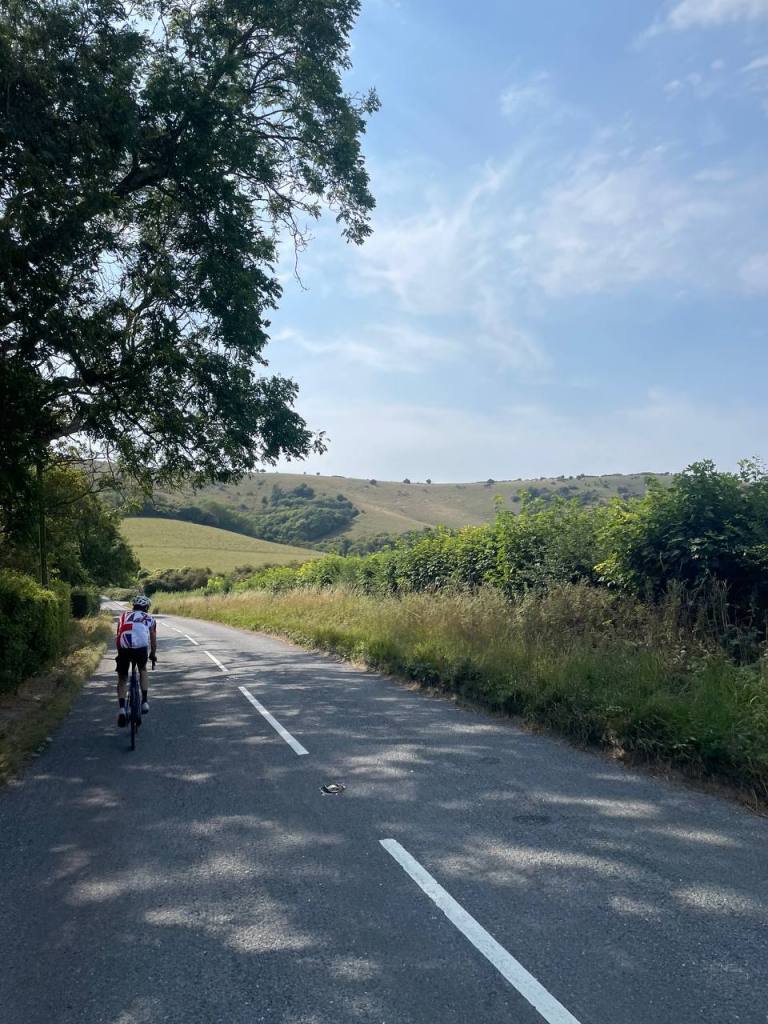
Hello Brighton!
Once we passed Ditchling Beacon, the first thing my eyes and ears noticed was drivers as crazy as the ones back in London: more evidence to support my claim that traffic = stress, and therefore cars = stress (since cars = traffic).
My heart and legs noticed something else though: more hills. One final push just before a steep descent into Brighton, for which I abused the brakes all the way, as the road quality was horrendous.
We had finally arrived at Brighton!
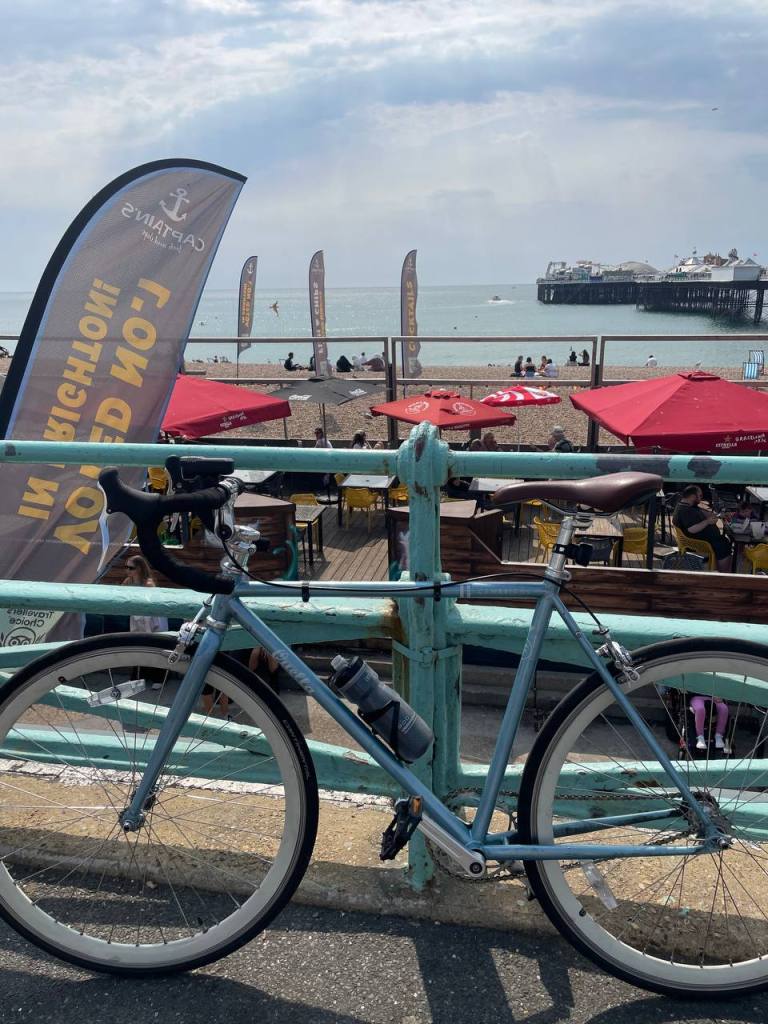
We immediately found a spot by the beach, and I changed into my swim trunks and dipped into the water. It was crisp and very welcome. The lifeguards I spoke to told me that a lot of tourists come to Brighton from London… though not many by bike!
The most painful part of this ride happened at the end… at Brighton Beach: where I walked barefoot on the hard pebbles back to Pixie.
But the sensation of lying down on the hot pebbles after a swim in the cold water was… angenehm.
We were hungry, and despite the warnings from the lifeguards about the prices at the beachfront, we were not gonna put on our Dora the Explorer hats on and cycle hunting for food.
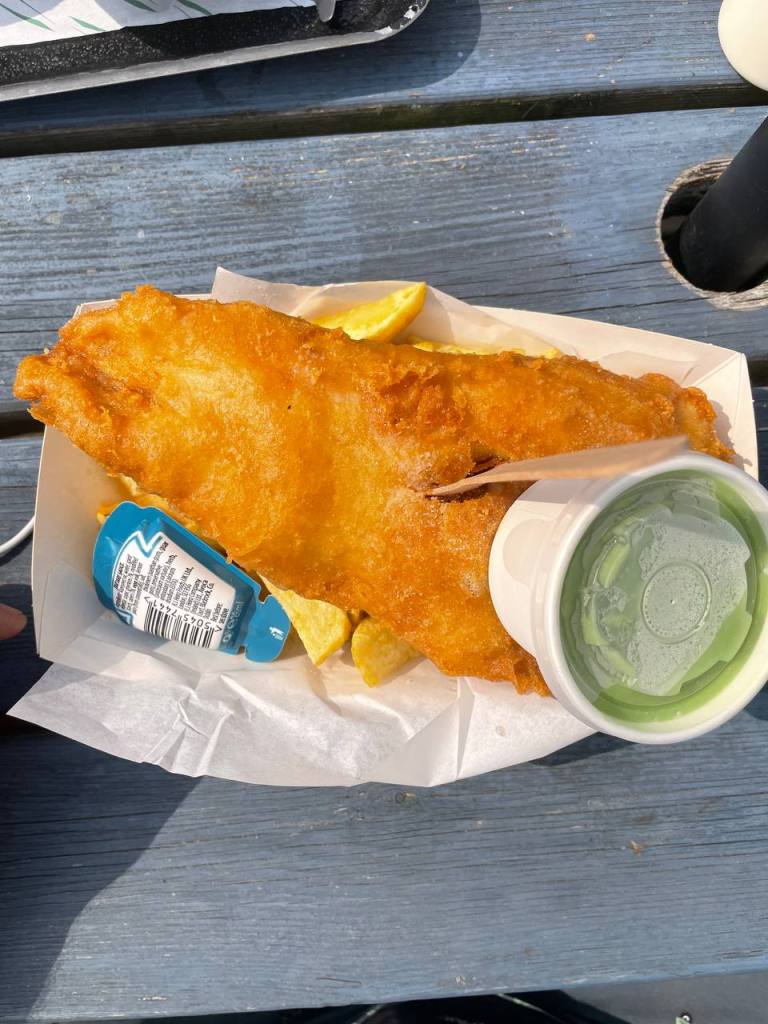
Mike got a nice burger, and I, despite knowing full well the consequences, got fish and chips, because hey, it was my first time to Brighton, and I did it by bike, and fish and chips on the seafront just felt right!
Cycle Back?
We initially intended to cycle back, and when we got to Brighton I was thinking: damn my legs can do it. After the swim I felt even more energised.
However, I forgot the cardinal rule of cycling: never stop. After I got up from the heavy fish and chips meal, my stomach was unhappy and my legs were juiceless. The short climb to the train station was so tough on the quads, and I was grateful that we were taking the train back.
Once we got back to London though, I felt fresh for the ride back. We sped through London’s busy streets, and said our goodbyes just after passing the bike shop.
It was a great day, and a great challenge accomplished.
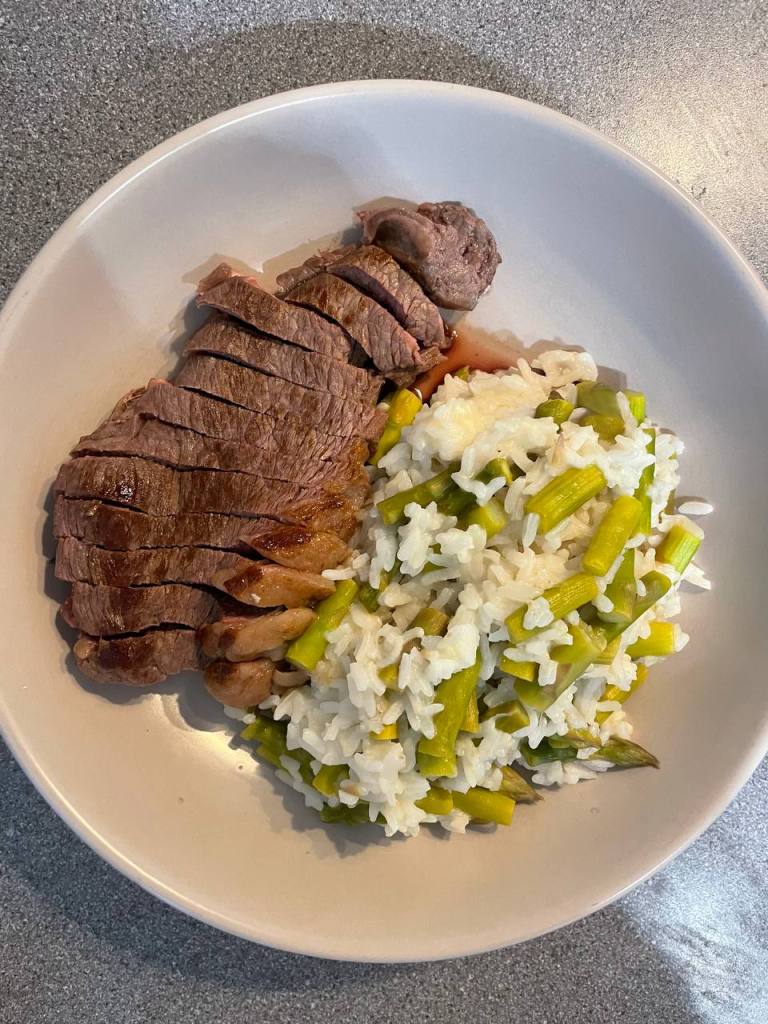
I treated myself to a lovely asparagus and lemon risotto, with a nice serving of steak for dinner.
If there’s one thing to take from this post: don’t let others make you doubt yourself. There is no perfect way to prepare for something, and yes, a geared bike will make your life easier, but if all you have is a single speed: go for it. You’ll be surprised how far you can take it! And don’t be afraid to fail. Finding your limits is a good thing, and chances are they are much higher than you think!
- Because she’s pretty and a fixie! ↩︎
- These are handlebars designed for road racing. Unlike flat handlebars, the levers sit at a vertical position. ↩︎
- I may end up writing a post that goes into great detail about the differences between the different handlebars… but for now: 1) bullhorns are great for keeping momentum in hills, but it’s hard to generate lots of force to get started on a steep incline, 2) flats are excellent for generating force, 3) dropbars… are the worst at generating force by far, but they are very easy (and enjoyable) to rock side to side ↩︎
- Also: I do enjoy torturing myself, but this is a separate issue… ↩︎
- Mike claims to be able to average 25 mph in the city, which I find absolutely nuts! I did not challenge him to this claim, but I did see his power output on a few segments and he can sure fly. ↩︎
- The rim is the part of the wheel that sits just under the tyre, and ends at the spokes (the metal rods that give the wheel its structure). On my bike, the rim is the white bit of the wheel +the thin silver layer just before the tyre. ↩︎
 Tsunami's Hungry
Leave a comment