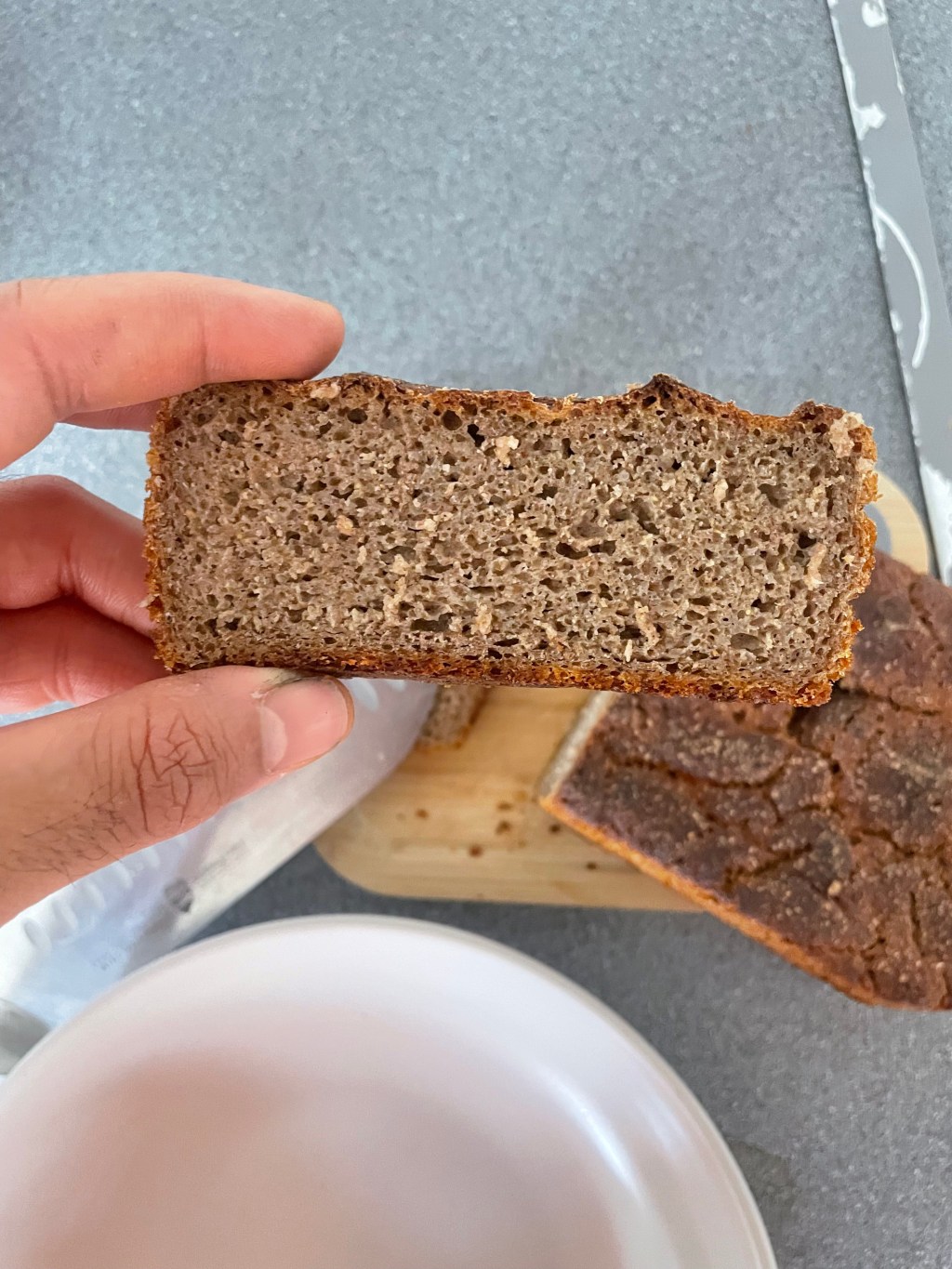
The last sourdough adventure I wrote about was back in June, where I used discard from Dusty1 as the leavening agent for shalité. Since then, I’ve been experimenting wildly, and I want to share with you some of the tamer, and admittedly, more successful ones… all with rye!
0: The Base Loaf
This is the base recipe that I use for all my experiments. It has served me well thus far, and when followed without any modifications, it results in seriously good, bakery level, rye loaves.
Credits to e5 Bakehouse for the recipe.
Ingredients:
- 120 g 100% hydration rye levain (last feed 8-12 hours ago)
- 220 g water
- 55 g wholemeal rye flour
- 180 g light rye flour
- 40 g sunflower seeds
- 40 pumpkin seeds
- 6 salt
Preparation
- Dissolve the levain into the water, then add your dry ingredients. Mix until combined and leave for around 10 minutes to firm up
- Using wet hands, shape the mixture into a ball and place it into a pre-oiled baking tin
- Cover with a cloth and leave proving for a couple of hours
- Once the dough has expanded, and consequently flattened, sprinkle some extra seeds on top (optional)
- Prove for around 5-6 hours in total. The dough should rise and start to form cracks at the top
- Preheat your oven to 250 degrees celsius, ideally with a tray or a stone inside
- Place your baking tin on the tray, and then pour water in the bottom of the oven to create steam (this is to create a better crust)
- Bake for 30 minutes, and then open the oven to release the steam.
- Bake for another 15 minutes after lowering the heat to 200
- Remove the loaf from the tin and let cool. Once cooled cover with paper bag and leave for 12 hours before slicing
This is the recipe I used in my previous rye articles (here and here). I honestly amazes me how simple it is to make and how delicious it turns out… making me wonder why I’ve spent so much money getting rye from Gail’s over the years…
That said, over time I’ve come to change a few things about it to suit my personal preference.
- I typically use a larger percentage of wholemeal rye (sometimes even 100%). I’ve only used Doves Farm flour thus far.
- I don’t bother too much about the levain. I haven’t been able to notice a significant difference in flavor or function. What is most influential is how far during fermentation the levain is since the last feed. The longer you leave it, the more bacteria dominant your starter will be, and the more “sour” your bread (at the expense of rise). As rye loaves are usually dense due to rye’s inability to form strong gluten networks, I tend to use a bacteria dominant levain.
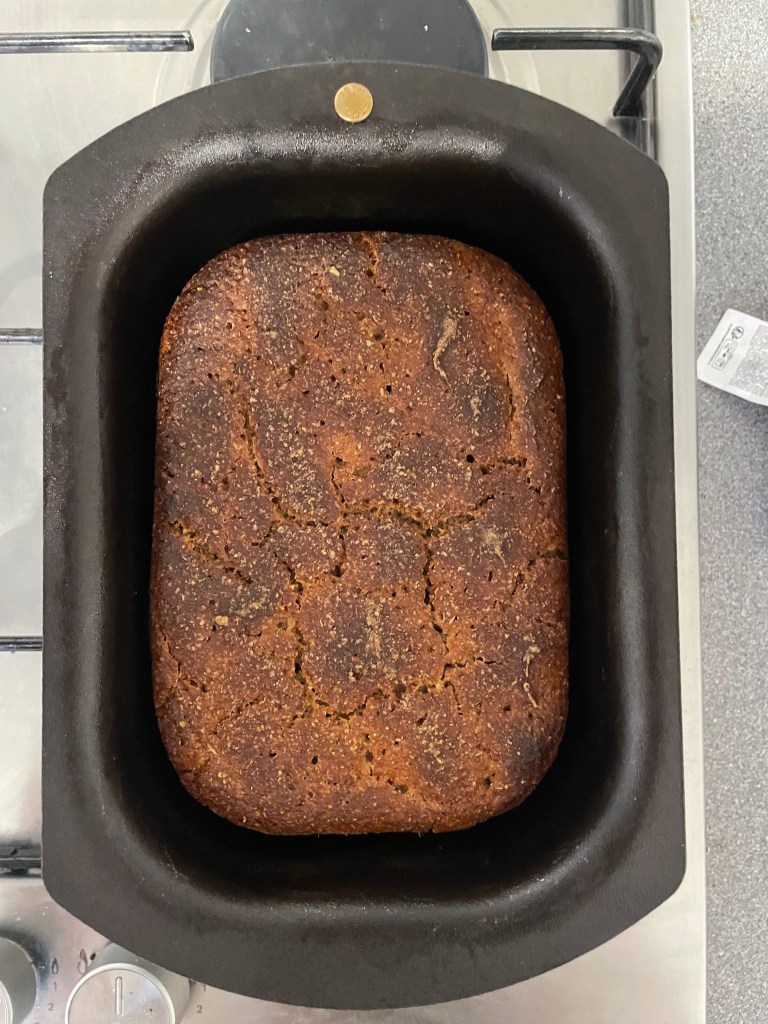
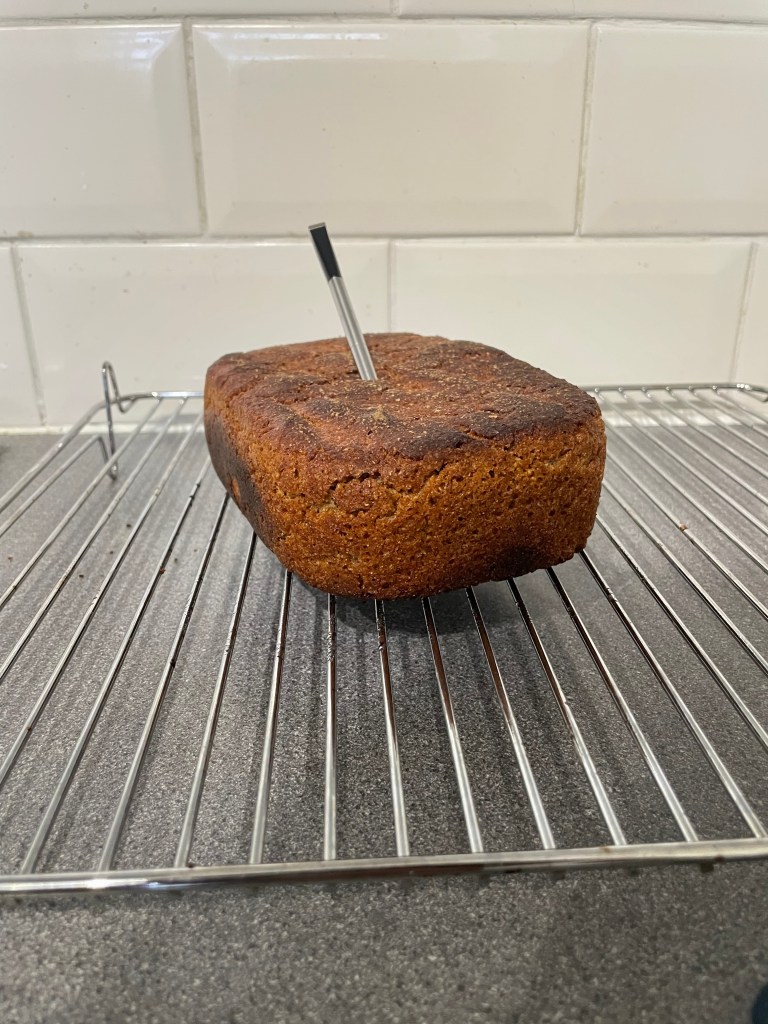
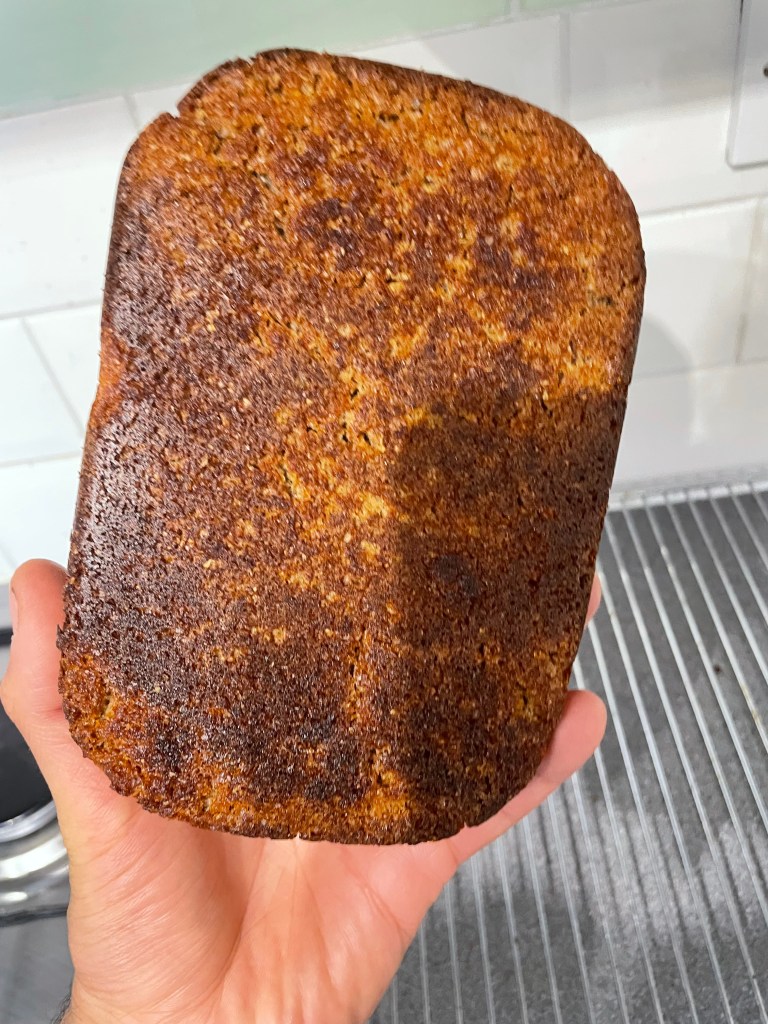
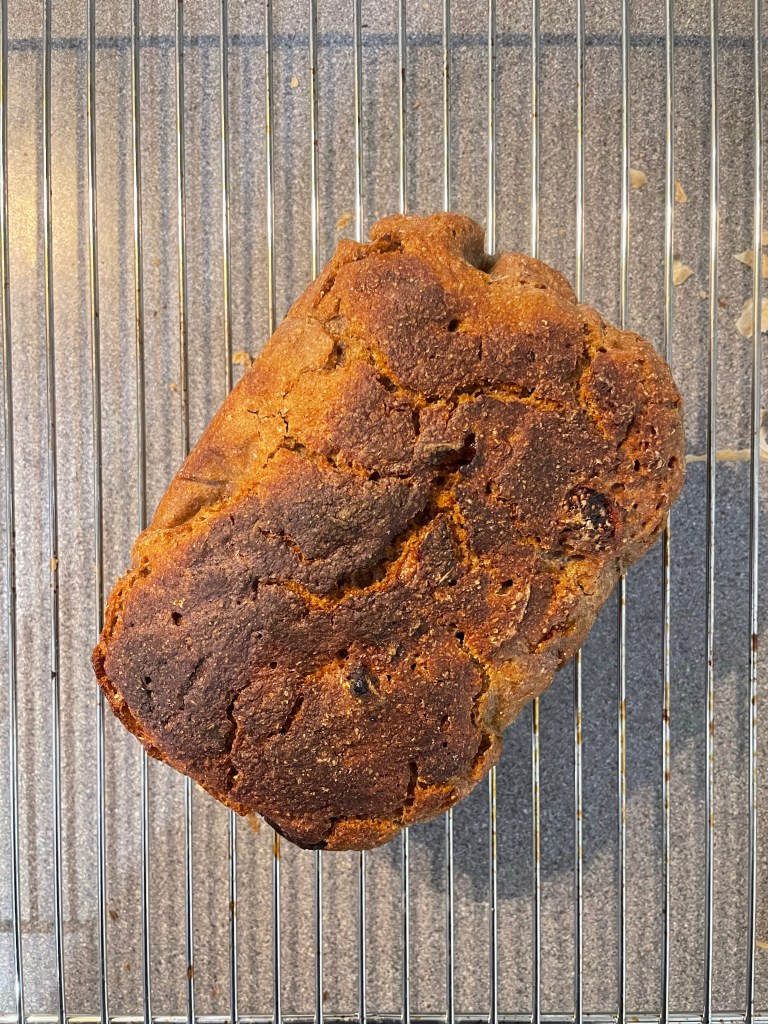
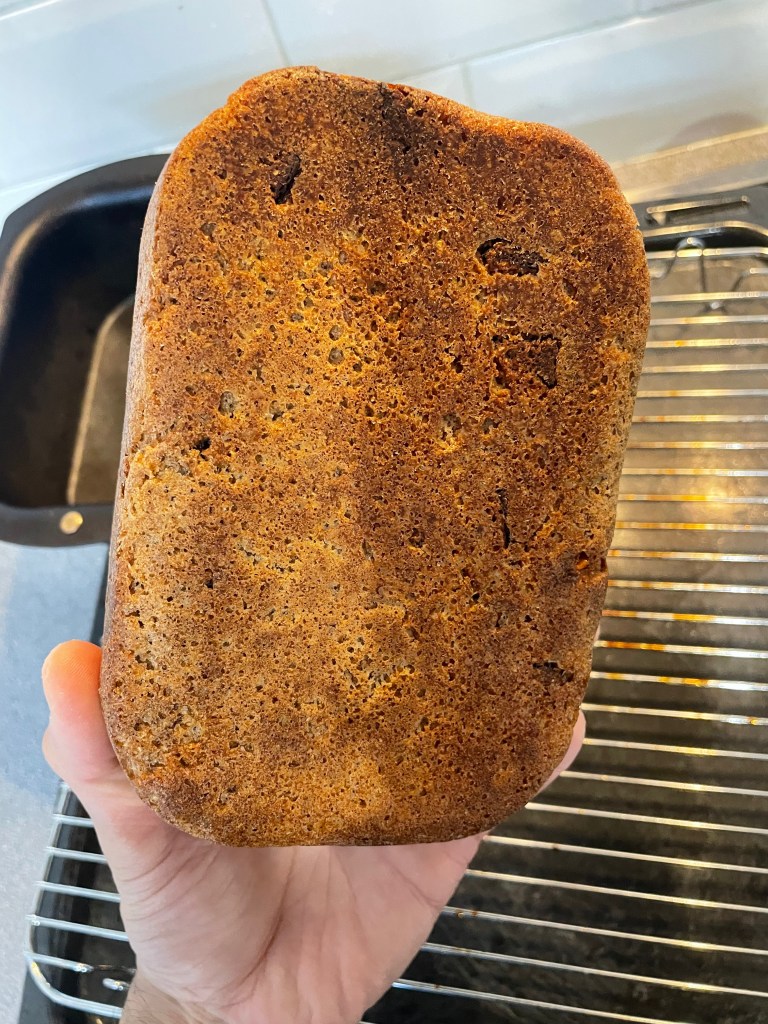
- I usually leave the oven at 250 for the last 15 minutes as well. This can lead to some “overdone” parts of the bread (see below for an example), however, I find that going for 200 doesn’t always produce consistent results, and I sometimes get a gummy/uncooked bread core (as confirmed by using a thermometer).
- I’m not too strict on the 120 g levain, sometimes going for 100 instead. You can still use 235 g total flour and 220 g water without a noticeable impact on the final outcome.
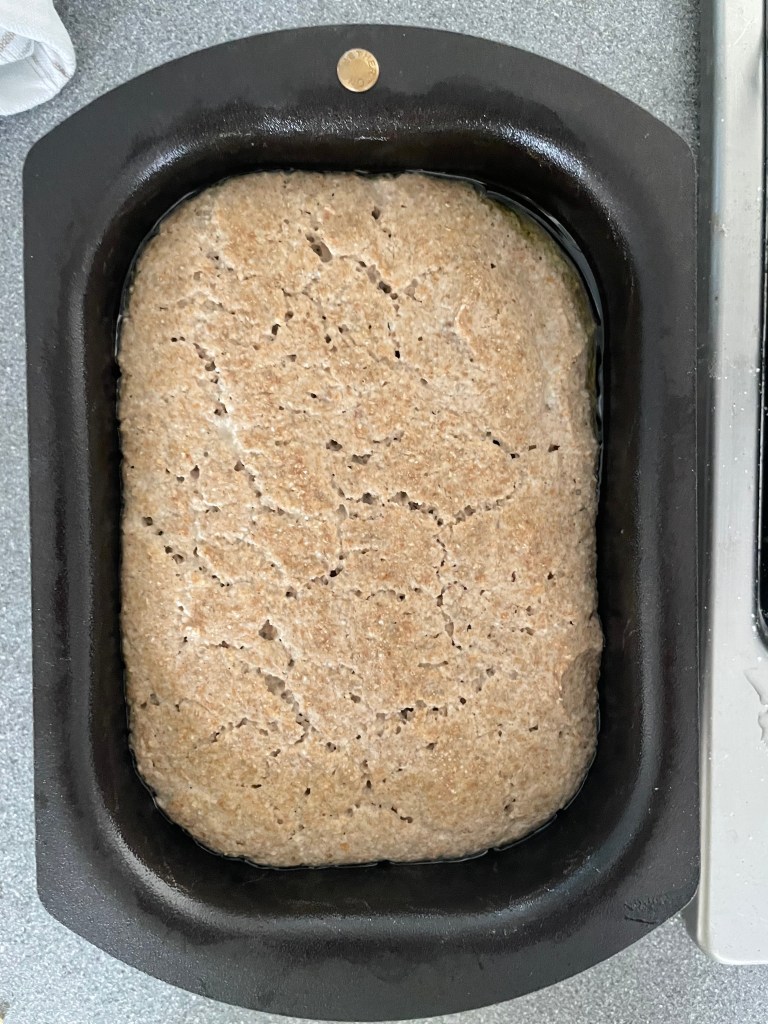
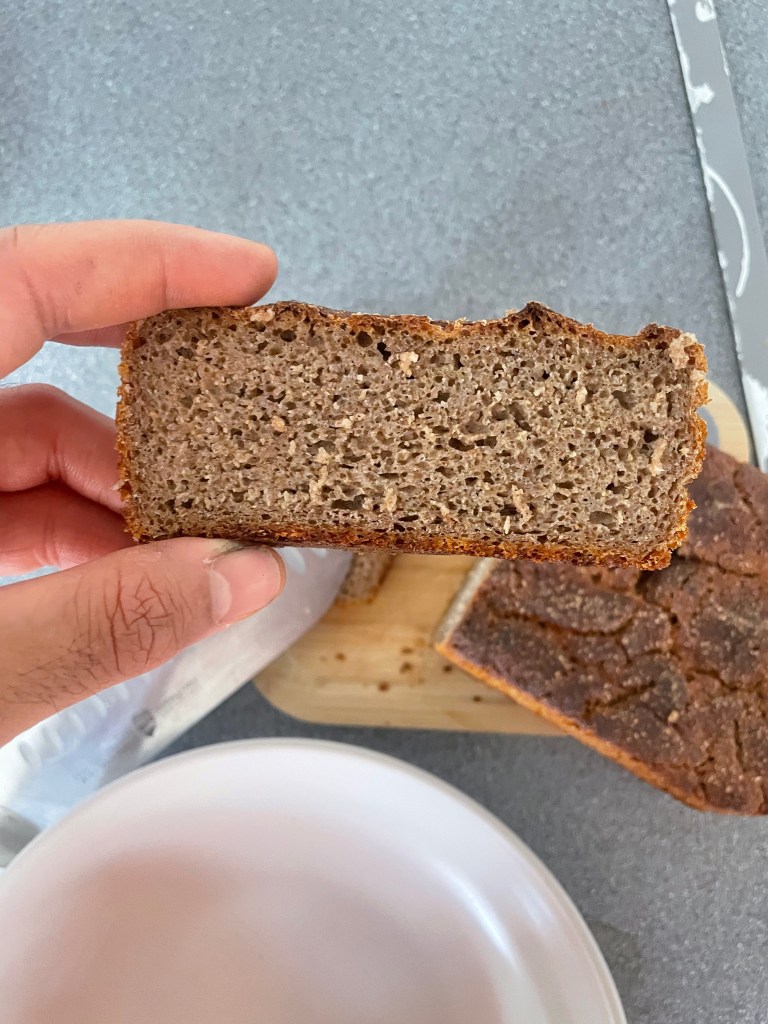
Below are examples from an unseeded rye that I made using the base recipe. I used a wholewheat levain here, and all the rye flour I used was wholemeal.
1: Julienned Carrot and Honey Loaf
What was my thinking here? I’m not even sure and perhaps that’s why this didn’t turn out too great. I guess I was hoping for the carrots to act as a “savory sweet” kind of addition to the loaf. However, Dusty did not like it, or maybe she didn’t like the honey, for my bread expanded lots, had massive air bubbles and got horribly stuck to the tin… and also: many parts were sticky and gummy despite a beautiful crust!
The modified base recipe looked as follows:
- 120 g 100% hydration wholemeal wheat levain
- 220 g water
- 235 g wholemeal rye flour
- 60 g carrots
- 35 g wheat bran (was curious to include it in there!)
- 25 g honey
- 6 salt
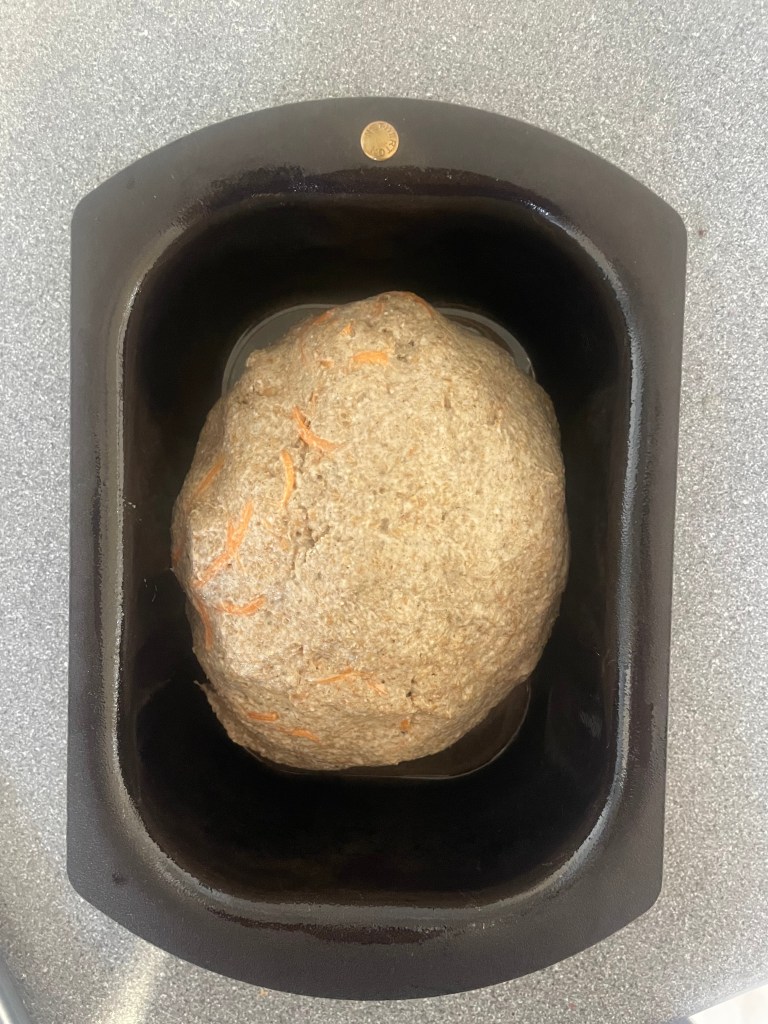
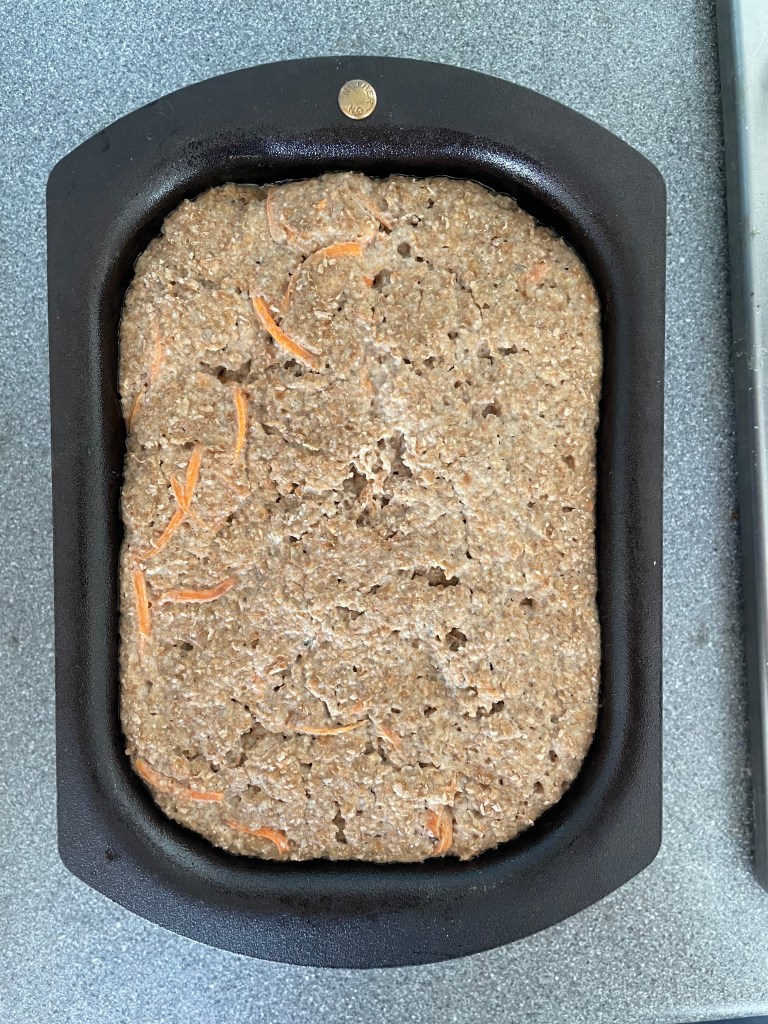
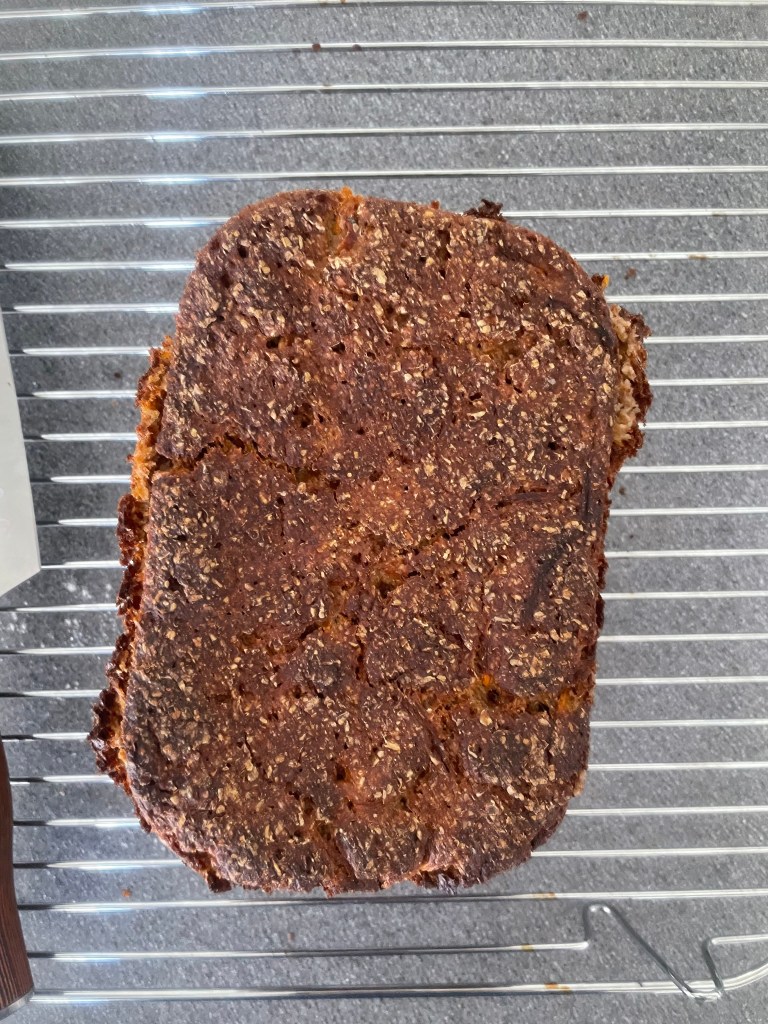
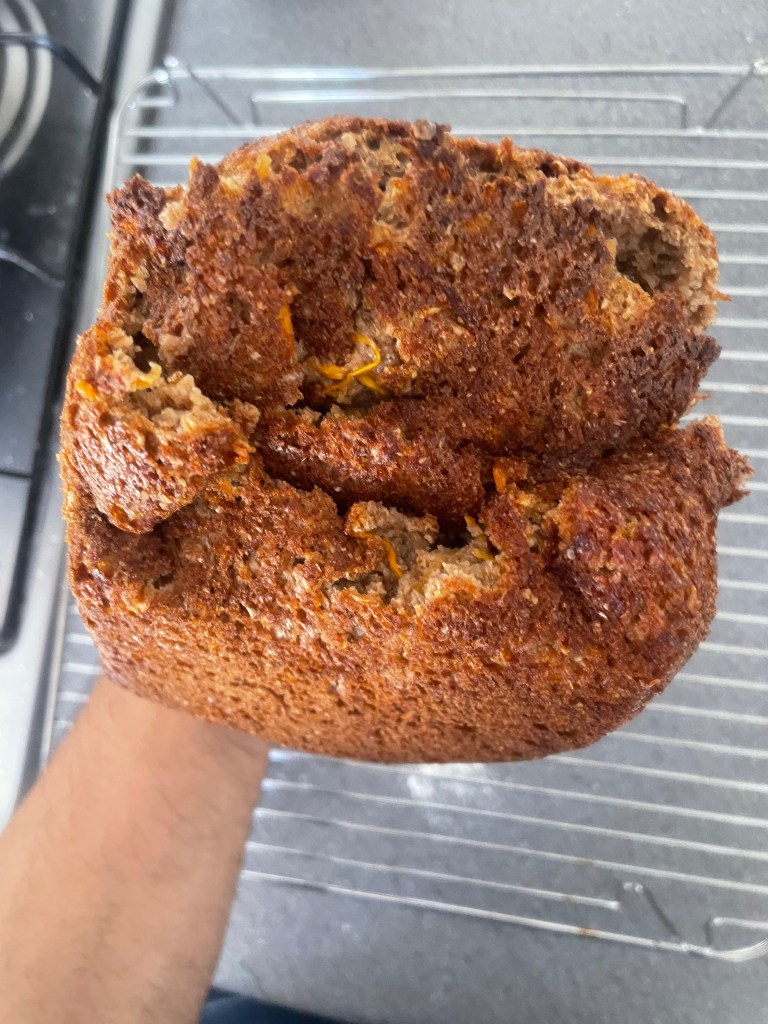
I think this occurred due to a combination of reasons:
- The carrots have a high water content (which I did not really think about, and to be fair, I didn’t expect it to be 80% water!). The release of water as steam from the carrots could have helped cause some of the uneven layers
- Honey attracts water, so it could have changed the overall distribution of water in the dough (hence gummy layers). I wasn’t patient enough to dissolve the honey, so this explanation also makes sense.
- The sugar content in the honey may have caused Dusty to expand too quickly… you can see that this dough rose much more than the other examples!
Taste wise: I enjoyed the carrot flavor (I did achieve the sweet savory flavor I was looking for, as some of the salt embedded itself into the carrots!). The crust was excellent. However, I struggled to eat the insides of the bread, and half the time I was wondering if I was just having a raw product…
2: Chocolate and Iranian Dried Fig Loaf
I don’t consider myself a chef per se, but sometimes I come up with discoveries and creations, all on my own, that completely blow my mind away. One bite and you’ll fall in love with life, and if you, like me, are already in love with life, then you’ll fall in love with love itself!
This discovery came about when I was rushing to get some sugar into my blood before a long run, during my marathon training. I shoved a couple of Iranian dried figs in my mouth along with some 85% dark chocolate, and as I was lacing my shoes my brain was going through a spiritual rollercoaster:
- First, you get the chocolate and dried fig flavors separately
- Then the dark chocolate completely coats your mouth, as it normally does
- But the fig comes back, intensely cutting through the chocolate with it’s honey-like sweetness
- And at this point both are crushed enough that they are almost a paste, and the longer it stays in your mouth, the more intense the flavor becomes!
So one day I thought: this combo would be excellent in bread.
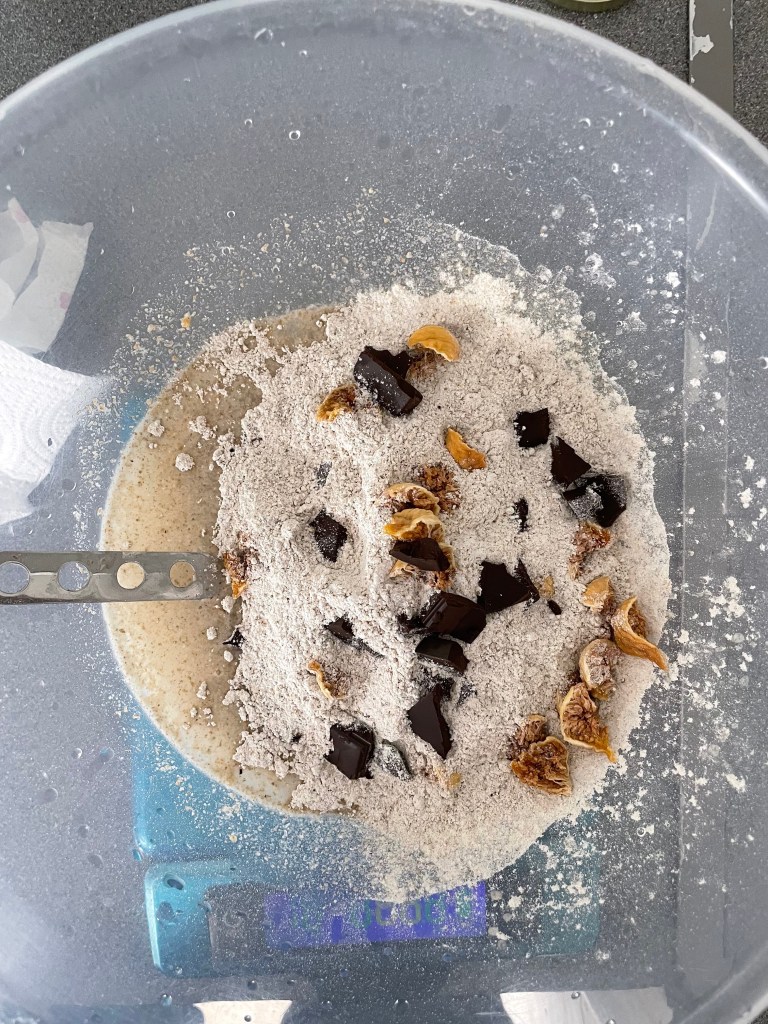
I modified the base recipe to the following:
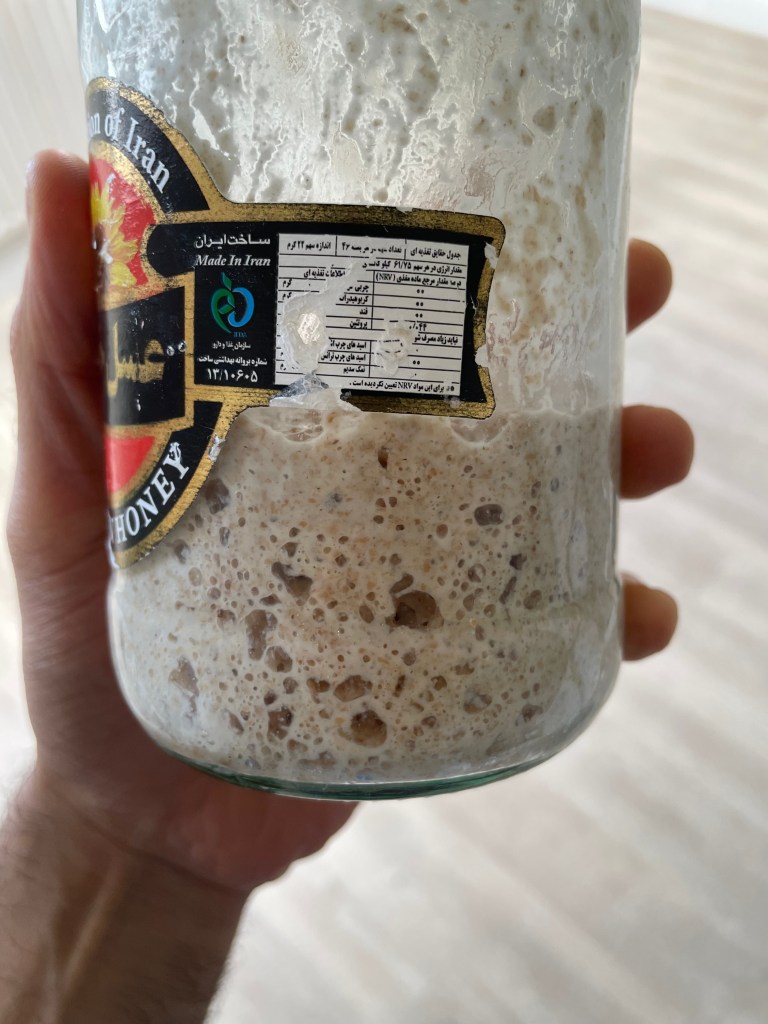
- 120 g 100% hydration wholemeal wheat levain
- 30 g Iranian dried figs
- 30 g 85% dark chovolate
- 235 g wholemeal rye flour
- 6 g salt
The result? Absolutely mind blowing
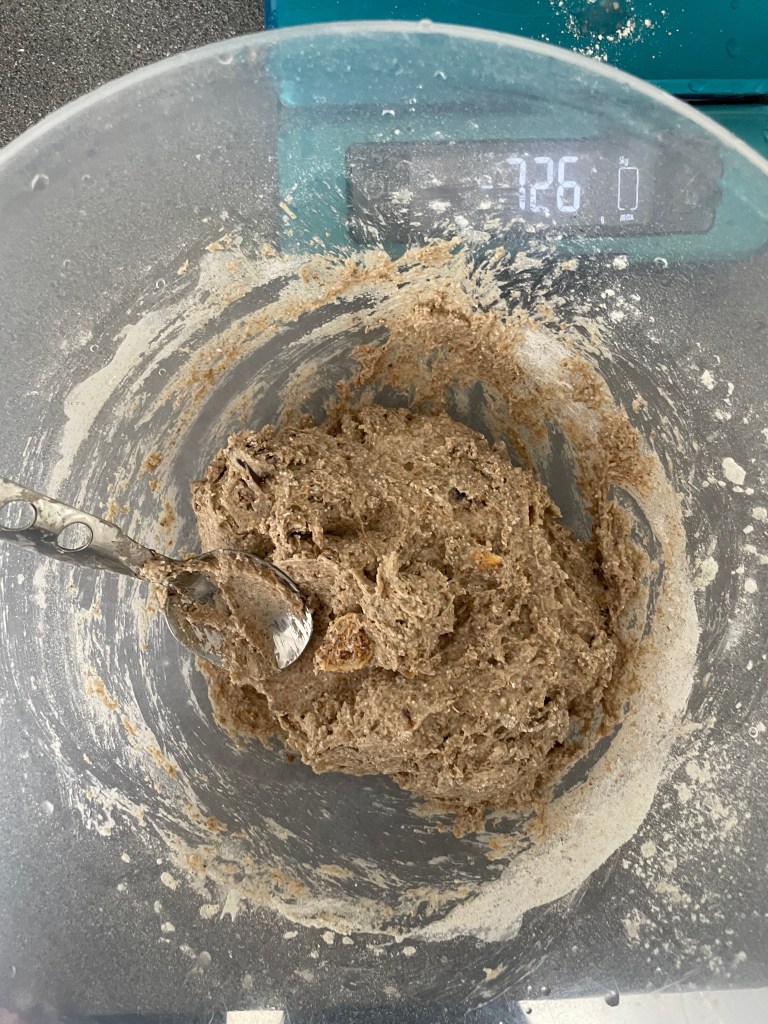
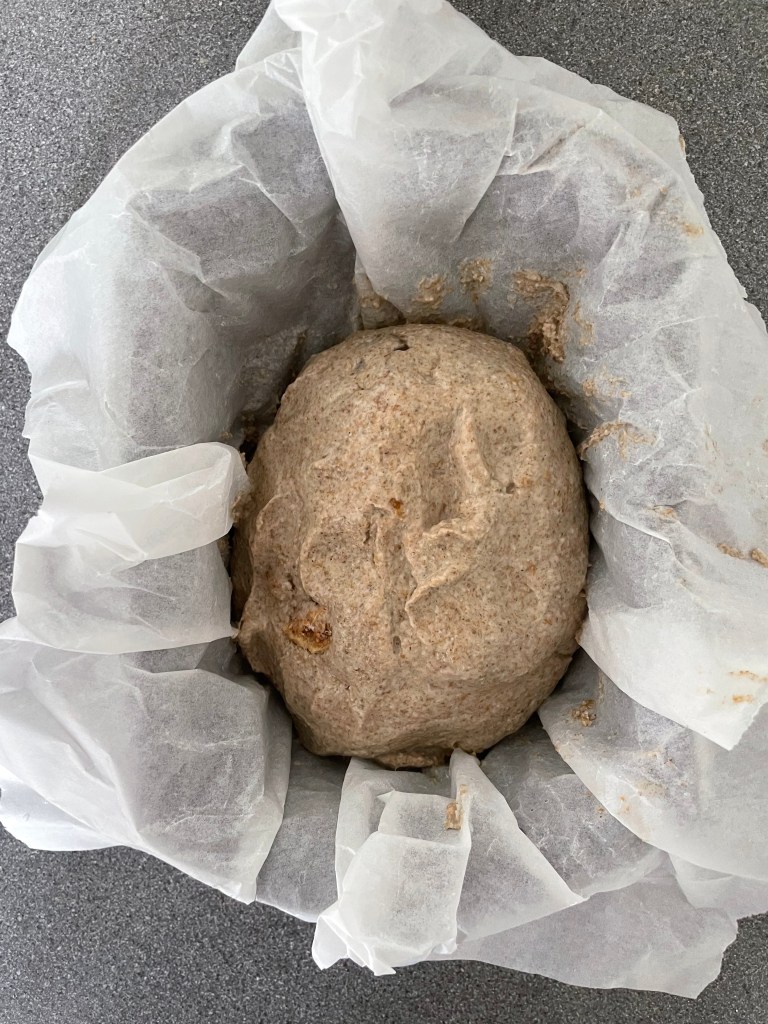
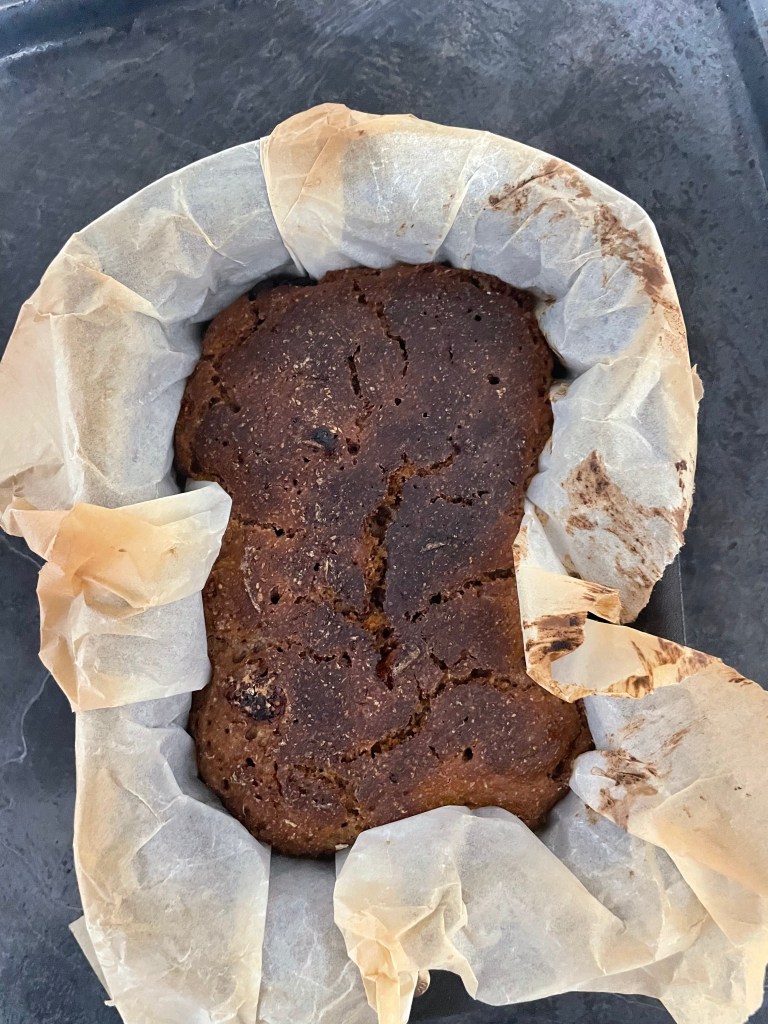
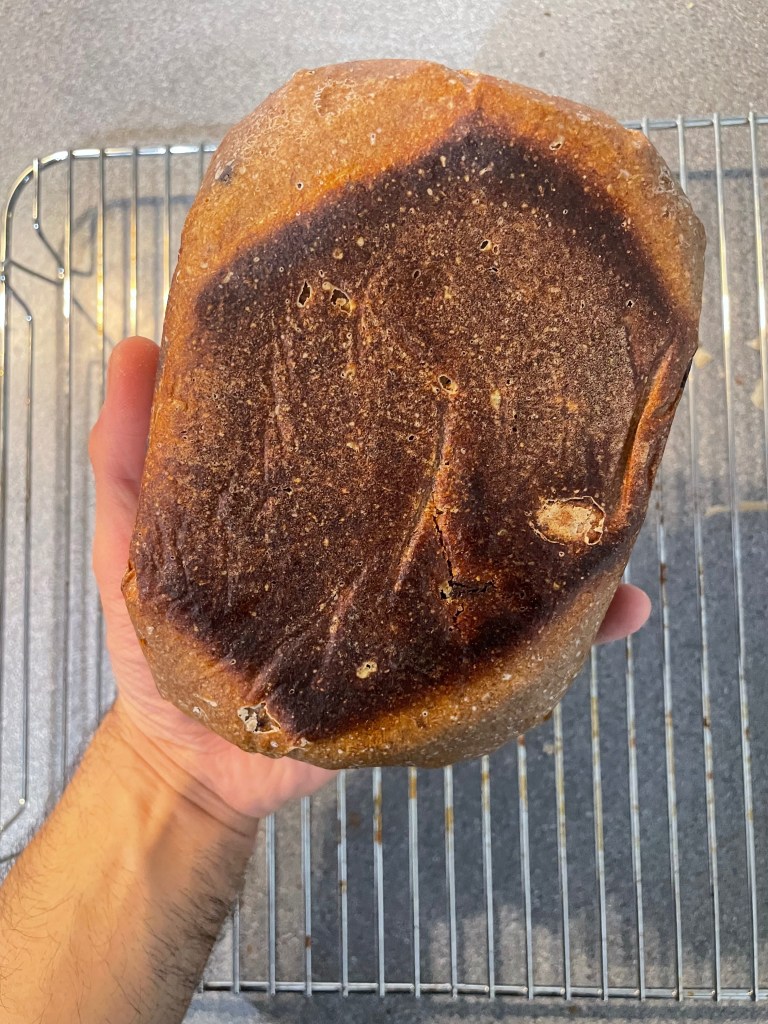
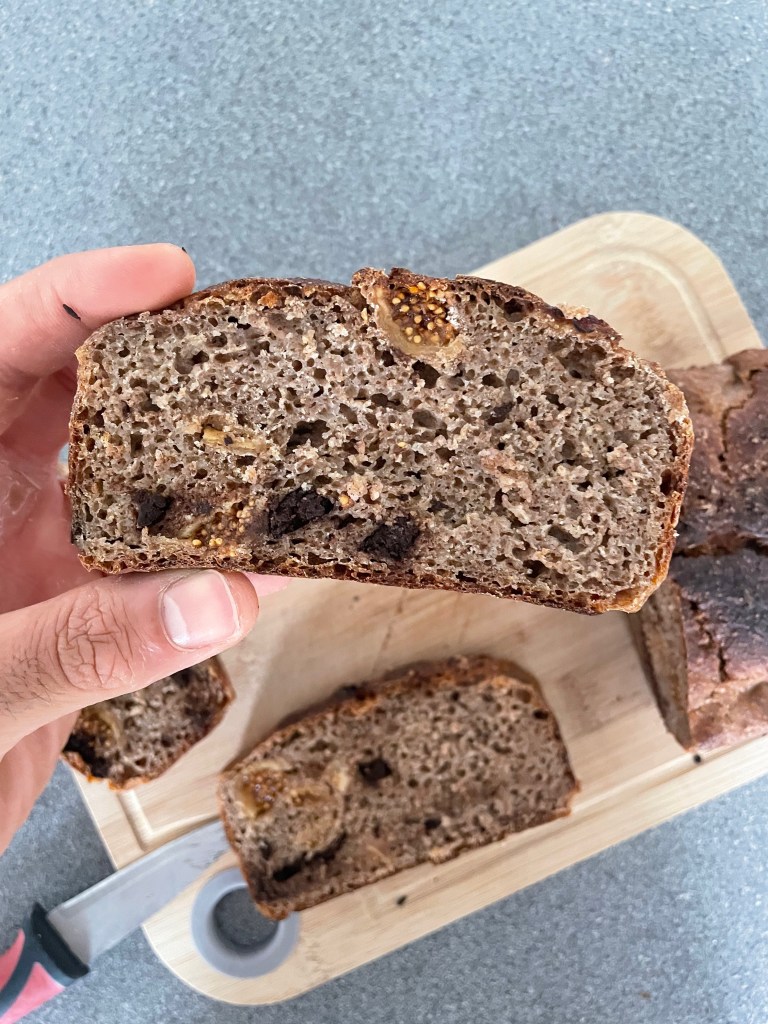
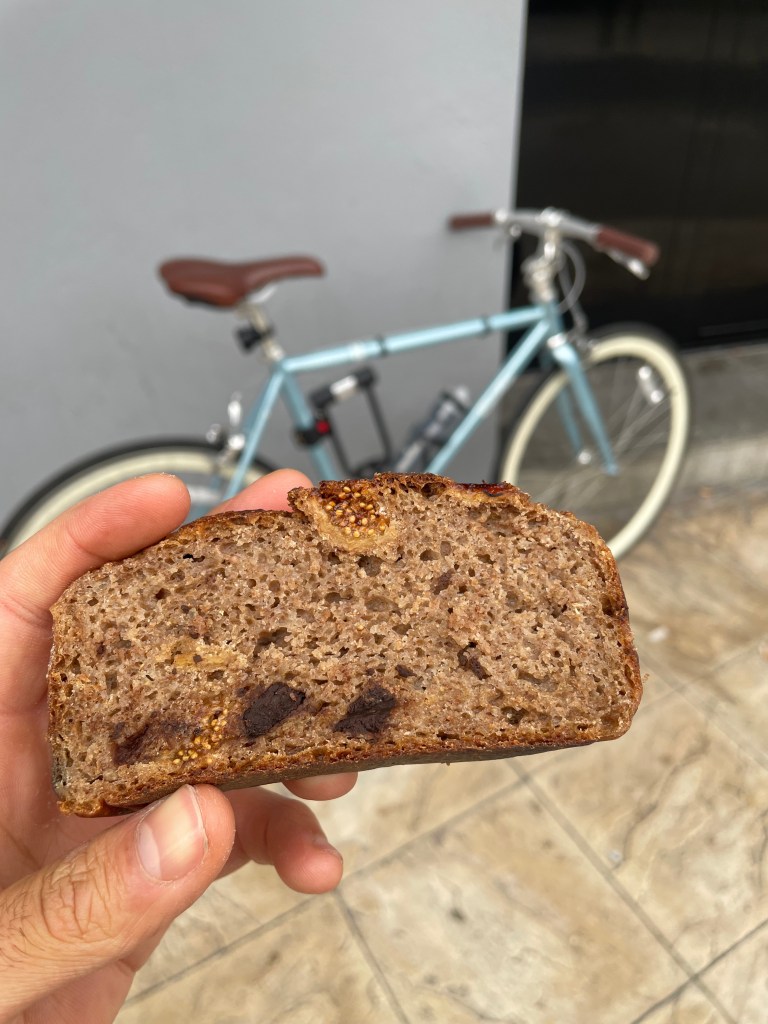
This was really good on it’s own, but I found that it paired perfectly even with slightly acidic 0 fat high protein yoghurts like Skyr or FAGE’s 0%: when I spread them over a slice of this bread it felt like I was having the 5% version!
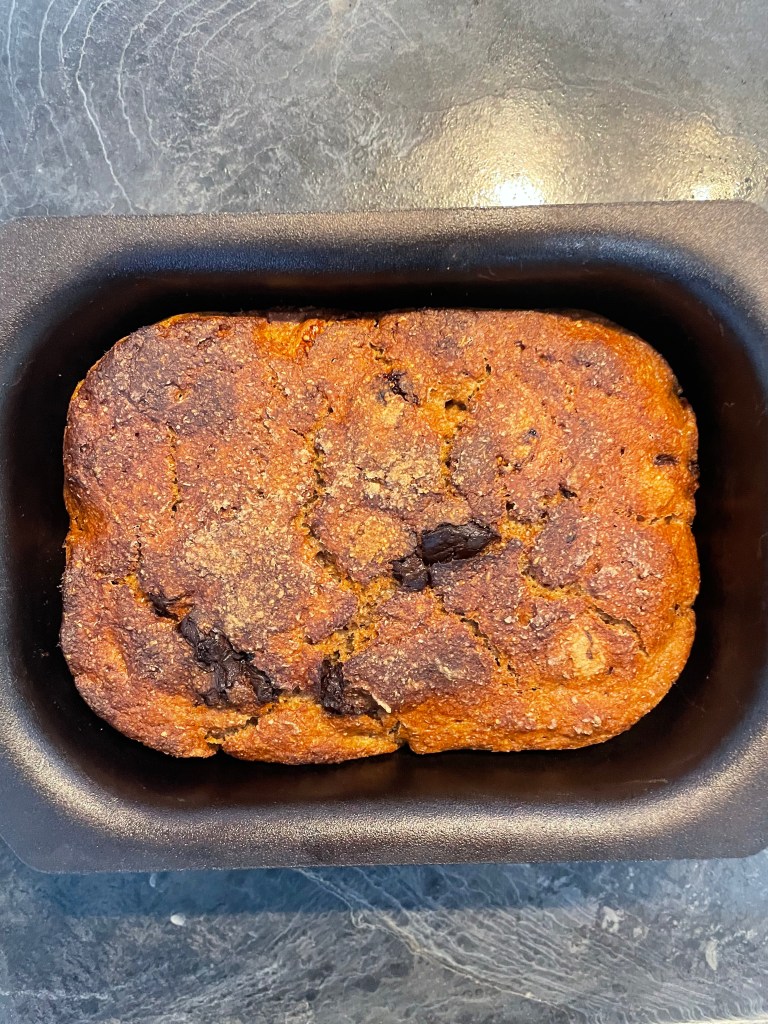
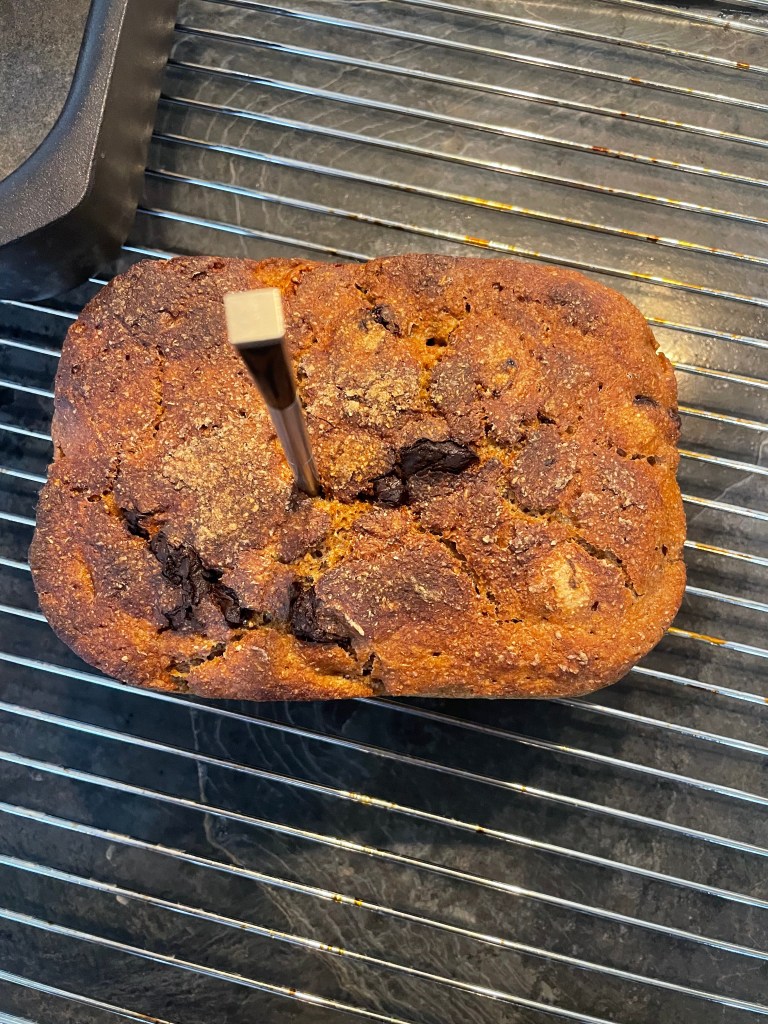
It was so good that I made it twice, with the second time doubling the chocolate and figs. The exact ratios depend on your taste: I personally like the flavor of dark chocolate, but some may find that more figs are needed to balance out its bitterness. One thing I’d note with this recipe though is that if you really want a uniform cross section, you need to make sure to cut your chocolate and figs well. As the chocolate tends to melt in my hands I opt for approximations instead. Below are results from the second try, and you can see much better coloring:
Concluding Remarks
Rye is an excellent choice for making loaves, because it is so easy. All you need is 15 minutes to get it proving. And IMO it tastes really, really good. Its ease also makes it a perfect place to experiment with different levains and toppings.
However, there is much more in the world of sourdough than rye. In the next few articles I’ll talk about the other experiments I’ve been trying: spelt, buckwheat and semolina loaves!
- The name of my sourdough: Dusty Springfelt because she was made of Spelt. ↩︎

 Tsunami's Hungry
Leave a comment