
Turkish food is generally well loved, but I can almost guarantee you that while most people have had döner kebab, they’ve never heard of other beauties such as Çiğ köfte or mantı. There is much more to Turkish cuisine than what you find for breakfast at megan’s, and this is me sharing some of it, having tried homemade Turkish specialities at the Feltham Turkish festival.
If there is ONE THING that I want you to take from this article: life is too short not to have Çiğ köfte. So go to your local Turkish resto and get some, or even better, learn to make it yourself!
Turkish Festival
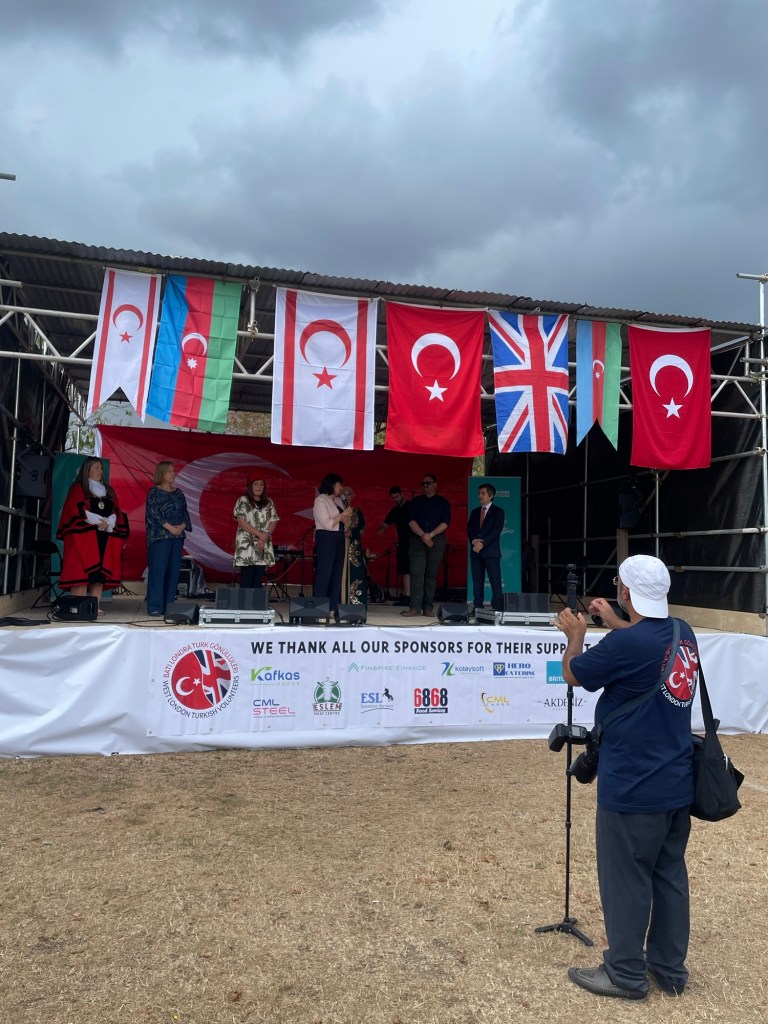
The Feltham Turkish Festival is a yearly event organized by the West London Turkish Volunteers. As per my understanding they’ve been running the event for eight years now, and it appears to be one of (if not) London’s biggest Turkish community led events. While the event isn’t just about food, with there being a main stage playing live traditional music, games for kids and some stalls that sell Turkish handcrafts, the primary focus is. There were three tents dedicated to it: two of which sold traditional dishes and small bites, and one which sold catered food, such as döner kebab and lahmacun. I didn’t bother with the catered food, not because I thought it wouldn’t be good, but rather because it would have been a waste of an opportunity not to try the homemade dishes!
Mantı
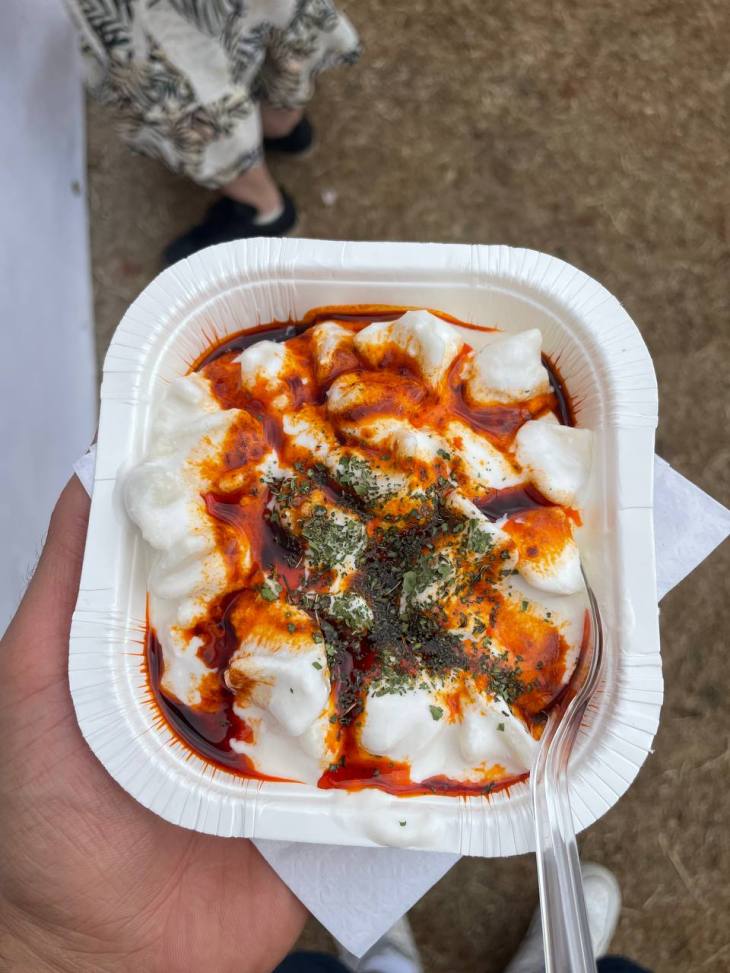
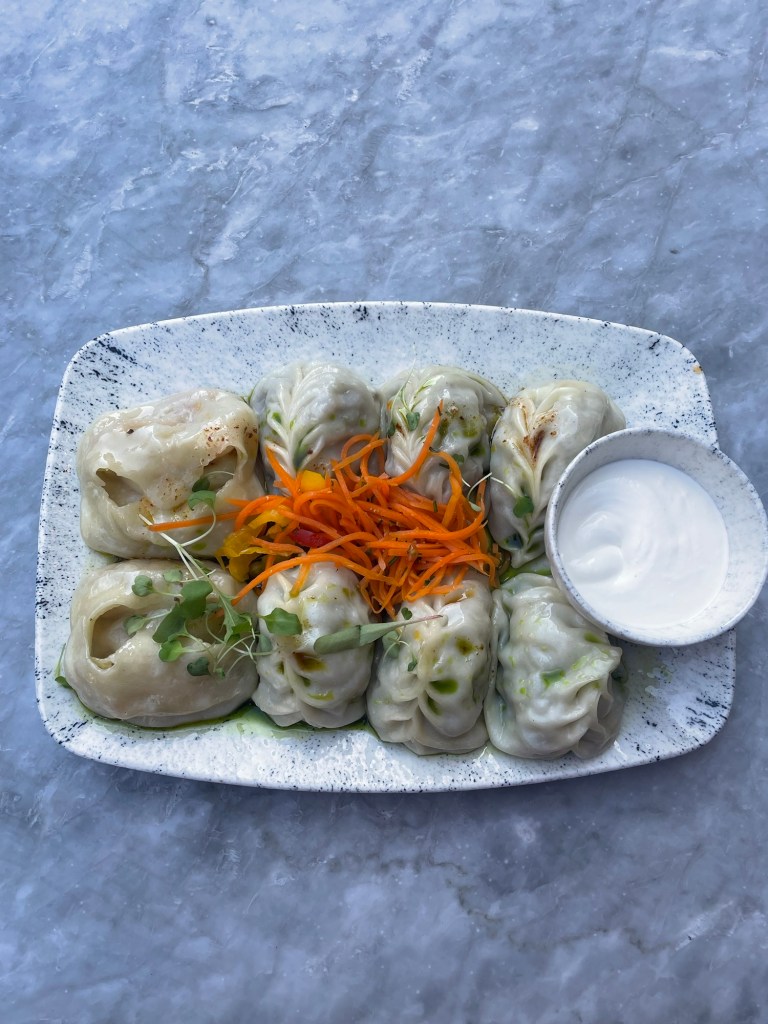
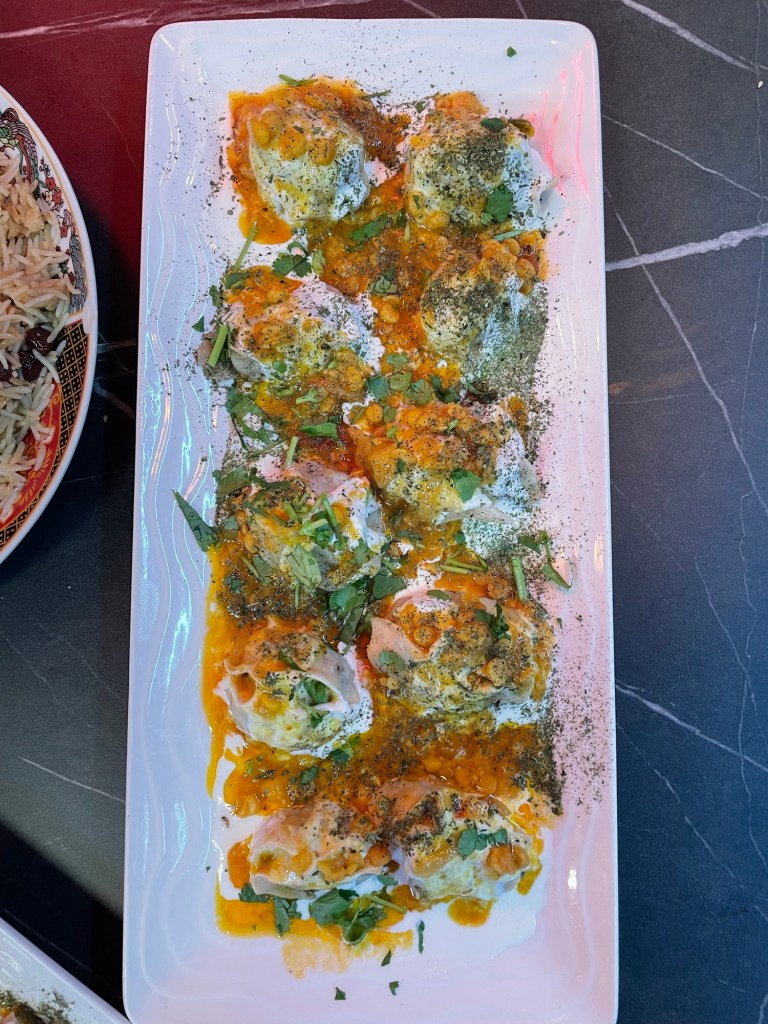
The first dish I went for was Mantı, a dish that I absolutely love ordering from Uzbek or Afghan venues. It is effectively a dumpling with some meat inside, not too dissimilar from tortellini. What makes the Turkish one different is the size of the dumplings, the choice of fillings, and the sauce drizzled on top. The Turkish manti is roughly the size of large blueberries, and it is filled with a ground beef mix that has tiny onion pieces in it, with a generous amount of salt and pepper. The dumplings are then steamed and once cooked through, covered with cold garlic-yoghurt and drizzled with light chili oil and garnished with dried mint.
While I enjoyed the dish, particularly the mild flavors of the yogurt and chilli sauce, I found myself wishing that the dumplings were bigger so that I could taste the filling a bit more.
Çiğ köfte
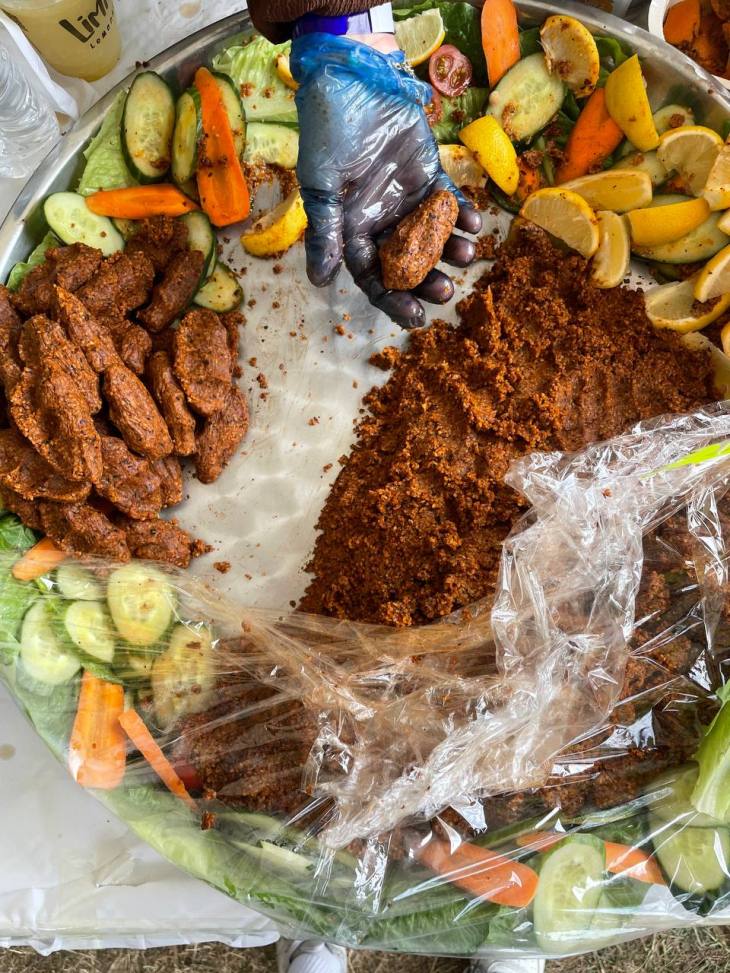
The dish I was most stoked about, by far. When I still had Instagram, I would salivate every time Hermann the German‘s Çiğ köfte videos would pop up on my feed. Traditionally, this dish used to be made with raw ground beef (in fact Çiğ köfte literally translates to raw meatballs, and you could say it is the Turkish equivalent of Kibbeh Niyyeh). However, modern Çiğ köfte is made with bulgur instead of raw meat, because the sale of Çiğ köfte made with raw meat was banned in Turkey in the late 2000s due to health hazards.
The dish is relatively easy to prepare: bulgur is kneaded with onions and water until it softens, and then tomato purée and spices are added into the mix, making for the most delicious bites you’ll ever have! The Çiğ köfte is then shaped into the shape shown below, and is served over lettuce leaves and drizzled with pomegranate molasses. Eating it is simple: rip a bit of lettuce, place a Çiğ köfte onto it, and enjoy a complex flavor that starts intense with all the spices, then develops into tangy goodness from the pomegranate molasses. It tastes fresh because of the lettuce, so while there is an option to grab this as a wrap, I would recommend it with lettuce. It is an option to drizzle some lemon juice over it, but I find that the pomegranate molasses is just perfect.
Mercimek köfte
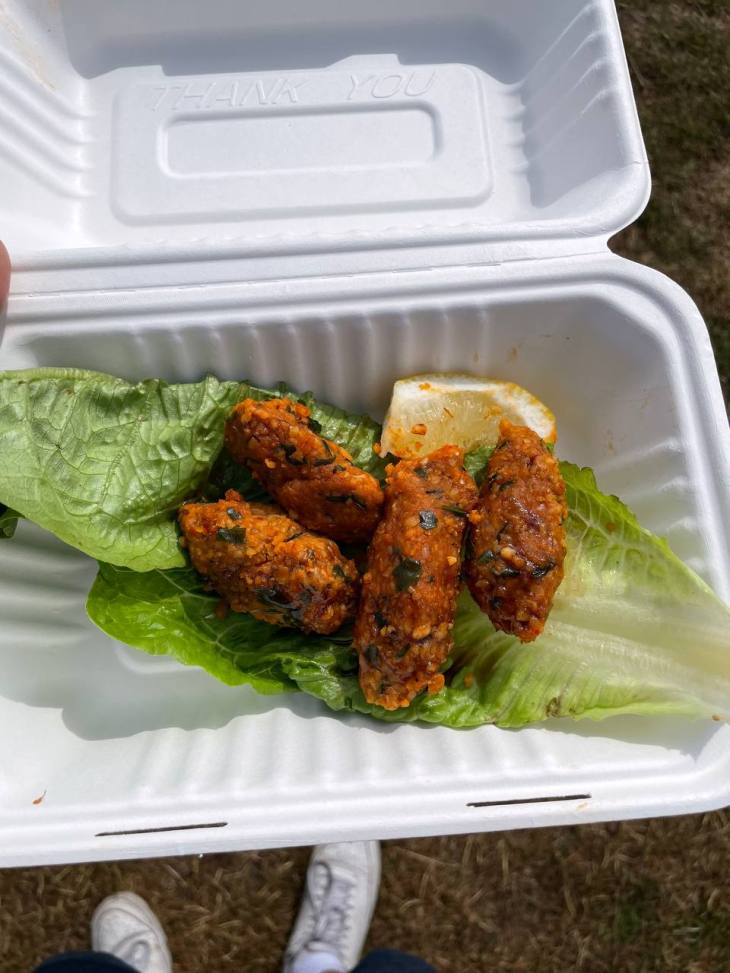
I hadn’t heard of this dish before, but it looked eerily similar to Çiğ köfte, and to be fair, you could consider it Çiğ köfte’s less known cousin (for good reason).
Mercimek köfte is the same concept, but it is made with red lentils which means that you cannot prepare it raw1. The red lentils are first cooked until a mushy texture is achieved, then fine bulgur is added into the hot mixture, which gets it to swell. Finally, onions roasted with tomato purée are added to the mix. Once the mixture has cooled, it is shaped exactly the same as Çiğ köfte, and eaten in the same way.
This was tasty, but it could never compete with Çiğ köfte in my opinion, because the flavour of the lentils is very noticeable, and you can tell that it is a cooked product. What’s great about Çiğ köfte is that you get an explosion of spices from a product that is essentially raw, and therefore tastes quite fresh.
Ispanaklı Börek
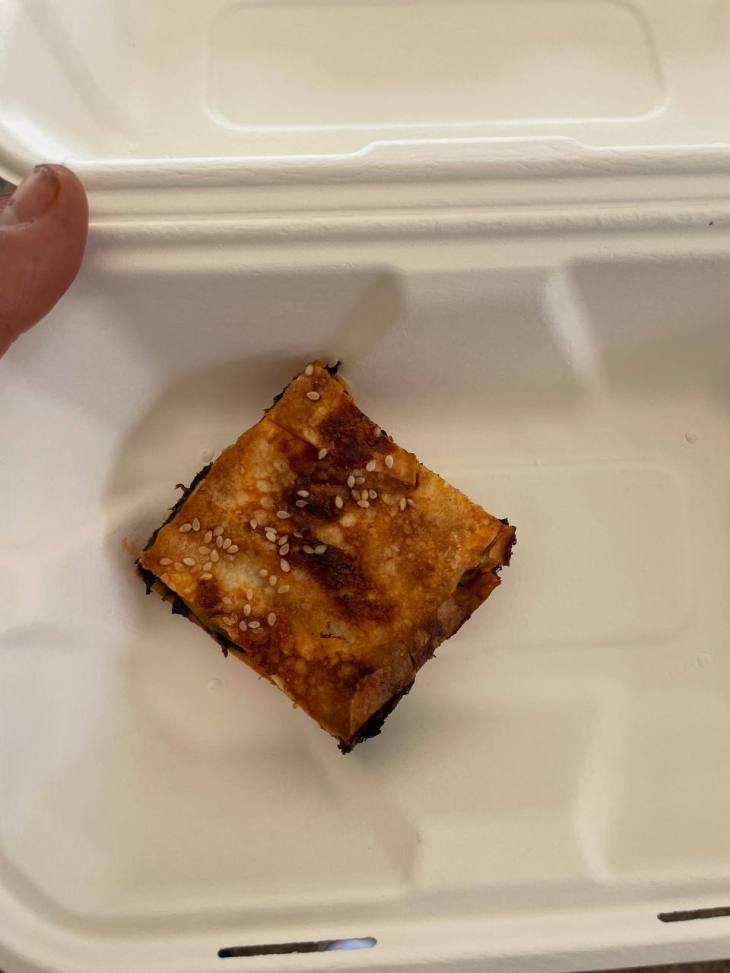
Börek is quite well known and well loved, for it is quite common across many countries, particularly in the Balkans. It’s a savory filo pastry, usually filled with cheese, meat or vegetables such as spinach.
I had one with just spinach, which I hadn’t seen before. There is not much to say about it, though that doesn’t make it a bad thing. It was a solid pastry with a nice spinach flavour.
Sarımsaklı Köfte
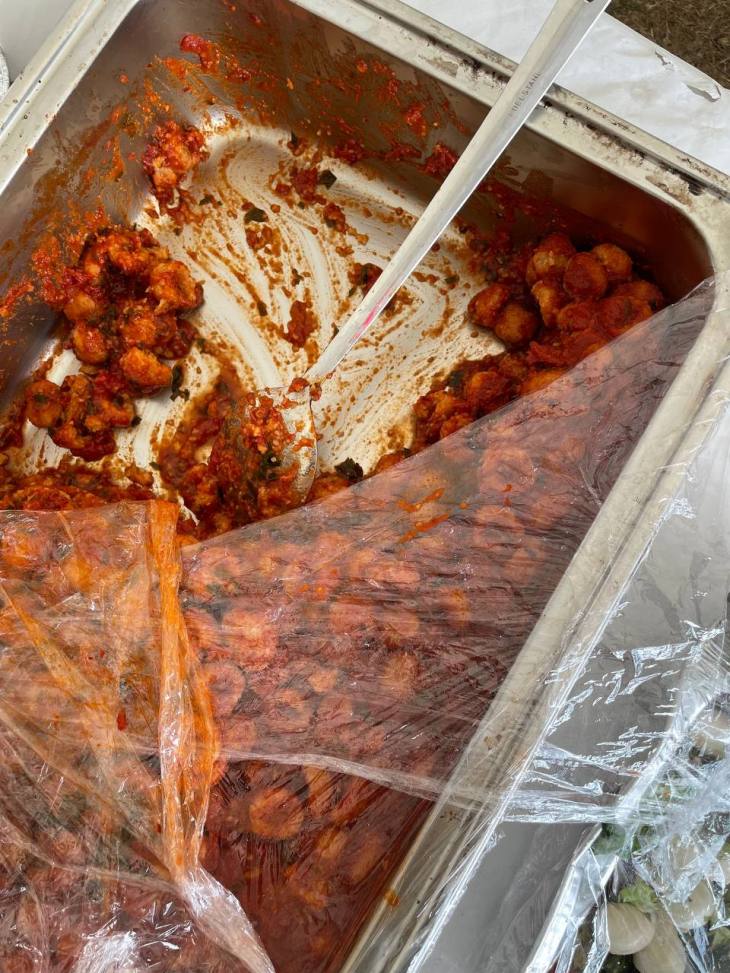
The final dish I tried was Sarımsaklı Köfte, and as I was researching for this article I noticed that our favorite German has a recipe for it too! The base is similar to Çiğ köfte: it is made out of bulgur, but instead of it being kneaded raw, boiling hot water is poured over it first, allowing it to expand. Then semolina, plain flour, tomato purée and spices are added until a smooth dough is formed. The dough is shaped into balls which are given dimples. These are then boiled in water, before being added to a rich galicky pepper-tomato based sauce.
It was quite tasty, and very different to the other two köftes.
My Impressions of Feltham
The Innocence of Youth
While on the bus on the way to Feltham, I got the impression that it was a relatively nice area, as all I could see were new builds.
However, walking through it on the way back home I noticed that the nice buildings hide its uneasy streets. I could not spot a single adult on the roads, and instead all I could see were kids, in the ages of 13-17. You may think: but why would kids make me feel uneasy? The answer is simple: kids dressed in tracks, with no active role models in their lives and lacking an ability to regulate their emotions are perhaps the most dangerous specimen to encounter on the streets. All I wished for was the safety of a seat on the train, as I kept my curious eyes away from theirs.
This was in stark contrast to the innocence of youth that I witnessed at the Turkish festival. At some point, it started to rain heavily and all us poor attendees dressed for a summery festival were cramped like sardines under the tents. Unlike us adults, the kids were pushing their curiosity way beyond my comfort zone. In front of me was a child just letting her hands get drenched by the rain outside the tent, and sometimes her shoes too. I wondered to myself “when did I stop behaving so freely” as I saw her dunking her foot into puddles that were forming outside the tent. Soon after the sun was back, but seemingly angry at the clouds for stealing the fun for it was seriously scorching. I lost sight of the kid as she zoomed past everyone else to play with all the other kids around.
Earlier that day, I had cycled 100 kilometers around London passing by so many housing estates that were falling apart. Walking through Feltham, which while not crumbly, introduced me to kids who are surely living in council estates. This made me feel a deep sadness that I cannot describe with words. All I could do was look up to the clouds and think:
How could you be so beautiful,
yet inflict so much pain on people?
Especially on children.
And you dare ask me to be faithful?
Famous Residents of Feltham
Perhaps Feltham isn’t all that bad because two legends lived there: Mo Farah and Freddie Mercury. Incidentally, the venue where the Turkish festival was hosted is indeed the school Mo Farah went to as a kid, where teachers noticed his exceptional athletic potential.
It was nice to see a mural dedicated to both these legends.


Concluding Remarks
The Turkish festival definitely left its mark on me, and while this event doesn’t have that much publicity, I would strongly recommend visiting it.
Feltham is a place I’m sure I’ll pass by again over the years, but perhaps on a cycle and not by foot.
- Note that while bulgur is a wheat product, you CAN consume it raw because it comes par-boiled. ↩︎
 Tsunami's Hungry
Leave a comment