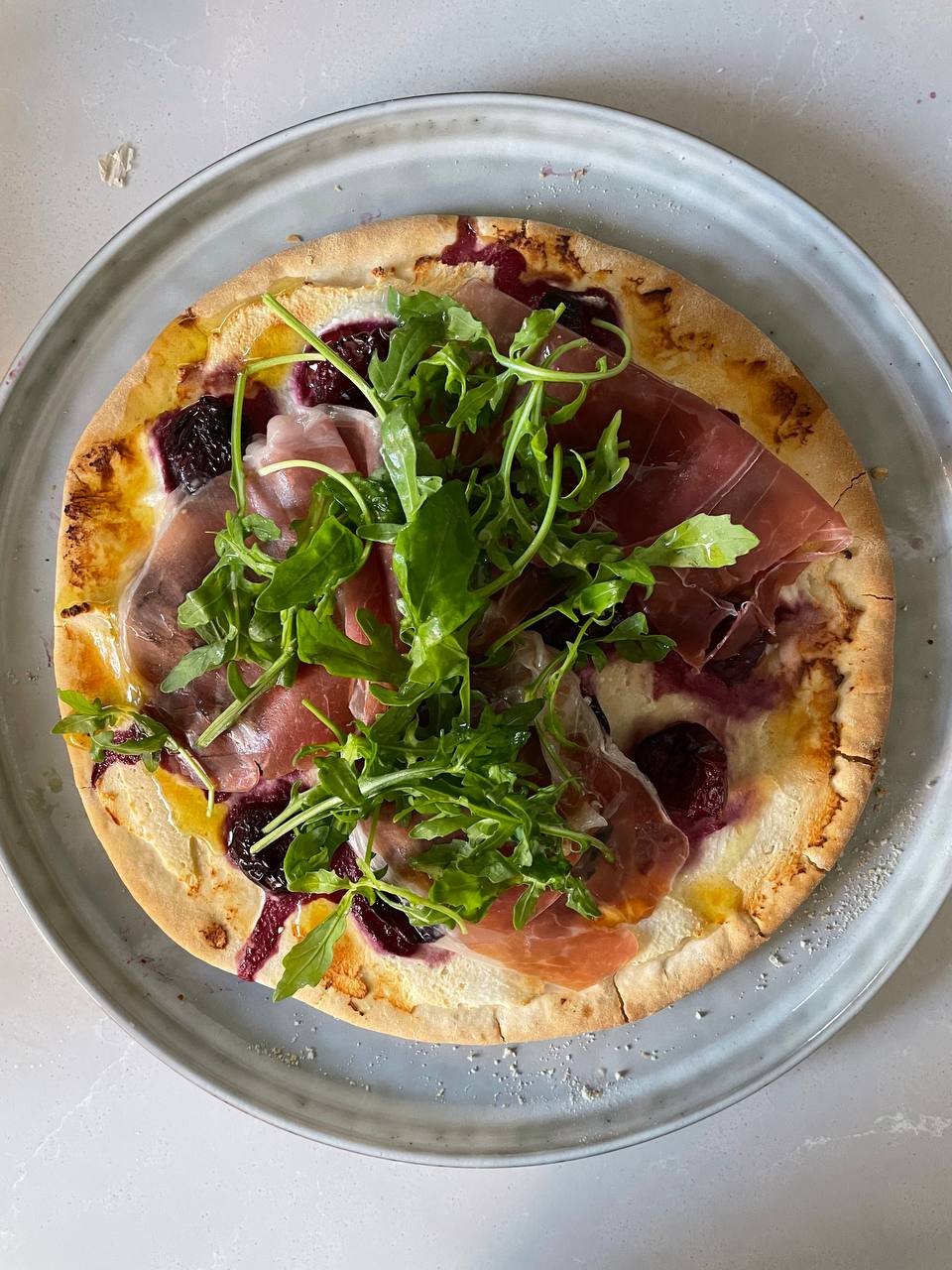
Shocking title I know, but I’ve recently been learning about and experimenting with lacto-fermentation, and an insane part of me thought this may work. I apologize to any Italians in advance: I’ll soon be posting experiments more aligned with the Italian way, which I’m sure you’ll appreciate 🙏.
But before going into the deep end: what is lacto-fermentation exactly?
Lacto-fermentation: A primer
Lacto-fermentation is a naturally occurring process whereby a certain type of bacteria, Lactobacillus, feed on the sugars of food, producing lactic acid as a byproduct. In fact, most of the foods that we love to consume are lacto-fermented: yoghurt, kimchi and sourdough bread (see my spectacular rye loaf!) are three completely different lacto-fermented food items that come to mind. If you think about it carefully the next time you consume any of them, you’ll notice the “sour”1 flavor as well as a certain kind of umami flavor.
There are many reasons to ferment food, but historically it is probably the case that lacto-fermentation was used as a way to preserve food. This is because the acid produced by the bacteria makes it harder for other pathogens and moulds to grow. That said, today’s fermentation trend is mostly driven by research suggesting that it has many health benefits, such as enhancing the bioavailability of nutrients and improving our gut microbiome.
Though the health benefits are compelling reasons to eat fermented food, there is also a more obvious reason: they taste amazing! The umami flavor you get from lacto-fermentation can elevate your cooking game, especially if done right (which naturally, is what I was trying to get to).
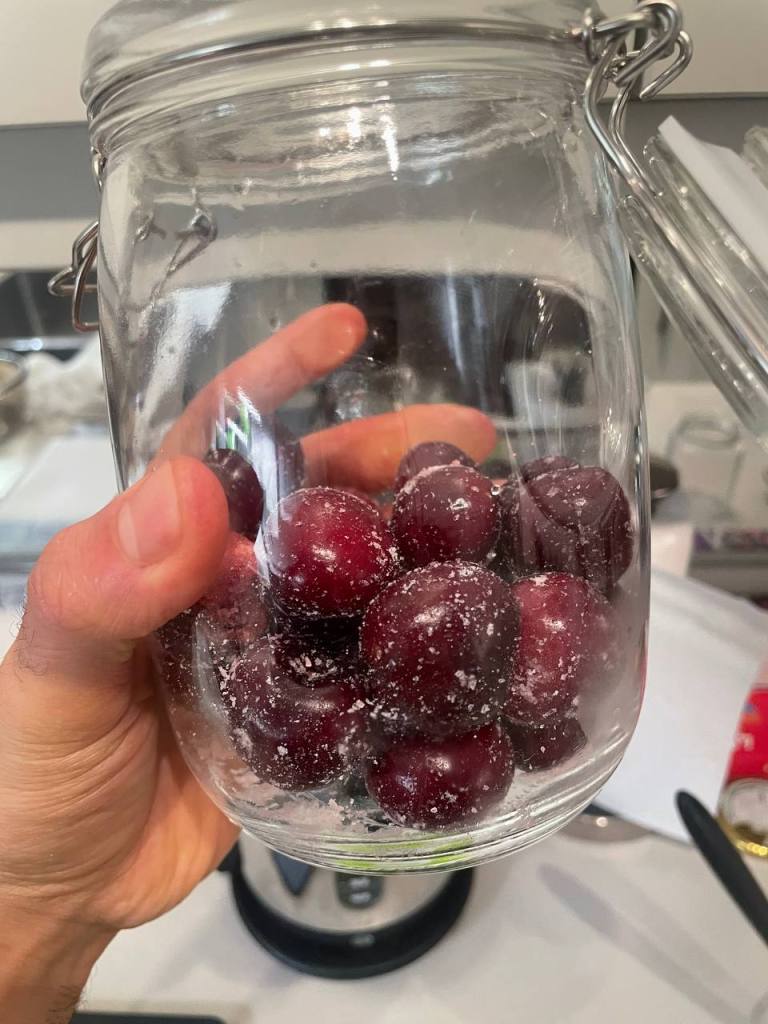
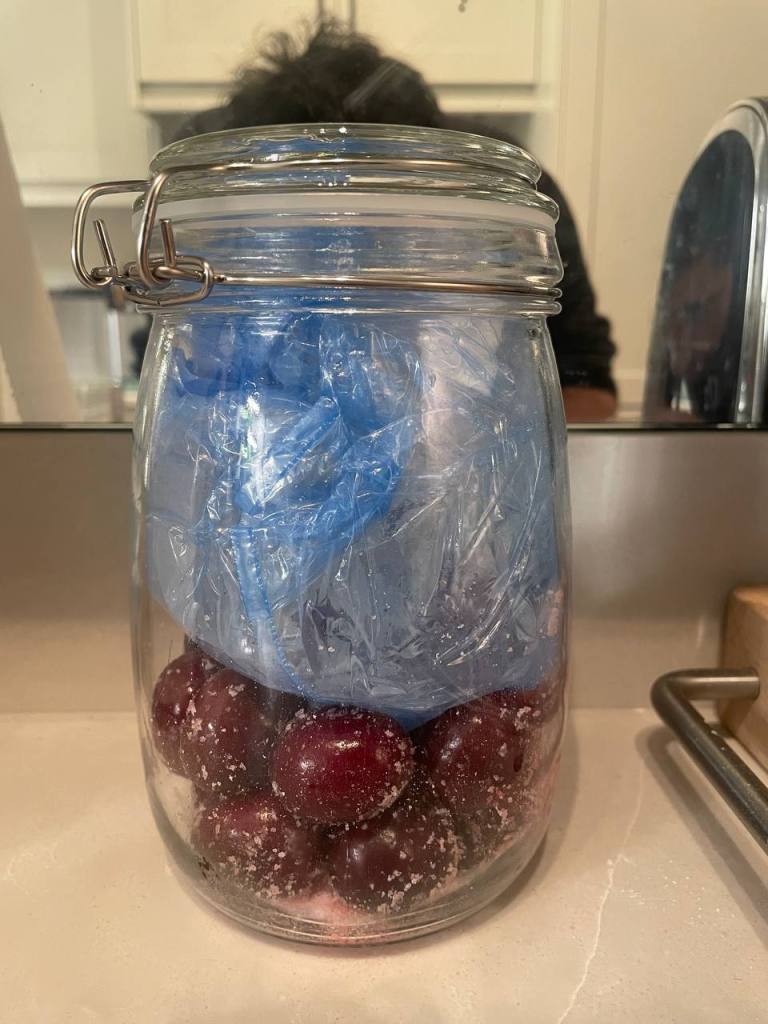
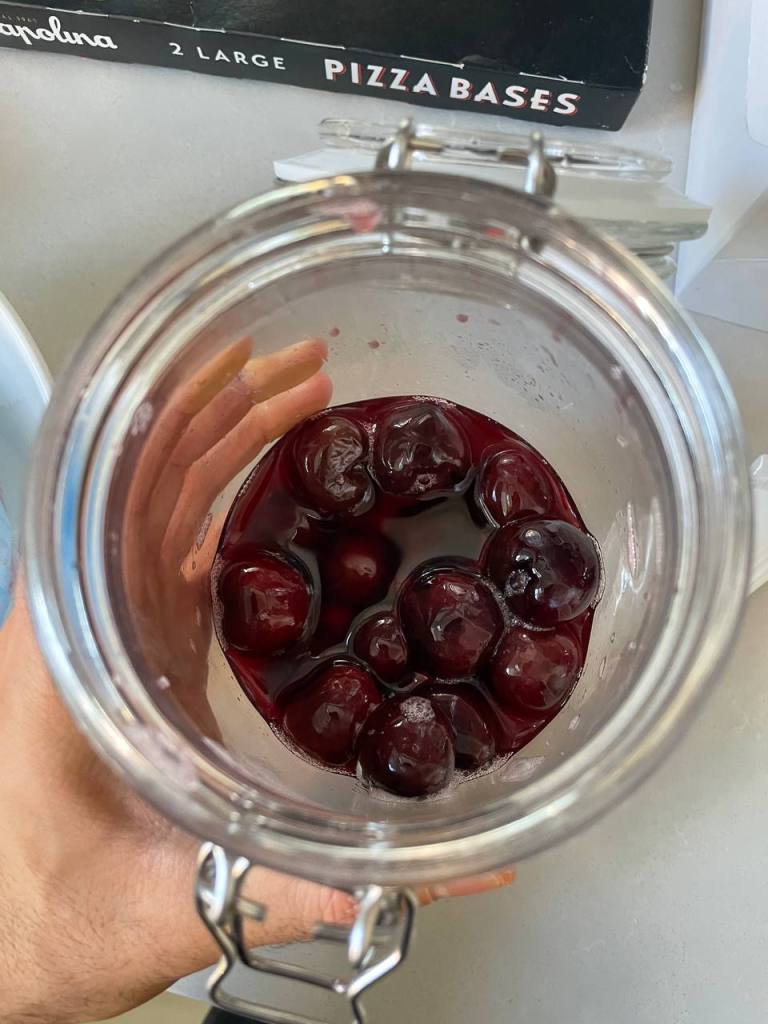
The fermentation process is simple: you weigh the ingredient you wish to ferment (in this case, cherries) and add them to a jar, then you add 3% of the ingredient’s weight in salt, mixing well to make sure that it is fully coated. You then make a makeshift vacuum seal to generate anaerobic conditions, so that aerobic pathogens don’t grow. The salt has two primary effects: 1) it kills salt intolerant pathogens, and 2) by extracting moisture from the fruits, it essentially starves pathogens that need the water to grow. Then you simply way for lactobacillus to do its wonderful job!
On Pizza?
I feel the need to justify why I tried this in the first place, as I got so many incredulous responses when I told my friends and family about it. In my mind, I was thinking:
- cherries are sweet, and despite what Italians will tell you, sweet DOES belong on pizza (forget pineapple pizza: figs on pizza and honey on pizza are where it’s at)
- cherries are not TOO sweet, so they should balance nicely in a savory setting
- fermentation will add a nice funky flavor to the cherries that will not remind you of desserts
I still stand by the fact that my logic was fair… so how did it turn out?
Well unfortunately, it was terrible… the cherries turned out too salty, especially after they were cooked2. Further, using cherries was a bad idea to start with because they are not sweet enough and are slightly sour to begin with: when fermented they become less sweet, and extra sour due to the lactic acid produced through the fermentation process. It becomes an absolute mess on pizza.
I chose to try this out on a store-bought pizza base (thank god I didn’t waste time making pizza dough, would have been a crushing blow to my ego), with a white ricotta base and some prosciutto/rocket as toppings.
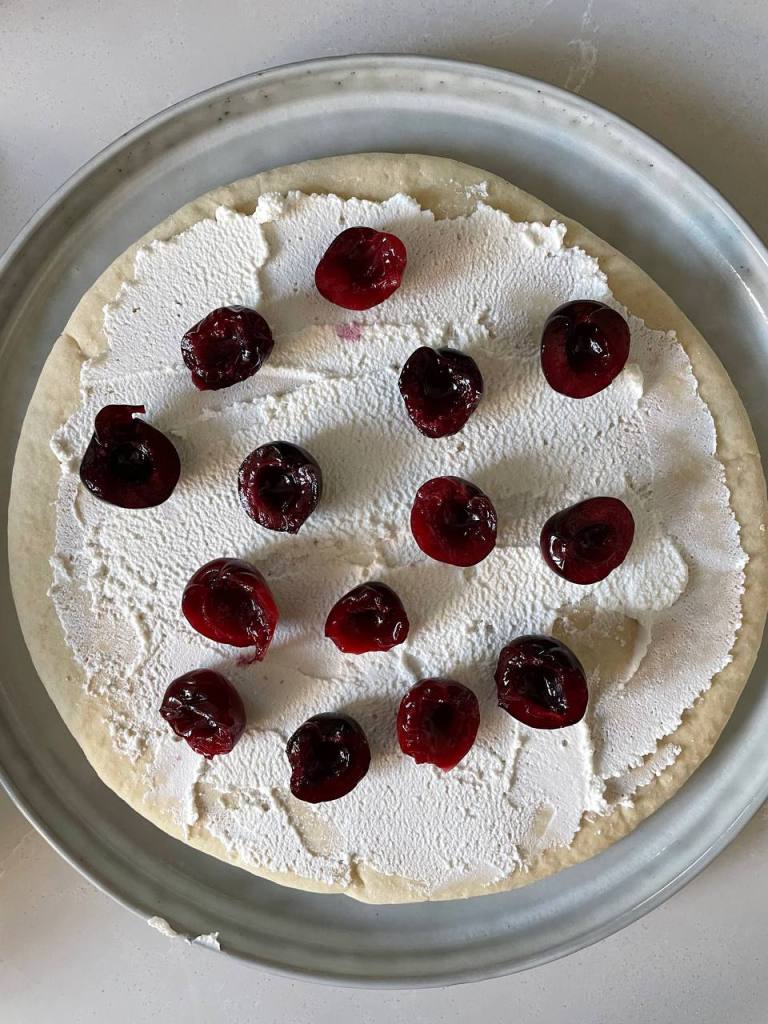
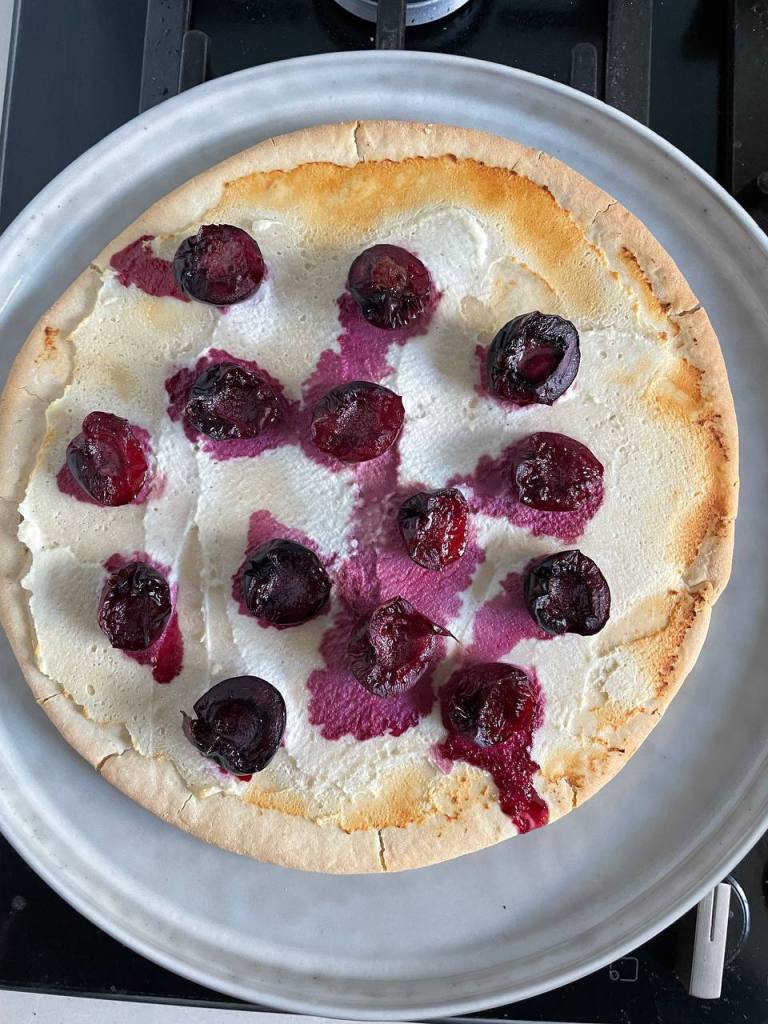
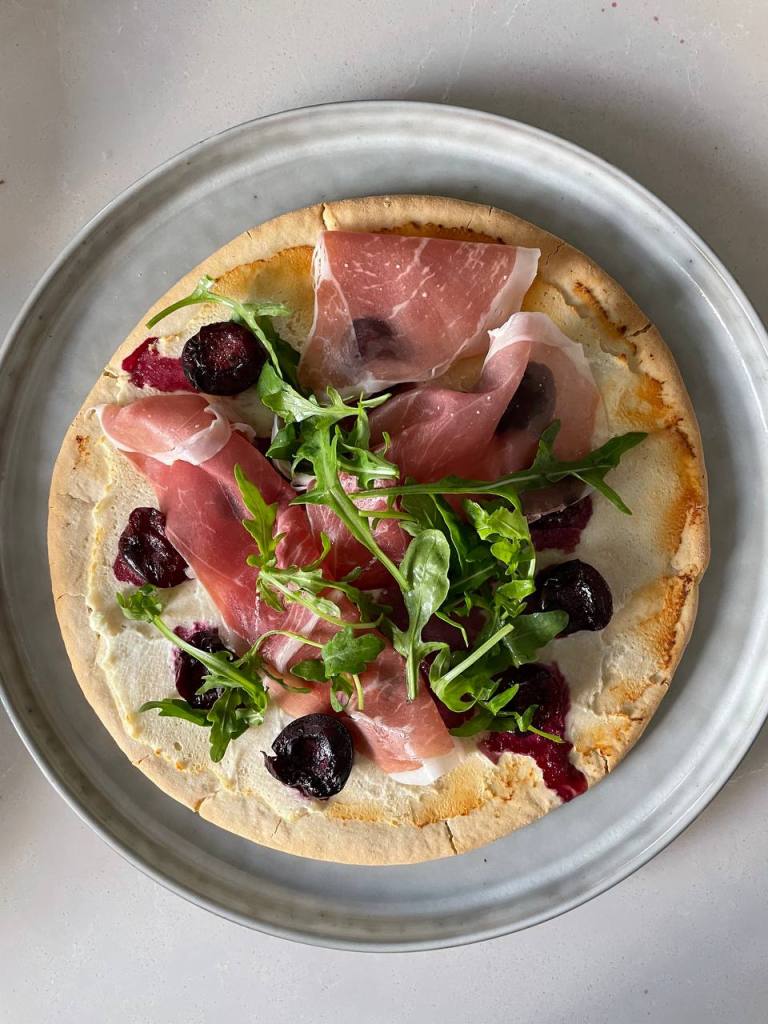
The cherries themselves were nice with some yogurt and honey, and I did not mind having the cherries put onto the pizza after the pizza was cooked. However, It was definitely not good enough to warrant trying it on pizza again. I’ll stick with having this with yogurt!
 Tsunami's Hungry
Leave a comment