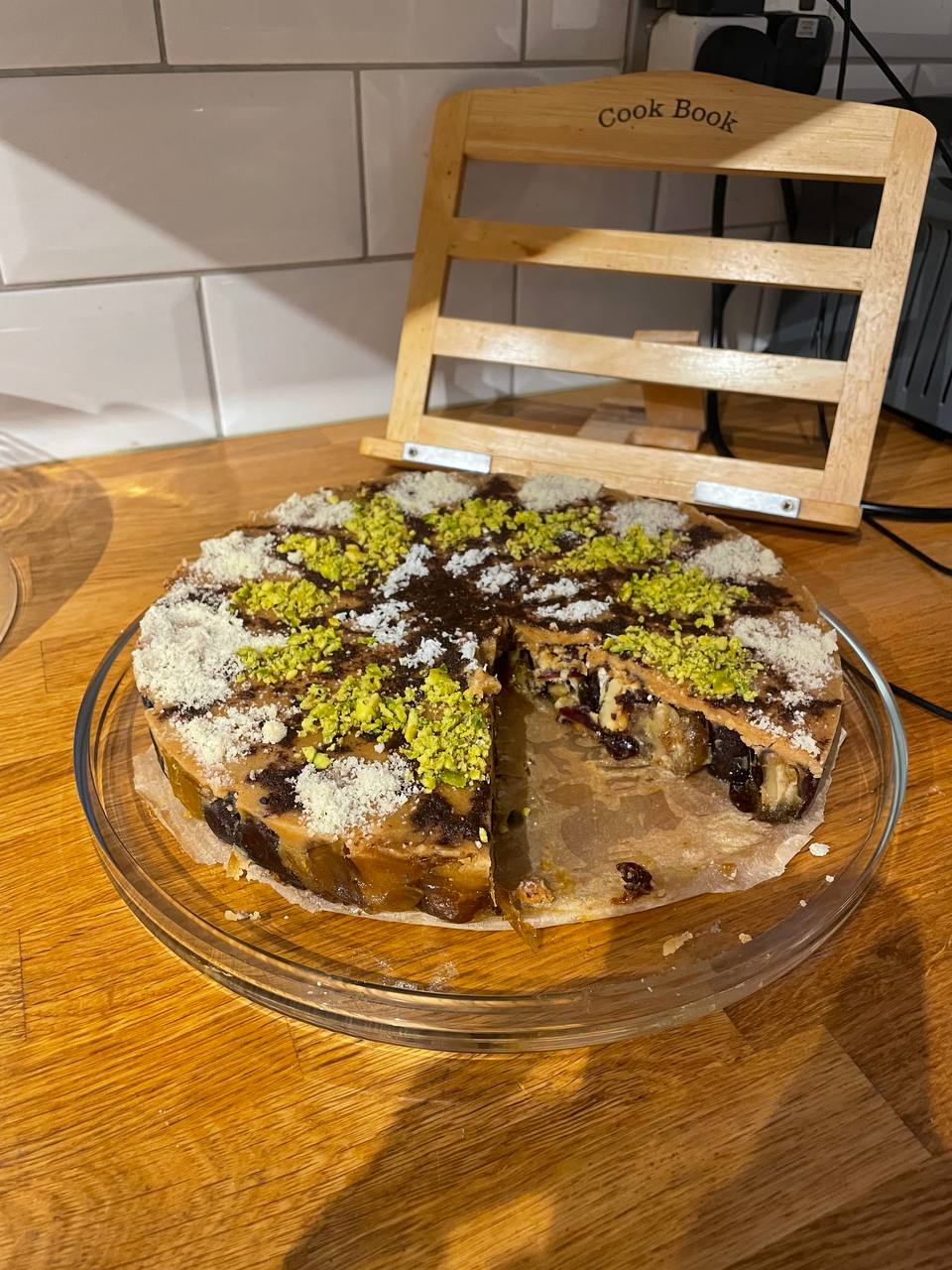
I’ve written extensively about my favorite dessert: Ranginak. If you’ve read my articles though you’ll see that I’ve been obsessed with experimentation to either enhance its flavor or to find ways to re-create it using ingredients that are more readily available. This article is different in that I focused on making a great ranginak without any bells and whistles. In doing so I came to certain realizations that I wanted to share.
Ripe dates are hard to replace
Prior to making this ranginak I’d planned to just use mazafati dates, which thus far have been the best substitute that I’ve found for ripe dates. However a day before starting work on it I was able to get my hands on some ripe dates. They weren’t enough for the amount that I wanted to make, which is why I decided to have a mix of ripe dates and mazafati dates.
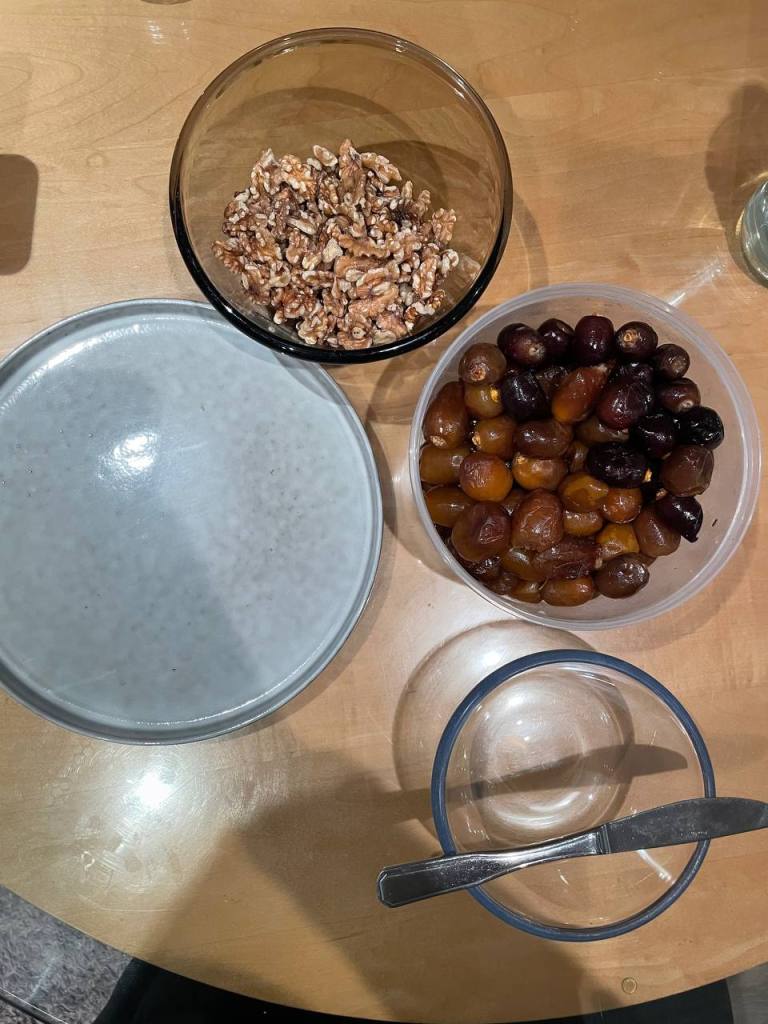
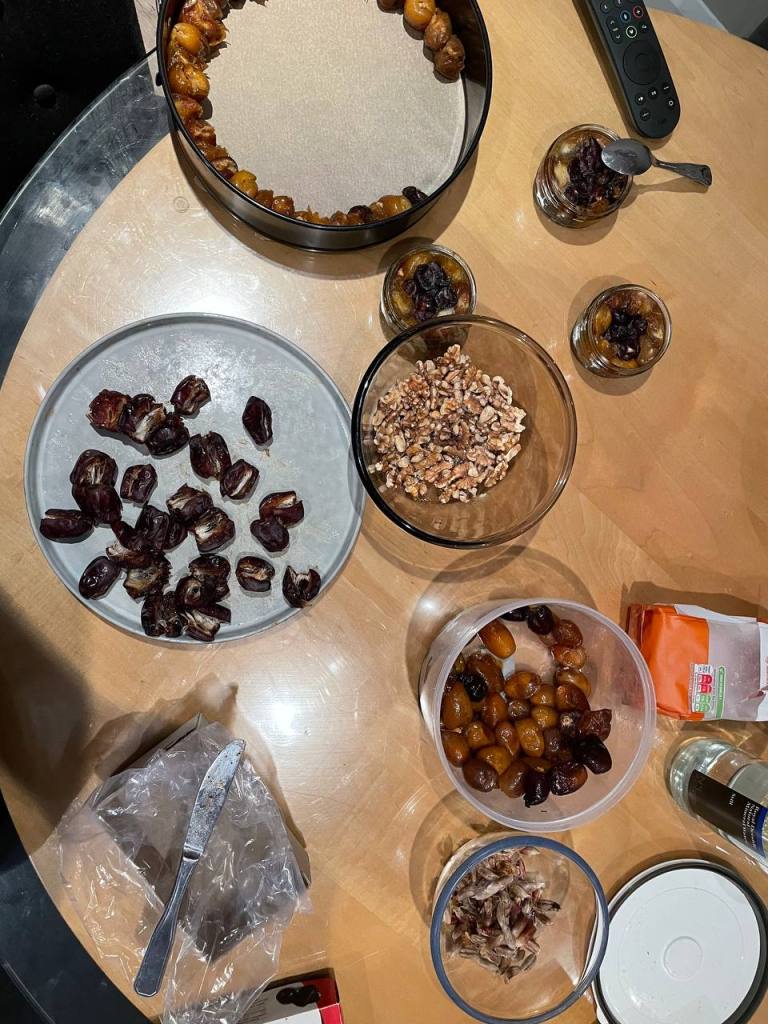
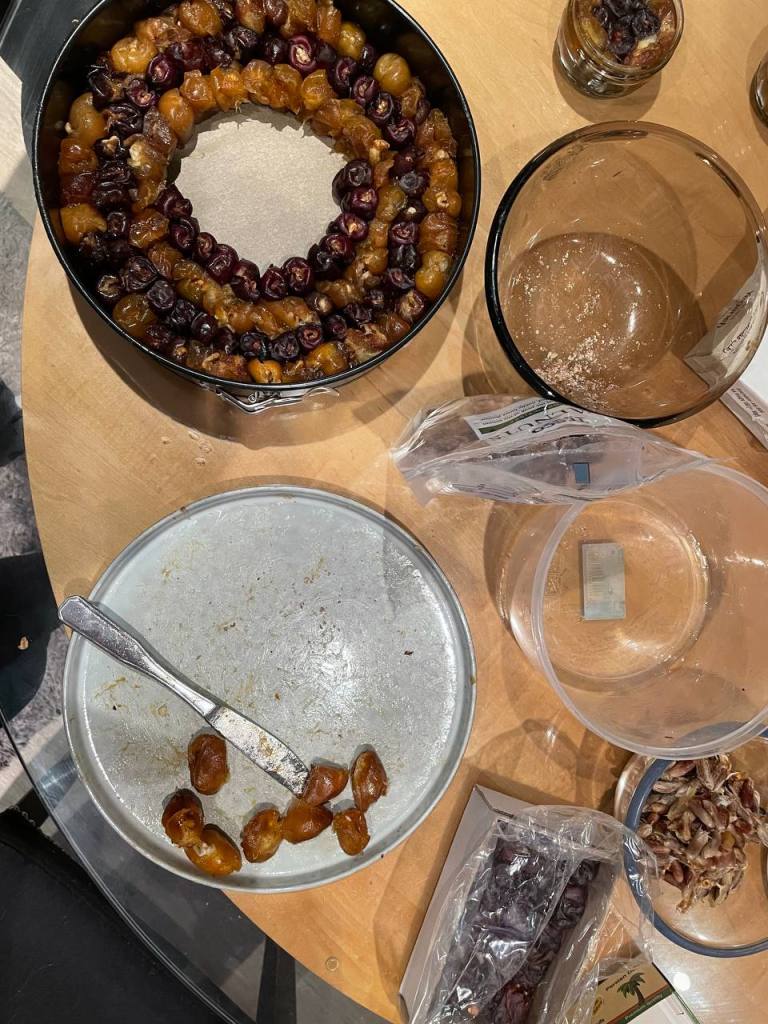
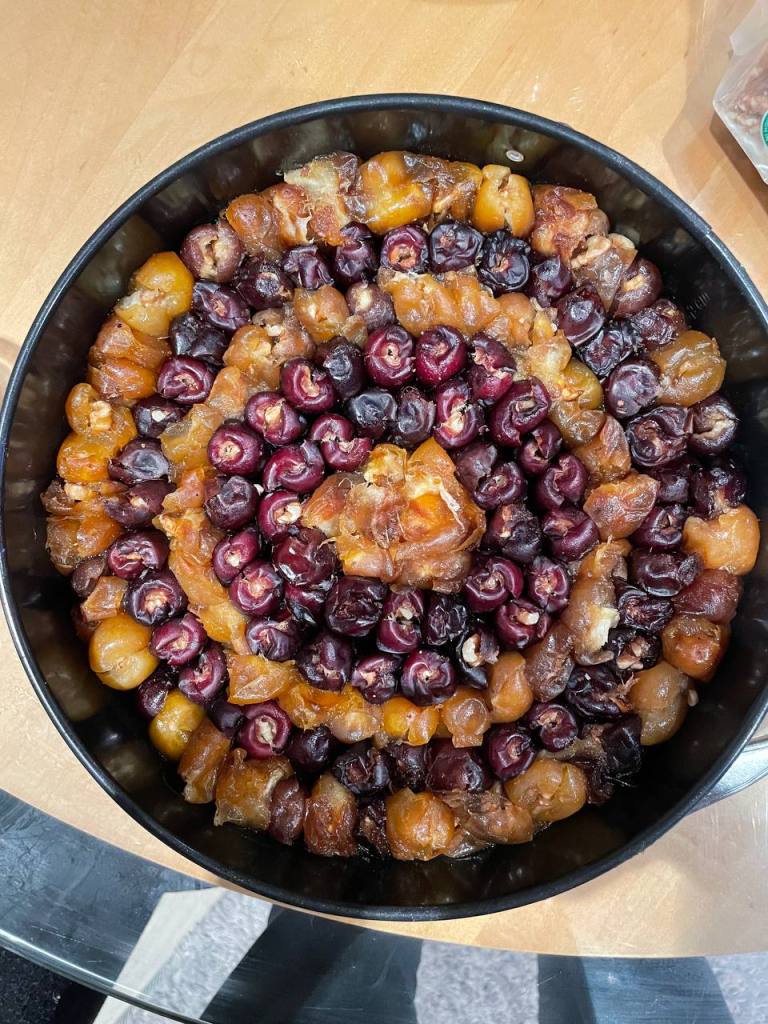
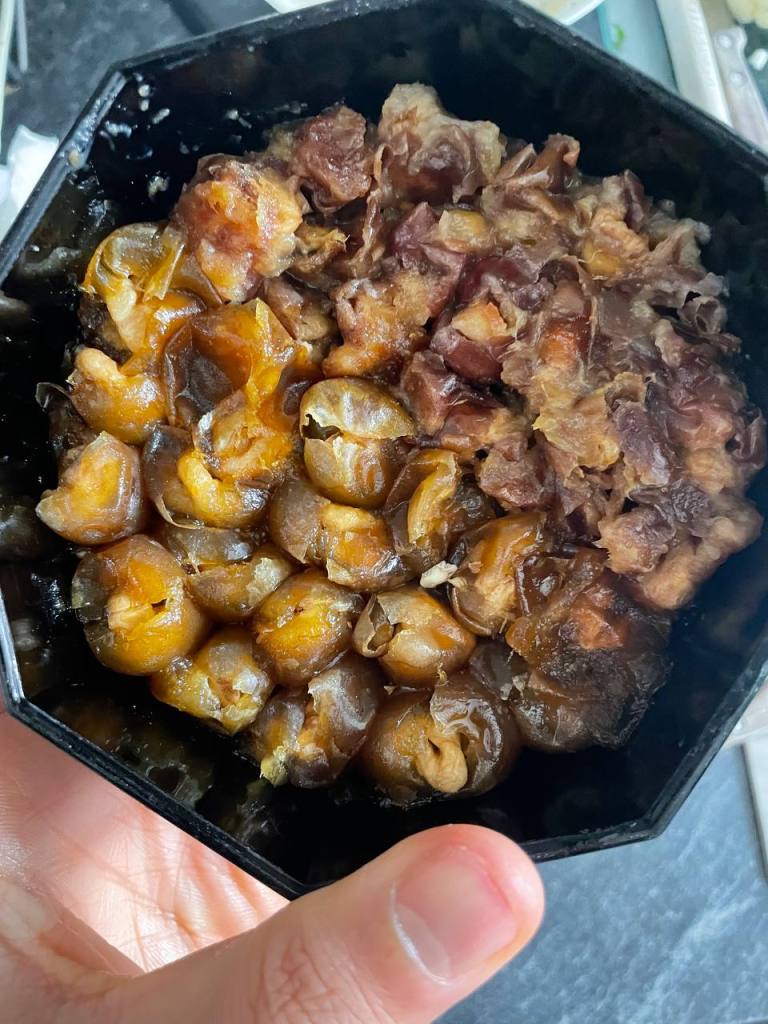
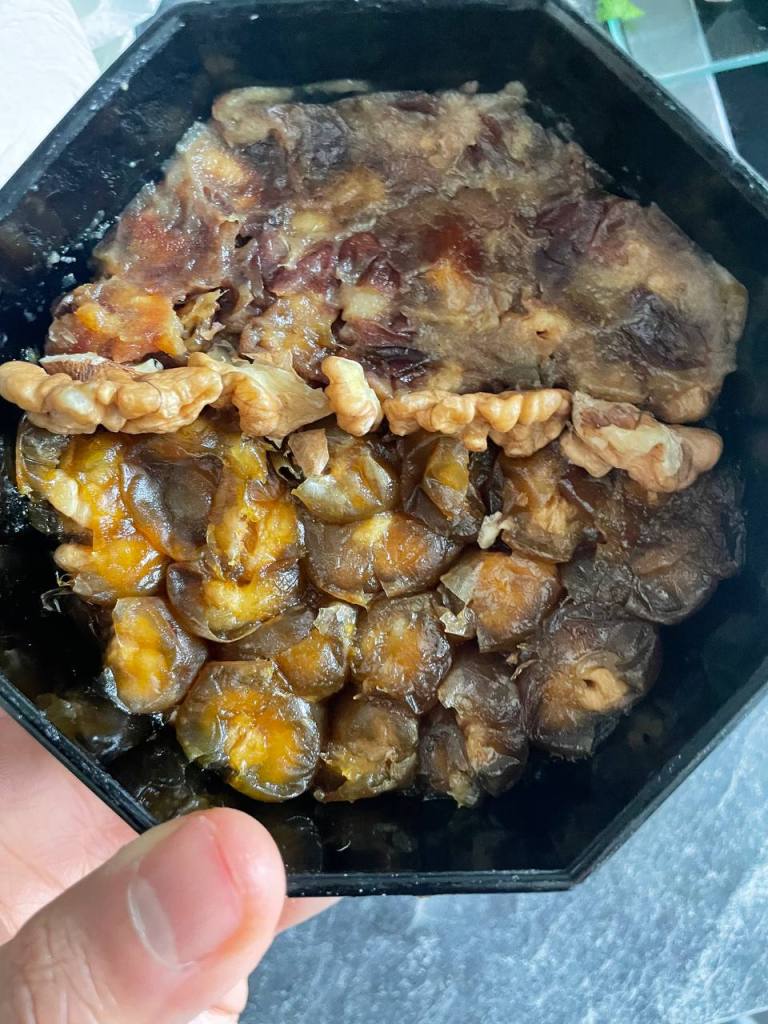
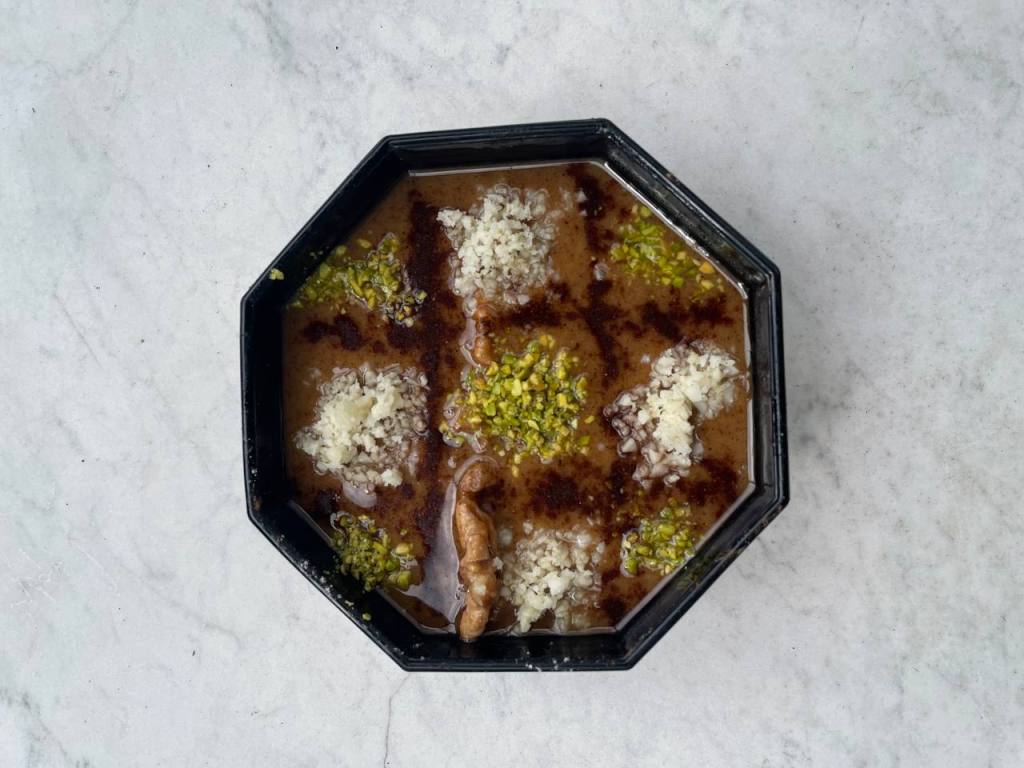
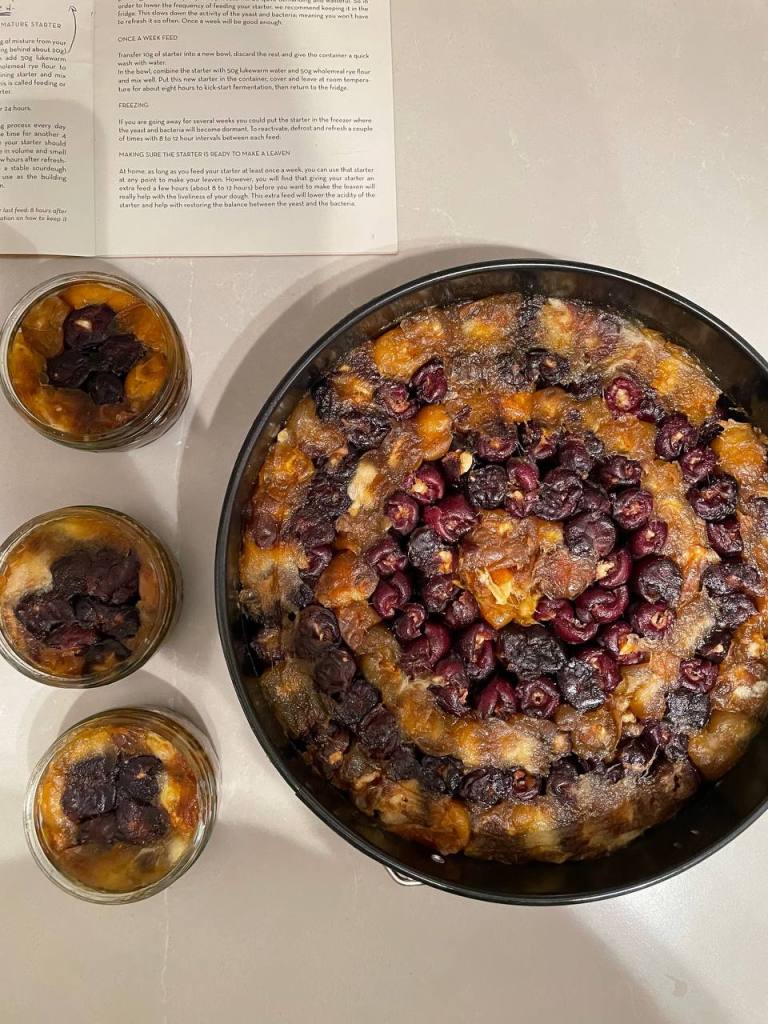
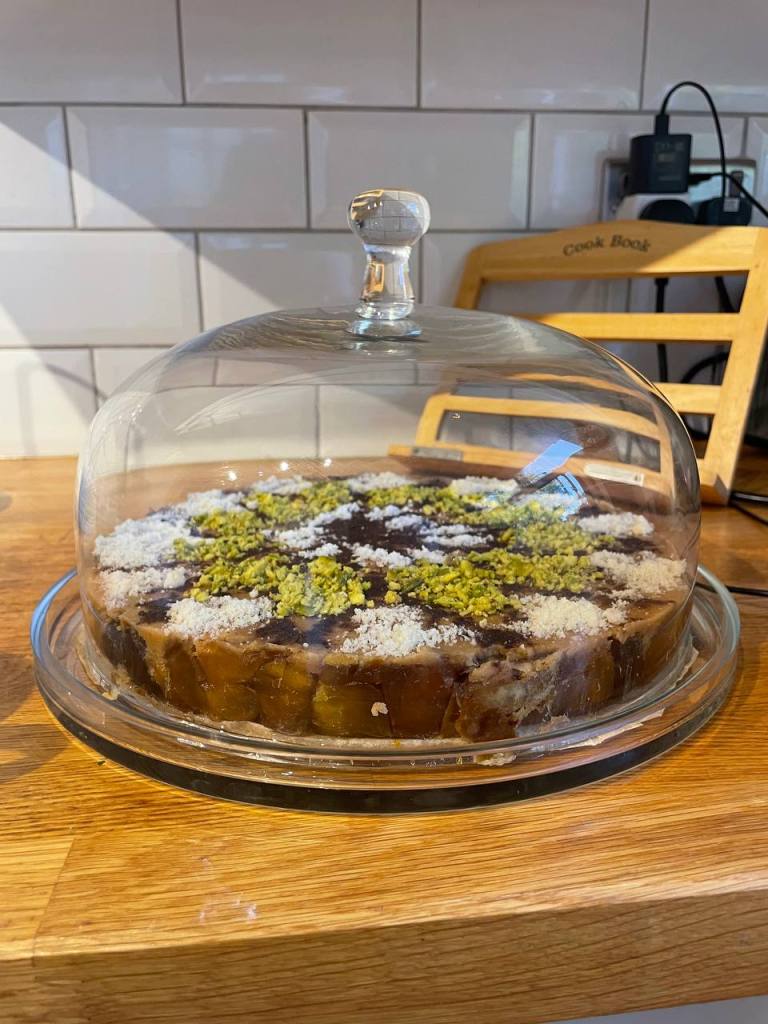
As you can see above, I alternated between ripe dates and mazafati dates (note that the black dates on the ripe date rings are also ripe dates). By working with both side by side, I was reminded of the key differences between them:
- Ripe dates are mushy. This makes the base of the ranginak pudding like. With normal dates, it almost feels like you’re having separate dates with a topping that keeps breaking. While that may be acceptable, to get it “right” you need to find a way to get that soft, mushy texture.
- Ripe dates have an almost caramel flavor. I’ve always known that ripe dates taste different but it was only through trying them side by side that I could pinpoint the exact difference. Ripe dates have a subtle flavor that reminds me of caramel. I think you could give them to someone and convince them that they’re not having dates. While a perfect ranginak will always make use of ripe dates, I can see myself enjoying a ranginak with a dried date flavor, provided that the texture is right.
- Ripe dates are not that sweet. You can tell that a ranginak is made with dates just because it is much sweeter. Ripe dates have a fairly mild flavor in comparison. When using dried dates one has to be careful with the amount of sugar they add on top of the ranginak.
In my previous experiments, I’ve been focused on point 1: how to get dried dates to have the same texture as ripe dates. To date I haven’t had a breakthrough, though I worked on a few mini experiments that have potential.
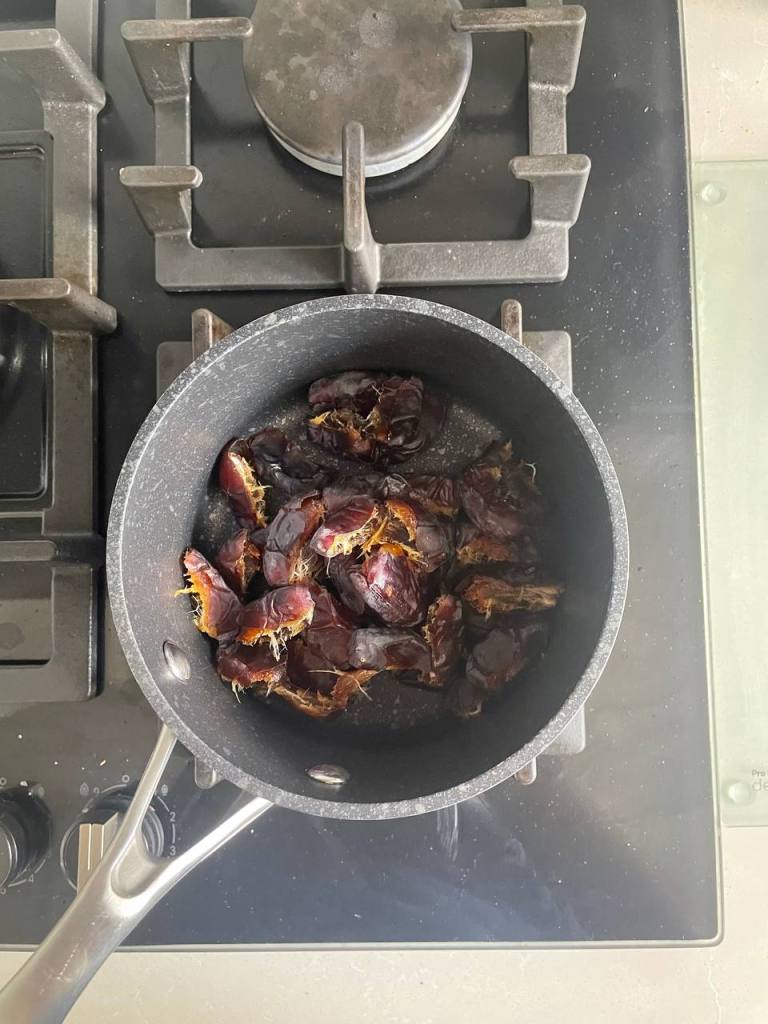
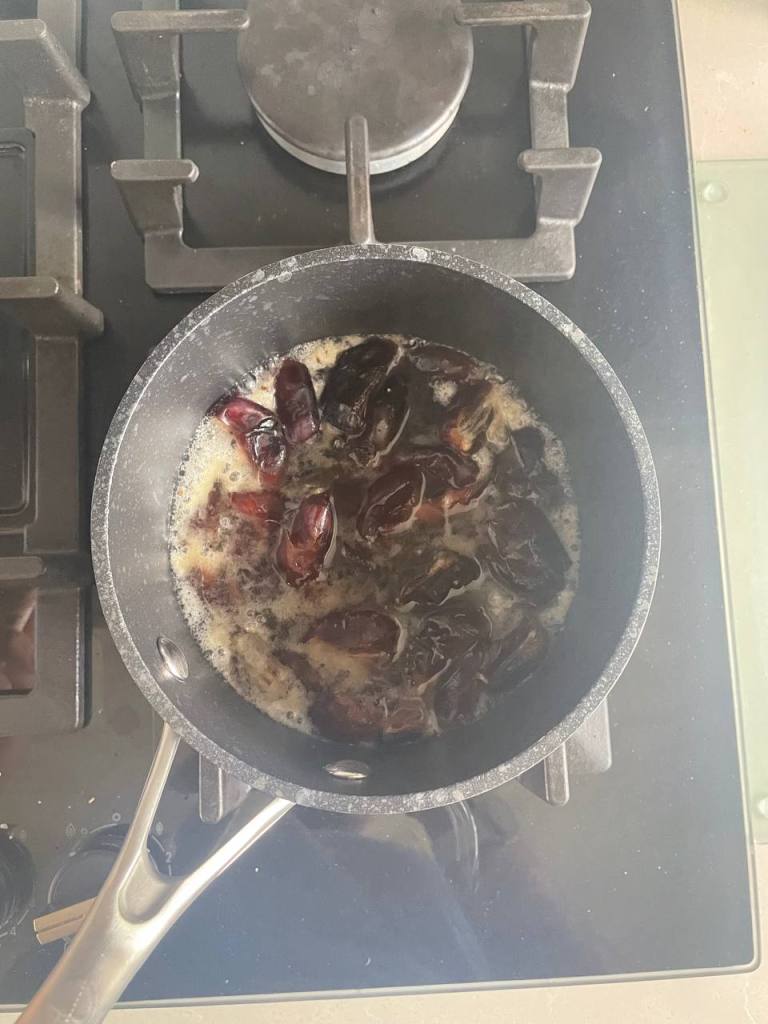
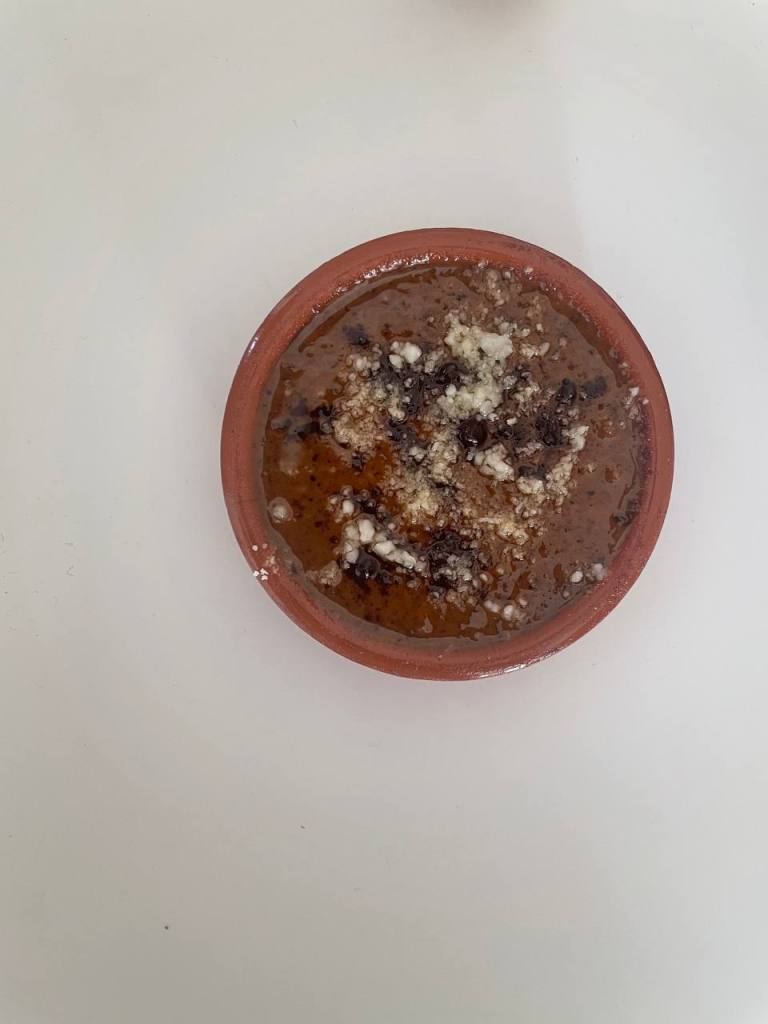
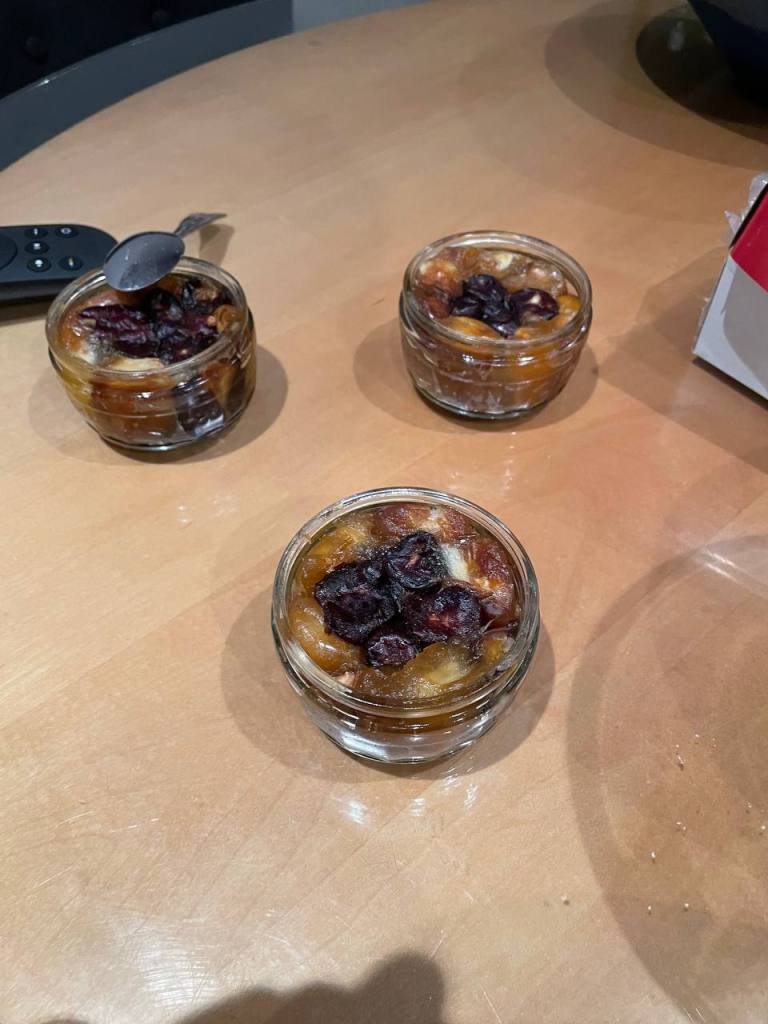
Recently I made date syrup for a different dessert by boiling pitted dates in water, and then separating the liquid from the leftover dates by passing the whole mixture through a sieve. The mixture that remains is a bit like date paste, but because I didn’t fully dehydrate it, it had a very moist consistency. So I decided to use it in a mini-ranginak, with a topping that had Ardeh (think tahini but toasted) to replace some of the oil. While the topping changed the flavor of the ranginak completely1, I found that the paste worked really well for the base of the ranginak. However, it has a very strong dried date flavor and is very sweet.
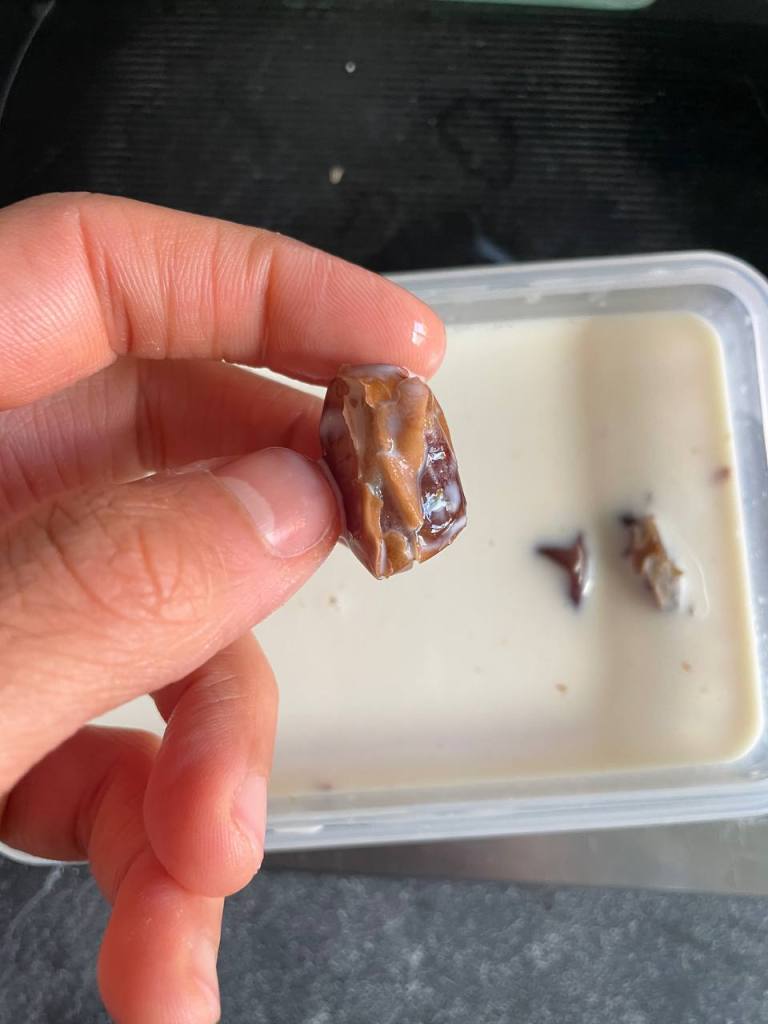
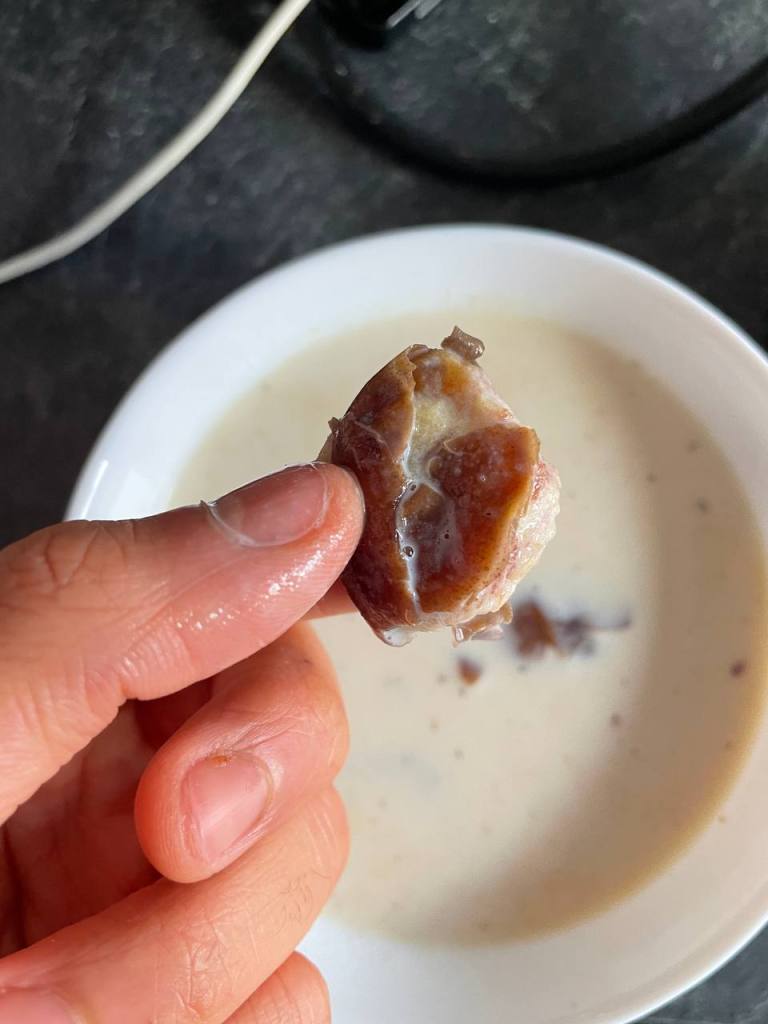
Another experiment I tried is to soak dates in milk (for those who read Ranginak Experiment #3 wondering where Experiment #2 went, this is it). Here I took a particularly dry and hard dates known as kashti in Iran, and added them to a bowl of fresh milk to see what happens. The outsides end up softening, and the flavor becomes milder and creamier due to the milk (not quite caramelly, but close), however as you can see in the 3rd photo (side by side with some ripe dates) that only the outsides soften. The insides remain very hard and date-like. This makes working with them very difficult too, as when you try slicing them in half to add the walnuts, the outsides, which have softened quite a bit, sometimes disintegrate completely (you can see in photo 2 disintegrated bits of date in the milk).

I was determined to see if using different dates makes a difference, and if I can use a liquid that does a better job softening. So what I did next is to soak some medjoul dates in water. In order to fix the issue of the outsides softening at a much faster rate, I decided to pit the dates first before soaking them.
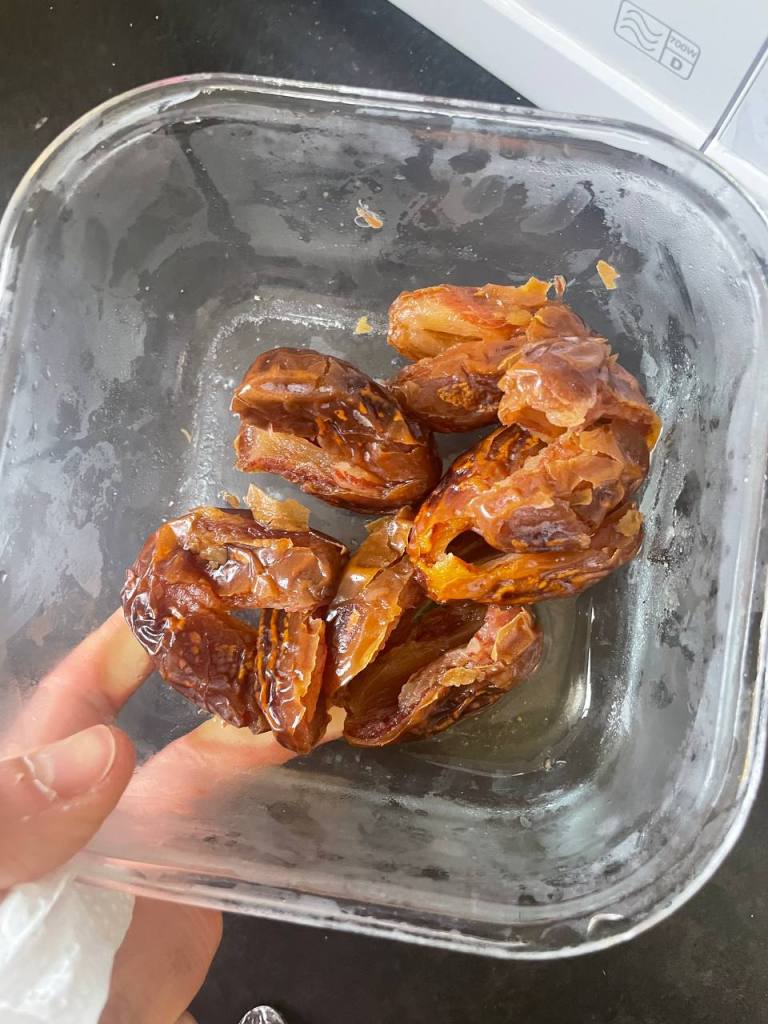
This did not work out at all. The water took too much of the flavor away. When biting into this it felt like I was having watered down dates. The whole date felt like it was disintegrating in my mouth, as opposed to it being mushy. I was very disappointed with this so I didn’t bother making ranginak with it.
Most recently, I revisited the idea of using milk again, but this time using mazafati dates, and instead of pitting them by slicing, I deiced to use chopsticks to only take the seed away. My intuition was that this should soften the dates very consistently. I also used Jersey Milk, as I wanted to take away from that strong date flavor. I don’t have any photos, but you have to take my word that this turned out really great. From all the things I’ve tried, it’s definitely the closest I’ve gotten to replicating the flavor and texture of ripe dates. I’m going to try and make a ranginak using this method, and report on how it turns out.
While I have some ideas to address the other differences between ripe dates and dried dates, I think it’s best that I focus on the main difference: the texture. I meant to write the title of this section as “Ripe dates are irreplaceable”, but I must believe that it’s possible.
Garnishing plays a crucial role
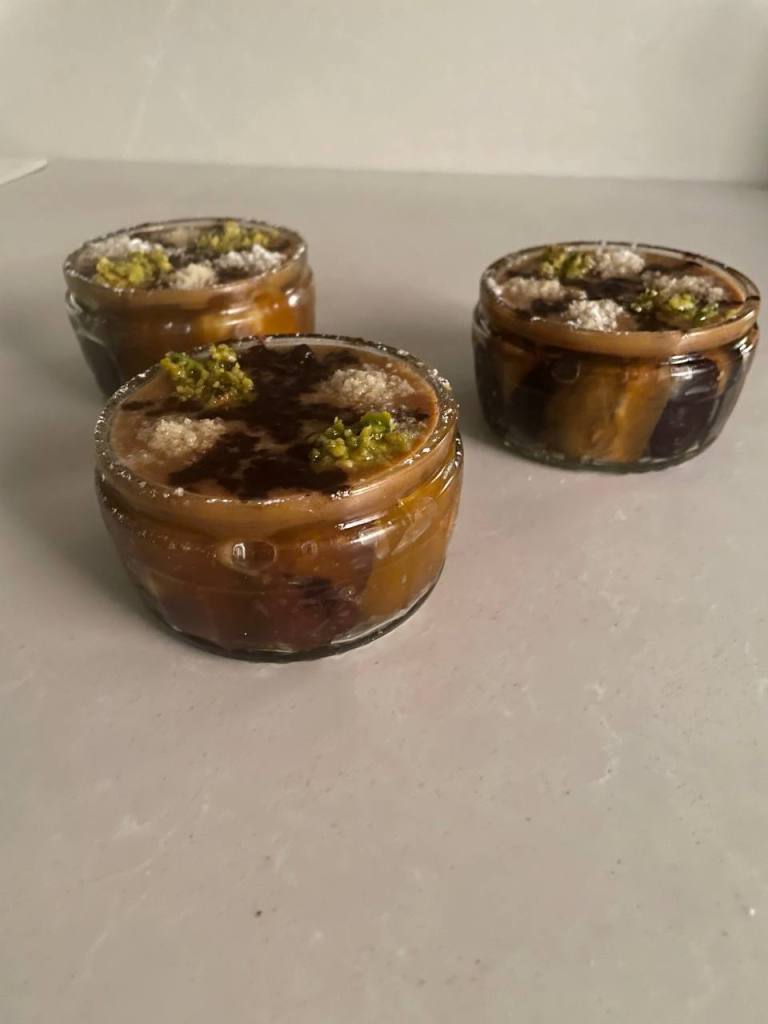
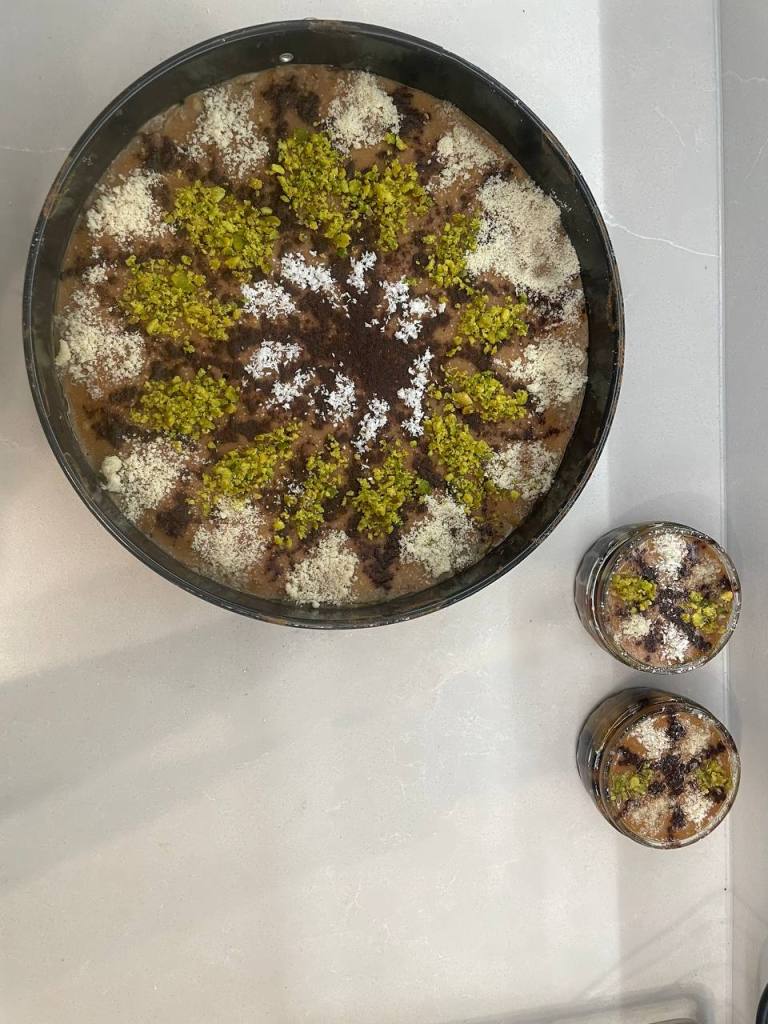
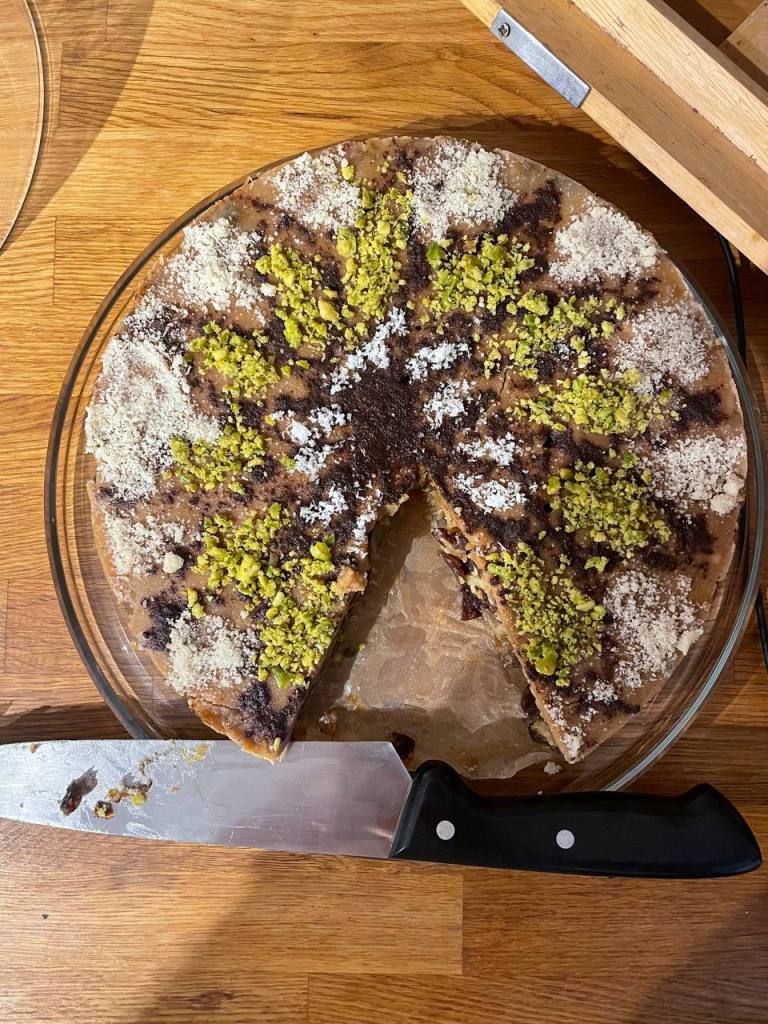
This time I put a lot of effort in the garnish, as I was taking the ranginak as a gift. I had run out of ground pistachio, so I decided to make some myself by blanching pistachios, de-skinning them, drying them and then crushing them with a mortar and pestle.
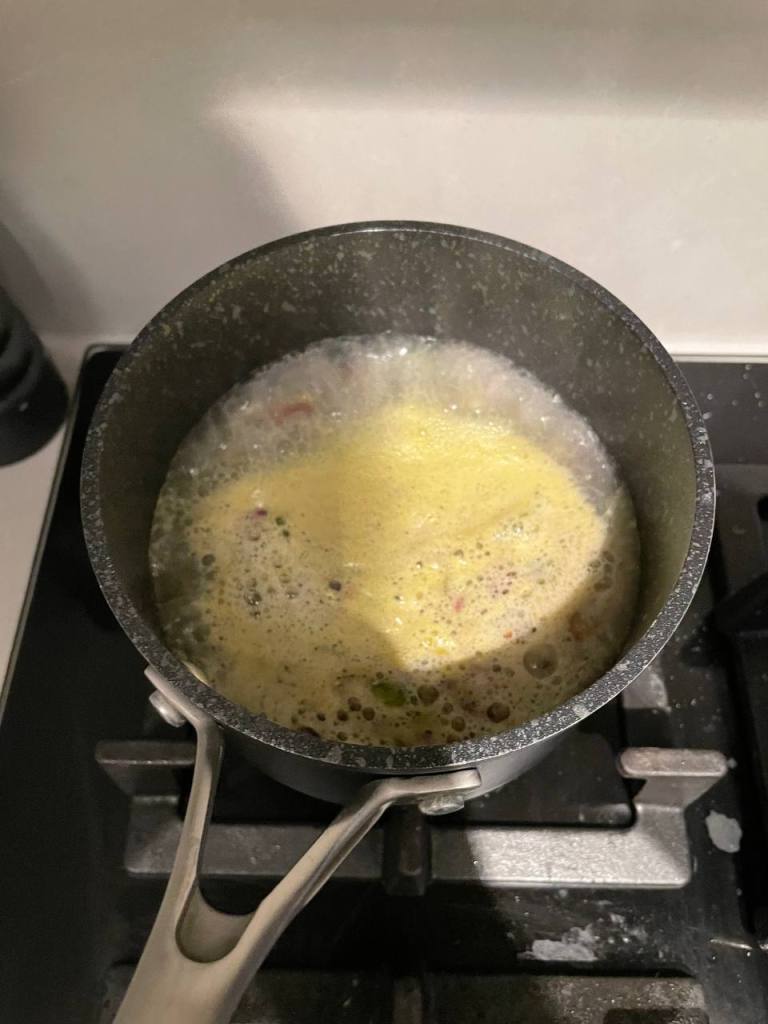
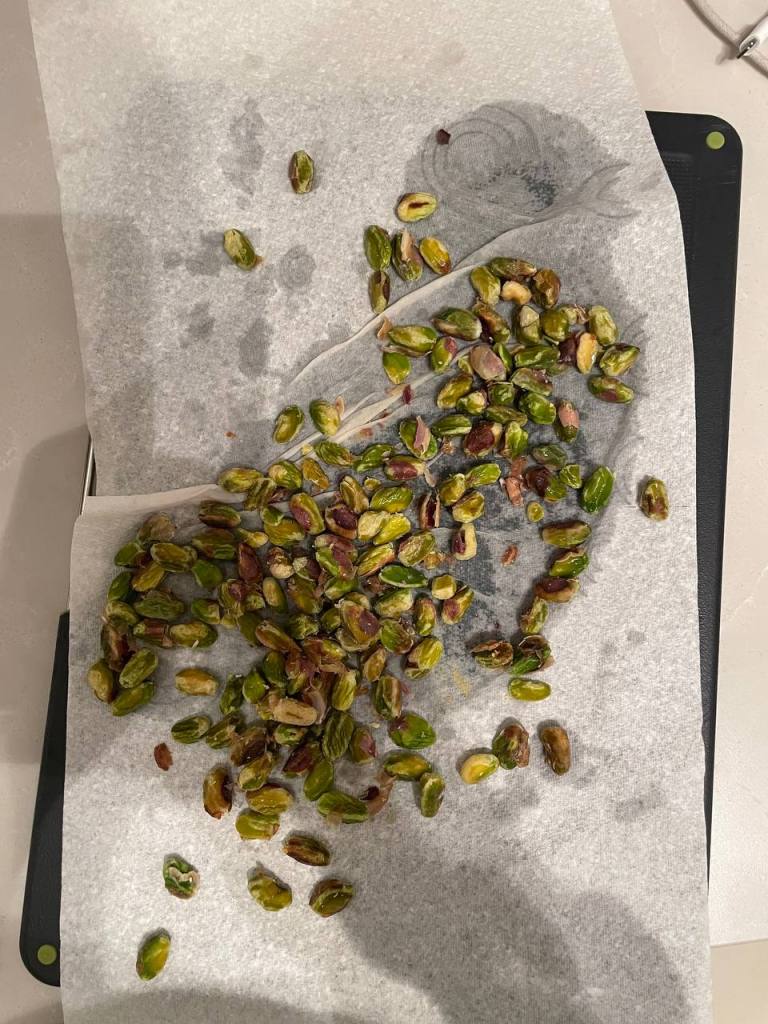
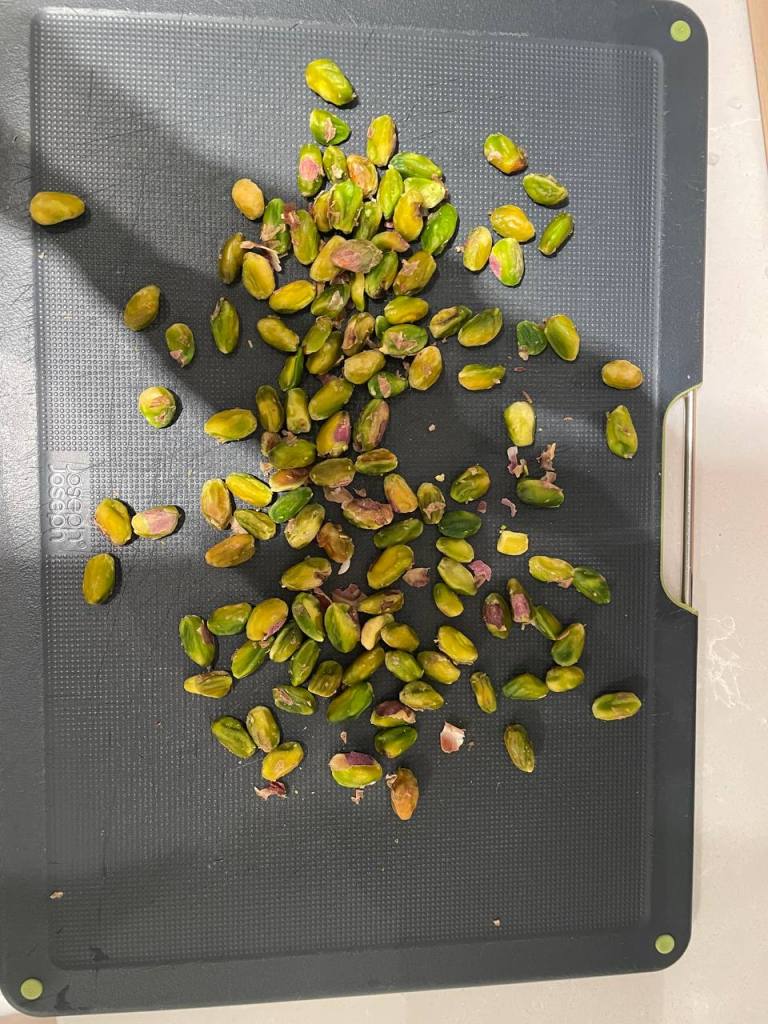
During this process I noticed two things: 1) fresh pistachios have a much better flavor and pre-ground ones, and 2) doing it yourself means you need to have the right equipment. In my case, I lacked proper dehydration tech so I felt like my pistachios remained a bit moist and didn’t taste as good as they could have. I also noticed that having the pistachio in bigger chunks is nicer than having it ground very finely, as you are able to get more of its flavor into your mouth per bite. I think next time, I’ll try to have sliced pistachios and almonds for the garnish instead of ground.
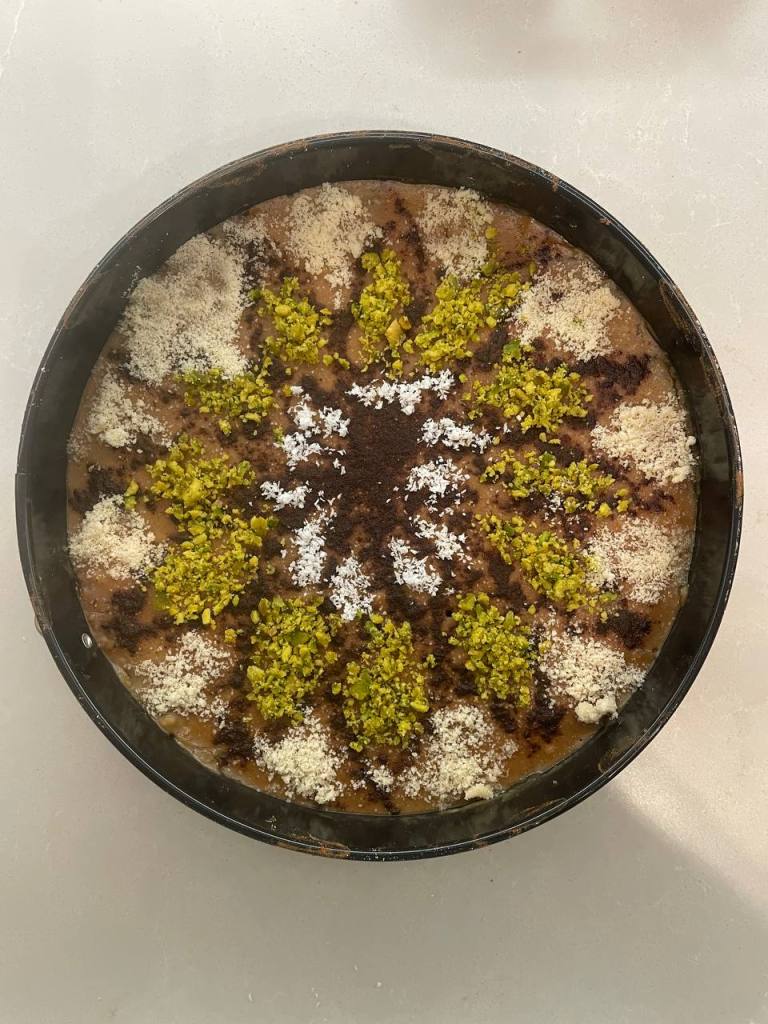
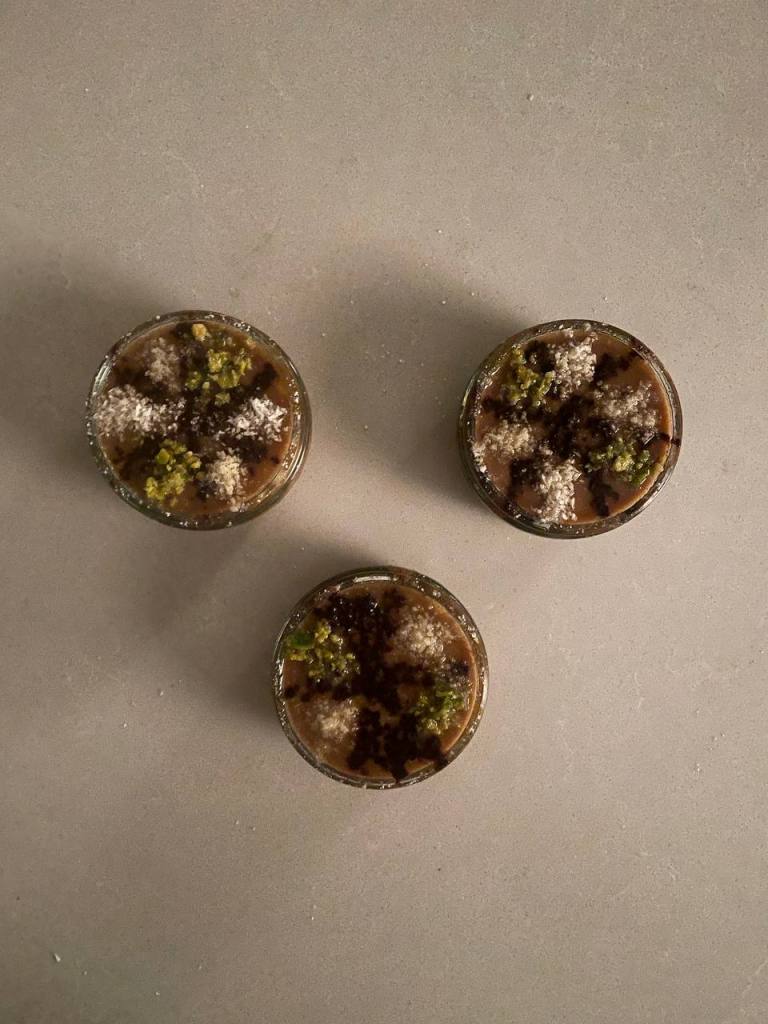
The amount that you add to the top matters too. For example, I added too little of the coconut so I could barely taste it, whereas the pistachio had a good proportion.
Two final bits: use a spoon to flatten them top before adding the topping, and make sure to garnish with sugar.
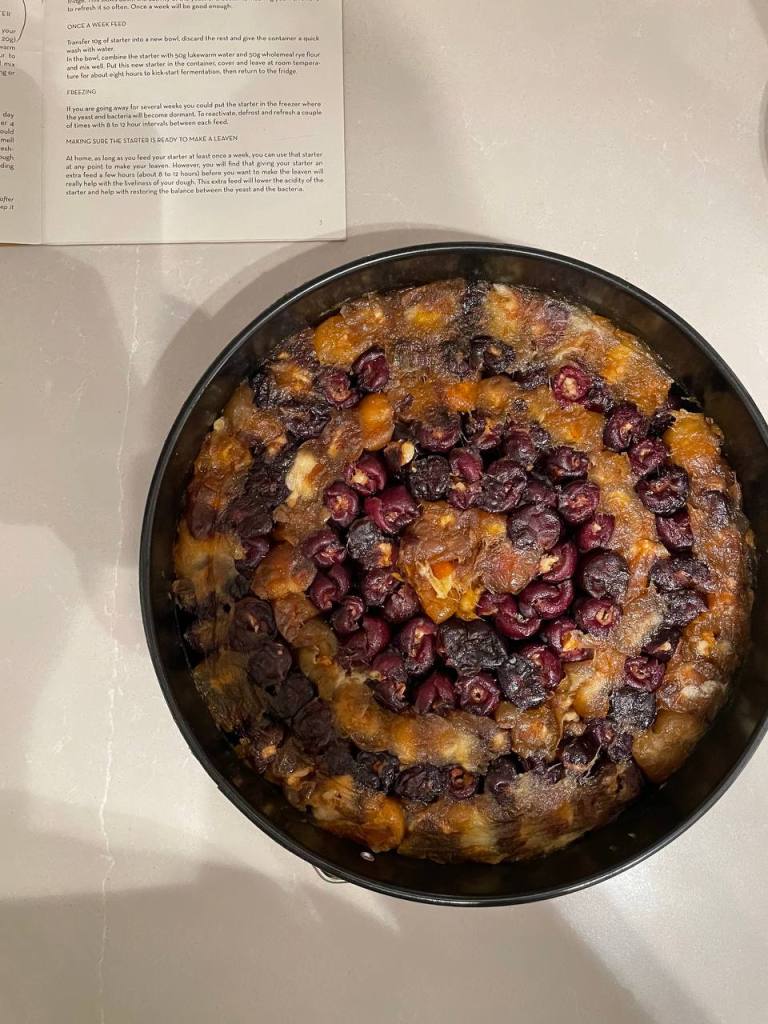
In the above photo you can see that I’ve flattened the top with a spoon (or a flat spatula if you have one). This gives you a nice base to put the topping, and is a step I’ve often skipped out of laziness. It is worth doing though. However, you’ll notice that this is another one of those bits where using dates gives you trouble: they are so hard to flatten.
On the second point, it’s perfectly OK to to avoid garnishing with sugar, however having a tiny layer under the other garnishes elevates the flavor of the ranginak. It makes sure that the first bite you take into the topping isn’t too strong, without making the dessert too sweet.
The right amount of oil
Finally, it’s important to accept that inevitably, when making the flour, that you’ll add a bit too much oil. This is OK and is much preferable to adding too little. With practice you’ll be able to know how much is right for the flour, but if you’ve added too much it is salvageable with some patience.
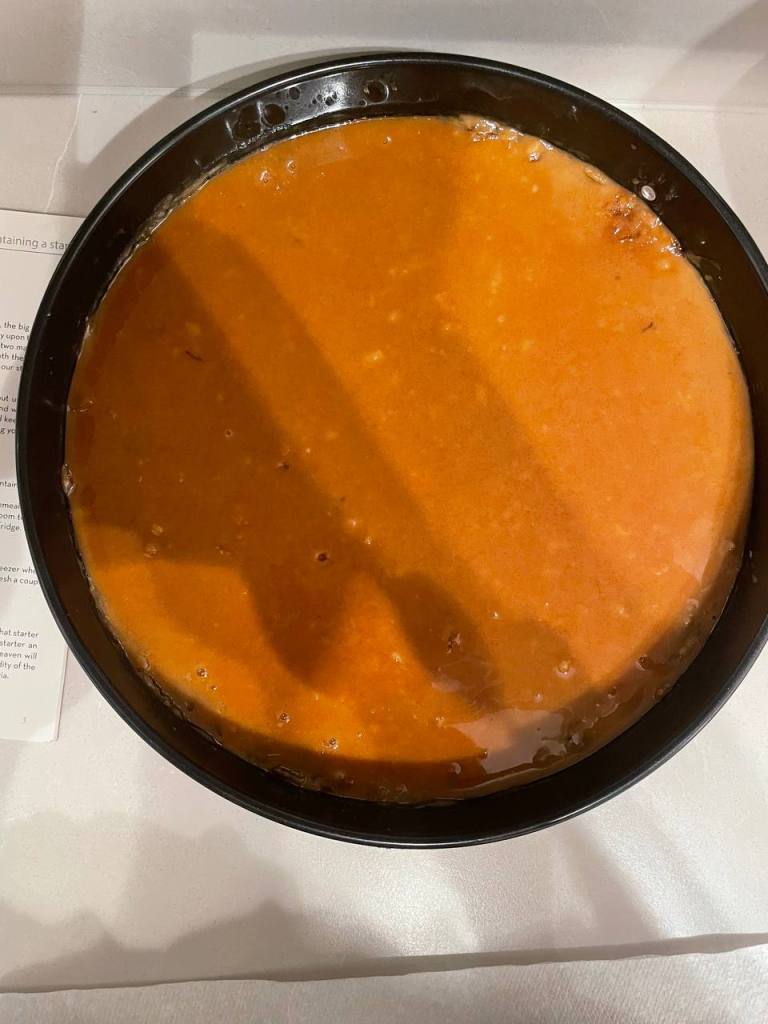
Once you’ve poured the flour topping onto the ranginak, wait some time until the oil naturally separates. At this point use a kitchen towel to take as much of it as possible. You can even press into the topping very lightly to skim off even more. Just be careful not to remove TOO much or else the cinnamon garnish won’t melt into the flour topping. You don’t want cinnamon powder sitting on the top, you want it to seep into the flour so that you get that nice black color.
It was quite reassuring making a bigger portion of ranginak this time to see, relatively, how little oil is used. So I’m not as stressed as I used to be about removing as much of it as possible, though I find that having a drier topping is far better in the mouth.
Concluding Remarks
Based on this experience of making ranginak and enjoying it, I have a few directions I want to explore:
- I’d like to research the science of date ripening so see if it’s possible to ripen my own dates at home from their raw state
- I want to experiment with a different presentation of ranginak, where I have layers of the flour topping and layers of date paste, e.g. a multi layer ranginak cake. Presenting it like a millionaire’s shortbread might work quite nicely too.
- As far as recreating the texture of ripe dates goes, I need to make proper ranginaks with date paste (boiled in water, and also in milk) and with dates soaked in milk
- Finally, and this is one for the far future, I wonder if the caramel flavor of ripe dates can be replicates by mixing in some persimmon into the ranginak? Perhaps the mixture of date and persimmon flavor gets us to that beautiful and subtle ripe date flavor??
I’ll leave you with a gallery of photos.
- I didn’t think it tasted bad, just very different to what you expect from ranginak. The combo of dates and ardeh works very well and is common in Iran, so I rate this as an alternative to ranginak. ↩︎

 Tsunami's Hungry
Leave a comment