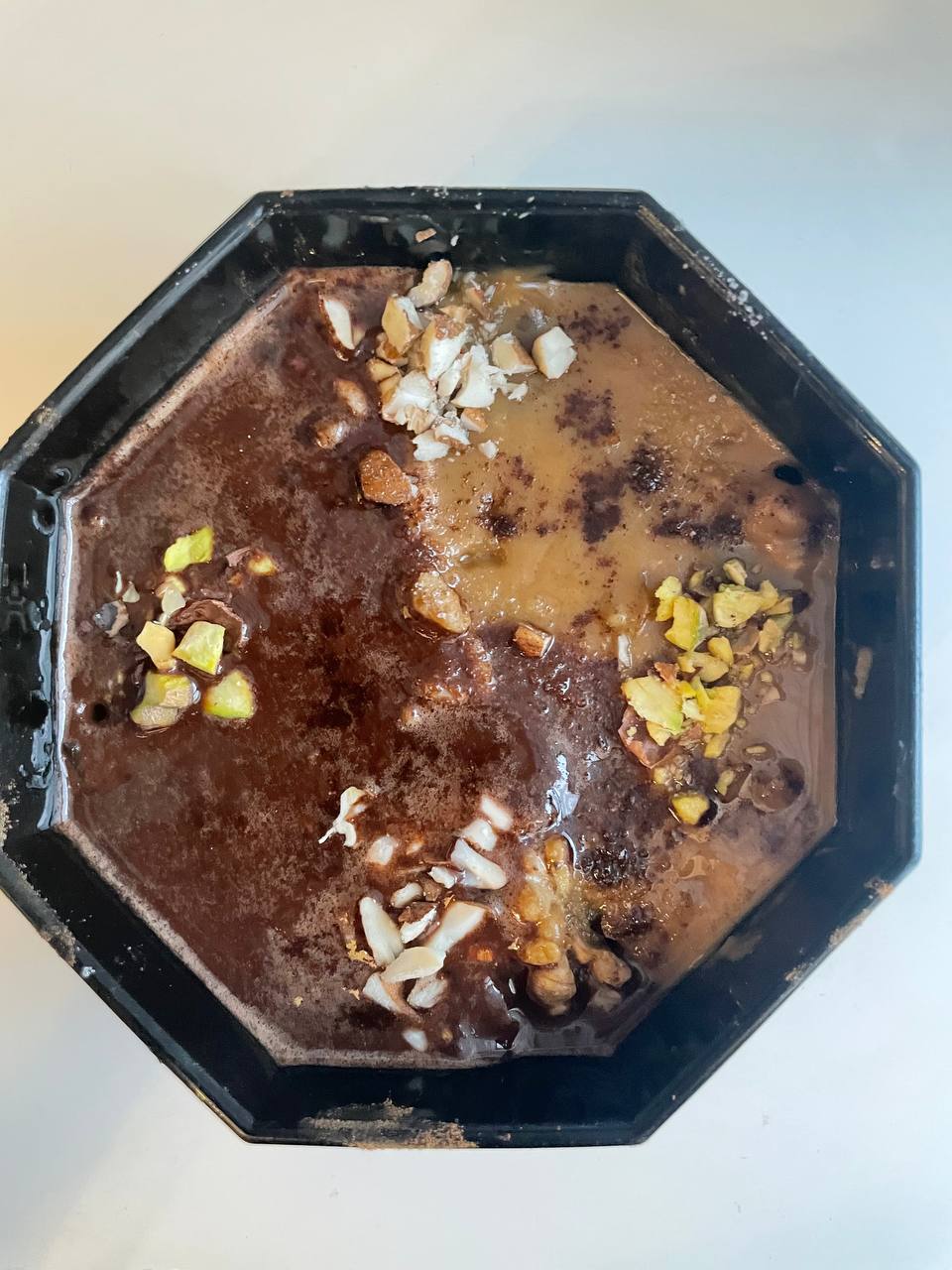
So far I’ve been covering the breakfasts of Evazi cuisine. Today I want to share with you one of my favorite desserts1: Ranginak.
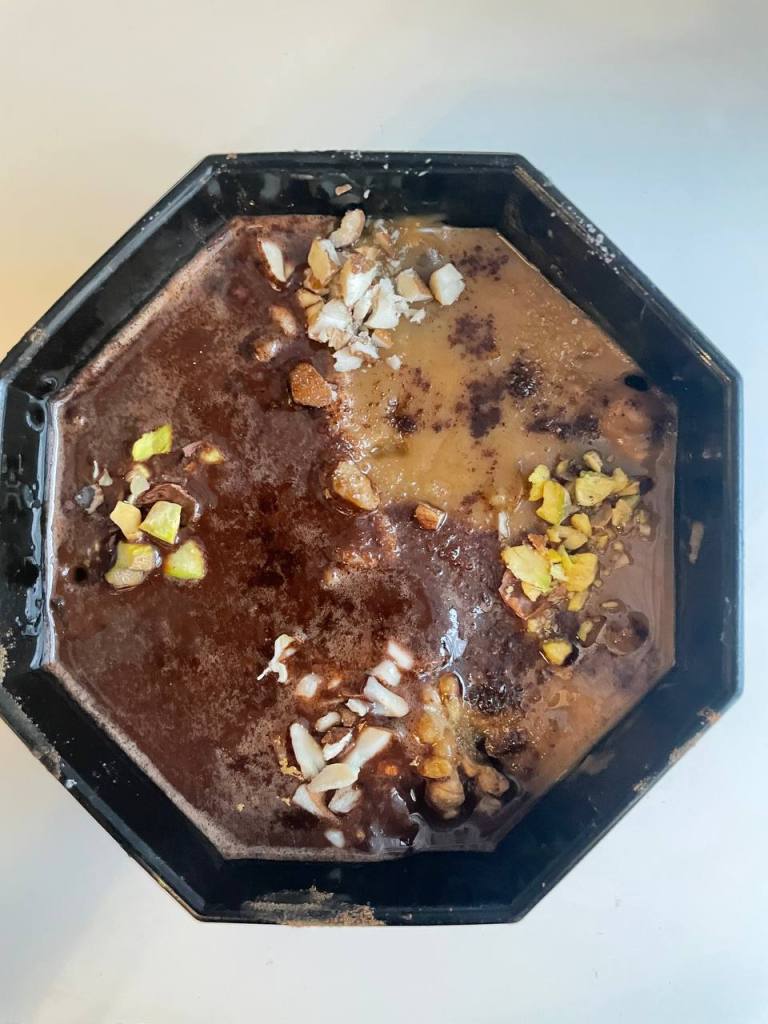
You may have heard of this dish before, as it’s not only Evazi. It’s a well known southern Iranian dessert, since that’s where dates grow. In this article I want to cover the general know-how of how to make ranginak (specifically using my mum’s recipe), before talking about my experiment: making a chocolate ranginak!
Making Traditional Ranginak
The Dates
What you ideally want to use is Rotab: “ripe dates”. Unfortunately, I don’t know where to find these in Europe. I was lucky in this case as we had some left in our freezer. Below is a photo of what they look like:
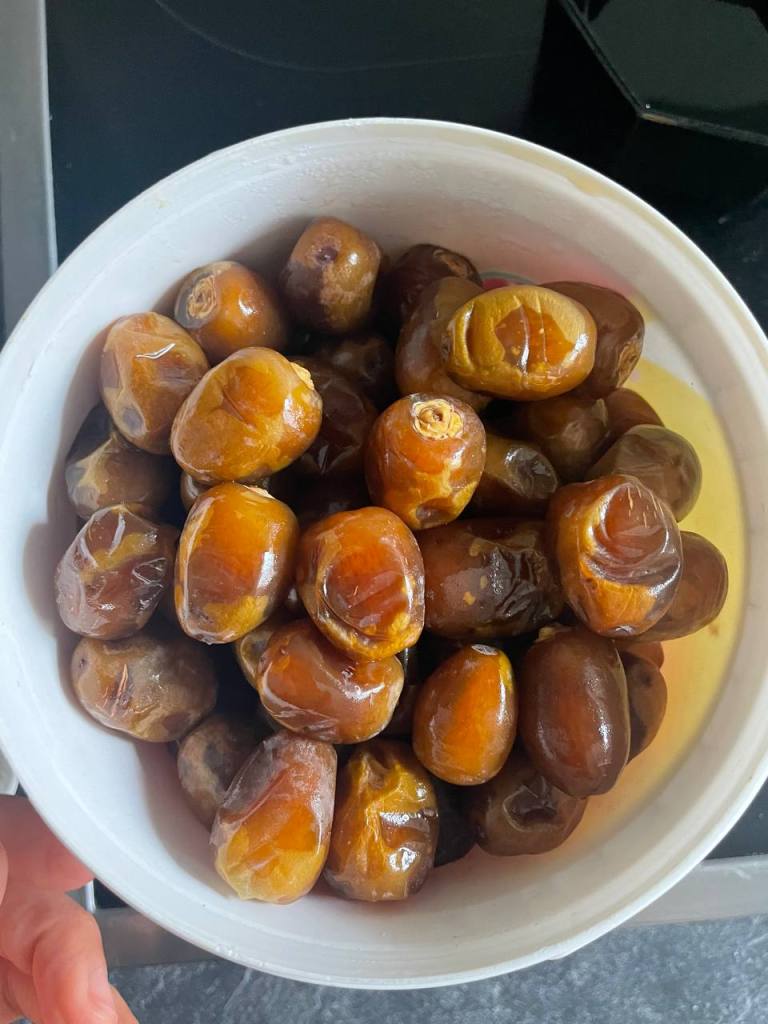
If you can’t find these dates, that’s okay! I’ve found some types of dates to be excellent substitutes, and if you can’t find them then you can use any dates that you like, as long as you accept that you’ll end up with a different texture and flavor. Or… you could visit in Iran and have ranginak there, but there are so many variations of this dish and in general people, don’t make it very well2.
If you go for smaller, drier and harder dates, you’ll find your ranginak will turn out very sweet, so you can go easy with the sugar. Because the dates are tough, you’ll also find that it is difficult to take nice bites of the ranginak3. The dates that I’ve found which most closely resemble Rotab are Mazafati dates, which can be found in most Iranian shops and some Arab ones. They aren’t quite as soft as Rotab, and some of them are very dry, but I’d say that the average mazafati date can replicate 70% of the flavor and texture of rotab. I have a hunch that Medjool dates would work well, though I’ve yet to try making ranginak with them.
Ingredients
- Lots of dates, enough to fill the container that you are using for the ranginak. The dish I used in cover photo is roughly 15×15 cm. I was able to fit 28 dates
- At least 1 quarter of a walnut for each date, but no more than half. Here I used roughly 12 walnuts4
- Plain white flour. How much you use depends on how thick you want the flour layer to be on top of your dates. In this case, I used 5 tablespoons
- Neutral oil. This depends on the amount of flour. I can’t give an exact amount as I didn’t measure in this instance. In terms of the type, I recommend using sunflower oil5.
For the garnish:
- Icing sugar
- Crushed pistachios
- Crushed almonds
- Cinnamon
Instructions
Prepare the base:
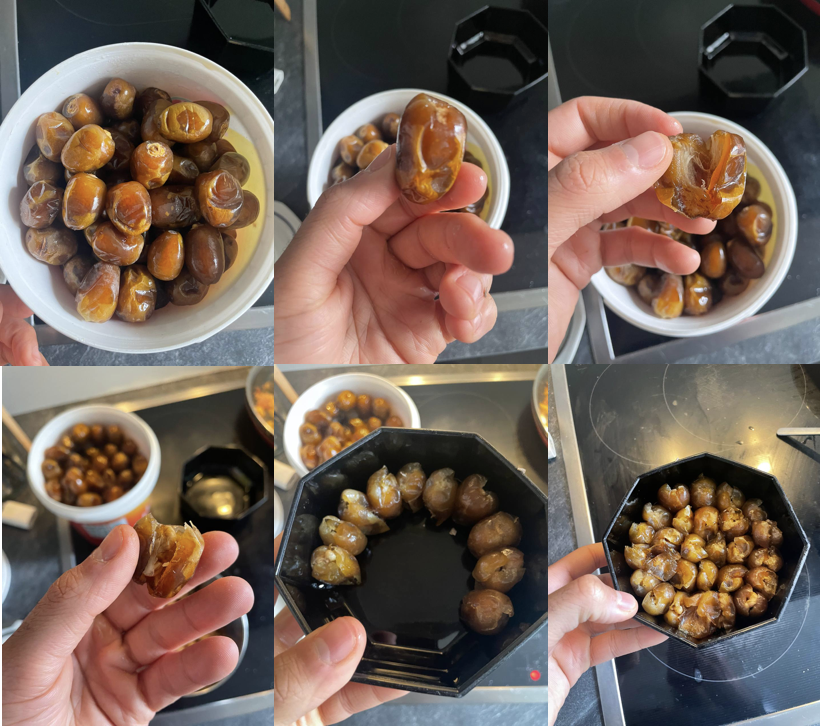
- Pit the dates one by one, add a 1/4-1/2 a walnut in place of the seeds. This will vary depending on the size of the dates and walnuts, but it works as a general rule of thumb. The idea is to cover the walnut fully.
- Add them to your serving dish, press them against each other as tightly as possible
- Once all the dates have been added, press them down to make the surface as uniform as possible. This will give a more professional look later when we add the flour
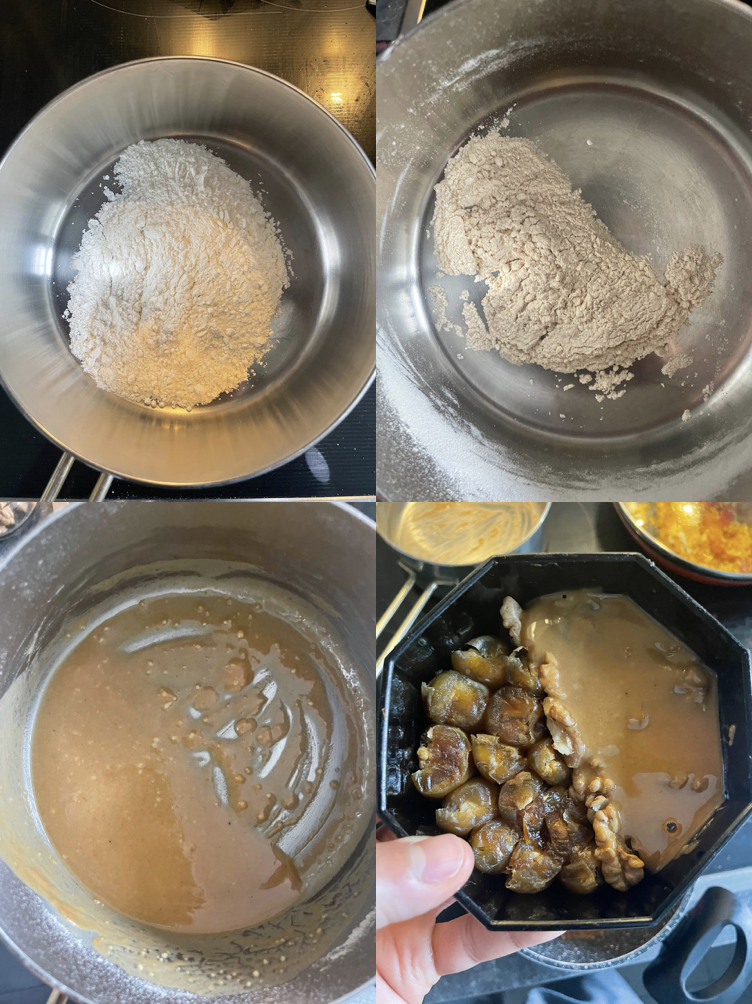
Prepare the flour:
- Pass your flour through a sieve as you add it to a pan/pot on medium-high heat. This will decrease the chance of forming lumps
- Toast the flour. Make sure to keep stirring, as it can quickly burn
- Once toasted (you can tell by both a change of color – browning, and a pleasant smell), add your oil (if using hard fats like butter make sure to melt them before) slowly and keep stirring
- The flour will mix with the oil and form an emulsified mixture. To get a sense of what is the “right amount” of oil: if it’s still grainy then you need to add more oil, if the oil starts to separate then you’ve added too much!
- Be very careful when you add the oil because the texture can change in an instant. If you have added too much oil, then there’s two fixes:
- If you’ve exceeded by a tiny bit, you can keep it as it is. The oil will separate later and you can use kitchen towels to remove
- If it’s too much, you can consider adding more flour. However, note that you’ll now have a mixture of well-toasted flour and raw flour. So the flavor will change slightly when you serve it. I would recommend keep it on the heat to cook the raw flour slightly, without burning the mixture.
- Once ready, pour the hot mixture over the dates. Try to spread it evenly. If there are uneven spots you can use a knife to even it out while it’s still hot. Be sure to do this quickly, as it will cool down quickly.
- Let it cool. During this time some oil separation may occur (e.g. if you’ve added too much oil). I would recommend removing it using kitchen towels, but if it’s not too much you can keep it for some extra moisture
Garnish:
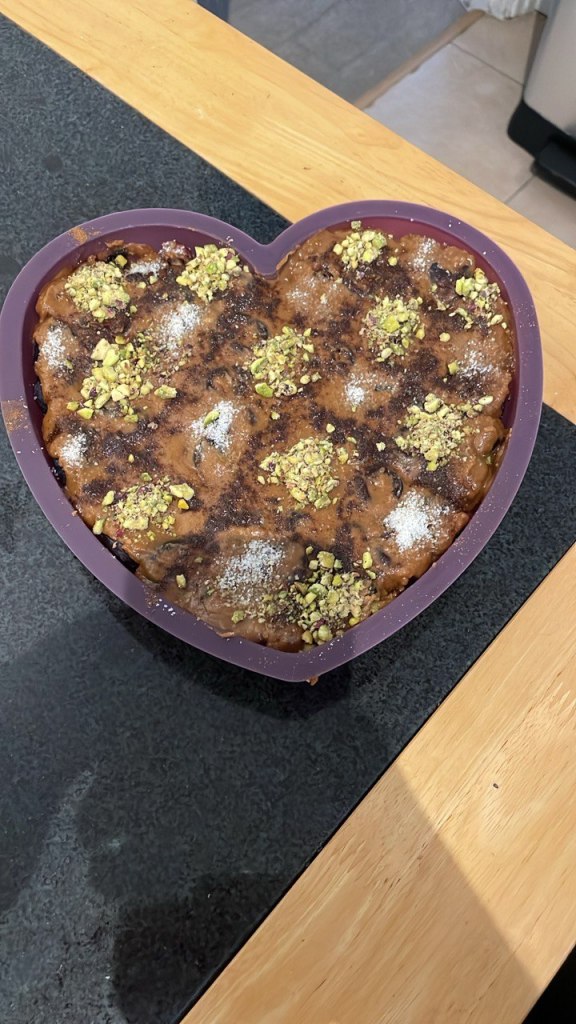
You can garnish the ranginak using any pattern that you like, but a nice way of doing it is to create a chessboard-like pattern using the cinnamon, and filling each square with a garnish or combination of garnishes. For example:
- Starting 1 inch from an edge, take pinch of cinnamon and slowly release it onto the dates in a straight going vertically downwards. Repeat this until you have “columns” of cinnamon, separately by roughly 1 inch form one another
- Repeat the same process horizontally. Your ranginak should now resemble a chessboard.
- Starting from the corner square, take a pinch of icing sugar and spread it over the square. Keep doing this for all the squares, skipping one square each time. We should now have one set of connected diagonals that have icing sugar on them, one set without
- Starting on the first column, for all the non-icing sugar bits add crushed pistachios. Repeat this for every other column
- Starting on the second column, for all the non-icing sugar bits, add the crushed almonds. Repeat this for every other column
A funky experiment – chocolate ranginak?
So I’ve always been curious to play around with ranginak. Since there are so many variations of it, I thought why not make my own? Maybe I can make it better?6
So my first official experiment, I decided to add chocolate to it. Intuition: chocolate and dates work amazingly well, surely it can work here too.
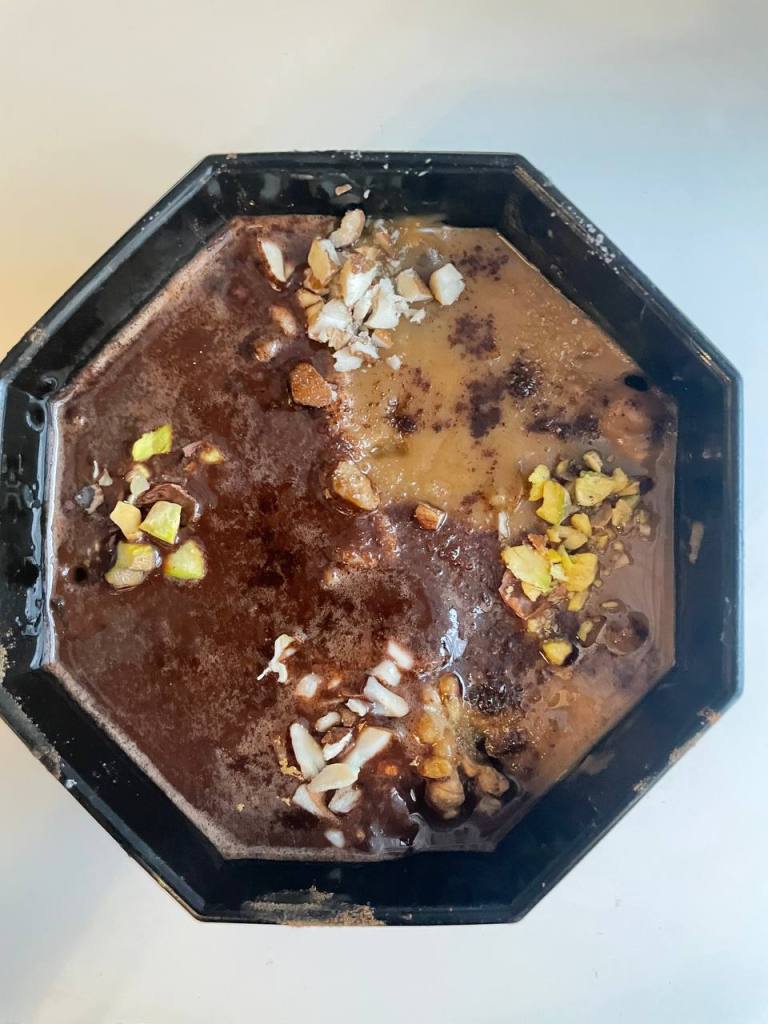
So for a separate batch of the flour, I decided to add melted Lindt chocolate (80%). Since the chocolate has some fat too, I decided to add the melted chocolate first before adding any oil to help me gauge how much oil I need to add.
Outcome
I must admit that the chocolate ranginak turned out quite good. I really enjoyed it. Of course, for me it does not beat the original flavor but it is something I can see myself having for a change. I would say though that using 80% dark chocolate with icing sugar made it a bit too sweet. Would be keen to try chocolate powder, or just 90-100% dark chocolate.
I have some ideas I want to explore next when it comes to ranginak, namely:
- What other garnishes can I use? I’m thinking macadamia nuts or shaved coconut would work amazingly (or should I use coconut oil?)
- How does the taste change when I use wholemeal flour?
- Can I use alternative flours to make a gf version? Which ones would work best to replicate the flavor, or make it better?
- What else can I mix with the flour? I was thinking it would be awesome if I could add peanut butter to this somehow
- Are there ways that I can make ranginak less calorie dense, or at least more nutritious?
- Can I use soaked dates as a substitute for rotab?
- Actually I’m lying. This is my favorite dessert. ↩︎
- Quite bold of me to say, but I have tried many a ranginak and truly think my mum’s style is by far the best. Most places don’t toast the flour enough, giving you an odd raw flavor and a slightly upset stomach. A lot of places don’t pit the dates, making the eating experience difficult and also losing out on the extra added creaminess and crunch from the walnuts. Everyone uses different oils… ↩︎
- I think soaking dates can help with this. I have an upcoming experiment regarding this. ↩︎
- Try to get as high-quality walnuts as you can. Any bitterness from the walnut will affect the ranginak’s flavor. The fresher the walnuts, the better. ↩︎
- Note that you can use any oil, or you can choose mixtures. For example my aunt adds both sunflower oil and butter. I’ve made ranginak with a range of different oils and have always found sunflower to work best. I’ve also found clarified butter to add a really nice nutty flavor. I recommend making it yourself as opposed to buying ghee – the ghee’s you find usually have a strong “beefy” smell that bothers me when it comes to ranginak. ↩︎
- Nah I’m lying. I can’t make my mum’s recipe better but maybe I can explore flavors that cater to specific needs? ↩︎

 Tsunami's Hungry
Leave a comment