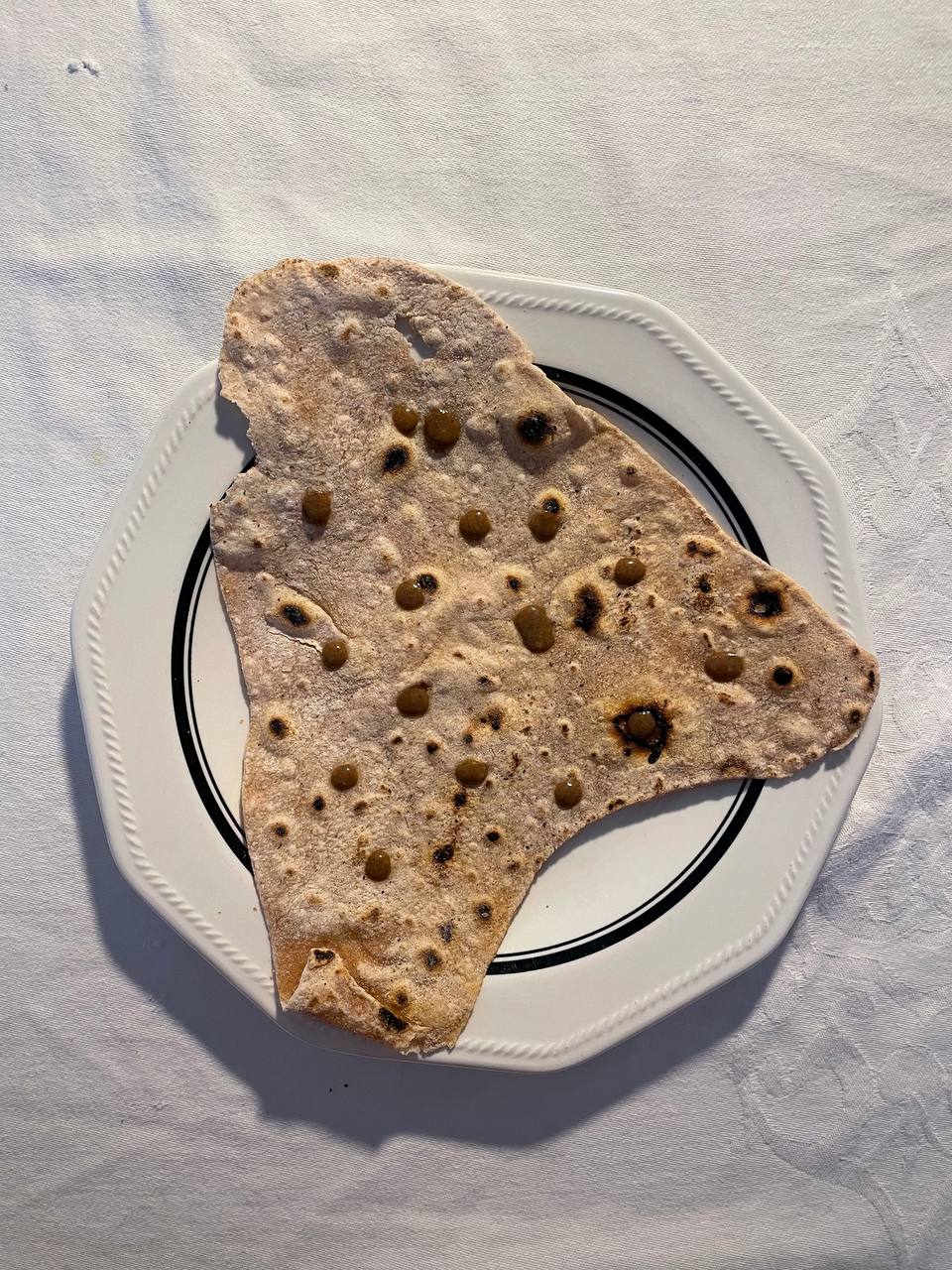
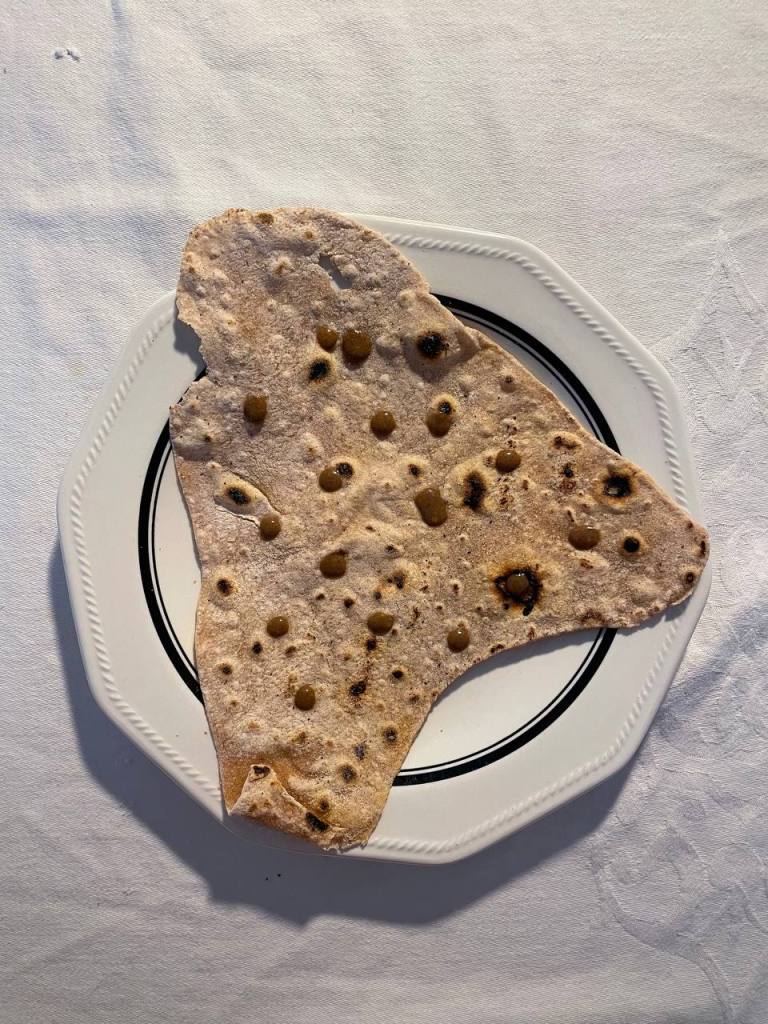
In addition to Shalité, Fateer is another Evazi breakfast classic. It is a type of flatbread, so you don’t need to fuss with yeast – just make your dough and you’re ready to go. Growing up, this was my go-to breakfast when I wanted something sweet: fateer (without mahveh) and honey1. My relationship with it changed at some point during high school when I became very health conscious, and since I moved away from Dubai, I lost access to it completely (since only my aunt knows how to make it). Prior to today, I think the last time I had fateer was over 5 years ago!
So… you can imagine how excited I was today when making it.
Ingredients
These are the exact ingredients and instructions from my aunt.
- 2 teacups of flour (did not specify the type)
- water (such that the dough ball is not wet)
- 1 teaspoon of salt
What I ended up using:
- 198 g wholemeal flour2
- 132 g water
- 6 g salt
Instructions
- Add the dry ingredients into a bowl and mix thoroughly
- Add water bit by bit, and start forming a ball
- Stop adding water when the dough ball is not wet. If it ends up being wet, add flour bit by bit and kneed until it becomes dry
- Make clementine-sized balls and flatten them
- Toast them on a hot pan, flip once they rise around 1 cm
My Attempt
I initially added 2 teacups of flour and 1 teacup of water, but this proved to be too much water. So I kept adding flour until my dough ball was mostly dry.
I then made clementine-sized dough balls out of the dough and started flattening! I made a mistake by choosing a very small surface for flattening though, which is why I got weirdly shaped fateers.
While flattening, I panicked because my dough was sticking to the rolling pin so I added tonnes of flour to the board. The result was that my fateers ended up grainy.
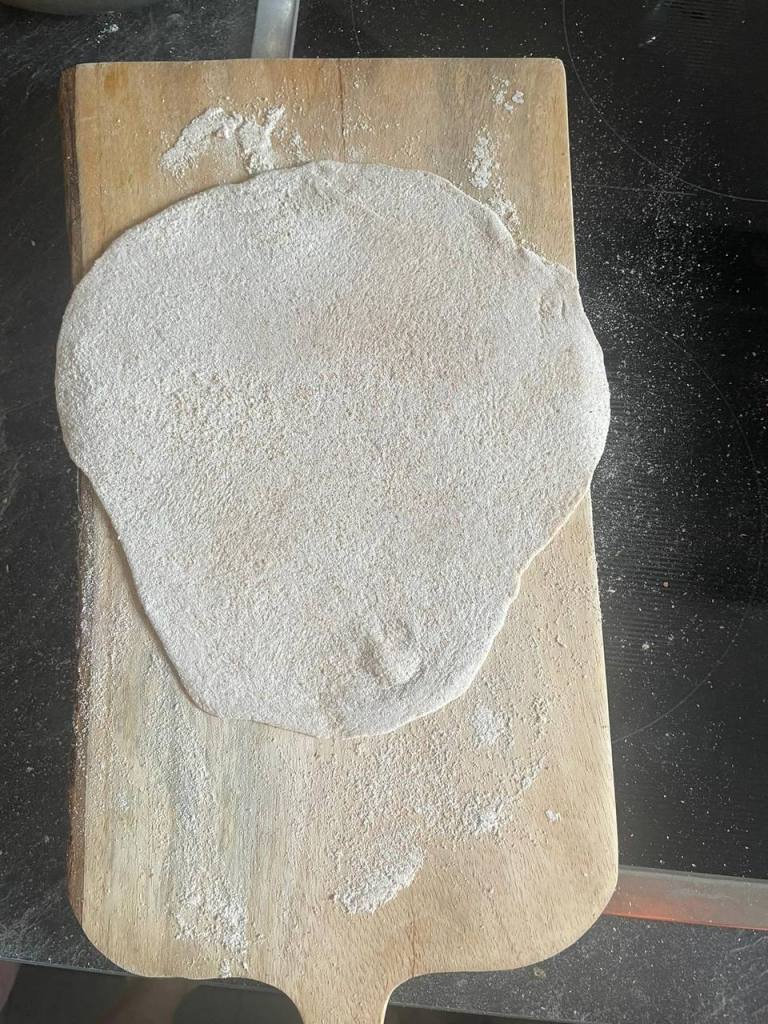
Now I wasn’t sure how much to flatten the dough, so my initial ones were slightly too thick. Flatten them as much as possible without tearing them.
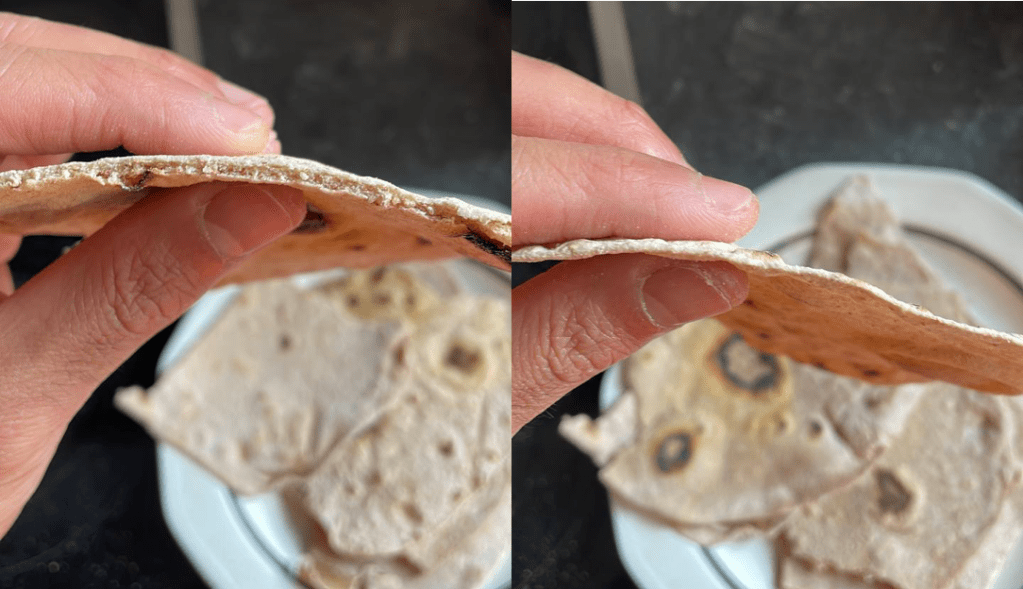
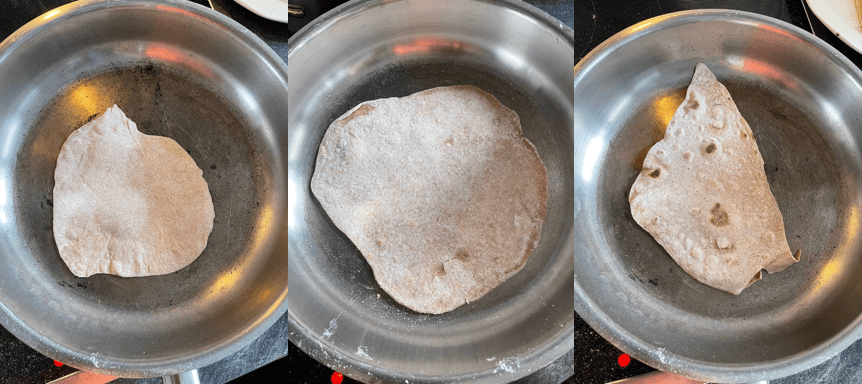
When it came to cooking them, I struggled with the temperature. Definitely don’t set this to be the highest on the electric hob, somewhere like 6 out of 9 should be good. Be careful that as you cook them, the flour particles start to burn so you’ll end up with an uneven cooking surface3. I didn’t get a proper rise on mine as my aunt suggested I would. My guess is that my dough was slightly too dry? Or maybe I needed to have a hotter pan (and then subsequently turn the temperature down). This is something I need to read about and experiment with. Here are some examples of what it looked like during cooking:
Outcome
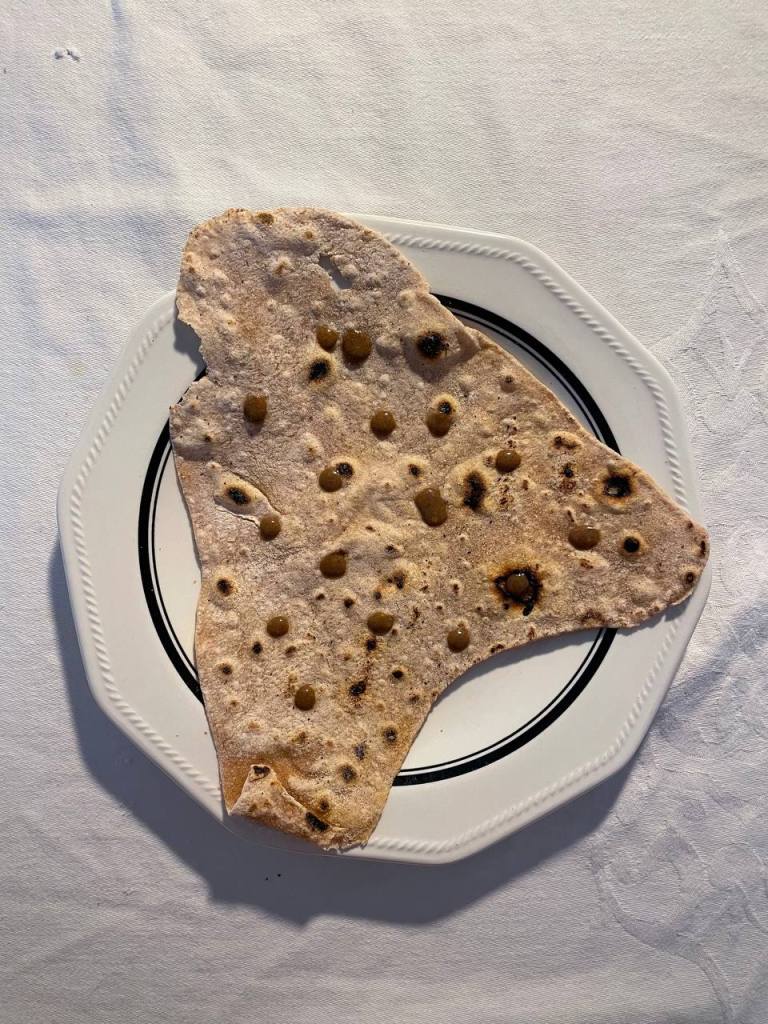
Overall, this experiment was a success. Even though I hadn’t had fateer in 5 years, the taste was almost exactly how I remember, so I’m very very happy with that!
However, it was far from perfect.
Firstly, the decision to go wholemeal was not 100% correct. My parents suggested that the flour ought to be white, but I disagree since the flavor would be markedly different. My thinking is that it should be a mix of white and wholemeal flour, similar to that of shalité, but with a bit more wholemeal. I did subsequently ask my aunt what she uses, and she said number 2, so my intuition is valid.
Aside from this, the major issue with my fateer is that it turned out dry. The trick to fix this is to cover the cooked fateer so that it stays “wet” because of the steam. Further, you’re meant to oil the surface of the fateers as you stack them on top of one another, which I was also unaware of.
Ways to enjoy Fateer
Growing up, I had fateer in exclusively two ways:
- Simply drizzled with mahveh, sometimes adding some fresh herbs like dill, mint, parsley and coriander and rolling it into a wrap
- Drizzled with honey
However, being a flatbread, fateer is very versatile and can be enjoyed any way you like! Here are some traditional Evazi ways that fateer is enjoyed:
- Just with mahveh, or just with honey
- Drizzled with mahveh, filled with terbeh, which is the leaf of white radish
- Drizzled with mahveh, filled with eggs cooked omelette style (just mix the eggs with salt and fry in oil until they are slightly browned and crispy)
- Torn into pieces (this is called teleet) and added to a bowl, then covered with a mixture of hot oil and sugar4
- Funny story: eating it with honey is one of the ways fateer is enjoyed in Evaz, however since I didn’t grow up there I was not aware of this until I turned 23! I always saw myself as a culinary genius for “inventing” a sweet way of enjoying it, since my parents would always exclusively have it with mahveh (making it savory). I have also committed the sin of having a mahveh-flavored fateer with honey… ↩︎
- Note that my aunt did NOT specify the flour type. I only assumed it’s wholemeal based on how I remember the flavor. ↩︎
- If you can, try to shake as much of the flour off before adding your fateer to the pan. Do this with caution though, as you may deform/tear them. ↩︎
- In general for sweeter variants, my aunt recommends using slightly less salt so that there isn’t a strong clash of sweet and savory. In my opinion the amount of salt in this recipe works well, though you could try decreasing it by up to 20% ↩︎
 Tsunami's Hungry
Leave a comment